


3 months 2 weeks ago
Next to enjoying ourselves, the next greatest pleasure consists in preventing others from enjoying themselves, or, more generally, in the acquisition of power.
▼
Source
source
Ch. 10: Recrudescence of Puritanism

4 months 1 day ago
Whilst in speaking of human things, we say that it is necessary to know them before we can love them...the saints on the contrary say in speaking of divine things that it is necessary to love them in order to know them, and that we only enter truth through charity.

3 months 2 weeks ago
In how many churches, by how many prophets, tell me, is man made sensible that he is an infinite Soul; that the earth and heavens are passing into his mind; that he is drinking forever the soul of God?
▼
Source
source
p. 18

3 months 3 weeks ago
All... good and useful properties of character have a price in exchange for others which have just as much use. Talent has a market price, since the sovereign or estate-owner can use a talented person in all sorts of ways. Temperament has a fancy price,22 since one can converse well with such a person; he is a pleasant companion. But, character has an inner value[,] and it is above all price.
▼
Source
source
Kant, Immanuel (1996), page 203

1 month 2 weeks ago
Though the coming of the day is still the most inspiriting, yet day's departure, also, and the return of night refresh, renew, and quiet us; and in the pastures of the dusk we stand, like cattle, exulting in the absence of the load.
▼
Source
source
Toils And Pleasures.

2 months 3 weeks ago
You may set the Negro free, but you cannot make him otherwise than an alien to the European. Nor is this all we scarcely acknowledge the common features of humanity in this stranger whom slavery has brought among us. His physiognomy is to our eyes hideous, his understanding weak, his tastes low; and we are almost inclined to look upon him as a being intermediate between man and the brutes.
▼
Source
source
Chapter XVIII.
3 months 2 weeks ago
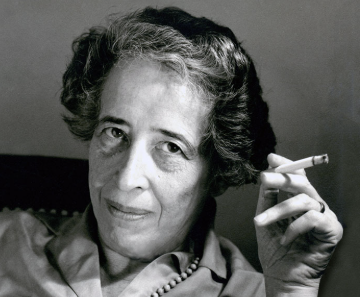
The defiance of established authority, religious and secular, social and political, as a world-wide phenomenon may well one day be accounted the outstanding event of the last decade.
▼
Source
source
"Civil Disobedience"

3 months 1 week ago
I believe that political power also exercises itself through the mediation of a certain number of institutions that seem to have nothing in common with political power, that have the appearance of being independent, but are not.
▼
Source
source
Debate with Noam Chomsky, École Supérieure de Technologie à Eindhoven, November 1971

2 months 1 day ago
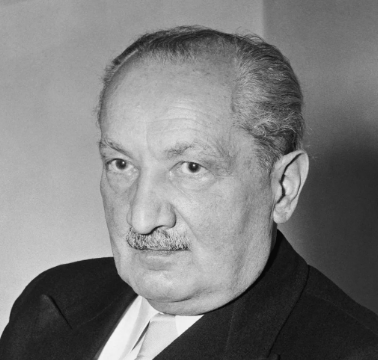
Promising, committment, and fidelity, for instance, are genuinely temporal practices.
3 months 2 weeks ago
Enjoyment of the work consists in participation in the creative state of the artist.
▼
Source
source
p. 117

3 months 3 weeks ago
No one has yet been found so firm of mind and purpose as resolutely to compel himself to sweep away all theories and common notions, and to apply the understanding, thus made fair and even, to a fresh examination of particulars. Thus it happens that human knowledge, as we have it, is a mere medley and ill-digested mass, made up of much credulity and much accident, and also of the childish notions which we at first imbibed.
▼
Source
source
Aphorism 97
1 month 2 days ago
Properties perceived in nature will depend on how one looks and how one looks depends on the economic interest one has in the resources of nature. The value of profit maximization is thus linked to reductionist systems, while the value of life and the maintenance of life is linked to holistic and ecological systems.
▼
Source
source
Staying Alive: Women, Ecology, and Development

2 months 1 day ago
When I was in my teens, I invented a term to describe them. I call it 'holiday consciousness' . . . because I often experienced this sense of optimism and wide-awakeness when setting out on a journey or a holiday. It was always the feeling that the world is self-evidently complex and beautiful, and that life is so obviously good that man's boredom and defeat is an absurdity . . . And then I used to ask: Why do men forget this so easily? And the answer seemed obvious: because the human will is so flabby and weak. Instead of being self-controlled, self-driven creatures, most men are little more than leaves on a stream, they drift along hoping for the best. I once wrote that men are like grandfather clocks driven by watchsprings.
▼
Source
source
p. 75

2 months 3 weeks ago
Happy are they that go to bed with grave music like Pythagoras.

3 months 2 weeks ago
The religion and philosophy of the Hebrews are those of a wilder and ruder tribe, wanting the civility and intellectual refinements and subtlety of Vedic culture.
▼
Source
source
A Tribute to Hinduism, 2008
3 months 2 weeks ago
Every man I meet is in some way my superior, and in that, I can learn of him.
▼
Source
source
As quoted in Think, Vol. 4-5 (1938), p. 32
3 months 2 weeks ago
A European who goes to New York and Chicago sees the future... when he goes to Asia he sees the past.
▼
Source
source
Ch. 8: Eastern and Western Ideals of Happiness
3 months 2 weeks ago
The hand that rounded Peter's dome, And groined the aisles of Christian Rome, Wrought in a sad sincerity, Himself from God he could not free; He builded better than he knew, The conscious stone to beauty grew.
▼
Source
source
The Problem, st. 2

2 months 2 weeks ago
We do not know whether Hitler is going to found a new Islam. (He is already on the way; he is like Mohammed. The emotion in Germany is Islamic; warlike and Islamic. They are all drunk with a wild god.)
▼
Source
source
The Symbolic Life - in The Collected Works: The Symbolic Life. Miscellaneous Writings (1977), p. 281

3 months 2 weeks ago
The meaning of a question is the method of answering it: then what is the meaning of 'Do two men really mean the same by the word "white"?' Tell me how you are searching, and I will tell you what you are searching for.
▼
Source
source
Philosophical Remarks (1991), Part III (27), pp.66-67

2 months 2 weeks ago
How many women thus waste life away the prey of discontent, who might have practised as physicians, regulated a farm, managed a shop, and stood erect, supported by their own industry, instead of hanging their heads surcharged with the dew of sensibility, that consumes the beauty to which it at first gave lustre.
▼
Source
source
Ch. 9

3 months 2 weeks ago
A genuine first-hand religious experience like this is bound to be a heterodoxy to its witnesses, the prophet appearing as a mere lonely madman. If his doctrine prove contagious enough to spread to any others, it becomes a definite and labeled heresy. But if it then still prove contagious enough to triumph over persecution, it becomes itself an orthodoxy; and when a religion has become an orthodoxy, its day of inwardness is over: the spring is dry; the faithful live at second hand exclusively and stone the prophets in their turn. The new church, in spite of whatever human goodness it may foster, can be henceforth counted on as a staunch ally in every attempt to stifle the spontaneous religious spirit, and to stop all later bubblings of the fountain from which in purer days it drew its own supply of inspiration.
▼
Source
source
Lectures XIV and XV, "The Value of Saintliness"

2 weeks ago
We are by no means opposed to the globalization of relationships as such-in fact, as we said, the strongest forces of Leftist internationalism have effectively led this process. The enemy, rather, is a specific regime of global relations that we call Empire.
▼
Source
source
45-46
2 months 1 week ago
Prosperity, both for individuals and for states, means possessions; and possessions mean burdens and harness and slavery; and slavery for the mind, too, because it is not only the rich man's time that is pre-empted, but his affections, his judgement, and the range of his thoughts.
▼
Source
source
"The Irony of Liberalism"

2 months 2 weeks ago
There is always someone above you: beyond God Himself rises Nothingness.

3 months 3 weeks ago
Nature forms us for ourselves, not for others; to be, not to seem.
▼
Source
source
Book II, Ch. 37. Of the Resemblance of Children to their Brothers

3 months 2 weeks ago
In fact of course, this 'productive' worker cares as much about the crappy shit he has to make as does the capitalist himself who employs him, and who also couldn't give a damn for the junk.
▼
Source
source
Notebook II, The Chapter on Capital, p. 193.

1 week 6 days ago
The Republican party has really gone off the rails and has become... in many ways a quasi-authoritarian party because many Republicans are not willing to accept the results of a... free and fair election. ...We've learned a lot from the... House committee that's studying the January 6th insurrection... What that committee has revealed was that this wasn't just a demonstration that spontaneously got out of hand. It was planned very deliberately by the White House as a way of pressuring former vice president Pence to overturn the election and keep Donald Trump in office, and right now a lot of state level Republican legislatures are trying to modify their rules for counting votes in the next election so that they would be in a better position to do what they tried to do in 2020, but didn't get away with... So this is probably the most severe threat to American democracy... since the Civil War... and I'm quite worried about that.
▼
Source
source
43:51:00

2 months 1 week ago
This language controls by reducing the linguistic forms and symbols of reflection, abstraction, development, contradiction; by substituting images for concepts. It denies or absorbs the transcendent vocabulary; it does not search for but establishes and imposes truth and falsehood.
▼
Source
source
p. 103
2 months 1 day ago
Steiner goes further than this -- and this is his own central contribution to modern thought. He states that once we have made a habit of remembering Mozart and the stars, we shall find ourselves developing powers of 'spiritual vision.' We shall never again feel ourselves to be helpless victims of the external world.
▼
Source
source
p. 169

2 months 2 days ago
A dangerous form of psychological splitting had to have taken place, and it continues to take place, in the psyches of many African Americans who can on one hand oppose racism, and then on the other hand passively absorb ways of thinking about beauty that are rooted in white supremacist thought.

2 months 2 weeks ago
The science of government being, therefore, so practical in itself, and intended for such practical purposes, a matter which requires experience, and even more experience than any person can gain in his whole life, however sagacious and observing he may be, it is with infinite caution that any man ought to venture upon pulling down an edifice which has answered in any tolerable degree for ages the common purposes of society, or on building it up again without having models and patterns of approved utility before his eyes.

4 months 2 weeks ago
There is no way of being almost funny or mildly funny or fairly funny or tolerably funny. You are either funny or not funny and there is nothing in between. And usually it is the writer who thinks he is funny and the reader who thinks he isn't.

3 days ago
Virtue alone affords everlasting and peace-giving joy; even if some obstacle arise, it is but like an intervening cloud, which floats beneath the sun but never prevails against it.
3 months 2 weeks ago
I must confess that I am deeply troubled. I fear that human beings are intent upon acting out a vast deathwish and that it lies with us now to make every effort to promote resistance to the insanity and brutality of policies which encompass the extermination of hundreds of millions of human beings.
▼
Source
source
Letter to Rudolf Carnap, June 21, 1962

2 months 1 week ago
O ye of little faith, why reason ye among yourselves, because ye have brought no bread? Do ye not yet understand, neither remember the five loaves of the five thousand, and how many baskets ye took up? Neither the seven loaves of the four thousand, and how many baskets ye took up? How is it that ye do not understand that I spake it not to you concerning bread, that ye should beware of the leaven of the Pharisees and of the Sadducees?
▼
Source
source
16:8-11 (KJV)
2 months 2 weeks ago
I believe in the salvation of humanity, in the future of cyanide . . .
2 months 1 week ago
Greatness by nature includes a power, but not a will to power.
▼
Source
source
p. 150

3 months 3 weeks ago
In every part of the universe we observe means adjusted with the nicest artifice to the ends which they are intended to produce; and in the mechanism of a plant, or animal body, admire how every thing is contrived for advancing the two great purposes of nature, the support of the individual, and the propagation of the species.
▼
Source
source
Section II, Chap. III.
3 months 2 weeks ago
If the colleges were better, if they ... had the power of imparting valuable thought, creative principles, truths which become powers, thoughts which become talents, - if they could cause that a mind not profound should become profound, - we should all rush to their gates: instead of contriving inducements to draw students, you would need to set policy at the gates to keep order in the in-rushing multitude.
▼
Source
source
The Celebration of Intellect, 1861
4 months 1 day ago
All the excesses, all the violence, and all the vanity of great men, come from the fact that they know not what they are: it being difficult for those who regard themselves at heart as equal with all men... For this it is necessary for one to forget himself, and to believe that he has some real excellence above them, in which consists this illusion that I am endeavoring to discover to you.
1 week 3 days ago
There is no witness so dreadful, no accuser so terrible as the conscience that dwells in the heart of every man.
▼
Source
source
Histories, XVIII, 43 (Bartlett's Familiar Quotations)
3 months 3 weeks ago
Man is certainly crazy. He could not make a mite, and he makes gods by the dozen.
▼
Source
source
Ch. 12
2 weeks ago
As for civilization, from which at last we are about to escape, so far from being the social destiny of man, it is only a transient stage - a state of temporary evil with which globes are afflicted during the first ages of their career; it is for the human race a disease of infancy, like teething; but it is a disease which has been prolonged in our globe at least twenty centuries beyond its natural term, owing to the neglect on the part of the ancient philosophy to study association and passional attraction.


2 months 1 week ago
Man is always something more than what he knows of himself. He is not what he is simply once and for all, but is a process...
3 months 2 weeks ago
What is new in our time is the increased power of the authorities to enforce their prejudices.
▼
Source
source
Quoted on Who Said That?, BBC TV, 8/8/1958
2 months 3 weeks ago
Useful undertakings which require sustained attention and vigorous precision in order to succeed often end up by being abandoned, for, in America, as elsewhere, the people move forward by sudden impulses and short-lived efforts.
▼
Source
source
Chapter V
2 months 2 weeks ago
Tell me how you want to die, and I'll tell you who you are.
3 months 2 weeks ago
Association, applied to land, shares the economic advantage of large-scale landed property, and first brings to realization the original tendency inherent in land-division, namely, equality. In the same way association also re-establishes, now on a rational basis, no longer mediated by serfdom, overlordship and the silly mysticism of property, the intimate ties of man with the earth, since the earth ceases to be an object of huckstering, and through free labour and free enjoyment becomes once more a true personal property of man.
▼
Source
source
Rent of Land, p. 65.
CivilSimian.com created by AxiomaticPanic, CivilSimian, Kalokagathia