


3 months 2 weeks ago
Science seems to be at war with itself.... Naive realism leads to physics, and physics, if true, shows naive realism to be false. Therefore naive realism, if true, is false; therefore it is false.
▼
Source
source
An Inquiry into Meaning and Truth (1940), Introduction, p. 15

2 months 3 weeks ago
The one infinite is perfect, in simplicity, of itself, absolutely, nor can aught be greater or better, This is the one Whole, God, universal Nature, occupying all space, of whom naught but infinity can give the perfect image or semblance.
▼
Source
source
II 12 as translated by Dorothea Waley Singer
3 months 2 weeks ago
"What is a thing?" is historical, because every report of the past, that is of the preliminaries to the question about the thing, is concerned with something static. This kind of historical reporting is an explicit shutting down of history, whereas it is, after all, a happening. We question historically if we ask what is still happening even if it seems to be past. We ask what is still happening and whether we remain equal to this happening so that it can really develop.
▼
Source
source
p. 43

3 months 3 weeks ago
Animals destitute of reason live with their own kind in a state of social amity. Elephants herd together; sheep and swine feed in flocks; cranes and crows take their flight in troops; storks have their public meetings to consult previously to their emigration, and feed their parents when unable to feed themselves; dolphins defend each other by mutual assistance; and everybody knows, that both ants and bees have respectively established by general agreement, a little friendly community.
3 months 2 weeks ago
Is a democracy, such as we know it, the last improvement possible in government? Is it not possible to take a step further towards recognizing and organizing the rights of man? There will never be a really free and enlightened State until the State comes to recognize the individual as a higher and independent power, from which all its own power and authority are derived, and treats him accordingly. I please myself with imagining a State at least which can afford to be just to all men, and to treat the individual with respect as a neighbor; which even would not think it inconsistent with its own repose if a few were to live aloof from it, not meddling with it, nor embraced by it, who fulfilled all the duties of neighbors and fellow-men. A State which bore this kind of fruit, and suffered it to drop off as fast as it ripened, would prepare the way for a still more perfect and glorious State, which also I have imagined, but not yet anywhere seen.
▼
Source
source
Final lines

3 months 2 weeks ago
There is a freemasonry among the dull by which they recognize and are sociable with the dull, as surely as a correspondent tact in men of genius.
▼
Source
source
1827



3 months 2 weeks ago
And, oddly enough, even at times when the current style permitted a treatment of the less epileptic aspects of religion, no fully adequate rendering of the contemplative life was ever achieved in the plasdc arts of Christendom. The peace that passes all understanding was often sung and spoken; it was hardly ever painted or carved. Thus, in the writings of St. Bernard, of Albertus Magnus, of Eckhart and Tauler and Ruysbroeck one may find passages that express very clearly the nature and significance of mystical contemplation. But the saints who figure in medieval painting and sculpture tell us next to nothing about this anticipation of the beatific vision. There are no equivalents of those Far Eastern Buddhas and Bodhisattvas who incarnate, in stone and paint, the experience of ultimate reality.

4 months 1 day ago
A doubtful balance is made between truth and pleasure, and... the knowledge of one and the feeling of the other stir up a combat the success of which is very uncertain, since, in order to judge of it, it would be necessary to know all that passes in the innermost spirit of the man, of which man himself is scarcely ever conscious.
3 months 2 weeks ago
The domination of the public way in which things have been interpreted has already decided upon even the possibilities of being attuned, that is, about the basic way in which Da-sein lets itself be affected by the world. The they prescribes that attunement, it determines what and how one "sees."
▼
Source
source
Stambaugh translation
2 months 3 days ago
Philosophy, in one of its functions, is the critic of cosmologies. It is its function to harmonise, refashion, and justify divergent intuitions as to the nature of things. It has to insist on the scrutiny of the ultimate ideas, and on the retention of the whole of the evidence in shaping our cosmological scheme. Its business is to render explicit, and - so far as may be - efficient, a process which otherwise is unconsciously performed without rational tests.
▼
Source
source
Preface, pp. ix-x
1 month 4 weeks ago
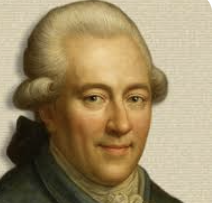
The most dangerous untruths are truths moderately distorted.
▼
Source
source
H 7 Variant translation: The most dangerous untruths are truths slightly distorted.

3 days ago
Dumb creatures have not human feelings, but have certain impulses which resemble them: for if it were not so, if they could feel love and hate, they would likewise be capable of friendship and enmity, of disagreement and agreement. Some traces of these qualities exist even in them, though properly all of them, whether good or bad, belong to the human breast alone.
2 months 1 week ago
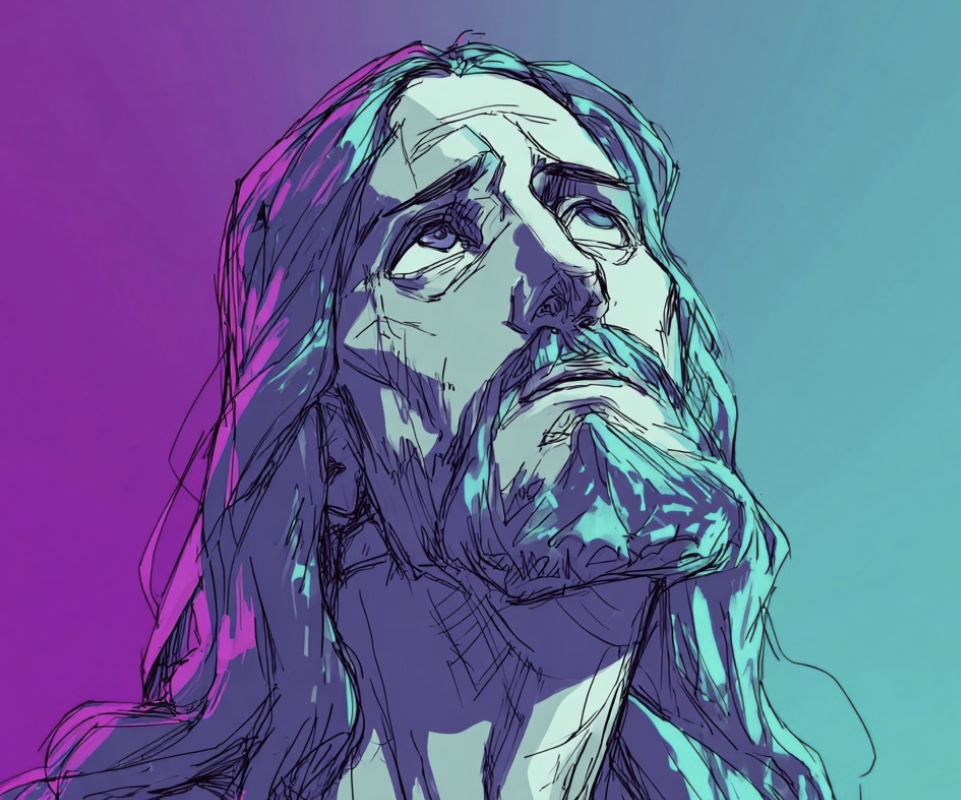
If anyone comes to Me and does not hate his father and mother, wife and children, brothers and sisters, yes, and his own life also, he cannot be My disciple.
▼
Source
source
14:26
3 months 2 weeks ago
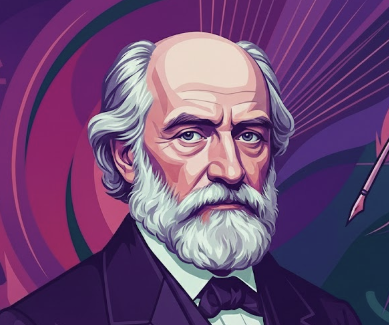
For an author to write as he speaks is just as reprehensible as the opposite fault, to speak as he writes; for this gives a pedantic effect to what he says, and at the same time makes him hardly intelligible.
▼
Source
source
The Art of Literature

3 months 3 weeks ago
Things are not so painful and difficult of themselves, but our weakness or cowardice makes them so.
▼
Source
source
Ch. 14, tr. Cotton, rev. W. Carew Hazlitt, 1877
3 months 2 weeks ago
Stupidity or reason? Oh, there was no choice now. It was imbecility every time.
▼
Source
source
The Gioconda smile, in Mortal Coils, 1921

2 months 2 weeks ago
I do not forgive myself for being born. It is as if, creeping into this world, I had profaned a mystery, betrayed some momentous pledge, committed a fault of nameless gravity. Yet in a less assured mood, birth seems a calamity I would be miserable not having known.
1 week 5 days ago
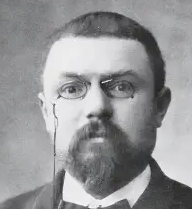
If we study the history of science we see happen two inverse phenomena... Sometimes simplicity hides under complex appearances; sometimes it is the simplicity which is apparent, and which disguises extremely complicated realities....No doubt, if our means of investigation should become more and more penetrating, we should discover the simple under the complex, then the complex under the simple, then again the simple under the complex, and so on, without our being able to foresee what will be the last term. We must stop somewhere, and that science may be possible, we must stop when we have found simplicity. This is the only ground on which we can rear the edifice of our generalizations.

3 months 2 weeks ago
But ordinary language is all right.
▼
Source
source
p. 28
4 months 2 weeks ago
The vices respectively fall short of or exceed what is right in both passions and actions, while virtue both finds and chooses that which is intermediate.

3 months 1 week ago
In the weightiest matters we must go to school to the animals, and learn spinning and weaving from the spider, building from the swallow, singing from the birds,-from the swan and the nightingale, imitating their art.

1 month 2 weeks ago
The tribalizing power of the new electronic media, the way in which they return to us to the unified fields of the old oral cultures, to tribal cohesion and pre-individualist patterns of thought, is little understood. Tribalism is the sense of the deep bond of family, the closed society as the norm of community.
▼
Source
source
Tyuonyi, Volumes 1-2, 1985, p. 60

1 week 2 days ago
And yet I will venture to believe that in no time, since the beginnings of Society, was the lot of those same dumb millions of toilers so entirely unbearable as it is even in the days now passing over us. It is not to die, or even to die of hunger, that makes a man wretched; many men have died; all men must die,-the last exit of us all is in a Fire-Chariot of Pain. But it is to live miserable we know not why; to work sore and yet gain nothing; to be heart-worn, weary, yet isolated, unrelated, girt in with a cold universal Laissez-faire: it is to die slowly all our life long, imprisoned in a deaf, dead, Infinite Injustice, as in the accursed iron belly of a Phalaris' Bull! This is and remains forever intolerable to all men whom God has made. Do we wonder at French Revolutions, Chartisms, Revolts of Three Days? The times, if we will consider them, are really unexampled.

4 months 1 week ago
Chi Wan thought thrice, and then acted. When the Master was informed of it, he said, "Twice may do."
3 months 3 weeks ago
Some books are to be tasted, others to be swallowed, and some few to be chewed and digested; that is, some books are to be read only in parts; others to be read, but not curiously; and some few to be read wholly, and with diligence and attention.
▼
Source
source
Of Studies
2 months 3 days ago
There is a quality of life which lies always beyond the mere fact of life; and when we include the quality in the fact, there is still omitted the quality of the quality.
▼
Source
source
Religion in the Making (February 1926), Lecture II: "Religion and Dogma".
2 months 4 days ago
The phrase, the world wants to be deceived, has become truer than had ever been intended. People are not only, as the saying goes, falling for the swindle; if it guarantees them even the most fleeting gratification they desire a deception which is nonetheless transparent to them. They force their eyes shut and voice approval, in a kind of self-loathing, for what is meted out to them, knowing fully the purpose for which it is manufactured. Without admitting it they sense that their lives would be completely intolerable as soon as they no longer clung to satisfactions which are none at all.
▼
Source
source
Section 10
3 months 2 weeks ago
We boil at different degrees.
▼
Source
source
Eloquence
1 week 2 days ago
The Age that admires talk so much can have little discernment for inarticulate work, or for anything that is deep and genuine. Nobody, or hardly anybody, having in himself an earnest sense for truth, how can anybody recognize an inarticulate Veracity, or Nature-fact of any kind; a Human Doer especially, who is the most complex, profound, and inarticulate of all Nature's Facts? Nobody can recognize him: till once he is patented, get some public stamp of authenticity, and has been articulately proclaimed, and asserted to be a Doer. To the worshipper of talk, such a one is a sealed book. An excellent human soul, direct from Heaven,-how shall any excellence of man become recognizable to this unfortunate? Not except by announcing and placarding itself as excellent,-which, I reckon, it above other things will probably be in no great haste to do.
3 months 2 weeks ago
Nature is too thin a screen; the glory of the One breaks in everywhere.
▼
Source
source
p. 182

4 months 2 weeks ago
At this point of his effort man stands face to face with the irrational. He feels within him his longing for happiness and for reason. The absurd is born of this confrontation between the human need and the unreasonable silence of the world. This must not be forgotten. This must be clung to because the whole consequence of a life can depend on it. The irrational, the human nostalgia, and the absurd that is born of their encounter, these are the three characters in the drama that must necessarily end with all the logic of which an existence is capable.

3 months 2 weeks ago
When they have really learned to love their neighbours as themselves, they will be allowed to love themselves as their neighbours.
▼
Source
source
Letter XIV

3 weeks 4 days ago
The true goal of the bourgeois life, in other words, is not self-enactment, but diversion. Most people need the organised distraction of work (if they can find it). Idleness - the life of the playboy who doesn't answer the phone - is simply too demanding. "
▼
Source
source
A difficult business," New Statesman

3 months 2 weeks ago
Anyone wanting a new house picks one from among those built on speculation or still in process of construction. The builder no longer works for his customers but for the market.
▼
Source
source
Vol. II, Ch. XII, p. 237.
2 months 2 weeks ago
But, braggart demons, we postpone our end: how could we renounce the display of our freedom, the show of our pride?
4 months 4 days ago
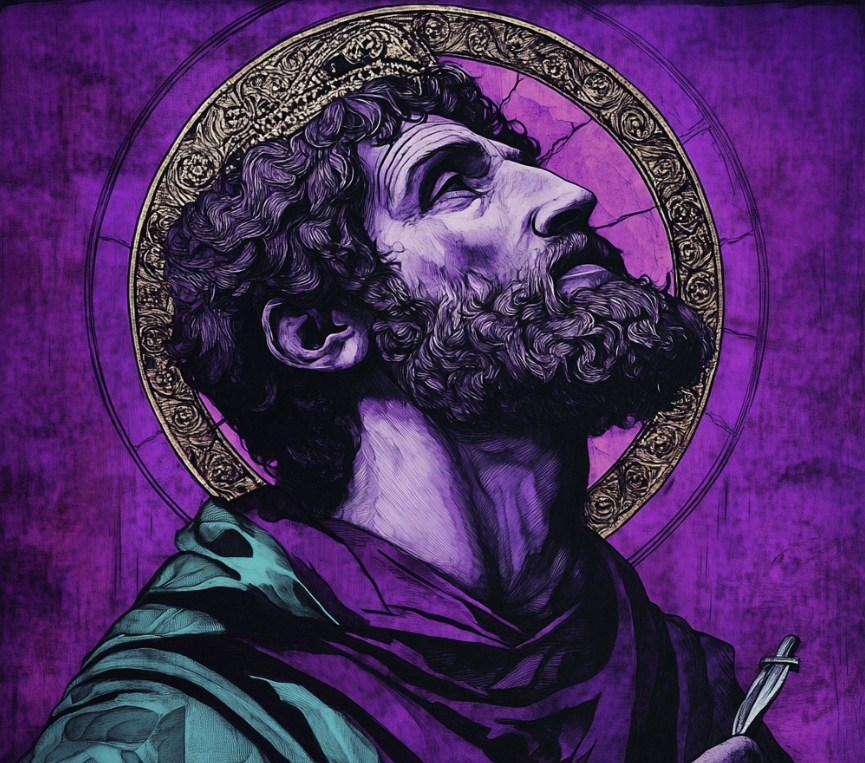
Christ's whole body groans in pain. Until the end of the world, when pain will pass away, this man groans and cries to God. And each one of us has part in the cry of that whole body. Thou didst cry out in thy day, and thy days have passed away; another took thy place and cried out in his day. Thou here, he there, and another there. The body of Christ ceases not to cry out all the day, one member replacing the other whose voice is hushed. Thus there is but one man who reaches unto the end of time, and those that cry are always His members.
▼
Source
source
p.423
2 months 2 weeks ago
A heart without music is like beauty without melancholy.
3 months 3 weeks ago
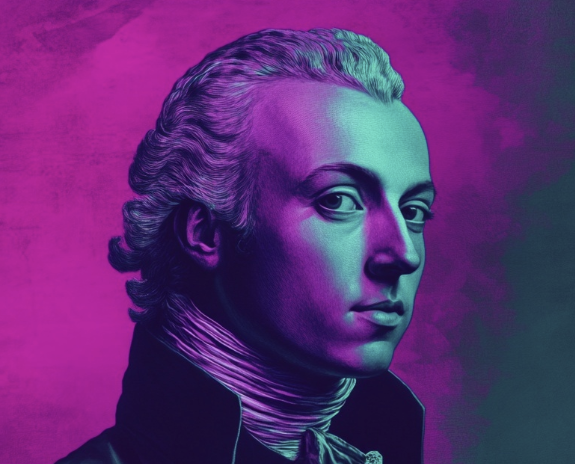
Metaphysics has as the proper object of its enquiries three ideas only: God, freedom, and immortality.
▼
Source
source
B 395
3 months 2 weeks ago
There is always a best way of doing everything, if it be to boil an egg. Manners are the happy ways of doing things; each once a stroke of genius or of love, - now repeated and hardened into usage. They form at last a rich varnish, with which the routine of life is washed, and its details adorned.
▼
Source
source
Behavior

3 months 2 weeks ago
To eat is to appropriate by destruction.
▼
Source
source
Part 3: Being-For-Others
2 months ago
I believe that if an individual is not on the path to transcending his society and seeing in what way it furthers or impedes the development of human potential, he cannot enter into intimate contact with his humanity. If the tabus, restrictions, distorted values appear "natural" to him, this is a clear indication that he cannot have a real knowledge of human nature. I believe that society, while having a function both stimulating and inhibiting at the same time, has always been in conflict with humanity. Only when the purpose of society is identified with that of humanity will society cease to paralyze man and encourage his dominance.

2 months 1 day ago
The problem is that sex is the most dangerous way of trying to achieve personal growth, because the life force has mixed it so liberally with a string sense of "magic", which, in the attempt at possession turns out to be an illusion. The attempt to possess a woman through an act of sex is as frustrating as trying to possess the scent of a rose by cooking and eating it.
▼
Source
source
p. 250
3 months 3 weeks ago
If you press me to say why I loved him, I can say no more than it was because he was he, and I was I. Variants: If a man urge me to tell wherefore I loved him, I feel it cannot be expressed but by answering: Because it was he, because it was myself. If a man should importune me to give a reason why I loved him, I find it could no otherwise be expressed, than by making answer: because it was he, because it was I.
▼
Source
source
Ch. 28
3 months 2 weeks ago
Imagination is not an empirical or superadded power of consciousness, it is the whole of consciousness as it realizes its freedom.
▼
Source
source
L'imagination (Imagination: A Psychological Critique)

2 months 4 days ago
Action is the pointer which shows the balance. We must not touch the pointer but the weight.
▼
Source
source
p. 97

2 months 2 weeks ago
On our earth we can only love with suffering and through suffering. We cannot love otherwise, and we know of no other sort of love. I want suffering in order to love. I long, I thirst, this very instant, to kiss with tears the earth that I have left, and I don't want, I won't accept life on any other!"
1 month 3 weeks ago
Even though the model referred to satisfies the theory, etc., it is 'unintended'; and we recognize that it is unintended from the description through which it is given (as in the intuitionist case). Models are not lost noumenal waifs looking for someone to name them; they are constructions within our theory itself. and they have names from birth.
▼
Source
source
Models and Reality
CivilSimian.com created by AxiomaticPanic, CivilSimian, Kalokagathia