


4 months 2 weeks ago
"I conclude that all is well," says Oedipus, and that remark is sacred. It echoes in the wild and limited universe of man. It teaches that all is not, has not been, exhausted. It drives out of this world a god who had come into it with dissatisfaction and a preference for futile suffering. It makes of fate a human matter, which must be settled among men.
4 months 2 weeks ago
It is as useless for a person to want first of all to decide the externals and after that the fundamentals as it is for a cosmic body, thinking to form itself, first of all to decide the nature of its surface, to what bodies it should turn its light, which its dark side, without first letting the harmony of centrifugal and centripetal forces realize its existence and letting the rest come of itself. One must learn to know oneself before knowing anything else (gnothi seauton). Not until a person has inwardly understood himself and then sees the course he is to take does his life gain peace and meaning.
3 months 3 weeks ago
For the inquisition of Final Causes is barren, and like a virgin consecrated to God produces nothing.
▼
Source
source
Book III, viii


2 months 2 weeks ago
In order to touch the heart and gain the confidence, the assent, the adhesion, and the co-operation of the illiterate legions of the proletariat - and the vast majority of proletarians unfortunately still belong in this category - it is necessary to begin to speak to those workers not of the general sufferings of the international proletariat as a whole but of their particular, daily, altogether private misfortunes. It is necessary to speak to them of their own trade and the conditions of their work in the specific locality where they live; of the harsh conditions and long hours of their daily work, of the small pay, the meanness of their employer, the high cost of living, and how impossible it is for them properly to support and bring up a family.
▼
Source
source
Founding of the Workers' International

3 months 2 weeks ago
Looking for God-or Heaven-by exploring space is like reading or seeing all Shakespeare's plays in the hope that you will find Shakespeare as one of the characters or Stratford as one of the places. Shakespeare is in one sense present at every moment in every play.
▼
Source
source
"The Seeing Eye", in Christian Reflections (1967), p. 167
2 months 3 weeks ago
Every man has his dignity. I'm willing to forget mine, but at my own discretion and not when someone else tells me to.

3 months 2 weeks ago
Take the happiest man, the one most envied by the world, and in nine cases out of ten his inmost consciousness is one of failure. Either his ideals in the line of his achievements are pitched far higher than the achievements themselves, or else he has secret ideals of which the world knows nothing, and in regard to which he inwardly knows himself to be found wanting.
▼
Source
source
Lectures VI and VII, "The Sick Soul"
2 months 1 week ago
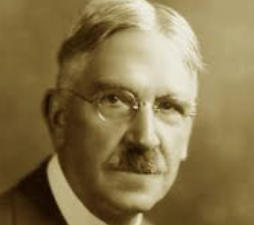
The three qualities of space and time reciprocally affect and qualify one another in experience. Space is inane save as occupied with active volumes. Pauses are holes when they do not accentuate masses and define figures as individuals. Extension sprawls and finally benumbs if it does not interact with place so as to assume intelligible distribution. Mass is nothing fixed. It contracts and expands, asserts and yields, according to its relations to other spatial and enduring things.... these are then the common properties of the matter of arts because there are general conditions without which an experience is not possible. As we saw earlier, the basic condition is felt relationship between doing and undergoing as the organism and environment interact.
▼
Source
source
pp. 220-21
3 months 2 weeks ago
In the practical use of our intellect, forgetting is as important a function as recollecting.
▼
Source
source
Ch. 16
1 month 3 days ago
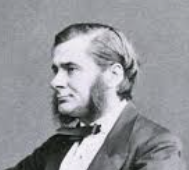
Whether we take these characters then, or such minor ones as those which are derivable from the proportional length of the spines in the cervical vertebrae, and the like, there is no doubt whatsoever as to the marked difference between Man and the Gorilla; but there is as little, that equally marked differences, of the very same order, obtain between the Gorilla and the lower apes.
▼
Source
source
Ch.2, p. 92
3 months 1 week ago
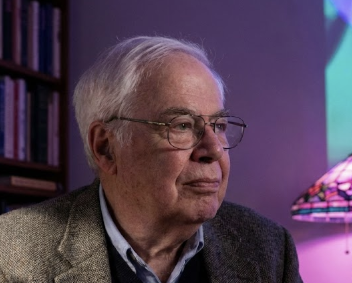
Almost as soon as I began to study philosophy, I was impressed by the way in which philosophical problems appeared, disappeared, or changed shape, as a result of new assumptions or vocabularies.
▼
Source
source
Preface

3 months 3 weeks ago
We seek and offer ourselves to be gulled.
▼
Source
source
Book III, Ch. 11. Of Cripples

3 months 2 weeks ago
Literature is the effort of man to indemnify himself for the wrongs of his condition.
▼
Source
source
"Walter Savage Landor", from The Dial, xii, 1841

2 months 2 weeks ago
That the uneducated and the ill-educated should think the hypothesis that all races of beings, man inclusive, may in process of time have been evolved from the simplest monad, a ludicrous one, is not to be wondered at. But for the physiologist, who knows that every individual being is so evolved-who knows, further, that in their earliest condition the germs of all plants and animals whatever are so similar, "that there is no appreciable distinction amongst them, which would enable it to be determined whether a particular molecule is the germ of a Conferva or of an Oak, of a Zoophyte or of a Man";-for him to make a difficulty of the matter is inexcusable.
▼
Source
source
Spencer here references William Benjamin Carpenter, Principles of Comparative Physiology see p. 473

2 months ago
This provides us with our first major clue to the solutions of the problem. Even if the left cannot see the world as full of potentiality, it can hold on to the moments of insight and refuse to let go of them. If I know that present difficulties will end in triumph, I am un-discourageable; I merely have to know it intellectually. And if I can 'know' that reality actually has a third dimension, I shall never fall into the mistake of complaining that there is nothing new under the sun and that life is futile.
▼
Source
source
p. 13

3 months 2 weeks ago
Do we call this the land of the free? What is it to be free from King George and continue the slaves of King Prejudice? What is it to be born free and not to live free? What is the value of any political freedom, but as a means to moral freedom? Is it a freedom to be slaves, or a freedom to be free, of which we boast? We are a nation of politicians, concerned about the outmost defences only of freedom. It is our children's children who may perchance be really free.
▼
Source
source
p. 493
1 month 2 weeks ago
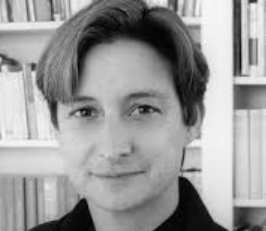
I am much more open about categories of gender, and my feminism has been about women's safety from violence, increased literacy, decreased poverty and more equality. I was never against the category of men. "As a Jew, I was taught it was ethically imperative to speak up" in Haaretz.
▼
Source
source
24-Feb-10

2 months 1 week ago
Each of us must pay for the slightest damage he inflicts upon a universe created for indifference and stagnation, sooner or later, he will regret not having left it intact.

2 months 3 weeks ago
Muhammad brought down from heaven and put into the Koran not religious doctrines only, but political maxims, criminal and civil laws, and scientific theories. The Gospels, on the other hand, deal only with the general relations between man and God and between man and man. Beyond that, they teach nothing and do not oblige people to believe anything. That alone, among a thousand reasons, is enough to show that Islam will not be able to hold its power long in ages of enlightenment and democracy, while Christianity is destined to reign in such ages, as in all others.
▼
Source
source
Book One, Chapter V.
1 month 2 weeks ago
When the world presents as a force field of violence, the task of nonviolence is to find ways of living and acting in that world such that violence is checked or ameliorated, or its direction turned, precisely at moments when it seems to saturate that world and offer no way out.
▼
Source
source
p. 10

3 months 2 weeks ago
Politics is a science. You can demonstrate that you are right and that others are wrong.
▼
Source
source
Act 5, sc. 2
2 months ago
All men are stuck in a kind of fog. They're surrounded by a wall of fog. They think this is perfectly normal, but it's not. It means that since they can't see much beyond their own little situation, they tend to vegetate. They need some immediate stimulus to keep them alert.
▼
Source
source
p. 20
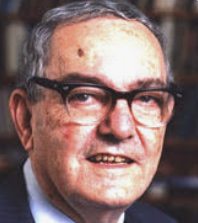
1 month 3 weeks ago
If by motivation we mean whatever it is that causes someone to follow a particular course of action, then every action is motivated - by definition. But in most human behavior the relation between motives and action is not simple; it is mediated by a whole chain of events and surrounding conditions. We observe a man scratching his arm. His motive (or goal)? To relieve an itch.
▼
Source
source
p. 265.

1 week 1 day ago
All work is as seed sown; it grows and spreads, and sows itself anew.

1 month 3 weeks ago
With a pen in my hand I have successfully stormed bulwarks from which others armed with sword and excommunication have been repulsed.
▼
Source
source
E 76
2 months 2 weeks ago
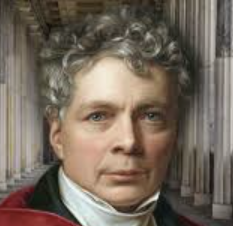
There was a time when religion was kept secret from popular belief within the mystery cults like a holy fire, sharing a common sanctuary with philosophy. The legends of antiquity name the earliest philosophers as the originators of these mystery cults, from which the most enlightened among the later philosophers, notably Plato, liked to educe their divine teachings. At that time philosophers still had the courage and the right to discuss the singly great themes, the only ones worthy of philosophizing and rising above common knowledge.
▼
Source
source
P. 7
2 months 2 days ago
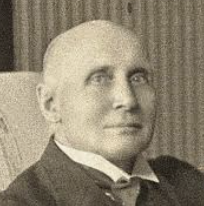
In its solitariness the spirit asks, What, in the way of value, is the attainment of life? And it can find no such value till it has merged its individual claim with that of the objective universe.
▼
Source
source
Religion is world-loyalty. Religion in the Making (February 1926), Lecture II: "Religion and Dogma".

2 months 2 weeks ago
It is a general popular error to suppose the loudest complainers for the publick to be the most anxious for its welfare.
▼
Source
source
Observations on a Late Publication on the Present State of the Nation

2 days ago
"Although," said he [Cato], "all the world has fallen under one man's sway, although Caesar's legions guard the land, his fleets the sea, and Caesar's troops beset the city gates, yet Cato has a way of escape; with one single hand he will open a wide path to freedom. This sword, unstained and blameless even in civil war, shall at last do good and noble service: the freedom which it could not give to his country it shall give to Cato!
▼
Source
source
De Providentia (On Providence), 2.10; translation by John W. Basore
3 months 1 week ago
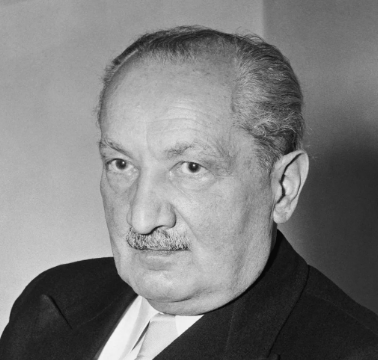
We ourselves are the entities to be analyzed.
▼
Source
source
Macquarrie & Robinson translation

3 months 2 weeks ago
... the attempt to make heaven on earth invariably produces hell. It leads to intolerance. It leads to religious wars, and to the saving of souls through the inquisition. And it is, I believe, based on a complete misunderstanding of our moral duties. It is our duty to help those who need help; but it cannot be our duty to make others happy, since this does not depend on us, and since it would only too often mean intruding on the privacy of those towards whom we have such amiable intentions.
▼
Source
source
Vol. 2, Ch. 24 "Oracular Philosophy and the Revolt against Reason"
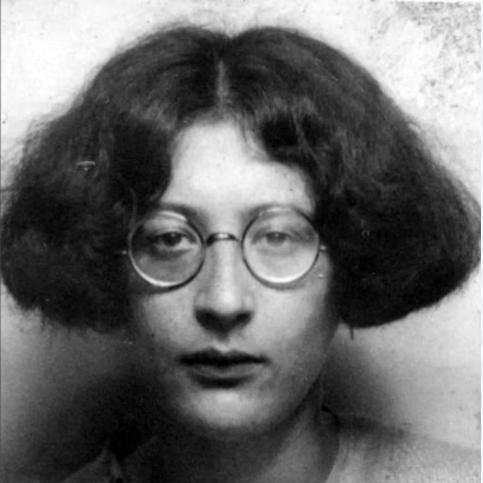
2 months 3 days ago
Attention is the rarest and purest form of generosity.
▼
Source
source
From an April 13, 1942 letter to poet Joë Bousquet, published in their collected correspondence

4 months 2 weeks ago
We have seen how it is originally language which works on the construction of concepts, a labor taken over in later ages by science. Just as the bee simultaneously constructs cells and fills them with honey, so science works unceasingly on this great columbarium of concepts, the graveyard of perceptions.
3 months 2 weeks ago
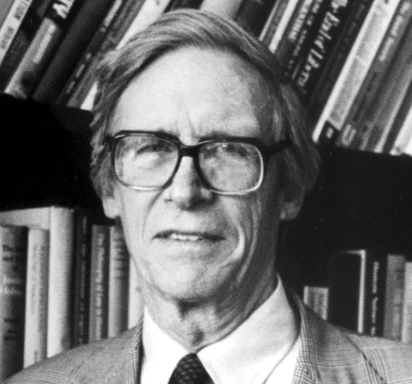
First of all, principles should be general. That is, it must be possible to formulate them without use of what would be intuitively recognized as proper names, or rigged definite descriptions.
▼
Source
source
Chapter III, Section 23, pg. 131
1 month 1 week ago
Falling in love is the one illogical adventure, the one thing of which we are tempted to think as supernatural, in our trite and reasonable world. The effect is out of all proportion with the cause. Two persons, neither of them, it may be, very amiable or very beautiful, meet, speak a little, and look a little into each other's eyes. That has been done a dozen or so of times in the experience of either with no great result. But on this occasion all is different. They fall at once into that state in which another person becomes to us the very gist and centrepoint of God's creation, and demolishes our laborious theories with a smile; in which our ideas are so bound up with the one master-thought that even the trivial cares of our own person become so many acts of devotion, and the love of life itself is translated into a wish to remain in the same world with so precious and desirable a fellow-creature.
▼
Source
source
Virginibus Puerisque, Ch. 3.

1 month 2 weeks ago
The revolutionaries say: "The government organization is bad in this and that respect; it must be destroyed and replaced by this and that." But a Christian says: "I know nothing about the governmental organization, or in how far it is good or bad, and for the same reason I do not want to support it."
▼
Source
source
Chapter IX, The Acceptance of the Christian Conception of Life will Emancipate Men from the Miseries of our Pagan Life
3 months 2 weeks ago
We may well be ashamed to tell what things we have read or heard in our day. I do not know why my news should be so trivial, - considering what one's dreams and expectations are, why the developments should be so paltry. The news we hear, for the most part, is not news to our genius. It is the stalest repetition.
▼
Source
source
p. 491

2 months 4 days ago
Rousseau has said in his Emile (book iv.): "Even though philosophers should be in a position to discover the truth, which of them would take any interest in it? Each one knows well that his system is not better founded than the others, but he supports it because it is his. ...The essential thing is to think differently from others. With believers he is an atheist; with atheists he is a believer." How much substantial truth there is in these gloomy confessions of this man of painful sincerity.

1 month 2 weeks ago
If we sit and talk in a dark room, words suddenly acquire new meanings and different textures...and on the radio. Given only the sound of a play, we have to fill in all of the senses, not just the sight of the action. So much do-it-yourself, or completion and "closure" of action, develops a kind of independent isolation in the young that makes them remote and inaccessible.
▼
Source
source
(p. 264)
3 months 2 weeks ago
Men resign themselves to their position should it ever occur to them to question it; and since all may view themselves as assigned their vocation, everyone is held to be equally fated and equally noble in the eyes of providence.
▼
Source
source
Chapter IX, Section 82, p. 547
2 months 2 weeks ago
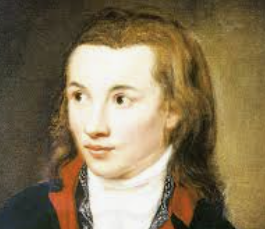
It depends only on the weakness of our organs and of our self-excitement (Selbstberuhrung), that we do not see ourselves in a Fairy-world. All Fabulous Tales (Mahrchen) are merely dreams of that home world, which is everywhere and nowhere. The higher powers in us, which one day as Genies, shall fulfil our will, are, for the present, Muses, which refresh us on our toilsome course with sweet remembrances.
1 month 2 weeks ago
Quite often a man goes on for years imagining that the religious teaching that had been imparted to him since childhood is still intact, while all the time there is not a trace of it left in him.
▼
Source
source
Pt. I, ch. 1
2 days ago
At any rate, if you wish to sift doubtful meanings of this kind, teach us that the happy man is not he whom the crowd deems happy, namely, he into whose coffers mighty sums have flowed, but he whose possessions are all in his soul, who is upright and exalted, who spurns inconstancy, who sees no man with whom he wishes to change places, who rates men only at their value as men, who takes Nature for his teacher, conforming to her laws and living as she commands, whom no violence can deprive of his possessions, who turns evil into good, is unerring in judgment, unshaken, unafraid, who may be moved by force but never moved to distraction, whom Fortune when she hurls at him with all her might the deadliest missile in her armoury, may graze, though rarely, but never wound.
2 months 2 days ago
A clash of doctrines is not a disaster - it is an opportunity.
▼
Source
source
Ch. 12: "Religion and Science", p. 259
2 months 1 week ago
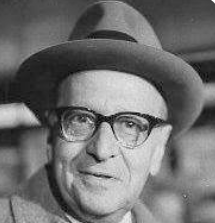
Pragmatism, in trying to turn experimental physics into a prototype of all science and to model all spheres of intellectual life after the techniques of the laboratory, is the counterpart of modern industrialism, for which the factory is the prototype of human existence, and which models all branches of culture after production on the conveyor belt.
▼
Source
source
p. 50.
1 month 2 weeks ago
For tribal man, space was the uncontrollable mystery. For technological man it is time that occupies the same role.
▼
Source
source
p. 85; "Magic that Changes Mood")
3 days ago
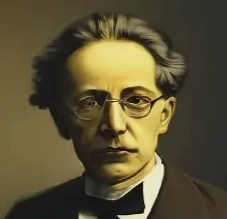
Where the world comes in my way - and it comes in my way everywhere - I consume it to quiet the hunger of my egoism. For me you are nothing but - my food, even as I too am fed upon and turned to use by you. We have only one relation to each other, that of usableness, of utility, of use.
▼
Source
source
Dover 2005, p. 296, 297
3 months 1 week ago
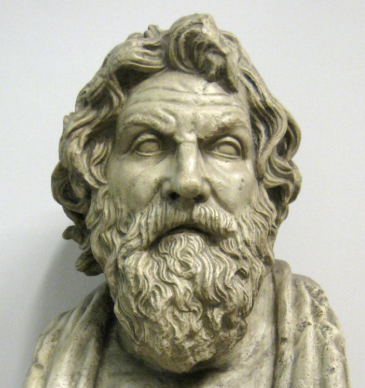
Being asked what learning is the most necessary, he replied, "How to get rid of having anything to unlearn.
▼
Source
source
" § 7
CivilSimian.com created by AxiomaticPanic, CivilSimian, Kalokagathia