


3 months 2 weeks ago
The notion that truths external to the mind may be known by intuition or consciousness, independently of observation and experience, is, I am persuaded, in these times, the great intellectual support of false doctrines and bad institutions. By the aid of this theory, every inveterate belief and every intense feeling, of which the origin is not remembered, is enabled to dispense with the obligation of justifying itself by reason, and is erected into its own all-sufficient voucher and justification. There never was such an instrument devised for consecrating all deep-seated prejudices.
▼
Source
source
(pp. 225-226)


3 months 2 weeks ago
The government of an exclusive company of merchants is, perhaps, the worst of all governments for any country whatever.
▼
Source
source
Chapter VII, Part Second, p. 619.
2 months ago
The chief error in philosophy is overstatement.
▼
Source
source
Pt. I, ch. 1, sec. 1.

3 months 2 weeks ago
The Beatific Vision, Sat Chit Ananda, Being-Awareness-Bliss-for the first time I understood, not on the verbal level, not by inchoate hints or at a distance, but precisely and completely what those prodigious syllables referred to. And then I remembered a passage I had read in one of Suzuki's essays. "What is the Dharma-Body of the Buddha?" ('"the Dharma-Body of the Buddha" is another way of saying Mind, Suchness, the Void, the Godhead.) The question is asked in a Zen monastery by an earnest and bewildered novice. And with the prompt irrelevance of one of the Marx Brothers, the Master answers, "The hedge at the bottom of the garden." "And the man who realizes this truth," the novice dubiously inquires, "what, may I ask, is he?" Groucho gives him a whack over the shoulders with his staff and answers, "A golden-haired lion."
1 month 3 weeks ago
Of all the inventions of man I doubt whether any was more easily accomplished than that of a Heaven.
▼
Source
source
L 34
3 months 3 days ago
Thrasyllus the Cynic begged a drachm of Antigonus. "That," said he, "is too little for a king to give." "Why, then," said the other, "give me a talent." "And that," said he, "is too much for a Cynic (or, for a dog) to receive."
▼
Source
source
45 Antigonus I
1 week ago
In science, as in the playing card experiment, novelty emerges only with difficulty, manifested by resistance, against a background provided by expectation.
▼
Source
source
p. 64

3 months 2 weeks ago
Science may set limits to knowledge, but should not set limits to imagination.

3 weeks 4 days ago
Given our anthropocentric bias, thinking of non-human vertebrates not just as equivalent in moral status to toddlers or infants, but as though they were toddlers or infants, is a useful exercise. Such reconceptualisation helps correct our lack of empathy for sentient beings whose physical appearance is different from "us". Ethically, the practice of intelligent "anthropomorphism" shouldn't be shunned as unscientific, but embraced insofar as it augments our stunted capacity for empathy. Such anthropomorphism can be a valuable corrective to our cognitive and moral limitations. This is not a plea to be sentimental, simply for impartial benevolence.
▼
Source
source
Reprogramming Predators, BLTC Research, 2009
2 months 1 week ago
The world of immediate experience-the world in which we find ourselves living-must be comprehended, transformed, even subverted in order to become that which it really is.
▼
Source
source
p. 123
1 month 3 weeks ago
If you are going to build something in the air it is always better to build castles than houses of cards.
▼
Source
source
F 39

4 months 1 week ago
Truth, like light, blinds. Falsehood, on the contrary, is a beautiful twilight that enhances every object.
4 months ago
Tentative efforts lead to tentative outcomes. Therefore, give yourself fully to your endeavors. Decide to construct your character through excellent actions, and determine to pay the price for a worthy goal. The trials you encounter will introduce you to your strengths. Remain steadfast... and one day you will build something that endures, something worthy of your potential.

2 months 1 week ago
How good would it be if one could die by throwing oneself into an infinite void.

2 months 3 days ago
Yes, yes, I see it all! - an enormous social activity, a mighty civilization, a profuseness of science, of art, of industry, of morality, and afterwords, when we have filled the world with industrial marvels, with great factories, with roads, museums and libraries, we shall fall exhausted at the foot of it all, and it will subsist - for whom? Was man made for science or was science made for man?

3 months 1 week ago
The way you use the word "God" does not show whom you mean - but, rather, what you mean.
▼
Source
source
p. 50e
2 months 2 weeks ago
The Age of Empty Freedom ... does not know that man must first through labour, industry, and art, learn how to know; but it has a certain fixed standard for all conceptions, and an established Common Sense of Mankind always ready and at hand, innate within itself and there present without trouble on its part;-and those conceptions and this Common Sense are to it the measure of the efficient and the real. It has this great advantage over the Age of Science, that it knows all things without having learned anything; and can pass judgment upon whatever comes before it at once and without hesitation,-without needing any preliminary evidence:-'That which I do not immediately comprehend by the conceptions which dwell within me, is nothing,'-says Empty Freedom.
▼
Source
source
p. 20
3 months 2 weeks ago
Belief in God and a future life makes it possible to go through life with less of stoic courage than is needed by skeptics. A great many young people lose faith in these dogmas at an age at which despair is easy, and thus have to face a much more intense unhappiness than that which falls to the lot of those who have never had a religious upbringing. Christianity offers reasons for not fearing death or the universe, and in so doing it fails to teach adequately the virtue of courage. The craving for religious faith being largely an outcome of fear, the advocates of faith tend to think that certain kinds of fear are not to be deprecated. In this, to my mind, they are gravely mistaken. To allow oneself to entertain pleasant beliefs as a means of avoiding fear is not to live in the best way. In so far as religion makes its appeal to fear, it is lowering to human dignity.
▼
Source
source
p. 107
3 months 4 weeks ago
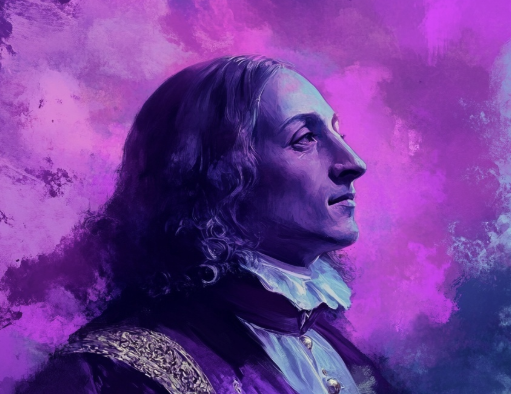
In order to enter into a real knowledge of your condition, consider it in this image: A man was cast by a tempest upon an unknown island, the inhabitants of which were in trouble to find their king, who was lost; and having a strong resemblance both in form and face to this king, he was taken for him, and acknowledged in this capacity by all the people.

1 week ago
Why not? What is to hinder this Samson from governing? There is in him what far transcends all apprenticeships; in the man himself there exists a model of governing, something to govern by! There exists in him a heart-abhorrence of whatever is incoherent, pusillanimous, unveracious,-that is to say, chaotic, _un_governed; of the Devil, not of God. A man of this kind cannot help governing! He has the living ideal of a governor in him; and the incessant necessity of struggling to unfold the same out of him.
3 months 3 days ago
To Harmodius, descended from the ancient Harmodius, when he reviled Iphicrates [a shoemaker's son] for his mean birth, "My nobility," said he, "begins in me, but yours ends in you."
▼
Source
source
54 Iphicrates

3 months 1 week ago
This market way of life promotes addictions to stimulation and obsessions with comfort and convenience.
▼
Source
source
(p29)

4 months 1 week ago
We face eternity now. We have no universe left, no outside phenomena, no emotions, no passions. Nothing but ourselves and thought. We face an eternity of introspection, when all through history we have never known what to do with ourselves on a rainy Sunday.
1 week 5 days ago
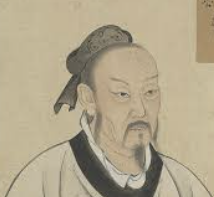
One whose intentions and thoughts are cultivated will disregard wealth and nobility. One whose greatest concern is for the Way and righteousness will take lightly kings and dukes. It is simply that when one examines oneself on the inside, external goods carry little weight. A saying goes, "The gentleman makes things his servants. The petty man is servant to things.
▼
Source
source
Readings in Classical Chinese Philosophy (2001), p. 263

3 months 1 week ago
Do not ask who I am and do not ask me to remain the same: leave it to our bureaucrats and our police to see that our papers are in order. At least spare us their morality when we write.
▼
Source
source
The Archaeology of Knowledge (1972), tr. A. M. Sheridan Smith (New York: Pantheon)

3 months 2 weeks ago
Friendship is the greatest of worldly goods. Certainly to me it is the chief happiness of life. If I had to give a piece of advice to a young man about a place to live, I think I shd. say, 'sacrifice almost everything to live where you can be near your friends.
▼
Source
source
Letter to Arthur Greeves (29 December 1935) - in They Stand Together: The Letters of C. S. Lewis to Arthur Greeves (1914-1963) (1979), p. 477

2 months 2 weeks ago
Thus poetry, regarded as a vehicle of thought, is especially impressive partly because it obeys all the laws of effective speech, and partly because in so doing it imitates the natural utterances of excitement.
▼
Source
source
Pt. I, sec. 6, "The Effect of Poetry Explained"
3 months 2 weeks ago
If anything extraordinary seems to have happened, we can always say that we have been the victims of an illusion. If we hold a philosophy which excludes the supernatural, this is what we always shall say.
▼
Source
source
Ch. 1: "The Scope of this Book"

3 months 6 days ago
Men have fashioned an image of Chance as an excuse for their own stupidity. For Chance rarely conflicts with intelligence, and most things in life can be set in order by an intelligent sharpsightedness.
▼
Source
source
Freeman (1948), p. 155
4 months 1 week ago
The best way to describe anyone is to give an example of the kind of thing he would do.
3 months 1 week ago
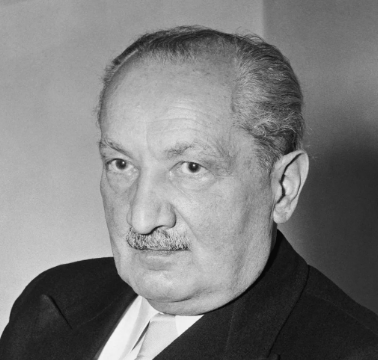
"For many, abstract thinking is toil; for me, on good days, it is feast and frenzy." (XIV, 24) Abstract thinking a feast? The highest form of human existence? ... "The feast implies: pride, exuberance, frivolity; mockery of all earnestness and respectability; a divine affirmation of oneself, out of animal plenitude and perfection-all obviously states to which the Christian may not honestly say Yes. The feast is paganism par excellence." (WM, 916). For that reason, we might add that thinking never takes place in Christianity. That is to say, there is no Christian philosophy. There is no true philosophy that could be determined anywhere else than from within itself.
▼
Source
source
p. 5
1 week 3 days ago
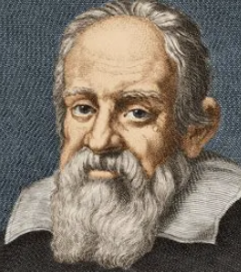
What was observed by us in the third place is the nature or matter of the Milky Way itself, which, with the aid of the spyglass, may be observed so well that all the disputes that for so many generations have vexed philosophers are destroyed by visible certainty, and we are liberated from wordy arguments.
▼
Source
source
Original text as reproduced in Edward Tufte, Beautiful Evidence (Cheshire, Connecticut: Graphics Press LLC, 2006), 101
1 month 1 week ago
There is certainly some chill and arid knowledge to be found upon the summits of formal and laborious science; but it is all round about you, and for the trouble of looking, that you will acquire the warm and palpitating facts of life.
▼
Source
source
An Apology for Idlers.
2 months 1 week ago
We exhort the compromisers to open their hearts to truth, to free themselves of their wretched and blind circumspection, of their intellectual arrogance, and of the servile fear which dries up their souls and paralyzes their movements. Let us therefore trust the eternal Spirit which destroys and annihilates only because it is the unfathomable and eternal source of all life. The passion for destruction is a creative passion, too!
▼
Source
source
"The Reaction in Germany" (1842) Often paraphrased as, "The urge to destroy is also a creative urge"

2 months 3 weeks ago
Rejoice not in another man's misfortune!

2 months 2 weeks ago
People talk sometimes of a bestial cruelty, but that's a great injustice and insult to the beasts; a beast can never be so cruel as a man, so artistically cruel. The tiger only tears and gnaws, that's all he can do. He would never think of nailing people by the ears, even if he were able to do it.

1 day ago
It is not the man who has too little, but the man who craves more, that is poor.
▼
Source
source
Line 6.

3 months 2 weeks ago
A witty saying proves nothing.
▼
Source
source
Le dîner du comte de Boulainvilliers (1767): Deuxième Entretien
4 months 1 week ago
Men grew desperate and the border between bitter frustration and wild destruction is sometimes easily crossed.

3 months 3 weeks ago
Now when God sends forth his holy Gospel, He deals with us in a twofold manner, the first outwardly, then inwardly. Outwardly he deals with us through the oral word of the Gospel and through material sings, that is, baptism adndthe sacrament of the altar. Inwardly He deals with us through the Holy spirit, faith, and other gifts. But whatever their measure of order the outward factors should and must procede. The inward experience follows and is effected by the outward. God has determined to give the inward to no one except through the outward.
▼
Source
source
Luthers Works, 40 p. 146 as quoted in Against the Idols: The Reformation of Worship from Erasmus to Calvinby Carlos M. N. Eire, p. 72
1 week ago
I called it a small light shining and shaping in the huge vortex of Norse darkness. Yet the darkness itself was alive; consider that. It was the eager inarticulate uninstructed Mind of the whole Norse People, longing only to become articulate, to go on articulating ever farther!
3 months 2 weeks ago
"A pleasure is full grown only when it is remembered. You are speaking, Hmān, as if the pleasure were one thing and the memory another. It is all one thing. The séroni could say it better than I say it now. Not better than I could say it in a poem. What you call remembering is the last part of the pleasure, as the crah is the last part of a poem. When you and I met, the meeting was over very shortly, it was nothing. Now it is growing something as we remember it. But still we know very little about it. What it will be when I remember it as I lie down to die, what it makes in me all my days till then-that is the real meeting. The other is only the beginning of it."
▼
Source
source
Hyoi, p. 73
2 months 1 week ago
To call war the soil of courage and virtue is like calling debauchery the soil of love.
▼
Source
source
Ch. III: Industry, Government, the peasants
1 month 4 weeks ago
We can define rituals as symbolic techniques of making oneself at home in the world. They transforming being at home to being in the world. They turn the world into a reliable place. They are to time what a home is to space. They render time habitable.
1 day ago
Man is a reasoning animal.
3 weeks 4 days ago
It's not that there are no differences between human and non-human animals, any more than there are no differences between black people and white people, freeborn citizens and slaves, men and women, Jews and gentiles, gays or heterosexuals. The question is rather: are they morally relevant differences? This matters because morally catastrophic consequences can ensue when we latch on to a real but morally irrelevant difference between sentient beings.
▼
Source
source
"The Abolitionist Project", Talks given at the FHI (Oxford University) and the Charity International Happiness Conference, 2007
3 months 2 weeks ago
Many Catholic mystics have affirmed that, at a certain stage of that contemplative prayer in which, according to the most authoritative theologians, the life of Christian perfection ultimately consists, it is necessary to put aside all thought of the Incarnation as distracting from the higher knowledge of that which has been incarnated. From this fact have arisen misunderstandings in plenty and a number of intellectual difficulties.
1 week ago
I came hither [Craigenputtoch] solely with the design to simplify my way of life and to secure the independence through which I could be enabled to remain true to myself.
▼
Source
source
Letter to Goethe, (1828).
CivilSimian.com created by AxiomaticPanic, CivilSimian, Kalokagathia