


3 months 2 weeks ago
Advocates of capitalism are very apt to appeal to the sacred principles of liberty, which are embodied in one maxim: The fortunate must not be restrained in the exercise of tyranny over the unfortunate.
▼
Source
source
Ch. 13: Freedom in Society


2 months 3 weeks ago
In no other country in the world is the love of property keener or more alert than in the United States, and nowhere else does the majority display less inclination toward doctrines which in any way threaten the way property is owned.
▼
Source
source
Book Three, Chapter XXI.

2 months 3 days ago
What objection is there in reason to there being no other purpose in the sum of things save only to exist and happen as it does exist and happen? For him who places himself outside of himself, none; but for him who lives and suffers and desires within himself - for him it is a question of life or death.

3 months 2 weeks ago
I have received, sir, your new book against the human species, and I thank you for it. You will please people by your manner of telling them the truth about themselves, but you will not alter them. The horrors of that human society-from which in our feebleness and ignorance we expect so many consolations-have never been painted in more striking colours: no one has ever been so witty as you are in trying to turn us into brutes: to read your book makes one long to go on all fours. Since, however, it is now some sixty years since I gave up the practice, I feel that it is unfortunately impossible for me to resume it: I leave this natural habit to those more fit for it than are you and I.
▼
Source
source
Letter to Jean-Jacques Rousseau, August 30, 1755 referring to Rousseau's Discourse on Inequality.
3 months 2 weeks ago
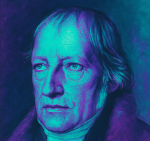
Poetry is the universal art of the spirit which has become free in itself and which is not tied down for its realization to external sensuous material; instead, it launches out exclusively in the inner space and the inner time of ideas and feelings.
▼
Source
source
As quoted in the Introduction to Aesthetics (1842), translated by T. M. Knox, (1979), p. 89

1 month 2 weeks ago
Science may fall back on its stupid excuse that science works for science, and that when it has been developed by the scientists it will become accessible to the people also; but art, if it be art, should be accessible to all, and particularly to those for whom it is produced. And the position of our art strikingly arraigns the producers of art for not wishing, not knowing how, and being unable, to serve the people.

1 day ago
Our plans miscarry because they have no aim. When a man does not know what harbour he is making for, no wind is the right wind.
▼
Source
source
Line 2 Alternate translation: If one does not know to which port one is sailing, no wind is favorable. (translator unknown).
3 months 2 weeks ago
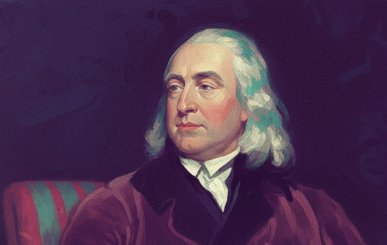
In looking over the catalogue of human actions (says a partizan of this principle) in order to determine which of them are to be marked with the seal of disapprobation, you need but to take counsel of your own feelings: whatever you find in yourself a propensity to condemn, is wrong for that very reason. For the same reason it is also meet for punishment: in what proportion it is adverse to utility, or whether it be adverse to utility at all, is a matter that makes no difference. In that same proportion also is it meet for punishment: if you hate much, punish much: if you hate little, punish little: punish as you hate. If you hate not at all, punish not at all: the fine feelings of the soul are not to be overborne and tyrannized by the harsh and rugged dictates of political utility.
▼
Source
source
Ch. 2: Of Principles Adverse to That of Utility
2 months 2 weeks ago
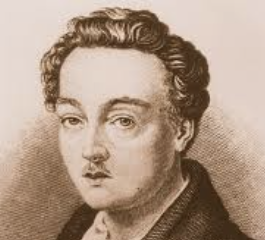
One must love humanity in order to reach out into the unique essence of each individual: no one can be too low or too ugly.
▼
Source
source
Lenz (1835).
2 months 1 week ago
Writing is like getting married. One should never commit oneself until one is amazed at one's luck.
▼
Source
source
The Black Prince (1973); 2003, p. 10.

3 months 3 weeks ago
There is a sort of gratification in doing good which makes us rejoice in ourselves.
▼
Source
source
Book III, Ch. 2
4 weeks 1 day ago
The WTO-related events in Seattle created the first experience of a rainbow politics-a successful pluralistic politics, without the working of a master mind, but with the currents and beauty that come out of free thinking. In the new politics, people have different ways of talking, but I feel the core will be living democracy and living economies, and that it will include both taking personal responsibility to make change and being part of national and international movements for change.

2 months 1 week ago
His disciples said to Him, "When will the Kingdom come?" Jesus said, "It will not come by waiting for it. It will not be a matter of saying 'Here it is' or 'There it is.' Rather, the Kingdom of the Father is spread out upon the earth, and men do not see it."
4 months 2 weeks ago
I joke sometimes to the effect that when I approach a part of a book where I must explain something I don't understand, I just type faster and faster and faster. Then, when I get to the part I don't understand, sheer inertia pushes me through. That's not literally true, of course, but there's something to it psychologically.
1 week 6 days ago
Many a time I have wanted to stop talking and find out what I really believed.
▼
Source
source
Introduction, p. x
2 months 1 week ago
Just as Marx used to say about the French Marxists of the late 'seventies: All I know is that I am not a Marxist.
▼
Source
source
Letter to Conrad Schmidt

3 months 2 weeks ago
There as here, passions are the motive of all action, but they are livelier, more ardent, or merely simpler and purer, thereby assuming a totally different character. All the first movements of nature are good and right.
▼
Source
source
First Dialogue; translated by Judith R. Bush, Christopher Kelly, Roger D. Masters
3 months 6 days ago
The mind enamored with deceptive things, declines things better.
▼
Source
source
Book II, satire ii, line 6
2 months 3 days ago
There are only two cases in which war is just: first, in order to resist the aggression of an enemy, and second, in order to help an ally who has been attacked.
▼
Source
source
No. 95. (Usbek writing to Rhedi)
2 months 1 week ago
A philosophy has no private store of knowledge or methods for attaining truth, so it has no private access to good. As it accepts knowledge and principles from those competent in science and inquiry, it accepts the goods that are diffused in human experience. It has no Mosaic or Pauline authority of revelation entrusted to it. But it has the authority of intelligence, of criticism of these common and natural goods.
2 months 2 days ago
We used to pay too little attention to utopias, or even disregard them altogether, saying with regret they were impossible of realisation. Now indeed they seem to be able to be brought about far more easily than we supposed, and we are actually faced by an agonising problem of quite another kind: how can we prevent their final realisation? ... Utopias are more realisable than those 'realist politics' that are only the carefully calculated policies of office-holders, and towards utopias we are moving. But it is possible that a new age is already beginning, in which cultured and intelligent people will dream of ways to avoid ideal states and to get back to a society that is less 'perfect' and more free.
▼
Source
source
pp. 187-188. Aldous Huxley used this passage (in French translation) as the epigraph to Brave New World.

2 months 3 weeks ago
It is the common wonder of all men, how among so many million of faces there should be none alike.
▼
Source
source
Section 2

2 months 1 week ago
The farther men get from God, the farther they advance into the knowledge of religions.
6 days ago
Civilization exists by geological consent, subject to change without notice.
▼
Source
source
What is Civilization? Ladies' Home Journal, LXIII
1 week 5 days ago
IF the passions and characters of man were not subject, like the material kingdoms, to distribution in series of groups, man would be out of unity with the universe; there would be duplicity of system in creation, and incoherence between the material and the passional worlds. If man would attain to social uniy, he should seek for the means in the serial order, to which God has subject all nature.
▼
Source
source
Le nouveau monde amoureux
2 months 1 week ago
We dread the future only when we are not sure we can kill ourselves when we want to.

3 months 2 weeks ago
Out from the heart of Nature rolled The burdens of the Bible old.
▼
Source
source
The Problem, st. 2
1 month 3 weeks ago
Rational free spirits are the light brigade who go on ahead and reconnoitre the ground which the heavy brigade of the orthodox will eventually occupy.
▼
Source
source
H 36

3 months 6 days ago
One who is serious all day will never have a good time, while one who is frivolous all day will never establish a household.
▼
Source
source
Maxim no. 25.
2 months 1 week ago
One of the scribes came to Jesus and asked him, "Which is the first of all commandments?" Jesus replied,"The first is this: Hear, O Israel! The Lord our God is Lord alone! You shall love the Lord your God with all your heart, with all your soul, with all your mind, and with all your strength. The second is like: You shall love your neighbor as yourself. There is no other commandment greater than these."
▼
Source
source
Mark 12:28-34
1 day ago
All right, men are as they should be, can be. What should they be? Surely not more than they can be! And what can they be? Not more, again, than they - can, than they have the competence, the force, to be. But this they really are, because what they are not, they are incapable of being; for to be capable means - really to be. One is not capable for anything that one really is not; one is not capable of anything that one does not really do. Could a man blinded by cataract see? Oh, yes, if he had his cataract successfully removed. But now he cannot see because he does not see. Possibility and reality always coincide. One can do nothing that one does not, as one does nothing that one cannot.
▼
Source
source
Cambridge 1995, p. 291
4 months 5 days ago
Of Every One-Hundred Men, Ten shouldn't even be there, Eighty are nothing but targets, Nine are real fighters... We are lucky to have them... They make the battle. Ah but the One, One of them is a Warrior... and He will bring the others back.
4 months 2 weeks ago
Even Plato assumes that the genuinely perfect condition of man means no sex distinction (and how strange this is for people like Feuerbach who are so occupied with affirming sex-differentiation, regarding which they would do best to appeal to paganism). He assumes that originally there was only the masculine (and when there is no thought of femininity, sex-distinction is undifferentiated), but through degeneration and corruption the feminine appeared. He assumes that base and cowardly men became women in death, but he still gives them hope of being elevated again to masculinity. He thinks that in the perfect life the masculine, as originally, will be the only sex, that is, that sex-distinction is a matter of indifference. So it is in Plato, and this, the idea of the state notwithstanding, was the culmination of his philosophy. How much more so, then, the Christian view.
3 months 2 weeks ago
In our monogamous part of the world, to marry means to halve one's rights and double one's duties.
▼
Source
source
Vol. 2, Ch. 27, § 370 Variant translation: To marry is to halve your rights and double your duties.
3 months 6 days ago
We are responsible not only for what we do but also for what we could have prevented.
▼
Source
source
Introduction (p. xv)
1 month 1 week ago
However many ways there may be of being alive, it is certain that there are vastly more ways of being dead.
▼
Source
source
Chapter 1 "Explaining the Very Improbable"

3 months 2 weeks ago
The more powerful and original a mind, the more it will incline towards the religion of solitude.

3 months 2 weeks ago
Communism differs from all previous movements in that it overturns the basis of all earlier relations of production and intercourse, and for the first time consciously treats all natural premises as the creatures of hitherto existing men, strips them of their natural character and subjugates them to the power of the united individuals. Its organisation is, therefore, essentially economic, the material production of the conditions of this unity; it turns existing conditions into conditions of unity. The reality, which communism is creating, is precisely the true basis for rendering it impossible that anything should exist independently of individuals, insofar as reality is only a product of the preceding intercourse of individuals themselves.
▼
Source
source
Vol. I, Part 4.
3 months 2 weeks ago
The young men were born with knives in their brain, a tendency to introversion, self-dissection, anatomizing of motives.
▼
Source
source
p. 530, col. 2
1 week 1 day ago
In the past you rivalled the Achaians and the Macedonians, peoples of your own race, and Philip, their commander, for the hegemony and glory, but now that the freedom of the Hellenes is at stake at a war against an alien people (Romans), ...And does it worth to ally with the barbarians, to take the field with them against the Epeirotans, the Achaians, the Akarnanians, the Boiotians, the Thessalians, in fact with almost all the Hellenes with the exception of the Aitolians who are a wicked nation... ...So Lakedaimonians it is good to remember your ancestors,... be afraid of the Romans... and do ally yourselves with the Achaians and Macedonians. But if some the most powerful citizens are opposed to this policy at least stay neutral and do not side with the unjust.
▼
Source
source
Histories, IX, 37:7-39:7 (Loeb)
3 months 3 weeks ago
No matter that we may mount on stilts, we still must walk on our own legs. And on the highest throne in the world, we still sit only on our own bottom.
▼
Source
source
Ch. 13
4 months 2 weeks ago
I make no secret about being Jewish ... I just think it's more important to be human and to have a human heritage; and I think it is wrong for anyone to feel that there is anything special about any one heritage of whatever kind. It is delightful to have the human heritage exist in a thousand varieties, for it makes for greater interest, but as soon as one variety is thought to be more important than another, the groundwork is laid for destroying them all.
1 month 4 weeks ago
The supreme effort of the avant-guard is onward, ever onward.
▼
Source
source
Light and Shadows in the Life of an Avant-Guard
4 months ago
For human beings, the measure of every action is the impression of the senses.
▼
Source
source
Book I, ch. 28, 10

3 months 2 weeks ago
A purely disembodied human emotion is a nonentity.
▼
Source
source
Ch. 25
CivilSimian.com created by AxiomaticPanic, CivilSimian, Kalokagathia