


3 months 2 weeks ago
In the visible world, the Milky Way is a tiny fragment; within this fragment, the solar system is an infinitesimal speck, and of this speck our planet is a microscopic dot. On this dot, tiny lumps of impure carbon and water, of complicated structure, with somewhat unusual physical and chemical properties, crawl about for a few years, until they are dissolved again into the elements of which they are compounded. They divide their time between labour designed to postpone the moment of dissolution for themselves and frantic struggles to hasten it for others of their kind.
▼
Source
source
Dreams and Facts, 1919

1 week ago
Men do reverence men. Men do worship in that 'one temple of the world,' as Novalis calls it, the Presence of a Man! Hero-worship, true and blessed, or else mistaken, false and accursed, goes on everywhere and everywhen. In this world there is one godlike thing, the essence of all that was or ever will be of godlike in this world: the veneration done to Human Worth by the hearts of men. Hero-worship, in the souls of the heroic, of the clear and wise,-it is the perpetual presence of Heaven in our poor Earth: when it is not there, Heaven is veiled from us; and all is under Heaven's ban and interdict, and there is no worship, or worthship, or worth or blessedness in the Earth any more!-
3 months 3 days ago
Diogenes the Cynic, when a little before his death he fell into a slumber, and his physician rousing him out of it asked him whether anything ailed him, wisely answered, "Nothing, sir; only one brother anticipates another,-Sleep before Death."
3 months 2 weeks ago
Is a democracy, such as we know it, the last improvement possible in government? Is it not possible to take a step further towards recognizing and organizing the rights of man? There will never be a really free and enlightened State until the State comes to recognize the individual as a higher and independent power, from which all its own power and authority are derived, and treats him accordingly. I please myself with imagining a State at least which can afford to be just to all men, and to treat the individual with respect as a neighbor; which even would not think it inconsistent with its own repose if a few were to live aloof from it, not meddling with it, nor embraced by it, who fulfilled all the duties of neighbors and fellow-men. A State which bore this kind of fruit, and suffered it to drop off as fast as it ripened, would prepare the way for a still more perfect and glorious State, which also I have imagined, but not yet anywhere seen.
▼
Source
source
Final lines

3 months 2 weeks ago
The open society is one in which men have learned to be to some extent critical of taboos, and to base decisions on the authority of their own intelligence.
▼
Source
source
Vol. 1, Endnotes to the Chapters : Notes to the Introduction.
1 month 3 weeks ago
All mathematical laws which we find in Nature are always suspect to me, in spite of their beauty. They give me no pleasure. They are merely auxiliaries. At close range it is all not true.
▼
Source
source
As quoted in Lichtenberg : A Doctrine of Scattered Occasions (1959) by Joseph Peter Stern, p. 84


1 day ago
The wise man is joyful, happy and calm, unshaken, he lives on a plane with the gods.

3 months 2 weeks ago
The importation of gold and silver is not the principal, much less the sole benefit which a nation derives from its foreign trade.
▼
Source
source
Chapter I, p. 479.

3 months 2 weeks ago
Act, if you like,-but you do it at your peril. Men's actions are too strong for them. Show me a man who has acted, and who has not been the victim and slave of his action. What they have done commits and enforces them to do the same again. The first act, which was to be an experiment, becomes a sacrament. The fiery reformer embodies his aspiration in some rite or covenant, and he and his friends cleave to the form, and lose the aspiration. The Quaker has established Quakerism, the Shaker has established his monastery and his dance; and, although each prates of spirit, there is no spirit, but repetition, which is anti-spiritual.
▼
Source
source
Goethe; or, the Writer

3 months 2 weeks ago
...they cudgel their brains with absurd questions, such as, for instance, why God did not make the world many centuries earlier. They persuade themselves that it is easy to conceive, to be sure, how God may discern what is present, that is, what is actual in the time in which he is, but how He may foresee what is future, that is, what is actual in the time in which He is not yet, they deem an intellectual difficulty; as if the existence of the Necessary Being descended through all the moments of an imaginary time, and, having already exhausted a part of His duration, saw before Him the eternity He was yet to live simultaneously with the present events of the world. All these difficulties upon proper insight into the notion of time vanish like smoke.

1 month 2 weeks ago
The mask, like the side-show freak, is mainly participatory rather than pictorial in its sensory appeal.
▼
Source
source
(p. 352)
3 months 1 week ago
It is a sign of wisdom to be able to use parrhesia without falling into the garrulousness of athuroglossos... One of the problems... how to distinguish that which must be said from that which should be kept silent.
4 months 6 days ago
To entire sincerity there belongs ceaselessness. Not ceasing, it continues long. Continuing long, it evidences itself. Evidencing itself, it reaches far. Reaching far, it becomes large and substantial. Large and substantial, it becomes high and brilliant. Large and substantial; this is how it contains all things. High and brilliant; this is how it overspreads all things. Reaching far and continuing long; this is how it perfects all things. So large and substantial, the individual possessing it is the co-equal of Earth. So high and brilliant, it makes him the co-equal of Heaven. So far-reaching and long-continuing, it makes him infinite. Such being its nature, without any display, it becomes manifested; without any movement, it produces changes; and without any effort, it accomplishes its ends.
1 week ago
All that Mankind has done, thought, gained or been: it is lying as in magic preservation in the pages of Books.
3 weeks 4 days ago
It's easy to support the status quo if one is not another of its victims.
▼
Source
source
Reply to Meet the people who want to turn predators into herbivores, TreeHugger, 4 Dec. 2015
2 months 1 week ago
There is rarely a creative man who does not have to pay a high price for the divine spark of his greatest gifts...the human element is frequently bled for the benefit of the creative element and to such an extent that it even brings out the bad qualities, as for instance, ruthless, naive egoism (so-called "auto-eroticism"), vanity, all kinds of vices-and all this in order to bring to the human I at least some life-strength, since otherwise it would perish of sheer inanition.
2 months 2 days ago
Music for entertainment ... seems to complement the reduction of people to silence, the dying out of speech as expression, the inability to communicate at all. It inhabits the pockets of silence that develop between people molded by anxiety, work and undemanding docility.
▼
Source
source
p. 271
2 months ago
Radical black feminists have never confined their vision to just the emancipation of black women or women in general, or all black people for that matter. Rather, they are the theorists and proponents of a radical humanism committed to liberating humanity and reconstructing social relations across the board. When bell hooks says "Feminism is for everybody," she is echoing what has always been a basic assumption of black feminists. We are not talking about identity politics but a constantly developing often contested, revolutionary conversation about how all of us might envision and remake the world.
▼
Source
source
Robin Kelley Freedom Dreams

1 month 1 week ago
I discovered that rejections are not altogether a bad thing. They teach a writer to rely on his own judgment and to say in his heart of hearts, "To hell with you."
▼
Source
source
Quoted in "Feeling Rejected? Join Updike, Mailer, Oates..." by Barbara Bauer and Robert F. Moss, New York Times (21 July 1985), section 7, page 1, column 1

3 months 1 week ago
An entire mythology is stored within our language.
▼
Source
source
Ch. 7 : Remarks on Frazer's Golden Bough, p. 133
3 months 1 week ago
A philosopher who is not taking part in discussions is like a boxer who never goes into the ring.
▼
Source
source
Conversation of 1930

1 month 4 weeks ago
Steiner goes further than this -- and this is his own central contribution to modern thought. He states that once we have made a habit of remembering Mozart and the stars, we shall find ourselves developing powers of 'spiritual vision.' We shall never again feel ourselves to be helpless victims of the external world.
▼
Source
source
p. 169
2 months 1 week ago
Art is not the possession of the few who are recognized writers, painters, musicians; it is the authentic expression of any and all individuality. Those who have the gift of creative expression in unusually large measure disclose the meaning of the individuality of others to those others. In participating in the work of art, they become artists in their activity. They learn to know and honor individuality in whatever form it appears. The fountains of creative activity are discovered and released. The free individuality which is the source of art is also the final source of creative development in time.
3 months 2 weeks ago
Scott does this still better than Wordsworth, and a very second-rate landscape does it more effectually than any poet. What made Wordsworth's poems a medicine for my state of mind, was that they expressed, not mere outward beauty, but states of feeling, and of thought coloured by feeling, under the excitement of beauty. They seemed to be the very culture of the feelings, which I was in quest of. In them I seemed to draw from a Source of inward joy, of sympathetic and imaginative pleasure, which could be shared in by all human beings; which had no connexion with struggle or imperfection, but would be made richer by every improvement in the physical or social condition of mankind. From them I seemed to learn what would be the perennial sources of happiness, when all the greater evils of life shall have been removed. And I felt myself at once better and happier as I came under their influence.
▼
Source
source
(pp. 147-148)
1 week 3 days ago
The mathematician is born, not made.
1 month 4 weeks ago
The revolutionary and critical thinker is in a certain way always outside of his society while of course he is at the same time also in it. That he is in it is obvious, but why is he outside it? First, because he is not brainwashed by the ruling ideology, that is to say, he has an extraordinary kind of independence of thought and feeling; hence he can have a greater objectivity than the average person has. There are many emotional factors too. And certainly I do not mean to enter here into the complex problem of the revolutionary thinker. But it seems to me essential that in a certain sense he transcends his society. You may say he transcends it because of the new historical developments and possibilities he is aware of, while the majority still think in traditional terms.
1 day ago
So near at hand is freedom, and is anyone still a slave?
2 months 2 days ago
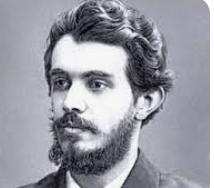
Berdyaev has been categorized as a Christian existentialist and a mystical philosopher. He never avoided the label of "mystic" since he felt it was the mystics of the world who came closest to understanding the role of spirit. Many of the philosophers he quoted were mystics - Meister Eckhart, Angelus Silesius and especially Jacob Boehme. The influence of Dostoevsky was central to his thought. Nevertheless, Berdyaev is not a naively irrational thinker; he brings an enormous fund of philosophical knowledge combined with the profundity of his own thought to support his view of existence. There are no dogmas in his writings to offend one's intellectual conscience.
▼
Source
source
Richard Schain, in In Love with Eternity : Philosophical Essays and Fragments (2005), Ch. 7 : Nikolai Alexandrovich Berdyaev - A Champion of the Spirit, p. 47

2 months 3 weeks ago
Time which antiquates Antiquities, and hath an art to make dust of all things.
▼
Source
source
Chapter V
3 months 3 weeks ago
The blame rests with the government. Why do they not put adulterers to death? Then I would not need to give such advice. Between two evils one is always the lesser, in this case allowing the adulterer to remarry in a distant land in order to avoid fornication . . .

2 months 3 weeks ago
What chiefly diverts the men of democracies from lofty ambition is not the scantiness of their fortunes, but the vehemence of the exertions they daily make to improve them.
▼
Source
source
Book Three, Chapter XIX.
1 month 1 week ago
In one way or another, all my books have been devoted to expounding and exploring the almost limitless power of the Darwinian principle-power unleashed whenever and wherever there is enough time for the consequences of primordial self-replication to unfold. Preface

2 months 1 week ago
It makes no sense to say that death is the goal of life, but what else is there to say?
3 months 2 weeks ago
The emotions I feel are no more meant to be shown in their unadulterated state than the inner organs by which we live.
▼
Source
source
pp. 31-32
1 month 2 weeks ago
Once animals had a more sacred, more divine character than men. There is not even a reign of the "human" in primitive societies, and for a long time the animal order has been the order of reference. Only the animal is worth being sacrificed, as a god, the sacrifice of man only comes afterward, according to a degraded order. Men qualify only by their affiliation to the animal: the Bororos "are" macaws. "
▼
Source
source
The Animals: Territory and Metamorphoses," p. 133

3 months 2 weeks ago
Hatred, as well as love, renders its votaries credulous.
▼
Source
source
V
2 months 1 week ago
No one can flatter himself that he is immune to the spirit of his own epoch, or even that he possesses a full understanding of it. Irrespective of our conscious convictions, each one of us, without exception, being a particle of the general mass, is somewhere attached to, colored by, or even undermined by the spirit which goes through the mass. Freedom stretches only as far as the limits of our consciousness.
▼
Source
source
Paracelsus the Physician
2 months 1 week ago
When you have understood that nothing is, that things do not even deserve the status of appearances, you no longer need to be saved, you are saved, and miserable forever.
2 months ago
Since we live in a society that promotes faddism and temporary superficial adaptation of different values, we are easily convinced that changes have occurred in arenas where there has been little or no change.
3 months 3 weeks ago
It is truly a marvelous thing to consider to what greatness Athens arrived in the space of one hundred years after she freed herself from the tyranny of Pisistratus; but, above all, it is even more marvelous to consider the greatness Rome reached when she freed herself from her kings. The reason is easy to understand, for it is the common good and not private gain that makes cities great. Yet, without a doubt, this common good is observed only in republics, for in them everything that promotes it is practised, and however much damage it does to this or that private individual, those who benefit from the said common good are so numerous that they are able to advance in spite of the inclination of the few citizens who are oppressed by it.
▼
Source
source
Book 2, Chapter 2
1 day ago
A great step towards independence is a good-humored stomach, one that is willing to endure rough treatment.
▼
Source
source
Line 3.
1 day ago
What madness this is, to punish oneself because one is unfortunate, and not to lessen, but to increase one's ills! You ought to display, in this matter also, that decent behaviour and modesty which has characterised all your life: for there is such a thing as self-restraint in grief also.
2 months 2 weeks ago
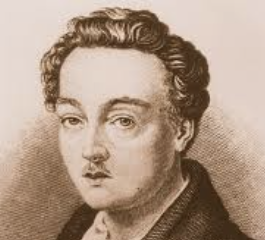
The stars are scattered all over the sky like shimmering tears, there must be great pain in the eye from which they trickled.
▼
Source
source
Act IV.
2 months 3 weeks ago
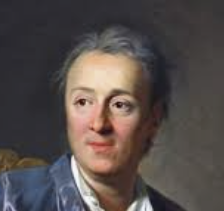
Justice is the first virtue of those who command, and stops the complaints of those who obey.
▼
Source
source
As quoted in The Golden Treasury of Thought : A Gathering of Quotations from the Best Ancient and Modern Authors (1873) by Theodore Taylor, p. 227

1 month 4 weeks ago
The Fathers of the Church can well afford to preach the gospel of Christ. It contains nothing dangerous to the regime of authority and wealth; it stands for self-denial and self-abnegation, for penance and regret, and is absolutely inert in the face of every indignity, every outrage imposed upon mankind.
CivilSimian.com created by AxiomaticPanic, CivilSimian, Kalokagathia