


Thu, 4 Dec 2025 - 22:44
The universal and lasting establishment of peace constitutes not merely a part, but the whole final purpose and end of the science of right as viewed within the limits of reason.

Mon, 8 Dec 2025 - 23:17
Suppose that I wish to deserve the title of "robber of remorse" and that I place in myself all [the townspeople's] repentence?

Fri, 28 Nov 2025 - 20:15
There is a great difference between the Idols of the human mind and the Ideas of the divine. That is to say, between certain empty dogmas, and the true signatures and marks set upon the works of creation as they are found in nature.

Sat, 29 Nov 2025 - 23:28
I approached the task of destroying images by first tearing them out of the heart through God's Word and making them worthless and despised. This indeed took place before Dr. Karlstadt ever dreamed of destroying images. For when they are no longer in the heart, they can do no harm when seen with the eyes. But Dr. Karlstadt, who pays no attention to matters of the heart, has reversed the order by removing them from sight and leaving them in the heart. For he does not preach faith, nor can he preach it; unfortunately, only now do I see that. Which of these two forms of destroying images is best, I will let each man judge for himself.

Wed, 3 Dec 2025 - 23:42
What a noble privilege is it of human reason to attain the knowledge of the supreme Being; and, from the visible works of nature, be enabled to infer so sublime a principle as its supreme Creator? But turn the reverse of the medal. Survey most nations and most ages. Examine the religious principles, which have, in fact, prevailed in the world. You will scarcely be persuaded, that they are any thing but sick men's dreams: Or perhaps will regard them more as the playsome whimsies of monkies in human shape, than the serious, positive, dogmatical asseverations of a being, who dignifies himself with the name of rational.
Wed, 3 Dec 2025 - 03:49
Now I am about to take my last voyage, a great leap in the dark.

Wed, 3 Dec 2025 - 22:19
The poverty of the lower ranks of people in China far surpasses that of the most beggarly nations of Europe. In the neighbourhood of Canton many hundred, it is commonly said, many thousand families have no habitation on the land, but live constantly in little fishing boats upon the rivers and the canals. The subsistence which they find there is so scanty that they are eager to fish up the nastiest garbage thrown overboard from any European ship. Any carrion, the carcase of a dead dog or cat, for example, though half putrid and stinking, is as welcome to them as the most wholesome food to the people of other countries.

Sun, 7 Dec 2025 - 02:53
[T]he application of algebra to geometry... far more than any of his metaphysical speculations, has immortalized the name of Descartes, and constitutes the greatest single step ever made in the progress of the exact sciences.

Tue, 9 Dec 2025 - 01:12
All things living are in search of a better world.

Sat, 6 Dec 2025 - 21:50
In the visible world, the Milky Way is a tiny fragment; within this fragment, the solar system is an infinitesimal speck, and of this speck our planet is a microscopic dot. On this dot, tiny lumps of impure carbon and water, of complicated structure, with somewhat unusual physical and chemical properties, crawl about for a few years, until they are dissolved again into the elements of which they are compounded. They divide their time between labour designed to postpone the moment of dissolution for themselves and frantic struggles to hasten it for others of their kind.
Wed, 3 Dec 2025 - 03:49
There are several passages in Hobbes's translation of Homer, which, if they had been writ on purpose to ridicule that poet, would have done very well. Alexander Pope, as quoted in Observations, Anecdotes, and Characters, of Books and Men (1820) by Joseph Spence, p. 285

Mon, 4 Aug 2025 - 01:44
One should oppose the fascination with Hitler according to which Hitler was, of course, a bad guy, responsible for the death of millions — but he definitely had balls, he pursued with iron will what he wanted. … This point is not only ethically repulsive, but simply wrong: no, Hitler did not ‘have the balls’ to really change things; he did not really act, all his actions were fundamentally reactions, i.e., he acted so that nothing would really change, he stages a big spectacle of Revolution so that the capitalist order could survive.”
In this precise sense of violence, Gandhi was more violent than Hitler: Gandhi’s movement effectively endeavored to interrupt the basic functioning of the British colonial state.

Sun, 7 Dec 2025 - 06:08
It appears then, that capitalist production comprises conditions independent of good or bad will, conditions which permit the working-class to enjoy that relative prosperity only momentarily, and at that always only as the harbinger of a coming crisis.
Mon, 8 Dec 2025 - 23:17
You know how much I admire Che Guevara. In fact, I believe that the man was not only an intellectual but also the most complete human being of our age: as a fighter and as a man, as a theoretician who was able to further the cause of revolution by drawing his theories from his personal experience in battle.

Fri, 12 Dec 2025 - 04:56
It seems to me that, in every culture, I come across a chapter headed Wisdom. And then I know exactly what is going to follow: Vanity of vanities, all is vanity.
Sat, 6 Dec 2025 - 21:50
The observer, when he seems to himself to be observing a stone, is really, if physics is to be believed, observing the effects of the stone upon himself.

Fri, 5 Dec 2025 - 21:04
An avidity to punish is always dangerous to liberty. It leads men to stretch, to misinterpret, and to misapply even the best of laws. He that would make his own liberty secure must guard even his enemy from oppression; for if he violates this duty he establishes a precedent that will reach to himself.
Tue, 25 Nov 2025 - 01:55
These eight rules [above] contain all the precepts for solid and immutable proofs.

Mon, 8 Dec 2025 - 01:37
All war propaganda consists, in the last resort, in substituting diabolical abstractions for human beings. Similarly, those who defend war have invented a pleasant sounding vocabulary of abstractions in which to describe the process of mass murder.

Sun, 7 Dec 2025 - 02:19
One may discover the root of a Hindoo religion in his own private history, when, in the silent intervals of the day or night, he does sometimes inflict on himself like austerities with a stern satisfaction.

Thu, 6 Nov 2025 - 23:24
Anxiety may be compared with dizziness. He whose eye happens to look down into the yawning abyss becomes dizzy. But what is the reason for this? It is just as much in his own eye as in the abyss, for suppose he had not looked down. Hence, anxiety is the dizziness of freedom, which emerges when the spirit wants to posit the synthesis and freedom looks down into its own possibility, laying hold of finiteness to support itself. Freedom succumbs to dizziness. Further than this, psychology cannot and will not go. In that very moment everything is changed, and freedom, when it again rises, sees that it is guilty. Between these two moments lies the leap, which no science has explained and which no science can explain. He who becomes guilty in anxiety becomes as ambiguously guilty as it is possible to become.
Mon, 8 Dec 2025 - 01:37
Single-mindedness is all very well in cows or baboons; in an animal claiming to belong to the same species as Shakespeare it is simply disgraceful.
Sun, 7 Dec 2025 - 06:08
The circulation of capital realizes value, while living labour creates value.

Tue, 9 Dec 2025 - 00:33
In all sectors of society there should be roughly equal prospects of culture and achievement for everyone similarly motivated and endowed. The expectations of those with the same abilities and aspirations should not be affected by their social class.

Wed, 5 Nov 2025 - 03:58
Go into the village over against you, and straightway ye shall find an ass tied, and a colt with her: loose them, and bring them unto me. And if any man say ought unto you, ye shall say, The Lord hath need of them; and straightway he will send them. All this was done, that it might be fulfilled which was spoken by the prophet, saying, Tell ye the daughter of Sion, Behold, thy King cometh unto thee, meek, and sitting upon an ass, and a colt the foal of an ass. 21:2-5 (KJV)
Sun, 7 Dec 2025 - 02:19
We do not live for idle amusement. I would not run round a corner to see the world blow up.
Fri, 12 Dec 2025 - 04:56
If life becomes hard to bear we think of improvements. But the most important and effective improvement, in our own attitude, hardly occurs to us, and we can decide on this only with the utmost difficulty.
Sun, 7 Dec 2025 - 02:19
What is called politics is comparatively something so superficial and inhuman, that, practically, I have never fairly recognized that it concerns me at all. The newspapers, I perceive, devote some of their columns specially to politics or government without charge; and this, one would say, is all that saves it; but, as I love literature, and, to some extent, the truth also, I never read those columns at any rate. I do not wish to blunt my sense of right so much.
Wed, 5 Nov 2025 - 03:58
Do not tell lies, and do not do what you hate, for all things are plain in the sight of Heaven. For nothing hidden will not become manifest, and nothing covered will remain without being uncovered. (6)
Sat, 13 Dec 2025 - 02:09
The disciple must break the glass, or better the mirror, the reflection, his infinite speculation on the master. And start to speak.

Mon, 8 Dec 2025 - 23:17
Monsieur ... I do not believe in God; his existence has been disproved by Science. But in the concentration camp, I learned to believe in men.

Sun, 30 Nov 2025 - 01:59
Every rich man is avaricious, in my opinion.

Sat, 6 Dec 2025 - 05:48
The law of simplicity and naïveté applies to all fine art, for it is compatible with what is most sublime. True brevity of expression consists in a man only saying what is worth saying, while avoiding all diffuse explanations of things which every one can think out for himself; that is, it consists in his correctly distinguishing between what is necessary and what is superfluous. On the other hand, one should never sacrifice clearness, to say nothing of grammar, for the sake of being brief. To impoverish the expression of a thought, or to obscure or spoil the meaning of a period for the sake of using fewer words shows a lamentable want of judgment.
Fri, 12 Dec 2025 - 04:56
What has to be accepted, the given, is - so one could say - forms of life.

Mon, 10 Nov 2025 - 02:44
Without the interplay of human against human, the chief interest in life is gone; most of the intellectual values are gone; most of the reason for living is gone.
Mon, 8 Dec 2025 - 01:37
We have been given free will, in order that we may will our self-will out of existence and so come to live continuously in a 'state of grace.' All our actions must be directed, in the last analysis, to making ourselves passive in relation to the activity and the being of divine reality. We are, as it were, aeolian harps, endowed with the power either to expose themselves to the wind of the Spirit or to shut themselves away from it.
Sat, 29 Nov 2025 - 23:28
I say that man without the grace of God nonetheless remains the general omnipotence of God who effects, and moves and impels all things in a necessary, infallible course; but the effect of man's being carried along is nothing--that is, avails nothing in God's sight, nor is reckoned to be anything but sin.
Mon, 8 Dec 2025 - 01:37
Who lives longer? the man who takes heroin for two years and dies, or a man who lives on roast beef, water and potatoes 'till 95? One passes his 24 months in eternity. All the years of the beefeater are lived only in time.
Sat, 22 Nov 2025 - 03:30
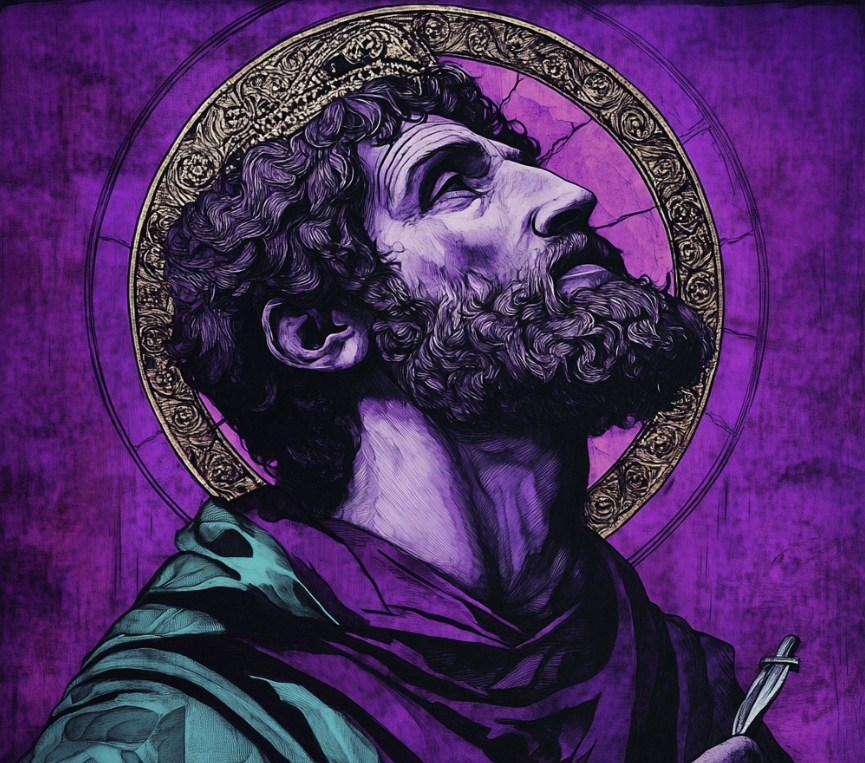
Now, justification in this life is given to us according to these three things: first by the laver of regeneration by which all sins are forgiven; then, by a struggle with the faults from whose guilt we have been absolved; the third, when our prayer is heard, in which we say: Forgive us our debts, because however bravely we fight against our faults, we are men; but the grace of God so aids as we fight in this corruptible body that there is reason for His hearing us as we ask forgiveness.
Sun, 7 Dec 2025 - 22:49
The deadliest enemies of nations are not their foreign foes; they always dwell within their borders. And from these internal enemies civilization is always in need of being saved. The nation blest above all nations is she in whom the civic genius of the people does the saving day by day, by acts without external picturesqueness; by speaking, writing, voting reasonably; by smiting corruption swiftly; by good temper between parties; by the people knowing true men when they see them, and preferring them as leaders to rabid partisans or empty quacks.
Sun, 7 Dec 2025 - 19:56
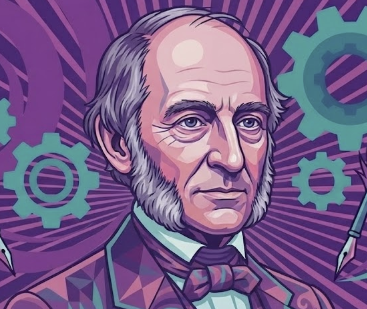
Next to the originator of a good sentence is the first quoter of it.

Tue, 11 Nov 2025 - 02:01
Ironic philosophies produce passionate works. Any thought that abandons unity glorifies diversity! And diversity is the home of art. The only thought to liberate the mind is that which leaves it alone, certain of its limits and of its impending end. No doctrine tempts it. It awaits the ripening of the work and of life.
Mon, 10 Nov 2025 - 02:44
Now any dogma, based primarily on faith and emotionalism, is a dangerous weapon to use on others, since it is almost impossible to guarantee that the weapon will never be turned on the user.
Sun, 7 Dec 2025 - 19:56
How can he [today's writer] be honored, when he does not honor himself; when he loses himself in the crowd; when he is no longer the lawgiver, but the sycophant, ducking to the giddy opinion of a reckless public.
Mon, 8 Dec 2025 - 21:06
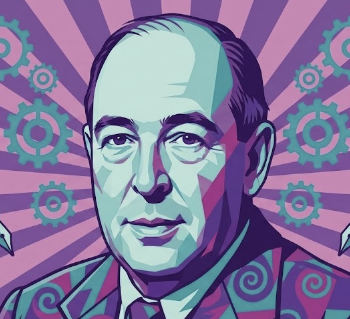
But the man is a humbug - a vulgar, shallow, self-satisfied mind, absolutely inaccessible to the complexities and delicacies of the real world. He has the journalist's air of being a specialist in everything, of taking in all points of view and being always on the side of the angels: he merely annoys a reader who has the least experience of knowing things, of what knowing is like. There is not two pence worth of real thought or real nobility in him. But he isn't dull.
Sat, 6 Dec 2025 - 21:50
Those who have been inspired to action by the doctrine of the class war will have acquired the habit of hatred, and will instinctively seek new enemies when the old ones have been vanquished. But in actual fact the psychology of the working man in any of the Western democracies is totally unlike that which is assumed in the Communist Manifesto. He does not by any means feel that he has nothing to lose but his chains, nor indeed is this true. The chains which bind Asia and Africa in subjection to Europe are partly riveted by him. He is himself part of a great system of tyranny and exploitation. Universal freedom would remove, not only his own chains, which are comparatively light, but the far heavier chains which he has helped to fasten upon the subject races of the world.
Sun, 7 Dec 2025 - 19:56
Fine manners need the support of fine manners in others.
Sun, 7 Dec 2025 - 02:19
He would have left a Greek accent slanting the wrong way, and righted up a falling man.
Sun, 7 Dec 2025 - 02:53
Again, defenders of utility often find themselves called upon to reply to such objections as this-that there is not time, previous to action, for calculating and weighing the effects of any line of conduct on the general happiness. This is exactly as if any one were to say that it is impossible to guide our conduct by Christianity, because there is not time, on every occasion on which anything has to be done, to read through the Old and New Testaments. The answer to the objection is, that there has been ample time, namely, the whole past duration of the human species. During all that time mankind have been learning by experience the tendencies of actions.
CivilSimian.com created by AxiomaticPanic, CivilSimian, Kalokagathia