

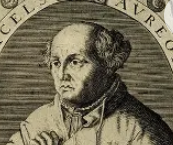
7 months 5 days ago
All is interrelated. Heaven and earth, air and water. All are but one thing; not four, not two and not three, but one. Where they are not together, there is only an incomplete piece.
▼
Source
source
Paracelsus - Collected Writings Vol. I (1926) edited by Bernhard Aschner, p. 110
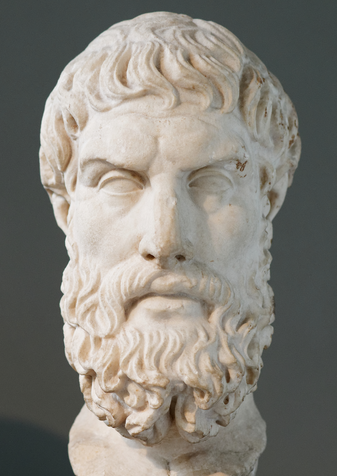
11 months 1 week ago
Those who were best able to provide themselves with the means of security against their neighbors, being thus in possession of the surest guarantee, passed the most agreeable life in each other's society; and their enjoyment of the fullest intimacy was such that, if one of them died before his time, the survivors did not mourn his death as if it called for sympathy.
7 months 1 day ago
Trying to define yourself is like trying to bite your own teeth.
▼
Source
source
As quoted in Life magazine
6 months 2 weeks ago
Truths obtained by Induction are made compact and permanent by being expressed in 'Technical Terms'.

10 months 2 weeks ago
A young man who wishes to remain a sound Atheist cannot be too careful of his reading. There are traps everywhere... God is, if I may say it, very unscrupulous.
▼
Source
source
p. 191
9 months 1 week ago
In books of psychology written from the spiritualist point of view, it is customary to begin the discussion of the existence of the soul as a simple substance, separable from the body, after this style: There is in me a principle which thinks, wills and feels... Now this implies a begging of the question. For it is far from being an immediate truth that there is in me such a principle; the immediate truth is that I think, will and feel. And I - the I that thinks, wills and feels - am immediately my living body with the states of consciousness which it sustains. It is my living body that thinks, wills and feels.
10 months 3 weeks ago
The sensuous may be exceedingly distinct, while intellectual concepts are extremely confused. The former we observe in the prototype of sensuous knowledge geometry; the latter, in the organon of all intellectual concepts, metaphysics. It is evident how much toil the latter is expending to dispel the fogs of confusion darkening the common intellect, though not always with the happy success of the former science.

10 months 3 weeks ago
The industrial peak of a people when its main concern is not yet gain, but rather to gain.
▼
Source
source
Introduction, p. 7.
9 months 1 week ago
The intellect is at home in that which is fixed only because it is done and over with, for intellect is itself just as much a deposit of past life as is the matter to which it is congenial. Intuition alone articulates in the forward thrust of life and alone lays hold of reality.


10 months 2 weeks ago
Ideal legislators do not vote their interests.
▼
Source
source
Chapter V, Section 43, p. 284

8 months 2 weeks ago
There are no passengers on Spaceship Earth. We are all crew.
▼
Source
source
Statement in 1965, in reference to Operating Manual for Spaceship Earth (1963) by Buckminster Fuller

8 months 2 weeks ago
Once introduced discontinuity, once challenge any of the properties of visual space, and as they flow from each other, the whole conceptual framework collapses.
▼
Source
source
p. 43

9 months 3 weeks ago
He had no failings which were not owing to a noble cause; to an ardent, generous, perhaps an immoderate passion for fame; a passion which is the instinct of all great souls.
▼
Source
source
The reference is to Charles Townshend
7 months 1 day ago
I am now even more persuaded of the urgent need to study why Socrates was accused. The dislike of philosophy is perennial, and the seeds of the condemnation of Socrates are present at all times, not in the bosoms of pleasure-seekers, who don't give a damn, but in those of high-minded and idealistic persons who do not want to submit their aspirations to examination.
▼
Source
source
Western Civ, p. 19.

10 months 2 weeks ago
Why did it occur to anyone to believe in only one God? And conversely why did it ever occur to anyone to believe in many gods? To both these questions we must return the same answer: Because that is how the human mind happens to work. For the human mind is both diverse and simple, simultaneously many and one. We have an immediate perception of our own diversity and of that of the outside world. And at the same time we have immediate perceptions of our own oneness.
▼
Source
source
"One and Many," p. 12
9 months 2 weeks ago
The bigger the crowd, the more negligible the individual.
▼
Source
source
p 14

8 months 2 weeks ago
Pardon one offence and you encourage the commission of many.
▼
Source
source
Maxim 750
10 months 3 weeks ago
A man who is so exceedingly civil that for the sake of quietude and a peaceable name will silently see the community imposed upon, or their rights invaded, may, in his principles, be a good man, but cannot be stiled a useful one, neither does he come up to the full mark of his duty; for silence becomes a kind of crime when it operates as a cover or an encouragement to the guilty.
▼
Source
source
"To the People of America", Pennsylvania Packet, January 23, 1779

10 months 3 weeks ago
You must love the crust of the earth on which you dwell more than the sweet crust of any bread or cake; you must be able to extract nutriment out of a sand heap.
▼
Source
source
January 25, 1858
6 months 2 weeks ago
I am a perfect stranger to France, which I have never seen, and I expect nothing from her king, whom I shall never know.
▼
Source
source
Chapter VIII, p. 76
7 months 2 weeks ago
There can be no liberty for a community which lacks the information by which to detect lies.
▼
Source
source
What Modern Liberty Means, p. 64
8 months 1 week ago
We believe it to be a rule without an exception, that the violence of a revolution corresponds to the degree of misgovemment which has produced that revolution.
▼
Source
source
Mirabeau', The Edinburgh Review (July 1832), quoted in The Miscellaneous Writings of Lord Macaulay, Vol. II (1860), pp. 81-82
9 months ago
The noble simplicity in the works of nature only too often originates in the noble shortsightedness of him who observes it.
▼
Source
source
H 1

9 months 2 weeks ago
I ask myself; Why is it that only some people suffer? Why are only some selected from the ranks of normal people and put on the torture rack? Some religions maintain that God is trying us through suffering, or that we expiate evil and unbelief through it. If such an explanation can satisfy the religious man, it is not sufficient for anyone who notices that suffering is arbitrary and unjust, because the innocent often suffer most. There is no valid justification for suffering. Suffering has no hierarchy of values.
▼
Source
source
in essay: the monopoly of suffering

10 months 4 weeks ago
We must remove the Decalogue out of sight and heart.
▼
Source
source
Wilhelm Martin Leberecht De Wette, 4, 188. As cited by Jonathan Ramachandran (January 1, 2019), Lake of Fire - Hope for the Wicked One Day? - Essays in First Christianity, 5 Loaf 2 Fish Publications, p. 1264.

7 months 1 week ago
The English are a dumb people. They can do great acts, but not describe them.
▼
Source
source
Bk. III, ch. 5.

9 months 2 weeks ago
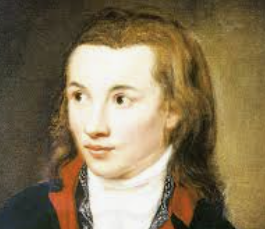
There is but one Temple in the World; and that is the Body of Man. Nothing is holier than this high form. Bending before men is a reverence done to this Revelation in the Flesh. We touch Heaven, when we lay our hand on a human body. Variant translation: There is but one temple in the Universe and that is the Body of Man.
▼
Source
source
As inscribed on the Library of Congress, quoted in Handbook of the New Library of Congress (1897) by Herbert Small, p. 53
8 months 2 weeks ago
Since Sputnik and the satellites, the planet is enclosed in a manmade environment that ends "Nature" and turns the globe into a repertory theater to be programmed.
▼
Source
source
Shakespeare at the Globe mentioning "All the world's a stage, and all the men and women merely players" (As You Like It, Act II, Scene 7)
7 months 3 weeks ago
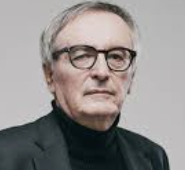
From a Darwinian point of view, human beliefs are adaptations to our part of the world. No doubt much of what we believe must be roughly accurate, or else we would not have survived. But the beliefs we have evolved might latch on to the world only enough to help us stumble our way through it, and then only for the time being. Human belief-systems could be useful illusions, appearing and disappearing as they prove to be more or less advantageous in the random walk of natural selection. Might not evolution be one of these illusions? Scientific naturalism is the theory that human beliefs are evolutionary adaptations whose survival has nothing to do with their truth. But in that case scientific naturalism is self-defeating, since on its own premises scientific theories cannot be known to be true.
▼
Source
source
Cross-correspondences (p. 69)
9 months 1 week ago
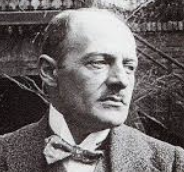
The medieval peasant prior to the 13th century does not compare himself to the feudal lord, nor does the artisan compare himself to the knight. ... From the king down to the hangman and the prostitute, everyone is "noble" in the sense that he considers himself as irreplaceable. In the "system of free competition," on the other hand, the notions on life's tasks and their value are not fundamental, they are but secondary derivations of the desire of all to surpass all the others. No "place" is more than a transitory point in this universal chase.
▼
Source
source
L. Coser, trans. (1973), p. 56

7 months 1 day ago
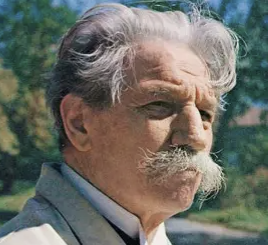
Defined from outside and quite empirically, complete civilization consists in realizing all possible progress in discovery and invention and in the arrangements of human society, and seeing that they work together for the spiritual perfecting of individuals, which is the real and final object of civilization. Reverence for life is in a position to complete this conception of civilization and to build its foundations on what lies at the core of our being. This it does by defining what is meant by the spiritual perfecting of man and making it consist in reaching the spirituality of an ever-deepening reverence for life.
▼
Source
source
quoted in Georg Feuerstein, Subhash Kak, and David Frawley. - In search of the cradle of civilization _ new light on ancient India-Quest Books

10 months 3 weeks ago
The brain may be regarded as a kind of parasite of the organism, a pensioner, as it were, who dwells with the body.

10 months 2 weeks ago
Fine manners need the support of fine manners in others.
▼
Source
source
Behavior
9 months 1 week ago
In the human reality, all existence that spends itself in procuring the prerequisites of existence is thus an "untrue" and unfree existence. Obviously this reflects the not at all ontological condition of a society based on the proposition that freedom is incompatible with the activity of procuring the necessities of life, that this activity is the "natural" function of a specific class, and that cognition of the truth and true existence imply freedom from the entire dimension of such activity. ... Society still is organized in such a way that procuring the necessities of life constitutes the full-time and life-long occupation of specific social classes, which are therefore unfree and prevented from a human existence. In this sense, the classical proposition according to which truth is incompatible with enslavement by socially necessary labor is still valid.
▼
Source
source
pp. 127-128
10 months 3 weeks ago
The more exquisite any good is, of which a small specimen is afforded us, the sharper is the evil, allied to it; and few exceptions are found to this uniform law of nature. The most sprightly wit borders on madness; the highest effusions of joy produce the deepest melancholy; the most ravishing pleasures are attended with the most cruel lassitude and disgust; the most flattering hopes make way for the severest disappointments. And, in general, no course of life has such safety (for happiness is not to be dreamed of) as the temperate and moderate, which maintains, as far as possible, a mediocrity, and a kind of insensibility, in every thing. As the good, the great, the sublime, the ravishing are found eminently in the genuine principles of theism; it may be expected, from the analogy of nature, that the base, the absurd, the mean, the terrifying will be equally discovered in religious fictions and chimeras.
▼
Source
source
Part XV - General corollary
10 months 3 weeks ago
If you can speak what you will never hear, if you can write what you will never read, you have done rare things.
7 months 6 days ago
Just as the schoolmen philosophized only inside the belief of the church, ... without ever throwing a doubt upon this belief; as authors fill whole folios on the State without calling in question the fixed idea of the State itself; as our newspapers are crammed with politics because they are conjured into the fancy that man was created to be a zoon politicon,-so also subjects vegetate in subjection, virtuous people in virtue, liberals in humanity, etc., without ever putting to these fixed ideas of theirs the searching knife of criticism. Undislodgeable, like a madman's delusion, those thoughts stand on a firm footing, and he who doubts them-lays hands on the sacred!
▼
Source
source
Cambridge 1995, p. 44
9 months 2 weeks ago
The idea does not belong to the soul; it is the soul that belongs to the idea.
▼
Source
source
Vol. I, par. 216
10 months 4 weeks ago
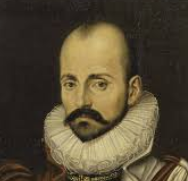
Live as long as you please, you will strike nothing off the time you will have to spend dead.
▼
Source
source
Ch. 20. Of the Force of Imagination
11 months 2 weeks ago
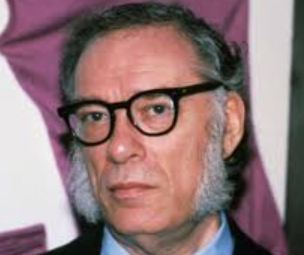
If one thing goes without saying, almost anything can.
10 months 3 weeks ago
Religion has two principal enemies, fanaticism and infidelity, or that which is called atheism. The first requires to be combated by reason and morality, the other by natural philosophy.
▼
Source
source
A Discourse, &c. &c.
10 months 3 weeks ago
I hear many condemn these men because they were so few. When were the good and the brave ever in a majority? Would you have had him wait till that time came? - till you and I came over to him? The very fact that he had no rabble or troop of hirelings about him would alone distinguish him from ordinary heroes. His company was small indeed, because few could be found worthy to pass muster. Each one who there laid down his life for the poor and oppressed was a picked man, culled out of many thousands, if not millions; apparently a man of principle, of rare courage, and devoted humanity; ready to sacrifice his life at any moment for the benefit of his fellow-man.

9 months 2 weeks ago
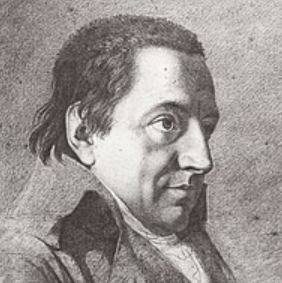
My immediate consciousness, my absolute perception, cannot go beyond myself, - I have immediate knowledge only of myself, whatever I know further I know only by reasoning, in the same manner in which I have come to those conclusions concerning the original powers of Nature, which certainly do not lie within the circle of my perceptions. I, however, - that which I call myself, - am not the man-forming power of Nature, but only one of its manifestations ; and only of this manifestation am I conscious, not of that power, whose existence I have only discovered from the necessity of explaining my own.
▼
Source
source
Jane Sinnett, trans 1846 p. 13

6 months 2 weeks ago
Reductionism (ultimately, the empirical explanability of everything and a cornerstone of science), has uses that are appropriate, and it also can be used inappropriately. It is appropriately used as a way (one way) of understanding what is empirically known or empirically knowable. When it becomes merely an intellectual "position" confronting what is not empirically known or knowable, then it becomes very quickly absurd, and also grossly desensitizing and false.
CivilSimian.com created by AxiomaticPanic, CivilSimian, Kalokagathia