


2 months 1 week ago
Faith which does not doubt is dead faith.
▼
Source
source
La Agonía del Cristianismo (The Agony of Christianity)
4 days ago
For us in Russia, communism is a dead dog, while, for many people in the West, it is still a living lion.
▼
Source
source
BBC Radio broadcast, Russian service, as quoted in The Listener

3 months 3 weeks ago
Act, if you like,-but you do it at your peril. Men's actions are too strong for them. Show me a man who has acted, and who has not been the victim and slave of his action. What they have done commits and enforces them to do the same again. The first act, which was to be an experiment, becomes a sacrament. The fiery reformer embodies his aspiration in some rite or covenant, and he and his friends cleave to the form, and lose the aspiration. The Quaker has established Quakerism, the Shaker has established his monastery and his dance; and, although each prates of spirit, there is no spirit, but repetition, which is anti-spiritual.
▼
Source
source
Goethe; or, the Writer

1 week 1 day ago
For sometimes it is an act of bravery even to live.
▼
Source
source
Seneca, Ad Lucilium epistulae morales, transl. Richard M. Gummere, 1920 ed., Epistle LXXVIII, pp. 181-182

3 months 3 weeks ago
Then he tried to recall the lessons of Mr. Wisdom. "it is I myself, eternal Spirit, who drives this Me, the slave, along that ledge. I ought not to care whether he falls and breaks his neck or not. It is not he that is real, it is I - I - I.
▼
Source
source
Pilgrim's Regress 137

4 months 2 weeks ago
One does not discover the absurd without being tempted to write a manual of happiness. "What! — by such narrow ways — ?" There is but one world, however. Happiness and the absurd are two sons of the same earth. They are inseparable. It would be a mistake to say that happiness necessarily springs from the absurd discovery. It happens as well that the feeling of the absurd springs from happiness.

3 months 3 weeks ago
What peculiar privilege has this little agitation of the brain which we call thought, that we must thus make it the model of the whole universe? Our partiality in our own favour does indeed present it on all occasions; but sound philosophy ought carefully to guard against so natural an illusion.
▼
Source
source
Philo to Cleanthes, Part II

1 month 2 days ago
Confusion of sapience with sentience can be ethically catastrophic.
▼
Source
source
Social Media Unsorted Postings 2016
3 months 1 week ago
Lysander, when Dionysius sent him two gowns, and bade him choose which he would carry to his daughter, said, "She can choose best," and so took both away with him.
▼
Source
source
Of Lysander
2 months 2 weeks ago
Liberal philosophy, at this point, ceases to be empirical and British in order to become German and transcendental. Moral life, it now believes, is not the pursuit of liberty and happiness of all sorts by all sorts of different creatures; it is the development of a single spirit in all life through a series of necessary phases, each higher than the preceding one. No man, accordingly, can really or ultimately desire anything but what the best people desire. This is the principle of the higher snobbery; and in fact, all earnest liberals are higher snobs.
▼
Source
source
"The Irony of Liberalism"

3 months 3 weeks ago
People are said to believe in God, or to disbelieve in Adam and Eve. But in such cases what is believed or disbelieved is that there is an entity answering a certain description. This, which can be believed or disbelieved is quite different from the actual entity (if any) which does answer the description. Thus the matter of belief is, in all cases, different in kind from the matter of sensation or presentation, and error is in no way analogous to hallucination. A hallucination is a fact, not an error; what is erroneous is a judgment based upon it.
▼
Source
source
On the Nature of Acquaintance: Neutral Monism, 1914
1 week 1 day ago
He who does not wish to die cannot have wished to live.

2 months 3 weeks ago
The new education must consist essentially in this, that it completely destroys freedom of will in the soil which it undertakes to cultivate, and produces on the contrary strict necessity in the decisions of the will, the opposite being impossible. Such a will can henceforth be relied on with confidence and certainty.
▼
Source
source
Addresses to the German Nation (1807), Second Address : "The General Nature of the New Education". Chicago and London, The Open Court Publishing Company, 1922, p. 20.
4 days ago
Proverbs about truth are well-loved in Russian. They give steady and sometimes striking expression to the not inconsiderable harsh national experience: ONE WORD OF TRUTH SHALL OUTWEIGH THE WHOLE WORLD. And it is here, on an imaginary fantasy, a breach of the principle of the conservation of mass and energy, that I base both my own activity and my appeal to the writers of the whole world.

2 months 2 weeks ago
The characteristic of the hour is that the commonplace mind, knowing itself to be commonplace, has the assurance to proclaim the rights of the commonplace and to impose them wherever it will. As they say in the United States: "to be different is to be indecent." The mass crushes beneath it everything that is different, everything that is excellent, individual, qualified and select. Anybody who is not like everybody, who does not think like everybody, runs the risk of being eliminated. And it is clear, of course, that this "everybody" is not "everybody." "Everybody" was normally the complex unity of the mass and the divergent, specialised minorities. Nowadays, "everybody" is the mass alone.
▼
Source
source
Chap.I: The Coming Of The Masses
2 months 2 weeks ago
Strictly speaking, the mass, as a psychological fact, can be defined without waiting for individuals to appear in mass formation. In the presence of one individual we can decide whether he is "mass" or not. The mass is all that which sets no value on itself - good or ill - based on specific grounds, but which feels itself "just like everybody," and nevertheless is not concerned about it; is, in fact, quite happy to feel itself as one with everybody else.
▼
Source
source
Chap.I: The Coming Of The Masses
1 month 2 days ago
Nietzsche claimed that his genius was in his nostrils and I think that is a very excellent place for it to be.
▼
Source
source
Genius

4 months 3 weeks ago
The most exciting phrase to hear in science, the one that heralds new discoveries, is not 'Eureka!', but 'That's funny ...'

2 months 1 week ago
We must wish either for that which actually exists or for that which cannot in any way exist - or, still better, for both. That which is and that which cannot be are both outside the realm of becoming.
▼
Source
source
p. 154

3 months 2 weeks ago
The idea that in order to get clear about the meaning of a general term one had to find the common element in all its applications has shackled philosophical investigation; for it has not only led to no result, but also made the philosopher dismiss as irrelevant the concrete cases, which alone could have helped him understand the usage of the general term.
▼
Source
source
p. 19
3 months 2 weeks ago
A serious and good philosophical work could be written consisting entirely of jokes.
▼
Source
source
As quoted in "A View from the Asylum" in Philosophical Investigations from the Sanctity of the Press (2004), by Henry Dribble, p. 87
1 week 1 day ago
That man, I declare, is happy whom nothing makes less strong than he is; he keeps to the heights, leaning upon none but himself; for one who sustains himself by any prop may fall.
2 months 3 weeks ago
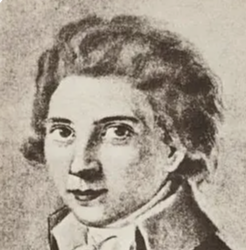
One can only become a philosopher, but not be one. As one believes he is a philosopher, he stops being one.
▼
Source
source
"Selected Aphorisms from the Athenaeum (1798)", Dialogue on Poetry and Literary Aphorisms, Ernst Behler and Roman Struc, trans. (Pennsylvania University Press:1968) #54

4 months 1 week ago
Opposition brings concord. Out of discord comes the fairest harmony.
3 months 3 weeks ago
The First [Friend] is the alter ego, the man who first reveals to you that you are not alone in the world by turning out (beyond hope) to share all your most secret delights. There is nothing to be overcome in making him your friend; he and you join like raindrops on a window. But the Second Friend is the man who disagrees with you about everything... Of course he shares your interests; otherwise he would not become your friend at all. But he has approached them all at a different angle. he has read all the right books but has got the wrong thing out of every one... How can he be so nearly right, and yet, invariably, just not right? He is as fascinating (and infuriating) as a woman.
1 week 2 days ago
It is a double-edged makeshift to entrust an individual or a group of individuals with the authority to resort to violence. The enticement implied is too tempting for a human being. The men who are to protect the community against violent aggression easily turn into the most dangerous aggressors. They transgress their mandate. They misuse their power for the oppression of those whom they were expected to defend against oppression. The main political problem is how to prevent the police power from becoming tyrannical. This is the meaning of all the struggles for liberty.
▼
Source
source
Chapter 5: On Some Popular Errors Concerning the Scope and Method of Economics, § 10 : The Concept of a Perfect System of Government
2 weeks ago
Scientific revolutions are inaugurated by a growing sense... that an existing paradigm has ceased to function adequately in the exploration of an aspect of nature to which that paradigm itself had previously led the way. p. 91
▼
Source
source
2012 ed.

3 months 3 weeks ago
But he, with these burthens on him, planned, commenced, and completed, the History of India; and this in the course of about ten years, a shorter time than has been occupied (even by writers who had no other employment) in the production of almost any other historical work of equal bulk, and of anything approaching to the same amount of reading and research. And to this is to be added, that during the whole period, a considerable part of almost every day was employed in the instruction of his children: in the case of one of whom, myself, he exerted an amount of labour, care, and perseverance rarely, if ever, employed for a similar purpose, in endeavouring to give, according to his own conception, the highest order of intellectual education.
▼
Source
source
(p. 4)

3 months 5 days ago
Better be mute, than dispute with the Ignorant.

2 months 4 weeks ago
The most formidable of all the ills that threaten the future of the Union arises from the presence of a black population upon its territory; and in contemplating the cause of the present embarrassments, or the future dangers of the United States, the observer is invariably led to this as a primary fact.
▼
Source
source
Chapter XVIII.
3 months 2 weeks ago
What I hold fast to is not one proposition but a nest of propositions.

4 months 1 day ago
A strong memory is commonly coupled with infirm judgment.
▼
Source
source
Ch. 9. Of Liars, tr. Cotton, rev. W. Carew Hazlitt, 1877
4 months 3 weeks ago
There are limits beyond which your folly will not carry you. I am glad of that. In fact, I am relieved.
2 months 1 week ago
It is the furious longing to give finality to the Universe, to make it conscious and personal, that has brought us to believe in God, to wish that God may exist, to create God, in a word. To create Him, yes! This saying ought not to scandalize even the most devout theist. For to believe in God is, in a certain sense, to create Him, although He first creates us. It is He who is continually creating Himself.

2 months 2 weeks ago
Can it really be that for us existence means exile, and nothingness, home?

2 weeks 4 days ago
The idea of universal human dignity ultimately comes out of Christianity... the view that all human beings are equal in the sight of God because they have the capacity for moral choice. As Western thought developed in the 17th-18th centuries, this took on a secular form under thinkers like Jean-Jacques Rousseau or Immanuel Kant or Georg Hegel, who argued that human equality is... based on human autonomy.
▼
Source
source
11:12

4 months 3 weeks ago
Men seem to pursue honour in order that they may believe themselves to be good. Accordingly, they seek to be honoured by the wise, and by those who know them well, and on the score of virtue; it is clear, therefore, that in their opinion at any rate, virtue is superior to honour. Perhaps, then, one ought to say that virtue rather than honour is the end of the political life; yet even virtue is plainly too imperfect: for it seems that a man might have all the virtues and yet be asleep, or fail to achieve anything all his life; moreover, such a person may suffer the greatest evils and misfortunes. And no one, in this case, would call a man, who passed his life in this manner, happy, except for argument's sake.

2 months 3 weeks ago
People must be governed in a manner agreeable to their temper and disposition; and men of free character and spirit must be ruled with, at least, some condescension to this spirit and this character.
▼
Source
source
Observations on a Late Publication on the Present State of the Nation (1769), page 76.
2 months 2 weeks ago
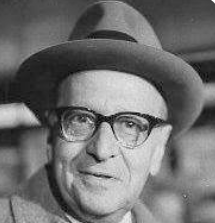
The endeavor of scientific research to see events in their more general connection in order to determine their laws, is a legitimate and useful occupation. Any protest against such efforts, in the name of freefom from restrictive conditions, would be fruitless if science did not naïvely identify the abstractions called rules and laws with the actually efficacious forces, and confuse the probability that B will follow A with the actual effort make B follow A.
▼
Source
source
p. 150.
1 day ago
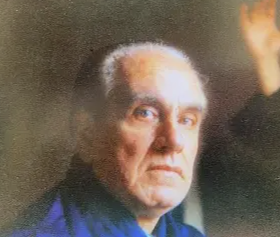
The presence of a proletarian aspect in Nazism is undeniable, as in the figure of Hitler himself, who had none of the traits of a 'gentleman,' of an aristocratic type di razza. This proletarian aspect and even vulgarity of National Socialism was often noticed, especially in Austria after its annexation to the Reich and after the phase of a rash 'national' infatuation of Austrians for 'Greater Germany.'
▼
Source
source
p. 43



4 months 2 days ago
The human understanding is of its own nature prone to suppose the existence of more order and regularity in the world than it finds. And though there be many things in nature which are singular and unmatched, yet it devises for them parallels and conjugates and relatives which do not exist. Hence the fiction that all celestial bodies move in perfect circles, spirals and dragons being (except in name) utterly rejected.
▼
Source
source
Aphorism 45

2 months 6 days ago
Motherhood in the true sense should embrace all children. Because so few realize this truth, child life is so empty of warmth, of love, of color, and beauty. A home-what is it to-day but a cage from which most of its inhabitants wish to escape? No, I should never have found happiness in such a place. My ideals, the struggle for them, and whatever hardships and suffering they have brought, far from wasting my life, have enriched it a thousandfold. To me it has been a grand adventure which I should not have missed for all the wealth in the world.
2 months 2 weeks ago
Read day and night, devour books - these sleeping pills - not to know but to forget! Through books you can retrace your way back to the origins of spleen, discarding history and its illusions.

3 months 3 weeks ago
...this Jewish doctrine of the primacy of economic values has found the widest acceptance and been most whole-heartedly acted upon. From America it has begun to infect the rest of the world. We may be pardoned for wishing that the Jews had remained not forty, but four thousand years in their repulsive wilderness.
▼
Source
source
"One and Many," pp. 18
1 month 3 weeks ago
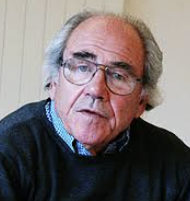
[In cloning,] the Father and the Mother have disappeared, not in the service of an aleatory liberty of the subject, but in the service of a matrix called code.
▼
Source
source
"Clone Story," p. 96
2 months 2 weeks ago
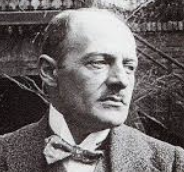
The "kingdom of God" has become the "other world," which stands mechanically beside "this world"-an opposition unknown to the strongest periods of Christianity.
▼
Source
source
L. Coser, trans. (1961), p. 97
3 months 3 weeks ago
They reckon ill who leave me out; When me they fly, I am the wings; I am the doubter and the doubt; And I the hymn the Brahmin sings.
▼
Source
source
Brahma, st. 3

4 months 1 week ago
Thus, in this universal catastrophe, the sufferings of Christians have tended to their moral improvement, because they viewed them with eyes of faith.
▼
Source
source
I, 9
3 months 2 weeks ago
Wisdom is passionless. But faith by contrast is what Kierkegaard calls a passion.
▼
Source
source
p. 53e
CivilSimian.com created by AxiomaticPanic, CivilSimian, Kalokagathia