

3 months 3 weeks ago
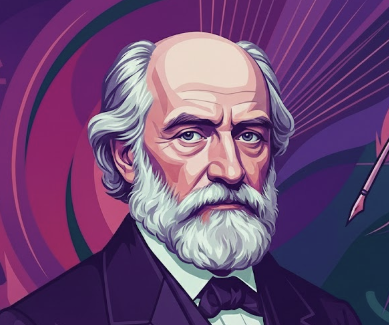
Pride is an established conviction of one's own paramount worth in some particular respect, while vanity is the desire of rousing such a conviction in others, and it is generally accompanied by the secret hope of ultimately coming to the same conviction oneself. Pride works from within; it is the direct appreciation of oneself. Vanity is the desire to arrive at this appreciation indirectly, from without.
▼
Source
source
Vol. 1, Ch. 4, § 2
2 months 1 week ago
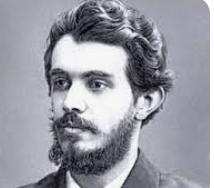
The life of Berdyaev spans the momentous events of the first half of the twentieth century in Europe. He was no ivory tower philosopher but was intimately affected by these events throughout his life and drew his inspirations from them regarding the nature of the human condition. His writings bear the imprint of the catastrophic situations within which he was destined to live.
▼
Source
source
Richard Schain, in In Love with Eternity : Philosophical Essays and Fragments (2005), Ch. 7 : Nikolai Alexandrovich Berdyaev - A Champion of the Spirit, p. 43

3 months 2 weeks ago
I am to talk about Apologetics. Apologetics means of course Defence. The first question is - what do you propose to defend? Christianity, of course...
▼
Source
source
"Christian Apologetics" (1945), p. 89

4 months 2 weeks ago
A robot must protect its own existence as long as such protection does not conflict with the First or Second Laws.

3 months 3 weeks ago
I should as soon think of swimming across Charles River when I wish to go to Boston, as of reading all my books in originals when I have them rendered for me in my mother tongue.
▼
Source
source
Books
4 months 2 weeks ago
One might think that a period which, in a space of fifty years, uproots, enslaves, or kills seventy million human beings should be condemned out of hand. But its culpability must still be understood... In more ingenuous times, when the tyrant razed cities for his own greater glory, when the slave chained to the conqueror's chariot was dragged through the rejoicing streets, when enemies were thrown to the wild beasts in front of the assembled people, the mind did not reel before such unabashed crimes, and the judgment remained unclouded. But slave camps under the flag of freedom, massacres justified by philanthropy or by a taste for the superhuman, in one sense cripple judgment. On the day when crime dons the apparel of innocence, through a curious transposition peculiar to our times, it is innocence that is called upon to justify itself.
2 months 3 weeks ago
Though I myself am an atheist, I openly profess religion in the sense just mentioned, that is, a nature religion. I hate the idealism that wrenches man out of nature; I am not ashamed of my dependency on nature; I openly confess that the workings of nature affect not only my surface, my skin, my body, but also my core, my innermost being, that the air I breathe in bright weather has a salutary effect not only on my lungs but also on my mind, that the light of the sun illumines not only my eyes but also my spirit and my heart. And I do not, like a Christian, believe that such dependency is contrary to my true being or hope to be delivered from it. I know further that I am a finite moral being, that I shall one day cease to be. But I find this very natural and am therefore perfectly reconciled to the thought.
▼
Source
source
Lecture V, R. Manheim, trans. (1967), pp. 35-36
3 months 3 weeks ago
Whatever games are played with us, we must play no games with ourselves, but deal in our privacy with the last honesty and truth.
▼
Source
source
Illusions
1 month 2 weeks ago
Schopenhauer argues that the empirical world exists only as a representation: 'every object, whatever its origin, is, as object, already conditioned by the subject, and thus is essentially only the subject's representation.' A representation is a subjective state that has been ordered according to space, time and causality - the primary forms of sensibility and understanding. So long as we turn our thoughts towards the natural world, and search for the thing-in-itself behind the representation is futile. Every argument and every experience leads only to the same end: the system of representations, standing like a veil between the subject and the thing-in-itself. No scientific investigation can penetrate the veil; and yet it is only a veil, Schopenhauer affirms, a tissue of illusions which we can, if we choose, penetrate by other means. The way to penetrate the veil was stumbled upon by Kant.
▼
Source
source
A Short History of Modern Philosophy (1981; 2nd ed. 1995), p. 177

2 months 3 weeks ago
We all labour against our own cure, for death is the cure of all diseases.
▼
Source
source
Section 9

2 months 2 weeks ago
Even when nothing happens, everything seems too much for me. What can be said, then, in the presence of an event, any event?
2 months 2 weeks ago
The slave frees himself when, of all the relations of private property, he abolishes only the relation of slavery and thereby becomes a proletarian; the proletarian can free himself only by abolishing private property in general.

6 days ago
He who receives a benefit with gratitude, repays the first installment of it.
▼
Source
source
De Beneficiis (On Benefits): Book 2, cap. 22, line 1.
4 months 4 days ago
The method of not erring is sought by all the world. The logicians profess to guide it, the geometricians alone attain it, and apart from science, and the imitations of it, there are no true demonstrations.
1 week 4 days ago
Philosophy accepts the hard and hazardous task of dealing with problems not yet open to the methods of science - problems like good and evil, beauty and ugliness, order and freedom, life and death; so soon as a field of inquiry yields knowledge susceptible of exact formulation it is called science. Every science begins as philosophy and ends as art; it arises in hypothesis and flows into achievement.
3 months 1 week ago
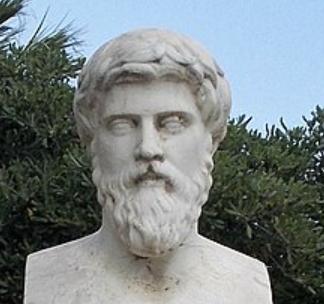
Alcibiades had a very handsome dog, that cost him seven thousand drachmas; and he cut off his tail, "that," said he, "the Athenians may have this story to tell of me, and may concern themselves no further with me."
▼
Source
source
50 Alcibiades
2 months 2 weeks ago
Loneliness does not come from having no people about one, but from being unable to communicate the things that seem important to oneself, or from holding certain views which others find inadmissible.
▼
Source
source
p.356

1 month 2 weeks ago
Native societies did not think of themselves as being in the world as occupants but considered that their rituals created the world and keep it operational.
▼
Source
source
College and University Journal, Volumes 6-7, American College Public Relations Association, 1967, p. 3
4 months 2 weeks ago
Someone once asked me, "If you had your choice, Dr. Asimov, would it be women or writing?" My answer was, "Well, I can write for twelve hours at a time without getting tired."
3 months 1 week ago
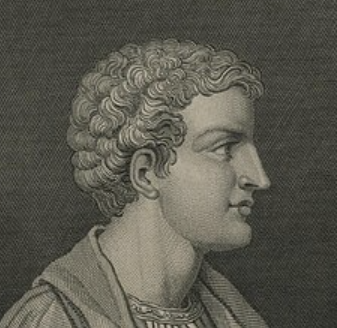
Ah, Postumus! they fleet away, our years, nor piety one hour can win from wrinkles and decay, and Death's indomitable power.
▼
Source
source
Book II, ode xiv, line 1 (trans. John Conington)
1 month 4 weeks ago
Part of what makes moral philosophy an anachronistic field is that its practitioners continue to argue in this very traditional and aprioristic way even though they themselves do not claim that one can provide a systematic and indubitable 'foundation' for the subject. Most of them rely on what are supposed to be 'intuitions' without claiming that those intuitions deliver uncontroversial ethical premises, on the one hand, or that they have an ontological or epistemological explanation of the reliability of those intuitions, on the other.
▼
Source
source
How Not to Solve Ethical Problems
2 months 4 weeks ago
Since therefore, as well those degrees of heat that are not painful, as those that are, can exist in a thinking substance; may we not conclude that external bodies are absolutely incapable of any degree of heat whatsoever?
▼
Source
source
Philonous to Hylas. Hylas replies with, "So it seems".

2 months 4 days ago
The pathos of it all is that the America which is to be protected by a huge military force is not the America of the people, but that of the privileged class; the class which robs and exploits the masses, and controls their lives from the cradle to the grave. No less pathetic is it that so few people realize that preparedness never leads to peace, but that it is indeed the road to universal slaughter.
2 months 1 week ago
Works of art express space as opportunity for movement and action.
▼
Source
source
p. 217

3 months 2 weeks ago
What a monument of human smallness is this idea of the philosopher king. What a contrast between it and the simplicity of humaneness of Socrates, who warned the statesmen against the danger of being dazzled by his own power, excellence, and wisdom, and who tried to teach him what matters most - that we are all frail human beings. What a decline from this world of irony and reason and truthfulness down to Plato's kingdom of the sage whose magical powers raise him high above ordinary men; although not quite high enough to forgo the use of lies, or to neglect the sorry trade of every shaman - the selling of spells, of breeding spells, in exchange for power over his fellow-men.
▼
Source
source
Vol. 1, Ch 8 "The Philosopher King"
2 months 3 days ago
I have had a larger responsibility of human lives than ever man or woman had before. And I attribute my success to this - I never gave or took an excuse. Yes, I do see the difference now between me and other men. When a disaster happens, I act and they make excuses.
▼
Source
source
Letter to Miss H. Bonham Carter, 1861. As quoted in The Gigantic Book of Teachers' Wisdom (2007) by Frank McCourt and Erin Gruwell, p. 410

3 months 3 weeks ago
Human nature is not a machine to be built after a model, and set to do exactly the work prescribed for it, but a tree, which requires to grow and develop itself on all sides, according to the tendency of the inward forces which make it a living thing.
▼
Source
source
Ch. III: Of Individuality, As One of the Elements of Well-Being
Just now
A mellow understanding of life and of human nature is, and always has been, the Chinese ideal of character, and from that understanding other qualities are derived, such as pacifism, contentment, calm and strength of endurance which distinguish the Chinese character.
▼
Source
source
p. 43
3 months 3 weeks ago
Truth, Goodness, Beauty - those celestial thrins,Continually are born; e'en now the Universe,With thousand throats, and eke with greener smiles,Its joy confesses at their recent birth.
▼
Source
source
June 14, 1838

1 month 3 weeks ago
In order to correctly define art, it is necessary, first of all, to cease to consider it as a means to pleasure and consider it as one of the conditions of human life. ...Reflecting on it in this way, we cannot fail to observe that art is one of the means of affective communication between people.

3 months 4 weeks ago
Kings and philosophers shit, and so do ladies.
▼
Source
source
Ch. 42, English translation from Hartle, Ann (2003), Michel de Montaigne: Accidental Philosopher, Cambridge University Press.
3 months 3 weeks ago
The value of a principle is the number of things it will explain; and there is no good theory of disease which does not at once suggest a cure.
▼
Source
source
p. 212
2 months 3 weeks ago
The recognition of the light of reality within the darkness of abstraction is a contradiction - both the affirmation and the negation of the real at one and the same time. The new philosophy, which thinks the concrete not in an abstract but a concrete way, which acknowledges the real in its reality - that is, in a way corresponding to the being of the real as true, which elevates it into the principle and object of philosophy - is consequently the truth of the Hegelian philosophy, indeed of modern philosophy as a whole.
▼
Source
source
Part III, Section 31
1 month 2 weeks ago
Darwin made it possible to be an intellectually fulfilled atheist.
▼
Source
source
Chapter 1 "Explaining the Very Improbable" (p. 6)

2 weeks 3 days ago
The old form of trade union, which was born in the nineteenth century and aimed primarily at negotiating wages for a specific trade is no longer sufficient. First of all, as we have been arguing, the old trade unions are not able to represent the unemployed, the poor, or even the mobile and flexible post-Fordist workers with short term contracts, all of whom participate actively in social production and increase social wealth. Second, the old unions are divided according to the various products and tasks defined in the heyday of industrial production - a miners' union, a pipefitters' union, a machinists' union and so forth. Today, insofar as the conditions and the relations of labor are becoming common, these traditional divisions (or even newly defined divisions) no longer make sense and serve only as an obstacle. Finally the old unions have become purely economic, not political, organization.
▼
Source
source
136

1 week 5 days ago
A loving heart is the beginning of all knowledge.
▼
Source
source
Article on Biography.

2 months 3 weeks ago
You talk of Paine with more respect than he deserves: He is utterly incapable of comprehending his subject. He has not even a moderate portion of learning of any kind. He has learnd the instrumental part of literature, a style, and a method of disposing his ideas, without having ever made a previous preparation of Study or thinking-for the use of it. ... [Paine] possesses nothing more than what a man whose audacity makes him careless of logical consequences, and his total want of honour and morality makes indifferent as to political consequences, may very easily write. They indeed who seriously write upon a principle of levelling ought to be answerd by the Magistrate-and not by the Speculatist.
▼
Source
source
Letter to William Cusac Smith (22 July 1791), quoted in Alfred Cobban and Robert A. Smith (eds.), The Correspondence of Edmund Burke, Volume VI: July 1789-December 1791 (1967), pp. 303-304
2 months 2 weeks ago
True science is distinctively the study of useless things. For the useful things will get studied without the aid of scientific men.

3 months 1 week ago
Now as of old the gods give men all good things, excepting only those that are baneful and injurious and useless. These, now as of old, are not gifts of the gods: men stumble into them themselves because of their own blindness and folly.

2 months 6 days ago
More and more it is becoming evident that what the West can most readily give to the East is its science and its scientific outlook. This is transferable from country to country, and from race to race, wherever there is a rational society.
▼
Source
source
Ch. 1: "The Origins of Modern Science", p. 4
1 month 3 weeks ago
When the world fails us, when we ourselves become worldless in the social sense, the body suffers and shows its precarity; that mode of demonstrating precarity is itself, or carries with it, a political demand and even an expression of outrage. To be a body differentially exposed to harm or to death is precisely to exhibit a form of precarity, but also to suffer a form of inequality that is unjust. So, the situation of many populations who are increasingly subject to unlivable precarity raises for us the question of global obligations. If we ask why any of us should care about those who suffer at a distance from us, the answer is not to be found in paternalistic justifications, but in the fact that we inhabit the world together in relations of interdependency. Our fates are, as it were, given over to one another.
▼
Source
source
p. 50
2 months 2 weeks ago
When animus and anima meet, the animus draws his sword of power and the anima ejects her poison of illusion and seduction. The outcome need not always be negative, since the two are equally likely to fall in love (a special instance of love at first sight).
▼
Source
source
Aion (1951). CW 9, Part II: P.338.30
1 week ago
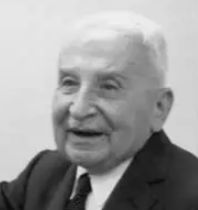
State and government are the social apparatus of violent coercion and repression. Such an apparatus, the police power, is indispensable in order to prevent anti-social individuals and bands from destroying social co-operation. Violent prevention and suppression of anti-social activities benefit the whole of society and each of its members. But violence and oppression are none the less evils and corrupt those in charge of their application. It is necessary to restrict the power of those in office lest they become absolute despots. Society cannot exist without an apparatus of violent coercion. But neither can it exist if the office holders are irresponsible tyrants free to inflict harm upon those they dislike.
2 months 2 weeks ago
What pride to discover that nothing belongs to you - what a revelation.

4 months 3 weeks ago
He who is punished is never he who performed the deed. He is always the scapegoat.

3 months 3 weeks ago
Proverbs are always platitudes until you have personally experienced the truth of them.
▼
Source
source
Part IV: America,Jesting Pilate: The Diary of a Journey, 1926
2 months 1 week ago
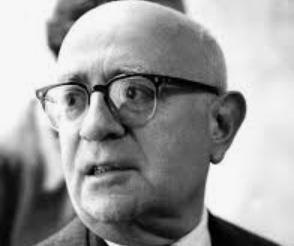
By abstaining from all definite content, whether as formal logic and theory of science or as the legend of Being beyond all beings, philosophy declared its bankruptcy regarding concrete social goals.
▼
Source
source
p. 6
3 months 3 weeks ago
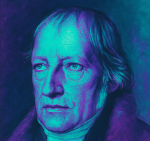
The owl of Minerva first begins her flight with the onset of dusk.
2 months 2 weeks ago
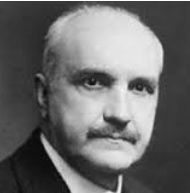
O world, thou choosest not the better part! It is not wisdom to be only wise, And on the inward vision close the eyes, But it is wisdom to believe the heart. Columbus found a world, and had no chart, Save one that faith deciphered in the skies; To trust the soul's invincible surmise Was all his science and his only art.
▼
Source
source
O World, Thou Choosest Not
2 months 6 days ago
Art is the imposing of a pattern on experience, and our aesthetic enjoyment in recognition of the pattern.
▼
Source
source
Ch. 29, June 10, 1943.
CivilSimian.com created by AxiomaticPanic, CivilSimian, Kalokagathia