


3 months 2 weeks ago
I have no need for good souls: an accomplice is what I wanted.
▼
Source
source
Electra to her brother Orestes, Act 2
1 month 3 days ago
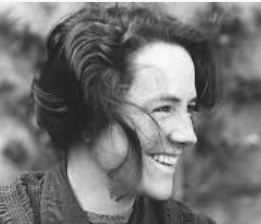
When one is a stranger to oneself then one is estranged from others too. If one is out of touch with oneself, then one cannot touch others.
2 months 2 weeks ago
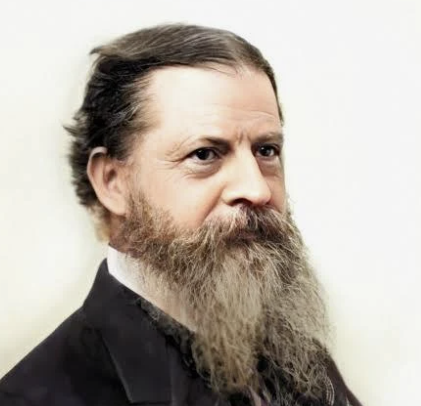
The difference between a pessimistic and an optimistic mind is of such controlling importance in regard to every intellectual function, and especially for the conduct of life, that it is out of the question to admit that both are normal, and the great majority of mankind are naturally optimistic.
▼
Source
source
V

1 month 2 weeks ago
But if you can breed cattle for milk yield, horses for running speed, and dogs for herding skill, why on Earth should it be impossible to breed humans for mathematical, musical or athletic ability? Objections such as "these are not one-dimensional abilities" apply equally to cows, horses and dogs and never stopped anybody in practice. I wonder whether, some 60 years after Hitler's death, we might at least venture to ask what the moral difference is between breeding for musical ability and forcing a child to take music lessons. Or why it is acceptable to train fast runners and high jumpers but not to breed them. I can think of some answers, and they are good ones, which would probably end up persuading me. But hasn't the time come when we should stop being frightened even to put the question? From the Afterword, The Herald
▼
Source
source
Glasgow, Scotland, 20 November 2006
1 month 1 week ago
There is surely no contradiction in saying that a certain section of the community may be quite competent to protect the persons and property of the rest, yet quite unfit to direct our opinions, or to superintend our private habits.
▼
Source
source
p. 246
2 days ago
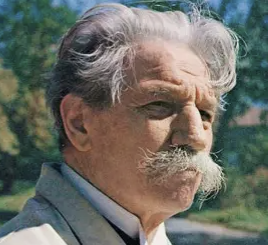
The ethic of Reverence for Life is the ethic of Love widened into universality.
▼
Source
source
Epilogue, p. 235

3 months 1 week ago
Fame and wealth without wisdom are unsafe possessions.
3 months 4 weeks ago
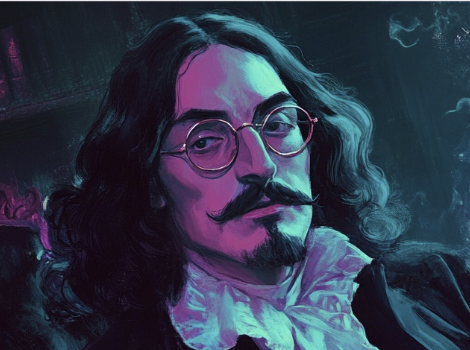
No doubt you know that Galileo had been convicted not long ago by the Inquisition, and that his opinion on the movement of the Earth had been condemned as heresy. Now I will tell you that all things I explain in my treatise, among which is also that same opinion about the movement of the Earth, all depend on one another, and are based upon certain evident truths. Nevertheless, I will not for the world stand up against the authority of the Church. ...I have the desire to live in peace and to continue on the road on which I have started.
▼
Source
source
Letter to Marin Mersenne (end of Feb., 1634) as quoted by Amir Aczel, Pendulum: Leon Foucault and the Triumph of Science

3 months 3 weeks ago
The essence of the Liberal outlook lies not in what opinions are held, but in how they are held: instead of being held dogmatically, they are held tentatively, and with a consciousness that new evidence may at any moment lead to their abandonment.

2 months 1 week ago
Passion is like suffering, and like suffering it creates its object. It is easier for the fire to find something to burn than for something combustible to find the fire.
1 month 3 weeks ago
Finally, and perhaps most importantly, you need to acquire the skills of writing and speaking that make for candor, rigor, and clarity. You cannot think clearly if you cannot speak and write clearly.

3 months 3 weeks ago
It is better to risk sparing a guilty person than to condemn an innocent one.
▼
Source
source
Zadig, 1747

4 months 1 week ago
Of our desires some are natural and necessary, others are natural but not necessary; and others are neither natural nor necessary, but are due to groundless opinion.

3 months 4 weeks ago
She is rightly called not only the mother of the man, but also the Mother of God ... It is certain that Mary is the Mother of the real and true God.
▼
Source
source
Weimar edition of Martin Luther's Works, English translation edited by J. Pelikan [Concordia: St. Louis], Vol. 11, Vol. 24, 107

1 month 2 weeks ago
The business of art is no longer the communication of thoughts or feelings which are to be conceptually ordered, but a direct participation in an experience. The whole tendency of modern communication...is towards participation in a process, rather than apprehension of concepts.
▼
Source
source
Letter to Harold Adam Innis (14 March 1951), published in Essential McLuhan (1995), edited by Eric McLuhan and Frank Zingrone, p. 73

1 week 5 days ago
Of this Shakspeare of ours, perhaps the opinion one sometimes hears a little idolatrously expressed is, in fact, the right one; I think the best judgement not of this country only, but of Europe at large, is slowly pointing to the conclusion, That Shakspeare is the chief of all Poets hitherto; the greatest intellect who, in our recorded world, has left record of himself in the way of Literature. On the whole, I know not such a power of vision, such a faculty of thought, if we take all the characters of it, in any other man. Such a calmness of depth; placid joyous strength; all things imaged in that great soul of his so true and clear, as in a tranquil unfathomable sea!

4 months ago
I have no patience with those who say that sexual excitement is shameful and that venereal stimuli have their origin not in nature, but in sin. Nothing is so far from the truth. As if marriage, whose function cannot be fulfilled without these incitements, did not rise above blame. In other living creatures, where do these incitements come from? From nature or from sin? From nature, of course. It must borne in mind that in the apetites of the body there is very little difference between man and other living creatures. Finally, we defile by our imagination what of its own nature is fair and holy. If we were willing to evaluate things not according to the opinion of the crowd, but according to nature itself, how is it less repulsive to eat, chew, digest, evacuate, and sleep after the fashion of dumb animals, than to enjoy lawful and permitted carnal relations?
▼
Source
source
In Praise of Marriage (1519), in Erasmus on Women (1996) Erika Rummel

2 weeks 2 days ago
To conceive the good, in fact, is not sufficient; it must be made to succeed among men. To accomplish this less pure paths must be followed.
▼
Source
source
Ch. 5.

2 months 3 weeks ago
The first and the simplest emotion which we discover in the human mind is Curiosity.
▼
Source
source
Part I Section I
2 months 1 week ago
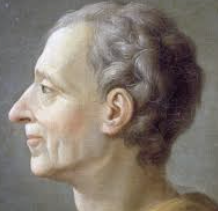
Do you think that God will punish them for not practicing a religion which he did not reveal to them?
▼
Source
source
No. 35. (Usbek writing to Gemchid)
2 months 1 week ago
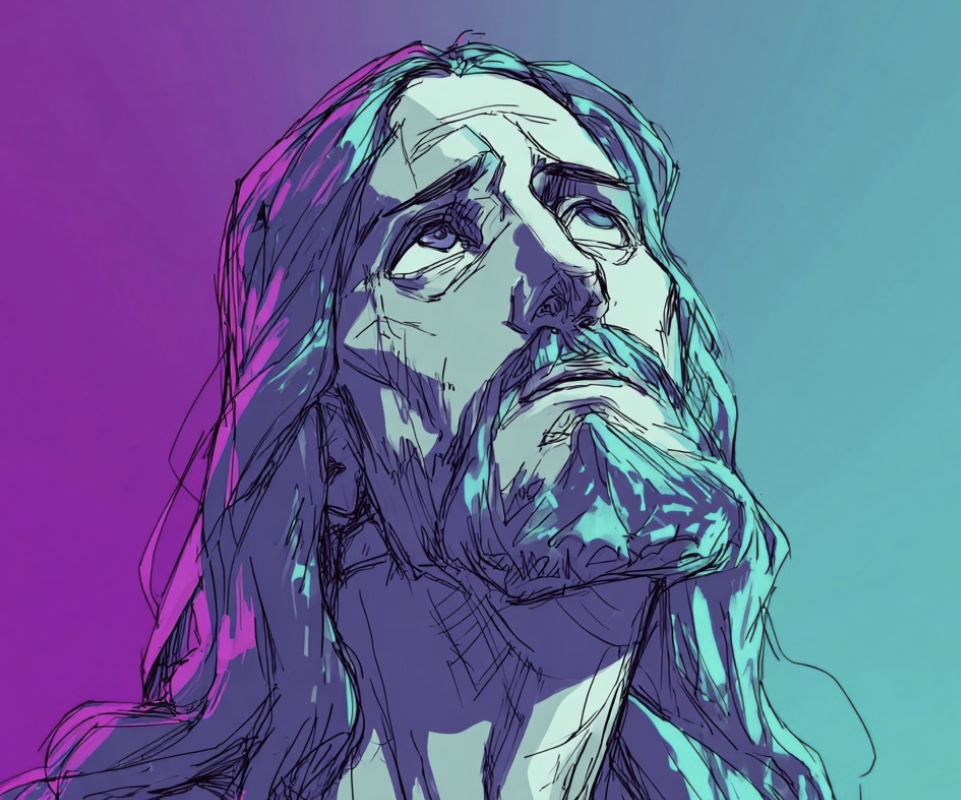
Because of your unbelief: for verily I say unto you, If ye have faith as a grain of mustard seed, ye shall say unto this mountain, Remove hence to yonder place; and it shall remove; and nothing shall be impossible unto you. Howbeit this kind goeth not out but by prayer and fasting.
▼
Source
source
17:20-21 (KJV)

2 months 2 weeks ago
Life is not, and death is a dream. Suffering has invented them both as self-justification. Man alone is torn between an unreality and an illusion.
2 months 2 weeks ago
There was a time when time did not yet exist. ... The rejection of birth is nothing but the nostalgia for this time before time.

3 months 3 weeks ago
What, in unenlightened societies, colour, race, religion, or in the case of a conquered country, nationality, are to some men, sex is to all women; a peremptory exclusion from almost all honourable occupations, but either such as cannot be fulfilled by others, or such as those others do not think worthy of their acceptance.
▼
Source
source
Ch. 4
4 months 6 days ago
If you believe what you like in the gospels, and reject what you don't like, it is not the gospel you believe, but yourself.
▼
Source
source
Earliest attribution found in Who Said That?: More than 2,500 Usable Quotes and Illustrations (1995) by George Sweeting. Online sources always attribute the quote to Augustine, but never specify in which of his works it is to be found.
4 months ago
I dare affirm in knowledge of nature, that a little natural philosophy, and the first entrance into it, doth dispose the opinion to atheism; but on the other side, much natural philosophy and wading deep into it, will bring about men's minds to religion; wherefore atheism every way seems to be combined with folly and ignorance, seeing nothing can can be more justly allotted to be the saying of fools than this, "There is no God" Of Atheism.
2 months 2 weeks ago
Primitive superstition lies just below the surface of even the most tough-minded individuals, and it is precisely those who most fight against it who are the first to succumb to its suggestive effects.
▼
Source
source
p. 25
3 months 2 weeks ago
Generosity is nothing else than a craze to possess. All which I abandon, all which I give, I enjoy in a higher manner through the fact that I give it away.... To give is to enjoy possessively the object which one gives.
▼
Source
source
Part 2
2 months 3 days ago
The lack of objectivity, as far as foreign nations are concerned, is notorious. From one day to another, another nation is made out to be utterly depraved and fiendish, while one's own nation stands for everything that is good and noble. Every action of the enemy is judged by one standard - every action of oneself by another. Even good deeds by the enemy are considered a sign of particular devilishness, meant to deceive us and the world, while our bad deeds are necessary and justified by our noble goals which they serve.
2 months 2 weeks ago
Isn't history ultimately the result of our fear of boredom?
2 months ago
If an angel were ever to tell us anything of his philosophy I believe many propositions would sound like 2 times 2 equals 13.
▼
Source
source
B 44
4 months 3 weeks ago
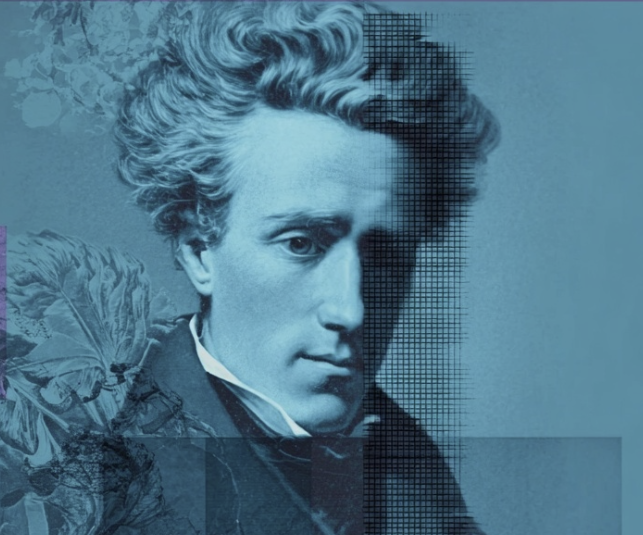
She has forgotten speech and language and the restlessness of thoughts, has forgotten what is even greater restlessness, this self, has forgotten herself-she, the lost woman, who is now lost in her Savior, who, lost in him, rests at his feet-like a picture. He speaks about her; he says: Her many sins are forgiven her, because she loved much. Although she is present, it is almost as if she were absent; it is almost as if he changed her into a picture, a parable.
3 months 2 weeks ago
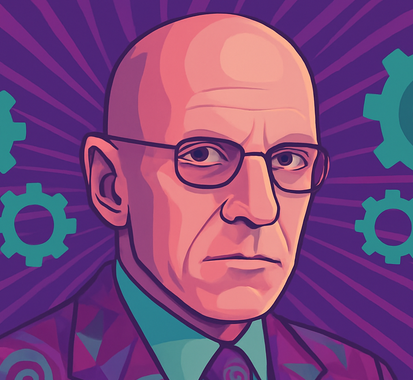
At the end of the Middle Ages, leprosy disappeared from the Western world. In the margins of the community, at the gates of cities, there stretched wastelands which sickness had ceased to haunt but had left sterile and long uninhabitable. For centuries, these reaches would belong to the non-human. From the fourteenth to the seventeenth century, they would wait, soliciting with strange incantations a new incarnation of disease, another grimace of terror, renewed rites of purification and exclusion.
▼
Source
source
Part One: 1. Stultifera Navis
1 month 2 weeks ago
It seems as if marriage were the royal road through life, and realised, on the instant, what we have all dreamed on summer Sundays when the bells ring, or at night when we cannot sleep for the desire of living. They think it will sober and change them. Like those who join a brotherhood, they fancy it needs but an act to be out of the coil and clamour for ever. But this is a wile of the devil's. To the end, spring winds will sow disquietude, passing faces leave a regret behind them, and the whole world keep calling and calling in their ears. For marriage is like life in this - that it is a field of battle, and not a bed of roses.
▼
Source
source
Virginibus Puerisque, Ch. 1.
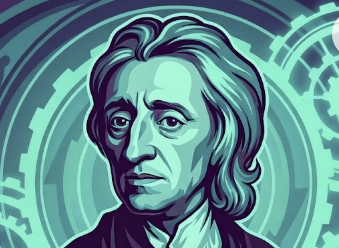
3 months 3 weeks ago
Covetousness, and the desire of having in our possession, and under our dominion, more than we have need of, being the root of all evil, should be early and carefully weeded out, and the contrary quality of a readiness to impart to others, implanted. This should be encourag'd by great commendation and credit, and constantly taking care that he loses nothing by his liberality.
▼
Source
source
Sec. 110

3 months 2 weeks ago
But why,' (some ask), 'why, if you have a serious comment to make on the real life of men, must you do it by talking about a phantasmagoric never-never land of your own?' Because, I take it, one of the main things the author wants to say is that the real life of men is of that mythical and heroic quality. One can see the principle at work in his characterization. Much that in a realistic work would be done by 'character delineation' is here done simply by making the character an elf, a dwarf, or a hobbit. The imagined beings have their insides on the outside; they are visible souls. And Man as a whole, Man pitted against the universe, have we seen him at all till we see that he is like a hero in a fairy tale?
▼
Source
source
p. 89
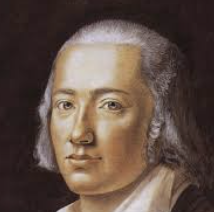
2 months 3 weeks ago
Being at one is god-like and good, but human, too human, the mania Which insists there is only the One, one country, one truth, and one way.
▼
Source
source
"The Root of All Evil" as translated by Michael Hamburger

2 months 5 days ago
Philosophy is the self-correction by consciousness of its own initial excess of subjectivity. Each actual occasion contributes to the circumstances of its origin additional formative elements deepening its own peculiar individuality. Consciousness is only the last and greatest of such elements by which the selective character of the individual obscures the external totality from which it originates and which it embodies. An actual individual, of such higher grade, has truck with the totality of things by reason of its sheer actuality; but it has attained its individual depth of being by a selective emphasis limited to its own purposes. The task of philosophy is to recover the totality obscured by the selection.
▼
Source
source
Pt. I, ch. 1, sec. 6.
1 month 2 weeks ago
To the blind all things are sudden.
▼
Source
source
(p. 41)

2 months 4 weeks ago
A constellation of the most pedantic, obstinate ignorance and presumption, mixed with a kind of rustic incivility, which would try the patience of Job.
▼
Source
source
Declaration about the scholars of England, particularly those of Oxford
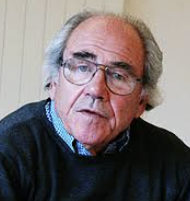
1 month 3 weeks ago
For it is with the same imperialism that present-day simulators try to make the real, all of the real, coincide with their simulation models.
▼
Source
source
"The Precession of Simulacra," pp. 1-2
4 months ago
"You err, not knowing the Scriptures nor the power of God" This canon is the mother of all canons against heresy; the causes of error are two; the ignorance of the will of God, and the ignorance or not sufficient consideration of his power.
▼
Source
source
Of Heresies

3 months 3 weeks ago
For there's no rood has not a star above it; The cordial quality of pear or plum Ascends as gladly in a single tree, As in broad orchards resonant with bees; And every atom poises for itself, And for the whole.
▼
Source
source
Musketaquid, st. 5
3 months 3 weeks ago
Inuring children gently to suffer some degrees of pain without shrinking, is a way to gain firmness to their minds, and lay a foundation for courage and resolution in the future part of their lives.
▼
Source
source
Sec. 115
1 month 2 weeks ago
To travel hopefully is a better thing than to arrive.
▼
Source
source
El Dorado.

2 months 1 week ago
The avant-garde and the beatniks share in the function of entertaining without endangering the good conscience of the men of good will.
▼
Source
source
p. 70

2 weeks 2 days ago
Now the argument that I make in my book is that part of the current disaffection with liberalism is not from any of its basic principles, but... is the result of certain deformations of liberal principles that were carried to extremes that led... to bad outcomes... There's a move in this direction on the right and... on the left.
▼
Source
source
12:25 Ref: Francis Fukuyama, Liberalism and Its Discontents
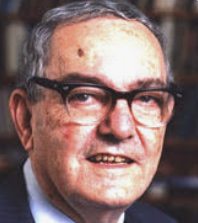
1 month 4 weeks ago
The function of knowledge in the decision-making process is to determine which consequences follow upon which of the alternative strategies.
▼
Source
source
p. 75
3 months 2 weeks ago
The constitution of madness as mental illness, at the end of the eighteenth century, bears witness to a rupture in a dialogue, gives the separation as already enacted, and expels from the memory all those imperfect words, of no fixed syntax, spoken falteringly, in which the exchange between madness and reason was carried out. The language of psychiatry, which is a monologue by reason about madness, could only have come into existence in such a silence.
▼
Source
source
Preface to 1961 edition
1 month 2 weeks ago
Conservatives believe that our identities and values are formed through our relations with other people, and not through our relation with the state. The state is not an end but a means. Civil society is the end, and the state is the means to protect it. The social world emerges through free association, rooted in friendship and community life. And the customs and institutions that we cherish have grown from below, by the 'invisible hand' of co-operation. They have rarely been imposed from above by the work of politics, the role of which, for a conservative, is to reconcile our many aims, and not to dictate or control them.
▼
Source
source
"Stand up for the real meaning of freedom," The Spectator
CivilSimian.com created by AxiomaticPanic, CivilSimian, Kalokagathia