


7 months 1 week ago
It is because of my wretchedness that I am "I." It is on account of the wretchedness of the universe that, in a sense, God is "I" (that is to say a person).
▼
Source
source
p. 83
4 months 3 weeks ago
We are all attached to the throne of the Supreme Being by a supple chain that restrains us without enslaving us. Nothing is more admirable in the universal order of things than the action of free beings under the divine hand. Freely slaves, they act voluntarily and necessarily at the same time; they really do what they will, but without being able to disturb the general plans. Each of these beings occupies the centre of a sphere of activity whose diameter varies according to the will of the Eternal Geometer, who can extend, restrict, check, or direct the will without altering its nature.
7 months 3 weeks ago
The free being with absolute freedom proposes to itself certain ends. It wills because it wills, and the willing of an object is itself the last ground of such willing. Thus we have previously determined a free being, and any other determination would destroy the conception of an Ego, or of a free being. Now, if it could be so arranged that the willing of an unlawful end would necessarily - in virtue of an always effective law - result in the very reverse of that end, then the unlawful will would always ANNIHILATE ITSELF. A person could not will that end for the very reason because he did will it; his unlawful will would become the ground of its own annihilation, as the will is indeed always its own last ground.
▼
Source
source
p. 193

7 months 1 week ago
I found Randi likable and plausible; the only thing that bothered me was the sweeping and intense nature of his skepticism. He was obviously working from the premise that all paranormal phenomena, without exception, are fakes or delusions. He seemed to take to take it for granted that all of us - there were also two women present - shared his opinions, and he made jovial, disparaging remarks about psychics and other such weirdos. I began to get the uncomfortable feeling of a Jew who has accidentally walked into a Nazi meeting, or a Jehovah's Witness at a convention of militant atheists. As a supposedly scientific psychic investigator, Randi struck me as being oddly fixed in his opinions.
▼
Source
source
pp. 39-40



7 months 1 week ago
The ideal of human kinship that would brook no injustice or social wrong agave the only meaning and purpose to my life. This ideal I found in anarchism. Not, to be sure, in the distorted image of anarchism presented in the Press and by pseudo-social economists or hounded and persecuted by the powers that be. I found anarchism the moving spirit of beauty-of social harmony-of a free and untrammeled growth of the individual. This became my inspiration and my highest goal.

9 months 1 week ago
But there is nothing sweeter than to dwell in towers that rise On high, serene and fortified with teachings of the wise, From which you may peer down upon the others as they stray This way and that, seeking the path of life, losing their way: The skirmishing of wits, the scramble for renown, the fight, Each striving harder than the next, and struggling day and night, To climb atop a heap of riches and lay claim to might.
▼
Source
source
Book II, lines 7-13 (tr. Stallings)
9 months 2 weeks ago
The Path is not far from man. When men try to pursue a course, which is far from the common indications of consciousness, this course cannot be considered The Path.
9 months 3 weeks ago
People don't stop things they enjoy doing just because they reach a certain age. They don't stop playing tennis just because they turn 40, they don't stop with sex just because they turn 40; they keep it up as long as they can if they enjoy it, and learning will be the same thing.

7 months 3 weeks ago
If I were asked to summarize as briefly as possible my vision of things, to reduce it to its most succinct expression, I should replace words with an exclamation point, a definitive !

5 months 1 week ago
The point is, not how long you live, but how nobly you live. And often this living nobly means that you cannot live long.
7 months 3 weeks ago
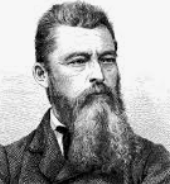
The secret of Hegel's dialectic lies ultimately in this alone, that it negates theology through philosophy in order then to negate philosophy through theology. Both the beginning and the end are constituted by theology; philosophy stands in the middle as the negation of the first positedness, but the negation of the negation is again theology. At first everything is overthrown, but then everything is reinstated in its old place, as in Descartes. The Hegelian philosophy is the last grand attempt to restore a lost and defunct Christianity through philosophy, and, of course, as is characteristic of the modern era, by identifying the negation of Christianity with Christianity itself.
▼
Source
source
Part II, Section 21

8 months 3 weeks ago
The great thing, then, in all education, is to make our nervous system our ally instead of our enemy.
▼
Source
source
Ch. 4

8 months 3 weeks ago
We are, like Nebuchadnezzar, dethroned, bereft of reason, and eating grass like an ox.
▼
Source
source
Prospects
6 months 4 weeks ago
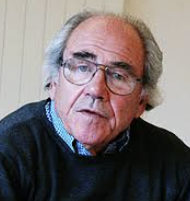
To dissimulate is to pretend not to have what one has. To simulate is to feign to have what one doesn't have. One implies a presence, the other an absence. But it is more complicated than that because simulating is not pretending: "Whoever fakes an illness can simply stay in bed and make everyone believe he is ill. Whoever simulates an illness produces in himself some of the symptoms" (Littré). Therefore, pretending, or dissimulating, leaves the principle of reality intact: the difference is always clear, it is simply masked, whereas simulation threatens the difference between the "true" and the "false," the "real" and the "imaginary."
▼
Source
source
"The Precession of Simulacra," p. 3
9 months 2 weeks ago
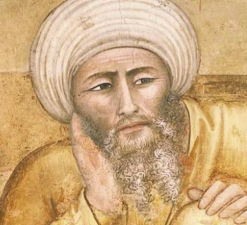
The Asharites have expressed a very peculiar opinion, both with regard to reason and religion; about this problem they have explained it in a way in which religion has not, but have adopted quite an opposite method.

6 months 3 weeks ago
Advertising is the greatest art form of the twentieth century.
▼
Source
source
quoted in Advertising Age, Sep. 3, 1976
8 months 2 weeks ago
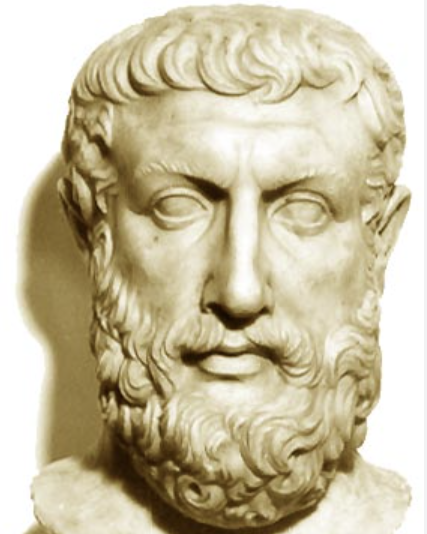
The only roads of enquiry there are to think of: one, that it is and that it is not possible for it not to be, this is the path of persuasion (for truth is its companion); the other, that it is not and that it must not be - this I say to you is a path wholly unknowable.
▼
Source
source
Frag. B 2.2-6, quoted by Proclus, Commentary on the Timaeus I, 345
6 months 5 days ago
The educated man is the man who does not live in immediate intuition, but in his recollection so that little is new to him any longer.
▼
Source
source
Chapter 4, Philosophy As Writing: The Case Of Hegel, p. 74

9 months 3 weeks ago
Zeus, the god of gods, who rules according to law, and is able to see into such things, perceiving that an honourable race was in a woeful plight, and wanting to inflict punishment on them, that they might be chastened and improve, collected all the gods into their most holy habitation, which, being placed in the centre of the world, beholds all created things.

6 months 3 weeks ago
Saying that what we call our "selves" consist only of our bodies and that reason, soul, and love arise only from the body, is like saying that what we call our body is equivalent to the food that feeds the body. It is true that my body is only made up of digested food and that my body would not exist without food, but my body is not the same as food. Food is what the body needs for life, but it is not the body itself. The same thing is true of my soul. It is true that without my body there would not be that which I call my soul, but my soul is not my body. The soul may need the body, but the body is not the soul.
▼
Source
source
p. 12
7 months 1 week ago
Words of the jargon sound as if they said something higher than what they mean.
▼
Source
source
p. 9

7 months 2 weeks ago
We have reached the point where the Objective Logic turns into the Subjective Logic, or, where subjectivity emerges as the true form of objectivity. We may sum up Hegel's analysis in the following schema: The true form of reality requires freedom. Freedom requires self-consciousness and knowledge of the truth. Self-consciousness and knowledge of the truth are the essentials of the subject. The form of reality must be conceived as subject.
▼
Source
source
P. 154-155
9 months 5 days ago
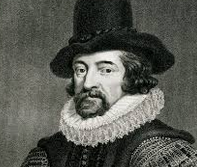
Man, being the servant and interpreter of Nature, can do and understand so much and so much only as he has observed in fact or in thought of the course of nature. Beyond this he neither knows anything nor can do anything.
▼
Source
source
Aphorism 1
7 months 5 days ago
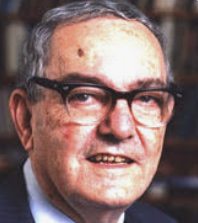
In Administrative Behavior, bounded rationality is largely characterized as a residual category - rationality is bounded when it falls short of omniscience. And the failures of omniscience are largely failures of knowing all the alternatives, uncertainty about relevant exogenous events, and inability to calculate consequences. There was needed a more positive and formal characterization of the mechanisms of choice under conditions of bounded rationality... Two concepts are central to the characterization: search and satisficing.
▼
Source
source
p. 502; As cited in Barros (2010, p. 464-5).

8 months 3 weeks ago
Howitt says of the man who found the great nugget which weighed twenty-eight pounds, at the Bendigo diggings in Australia: - "He soon began to drink; got a horse, and rode all about, generally at full gallop, and, when he met people, called out to inquire if they knew who he was, and then kindly informed them that he was 'the bloody wretch that had found the nugget.' At last he rode full speed against a tree, and nearly knocked his brains out." I think, however, there was no danger of that, for he had already knocked his brains out against the nugget.
▼
Source
source
p. 489
5 months 3 weeks ago
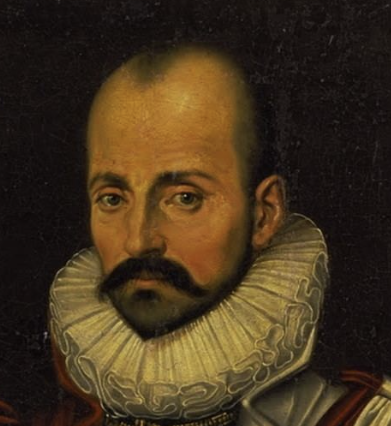
There is in our souls some native seed of reason, which, if nourished by good counsel and training, flowers into virtue, but which, on the other hand, if unable to resist the vices surrounding it, is stifled and blighted.
▼
Source
source
Part 2

9 months 4 days ago
Great abuses in the world are begotten, or, to speak more boldly, all the abuses of the world are begotten, by our being taught to be afraid of professing our ignorance, and that we are bound to accept all things we are not able to refute: we speak of all things by precepts and decisions. The style at Rome was that even that which a witness deposed to having seen with his own eyes, and what a judge determined with his most certain knowledge, was couched in this form of speaking: "it seems to me." They make me hate things that are likely, when they would impose them upon me as infallible.
▼
Source
source
Ch. 12, tr. Cotton, rev. W. Carew Hazlitt, 1877

7 months 2 weeks ago
Yea; have ye never read, Out of the mouth of babes and sucklings thou hast perfected praise?
▼
Source
source
21:16 (KJV)
9 months ago
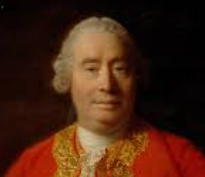
Avarice, the spur of industry, is so obstinate a passion, and works its way through so many real dangers and difficulties, that it is not likely to be scared by an imaginary danger, which is so small, that it scarcely admits of calculation. Commerce, therefore, in my opinion, is apt to decay in absolute governments, not because it is there less secure, but because it is less honourable.
▼
Source
source
Part I, Essay 12: Of Civil Liberty
5 months 5 days ago
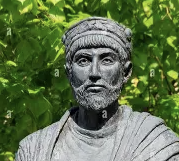
I too am not one to despise myths, and I am far from rejecting those that have the right tendency; indeed I am of the same opinion as you and your admired, or rather the universally admired, Plato. He also often conveyed a serious lesson in his myths.
5 months 2 weeks ago
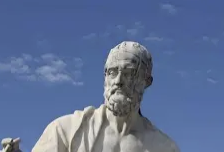
There is no witness so dreadful, no accuser so terrible as the conscience that dwells in the heart of every man.
▼
Source
source
Histories, XVIII, 43 (Bartlett's Familiar Quotations)
6 months 4 weeks ago
If the thought enunciates an object as a truth, it is only as a challenge to this object's own self-fulfillment.

4 months 3 weeks ago
We are disposed, somewhat by culture and somewhat by nature, to solve our problems by violence, and even to enjoy doing so. And yet by now all of us must at least have suspected that our right to live, to be free, and to be at peace is not guaranteed by any act of violence. It can be guaranteed only by our willingness that all other persons should live, be free, and be at peace - and by our willingness to use or give our own lives to make that possible.
7 months 3 weeks ago
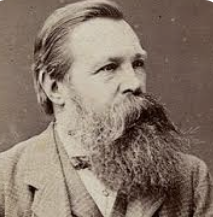
All religions so far have been the expression of historical stages of development of individual peoples or groups of peoples. But communism is the stage of historical development which makes all existing religions superfluous and brings about their disappearance.
6 months 3 weeks ago
By phonemic transformation into visual terms, the alphabet became a universal, abstract, static container of meaningless sounds.
8 months 3 weeks ago
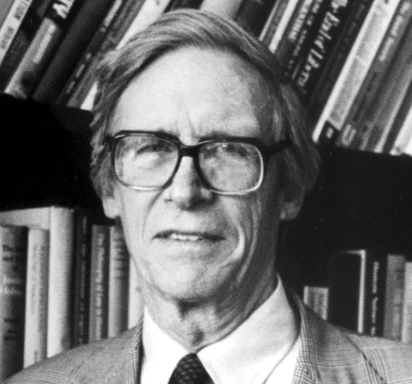
Clearly when the liberties are left unrestricted they collide with one another.
▼
Source
source
Chapter IV, Section 32, p. 203
7 months 1 week ago
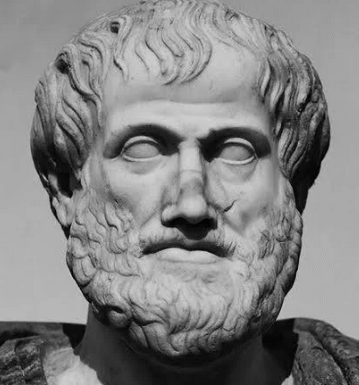
It is not enough to accept a concept of order and live by it; that is cowardice, and such cowardice cannot result from freedom. Chaos must be faced. Real order must be preceded by a descent into chaos.
▼
Source
source
Chapter Three, The Romantic Outsider
9 months 3 weeks ago
Just as it sometimes happens that deformed offspring are produced by deformed parents, and sometimes not, so the offspring produced by a female are sometimes female, sometimes not, but male, because the female is as it were a deformed male.

5 months 3 weeks ago
In situations of de facto diversity, attempts to impose a single way of life on an entire population is a formula for dictatorship.
9 months 4 days ago
We are no nearer heaven on the top of Mount Cenis than at the bottom of the sea; take the distance with your astrolabe. They debase God even to the carnal knowledge of women, to so many times, and so many generations.
▼
Source
source
Ch. 12
5 months 1 week ago
You have the courage to tell the masses what no politician told them: you are inferior and all the improvements in your conditions which you simply take for granted you owe to the effort of men who are better than you. If this be arrogance, as some of your critics observed, it is still the truth that had to said in the age of the Welfare State.
▼
Source
source
Mises' letter to Ayn Rand praising Atlas Shrugged,(23 January 1958), quoted in Mises: The Last Knight of Liberalism (2007).

8 months 1 day ago
In order to enjoy the inestimable benefits that the liberty of the press ensures, it is necessary to submit to the inevitable evils it creates.
▼
Source
source
Chapter XI.
9 months 2 weeks ago
The superior man, even when he is not moving, has a feeling of reverence, and while he speaks not, he has the feeling of truthfulness.
8 months 4 weeks ago
Complete ignorance with regard to certain matters is perhaps the best thing for children; but let them learn very early what it is impossible to conceal from them permanently. Either their curiosity must never be aroused, or it must be satisfied before the age when it becomes a source of danger. Your conduct towards your pupil in this respect depends greatly on his individual circumstances, the society in which he moves, the position in which he may find himself, etc. Nothing must be left to chance; and if you are not sure of keeping him in ignorance of the difference between the sexes till he is sixteen, take care you teach him before he is ten.
CivilSimian.com created by AxiomaticPanic, CivilSimian, Kalokagathia