To me it's like standing on a platform of perpetual error. We can't just learn and remember.


You may have made a Revolution, but not a Reformation. You may have subverted Monarchy, but not recover'd freedom.
Those truly natural wants, which reason alone, without some other help, is not able to fence against, nor keep from disturbing us. The pains of sickness and hurts, hunger, thirst, and cold, want of sleep and rest or relaxation of the part weary'd with labour, are what all men feel and the best dispos'd minds cannot but be sensible of their uneasiness; and therefore ought, by fit applications, to seek their removal, though not with impatience, or over great haste, upon the first approaches of them, where delay does not threaten some irreparable harm. The pains that come from the necessities of nature, are monitors to us to beware of greater mischiefs, which they are the forerunner of; and therefore they must not be wholly neglected, and strain'd too far. But yet the more children can be inur'd to hardships of this kind, by a wise care to make them stronger in body and mind, the better it will be for them.
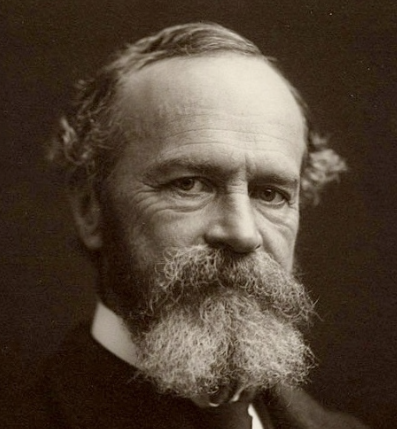
I myself believe that the evidence for God lies primarily in inner personal experiences.
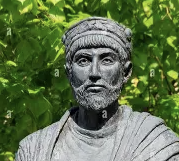
The Phoenicians who from their sagacity and learning possess great insight into things divine, hold the doctrine that this universally diffused radiance is a part of the "Soul of the Stars." This opinion is consistent with sound reason: if we consider the light that is without body, we shall perceive that of such light the source cannot be a body, but rather the simple action of a mind, which spreads itself by means of illumination as far as its proper seat; to which the middle region of the heavens is contiguous, from which place it shines forth with all its vigour and fills the heavenly orbs, illuminating at the same time the whole universe with its divine and pure radiance.
But now we come to the real paradox: that something as explosive as sexual excitement can nevertheless become a matter of habit, But then that applies to all our pleasures. We discover some new product in the supermarket, and become addicted to it. Then our tastebuds become accustomed to its flavour, and or interest fades. In the same way a honeymoon couple may find an excuse to hurry off to the bedroom half a dozen times a day; but after a month or so sex has taken its place among the many routines of their lives. They still enjoy it, but it no longer has quite the same power to excite the imagination. Sex, like every other pleasure, can become mechanical.
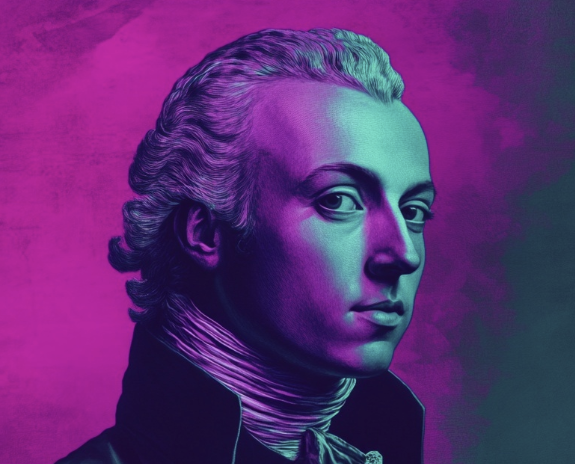
Thus our duties to animals are indirectly duties to humanity.

We can pool information about experiences, but never the experiences themselves. From family to nation, every human group is a society of island universes.
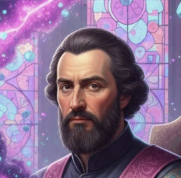
Animals and plants are living effects of Nature; this Nature ... is none other than God in things... Diverse living things represent diverse divinities and diverse powers, which, besides the absolute being they possess, obtain the being communicated to all things according to their capacity and measure. Whence all of God is in all things (although not totally, but in some more abundantly and in others less) ... Think thus, of the sun in the crocus, in the narcissus, in the heliotrope, in the rooster, in the lion.... To the extent that one communicates with Nature, so one ascends to Divinity through Nature.
Art can speak its own language only as long as the images are alive which refuse and refute the established order.
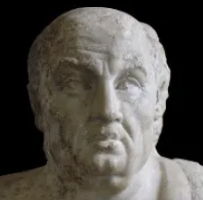
You have, dearest Serene, things that can protect tranquility, things that restore it, things that resist creeping escapes. Be it known, however, that none of these things is sufficient for those who hold a feeble matter, unless a constant concern surrounds the slipping mind.
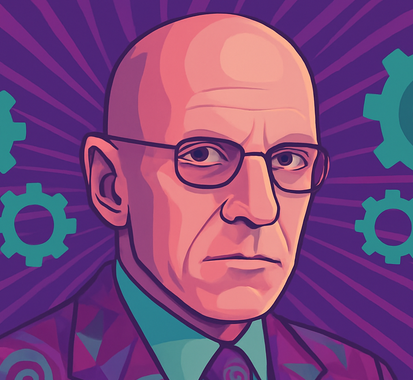
My intention was not to deal with the problem of truth, but with the problem of the truth-teller, or of truth telling... [W]ho is able to tell the truth, about what, with what consequences, and with what relations to power. ...[W]ith the question of the importance of telling the truth, knowing who is able to tell the truth, and knowing why we should tell the truth, we have the roots of what we could call the 'critical' tradition in the West.
Modem mainstream economic theory bravely assumes that people make their decisions in such a way as to maximize their utility. Accepting this assumption enables economics to predict a great deal of behavior (correctly or incorrectly) without ever making empirical studies of human actors.

Origen, of course, is also a great advocate of the allegorical approach. Yet I think you will have to admit that our modem theologians either despise this method of interpretation or are completely ignorant of it. As a matter of fact they surpass the pagans of antiquity in the subtlety of their distinctions.
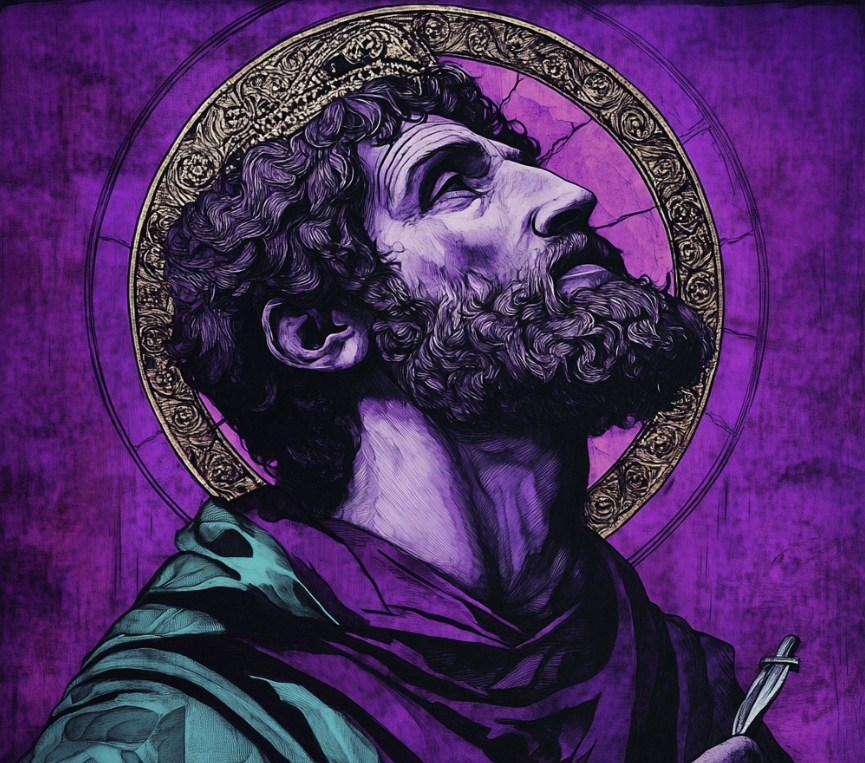
What is the use of believing, if the dost blaspheme? Thou adorest Him as Head, and dost blaspheme Him in His body. He loves His body. Thou canst cut thyself off from the body, but the Head does not detach itself from its body. "Thou dost honor me in vain," He cries from heaven, "thou dost honor Me in vain!" If someone wished to kiss thy cheek, but insisted at the same time on trampling thy feet; if with his hailed boots he were to crush thy feet as he tries to hold thy head and kiss thee, wouldst thou not interrupt his expression of respect and cry out: "What are thou doing, man? Thou art trampling upon me!" It is for this reason that before He ascended into heaven our Lord Jesus Christ recommended to us His body, by which He was to remain upon earth. For He foresaw that many would pay Him homage because of His glory in heaven, but that their homage would be vain, so long as they despise His members on earth.
Psychoanalysis is essentially a theory of unconscious strivings, of resistance, of falsification of reality according to one's subjective needs and expectations.
At present we live to impede each other's satisfactions; competition, domestic life, society, what is it all but this? We go somewhere where we are not wanted and where we don't want to go. What else is conventional life? Passivity when we want to be active. So many hours spent every day in passively doing what conventional life tells us, when we would so gladly be at work. And is it a wonder that all individual life is extinguished?
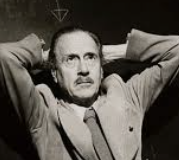
Media, by altering the environment, evoke in us unique ratios of sense perception...When these ratios change, men change.
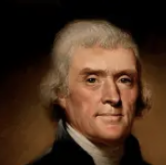
I regret that I am now to die in the belief, that the useless sacrifice of themselves by the generation of 1776, to acquire self- government and happiness to their country, is to be thrown away by the unwise and unworthy passions of their sons, and that my only consolation is to be, that I live not to weep over it. If they would but dispassionately weigh the blessings they will throw away, against an abstract principle more likely to be effected by union than by scission, they would pause before they would perpetrate this act of suicide on themselves, and of treason against the hopes of the world. To yourself, as the faithful advocate of the Union, I tender the offering of my high esteem and respect.
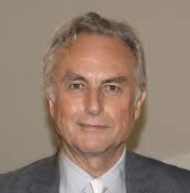
I don't want to sound callous. I mean, even if I have nothing to offer, that doesn't matter, because that still doesn't mean that what anybody else has to offer therefore has to be true.
Husserl has shown that man's prejudices go a great deal deeper than his intellect or his emotions. Consciousness itself is 'prejudiced' - that is to say, intentional.
What all agree upon is probably right; what no two agree in most probably is wrong.
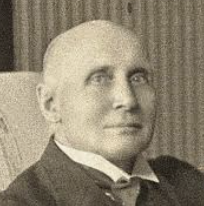
Philosophy, in one of its functions, is the critic of cosmologies. It is its function to harmonise, refashion, and justify divergent intuitions as to the nature of things. It has to insist on the scrutiny of the ultimate ideas, and on the retention of the whole of the evidence in shaping our cosmological scheme. Its business is to render explicit, and - so far as may be - efficient, a process which otherwise is unconsciously performed without rational tests.
Existence is illusory and it is eternal.
They are irreverent to the gods and disobedient to our edicts, lenient as they are. For we allow none of them to be dragged to the altars unwillingly...It is therefore my pleasure to announce and publish to all the people by this edict, that they must not abet the seditions of the clergy...They may hold their meetings, if they wish, and offer prayers according to their established use...and for the future, let all people live in harmony...Men should be taught and won over by reason, not by blows, insults, and corporal punishments. I therefore most earnestly admonish the adherents of the true religion not to injure or insult the Galilaeans in any way...Those who are in the wrong in matters of supreme importance are objects of pity rather than of hate...
The inevitable lack of objectivity in political decisions, which is only the reflex to suppress the politically inherent friend-enemy antithesis, manifests itself in the regrettable forms and aspects of the scramble for office and the politics of patronage. The demand for depoliticalization which arises in this context means only the rejection of party politics, etc. The equation politics = party politics is possible whenever antagonisms among domestic political parties succeed in weakening the all-embracing political unit, the state.

O woman, great is thy faith: be it unto thee even as thou wilt.
That which had grown from the earth, to the earth, But that which has sprung from heavenly seed, Back to the heavenly realms returns. This is either a dissolution of the mutual involution of the atoms, or a similar dispersion of the unsentient elements.

I don't care for the applause one gets by saying what others are thinking; I want actually to change people's thoughts. Power over people's minds is the main personal desire of my life; and this sort of power is not acquired by saying popular things.

It is forbidden to kill; therefore all murderers are punished unless they kill in large numbers and to the sound of trumpets.
Rational and kindly behavior tends to produce good results and these results remain good even when the behavior which produced them was itself produced by a pill.
What is the wisdom of a book compared with the wisdom of an angel?
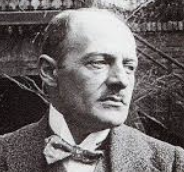
All the seemingly positive valuations and judgments of ressentiment are hidden devaluations and negations.
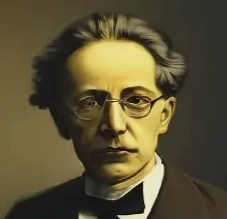
Whether nature gives me a right, or whether God, the people's choice, etc., does so, all of that is the same foreign right, a right that I do not give or take to myself. Thus the Communists say, equal labour entitles man to equal enjoyment. [...] No, equal labour does not entitle you to it, but equal enjoyment alone entitles you to equal enjoyment. Enjoy, then you are entitled to enjoyment. But, if you have laboured and let the enjoyment be taken from you, then - 'it serves you right.' If you take the enjoyment, it is your right; if, on the contrary, you only pine for it without laying hands on it, it remains as before, a, 'well-earned right' of those who are privileged for enjoyment. It is their right, as by laying hands on it would become your right.

I feel that these old Northmen wore looking into Nature with open eye and soul: most earnest, honest; childlike, and yet manlike; with a great-hearted simplicity and depth and freshness, in a true, loving, admiring, unfearing way.
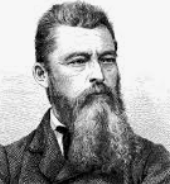
Every presentation of philosophy, whether oral or written, is to be taken and can only be taken in the sense of a means. Every system is only an expression or image of reason, and hence only an object of reason, an object which reason-a living power that procreates itself in new thinking beings-distinguishes from itself and posits as an object of criticism. Every system that is not recognized and appropriated as just a means, limits and warps the mind for it sets up the indirect and formal thought in the place of the direct, original and material thought.
I do feel visceral revulsion at the burka because for me it is a symbol of the oppression of women.

The Republican form of government is the highest form of government; but because of this it requires the highest type of human nature - a type nowhere at present existing.
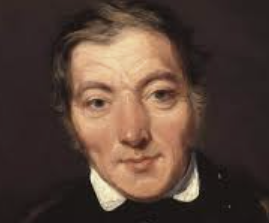
It is therefore, the interest of all, that every one, from birth, should be well educated, physically and mentally, that society may be improved in its character, - that everyone should be beneficially employed, physically and mentally, that the greatest amount of wealth may be created, and knowledge attained, - that everyone should be placed in the midst of those external circumstances that will produce the greatest number of pleasurable sensations, through the longest life, that man may be made truly intelligent, moral and happy, and be thus prepared to enter upon the coming Millennium.

[...] men are not astonish'd at the operations of their own reason, at the same time, that they admire the instinct of animals, and find a difficulty in explaining it, merely because it cannot be reduc'd to the very same principles. [...] reason is nothing but a wonderful and unintelligible instinct in our souls[.]

As soon as the land of any country has all become private property, the landlords, like all other men, love to reap where they never sowed, and demand a rent even for its natural produce.

The poor, by thinking unceasingly of money, reach the point of losing the spiritual advantages of non-possession, thereby sinking as low as the rich.
The errors of the times of superstition and bigotry still hold some sway, and compel those who wish to preserve a regard to their respectability in society to an over strained demeanor; and this demeanor sometimes degenerates into hypocrisy, and is often the cause of great inconsistency. It is destructive of every open, honest, generous, and manly feeling. It disgusts many, and drives them to the opposite extreme. It is sometimes the cause of insanity. It is founded in ignorance. While erroneous customs prevail in any country, it would evince an ignorance of human nature in any individual to offend against them, until he has convinced the community of their error.
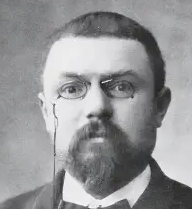
Point set topology is a disease from which the human race will soon recover.
But let us now dismiss these poetical fictions; because with what is divine they have mingled much of human alloy; and let us now consider what the deity has declared concerning himself and the other gods. The region surrounding the Earth has its existence in virtue of birth. From whom then does it receive its eternity and imperishability, if not from him who holds all things together within defined limits, for it is impossible that the nature of bodies (material) should be without a limit, inasmuch as they cannot dispense with a Final Cause, nor exist through themselves.
Loren von Stein thus turned the dialectic into an ensemble of objective laws calling for social reform as the adequate solution of all contradictions and neutralized the critical elements of the dialectic.

The people reign over the American political world as God rules over the universe. It is the cause and the end of all things; everything rises out of it and is absorbed back into it.
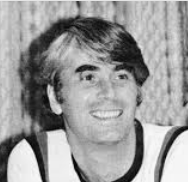
There will not be one kind of community existing and one kind of life led in utopia. Utopia will consist of utopias, of many different and divergent communities in which people lead different kinds of lives under different institutions. Some kinds of communities will be more attractive to most than others; communities will wax and wane. People will leave some for others or spend their whole lives in one. Utopia is a framework for utopias, a place where people are at liberty to join together voluntarily to pursue and attempt to realize their own vision of the good life in the ideal community but where no one can impose his own utopian vision upon others.
TV is not good at covering single events. It needs a ritual, a rhythm, and a pattern...[TV] tends to fosters patterns rather than events.
CivilSimian.com created by AxiomaticPanic, CivilSimian, Kalokagathia