

3 months 3 weeks ago
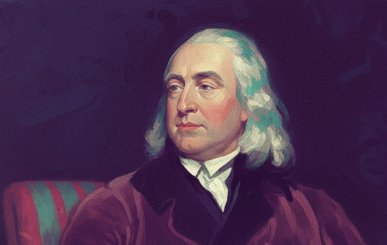
It is the principle of antipathy which leads us to speak of offences as deserving punishment. It is the corresponding principle of sympathy which leads us to speak of certain actions as meriting reward. This word merit can only lead to passion and error. It is effects good or bad which we ought alone to consider.
▼
Source
source
MSS 29, 32, University College Collection

3 months 3 weeks ago
We never have a full demonstration, although there is always an underlying reason for the truth, even if it is only perfectly understood by God, who alone penetrated the infinite series in one stroke of the mind.
▼
Source
source
The Shorter Leibniz Texts (2006) edited by Lloyd H. Strickland, p. 111

3 months 3 weeks ago
A man who is so exceedingly civil that for the sake of quietude and a peaceable name will silently see the community imposed upon, or their rights invaded, may, in his principles, be a good man, but cannot be stiled a useful one, neither does he come up to the full mark of his duty; for silence becomes a kind of crime when it operates as a cover or an encouragement to the guilty.
▼
Source
source
"To the People of America", Pennsylvania Packet, January 23, 1779

3 months 3 weeks ago
Morality is everywhere the same for all men, therefore it comes from God; sects differ, therefore they are the work of men.
▼
Source
source
"Atheist", 1764

3 months 1 week ago
With a drunken man do not walk on the road.
2 months 1 week ago
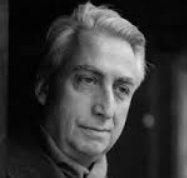
The bastard form of mass culture is humiliated repetition: content, ideological schema, the blurring of contradictions-these are repeated, but the superficial forms are varied: always new books, new programs, new films, news items, but always the same meaning.
▼
Source
source
Modern, in The Pleasure of the Text
2 months 2 weeks ago
England is the paradise of individuality, eccentricity, heresy, anomalies, hobbies, and humors.
▼
Source
source
"The British Character"
1 month 3 weeks ago
The simulacrum now hides, not the truth, but the fact that there is none, that is to say, the continuation of Nothingness.
2 months 2 weeks ago
Nothing could be more natural than the developement of the passions, nor more striking than the views of the human heart. What delicate struggles! and uncommonly pretty turns of thought!
▼
Source
source
Mary: A Fiction

2 months 4 weeks ago
Nature is none other than God in things... Animals and plants are living effects of Nature; Whence all of God is in all things... Think thus, of the sun in the crocus, in the narcissus, in the heliotrope, in the rooster, in the lion.
▼
Source
source
As quoted in Elements of Pantheism (2004) by Paul A. Harrison
1 week 4 days ago
There is no greater drama in human record than the sight of a few Christians, scorned or oppressed by a succession of emperors, bearing all trials with a fierce tenacity, multiplying quietly, building order while their enemies generated chaos, fighting the sword with the word, brutality with hope, and at last defeating the strongest state that history has known. Caesar and Christ had met in the arena, and Christ had won.
▼
Source
source
Chapter 30, part 1, p. 652

2 months 2 weeks ago
The fact that life has no meaning is a reason to live - moreover, the only one.
3 months 2 weeks ago
No punishment has ever possessed enough power of deterrence to prevent the commission of crimes. On the contrary, whatever the punishment, once a specific crime has appeared for the first time, its reappearance is more likely than its initial emergence could ever have been.
▼
Source
source
Epilogue

2 months 4 days ago
With all our boasted reforms, our great social changes, and our far-reaching discoveries, human beings continue to be sent to the worst of hells, wherein they are outraged, degraded, and tortured, that society may be "protected" from the phantoms of its own making.

4 months ago
Sir Henry Wotton used to say that critics are like brushers of noblemen's clothes.
▼
Source
source
No. 64

1 month 2 weeks ago
The images of mankind have become the most basic thing about them. And they're all software, and disembodied.
▼
Source
source
(p. 346)

3 months 5 days ago
For this, to draw a right line from every point, to every point, follows the definition, which says, that a line is the flux of a point, and a right line an indeclinable and inflexible flow.
▼
Source
source
Book III. Concerning Petitions and Axioms.
1 week 4 days ago
Most of our literature and social philosophy after 1850 was the voice of freedom against authority, of the child against the parent, of the pupil against the teacher. Through many years I shared in that individualistic revolt. I do not regret it; it is the function of youth to defend liberty and innovation, of the old to defend order and tradition, and of middle age to find a middle way. But now that I too am old, I wonder whether the battle I fought was not too completely won. Let us say humbly but publicly that we resent corruption in politics, dishonesty in business, faithlessness in marriage, pornography in literature, coarseness in language, chaos in music, meaninglessness in art.
▼
Source
source
"The Second Sexual Revolution", Time magazine,
6 days ago
The truth is, that most men want knowledge, not for itself, but for the superiority which knowledge confers; and the means they employ to secure this superiority, are as wrong as the ultimate object, for no man can ever end with being superior, who will not begin with being inferior.
▼
Source
source
Lecture IX : On the Conduct of the Understanding
4 months ago
Since my logic aims to teach and instruct the understanding, not that it may with the slender tendrils of the mind snatch at and lay hold of abstract notions (as the common logic does), but that it may in very truth dissect nature, and discover the virtues and actions of bodies, with their laws as determined in matter; so that this science flows not merely from the nature of the mind, but also from the nature of things.
▼
Source
source
Aphorism 52
1 month 2 weeks ago
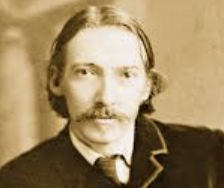
Youth now flees on feathered foot.
▼
Source
source
To Will H. Low, reported in Bartlett's Familiar Quotations, 10th ed. (1919).

4 months 2 weeks ago
When you write a short story ... you had better know the ending first. The end of a story is only the end to the reader. To the writer, it's the beginning. If you don't know exactly where you're going every minute you're writing, you'll never get there or anywhere.
Just now
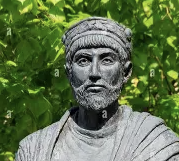
If the immediate creator of the universe be he who is proclaimed by Moses, then we hold nobler beliefs concerning him, inasmuch as we consider him to be the master of all things in general, but that there are besides national gods who are subordinate to him and are like viceroys of a king, each administering separately his own province; and, moreover, we do not make him the sectional rival of the gods whose station is subordinate to his. But if Moses first pays honour to a sectional god, and then makes the lordship of the whole universe contrast with his power, then it is better to believe as we do, and to recognise the God of the All, though not without apprehending also the God of Moses; this is better, I say, than to honour one who has been assigned the lordship over a very small portion, instead of the creator of all things.

2 months 3 weeks ago
Persecution is a bad and indirect way to plant Religion.
▼
Source
source
Section 25
2 months 2 weeks ago
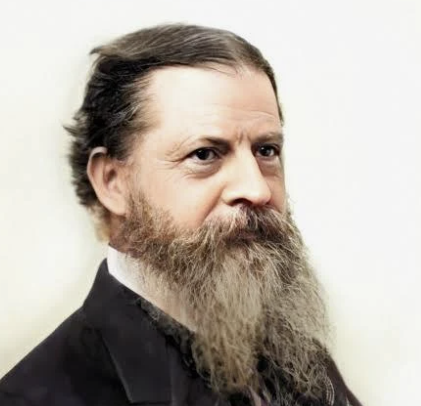
The tendency to regard continuity, in the sense in which I shall define it, as an idea of prime importance in philosophy conveniently may be be termed synechism. The present paper is intended chiefly to show what synechism is, and what it leads to.

3 months 3 weeks ago
The world neither ever saw, nor ever will see, a perfectly fair lottery.
▼
Source
source
Chapter X, Part I.
2 months 1 week ago
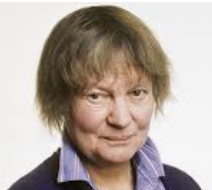
The chief requirement of the good life... is to live without any image of oneself.
▼
Source
source
The Bell (1958), ch. 9; 2001, p. 119.

4 months 2 weeks ago
In Oran, as elsewhere, for want of time and thought, people have to love one another without knowing it.
1 day ago
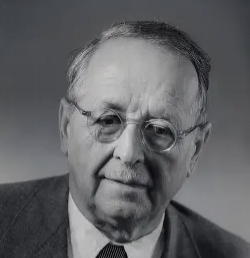
It was my wish to present this great subject as an illustration of the itermingling of philosophical, mathematical, and physical thought, a study which is dear to my heart. This could be done only by building up the theory systematically from the foundations, and by restricting attention throughout to the principles. But I have not been able to satisfy these self-imposed requirements: the mathematician predominates at the expense of the philosopher.
▼
Source
source
From the Author's Preface to First Edition

1 month ago
Given our anthropocentric bias, thinking of non-human vertebrates not just as equivalent in moral status to toddlers or infants, but as though they were toddlers or infants, is a useful exercise. Such reconceptualisation helps correct our lack of empathy for sentient beings whose physical appearance is different from "us". Ethically, the practice of intelligent "anthropomorphism" shouldn't be shunned as unscientific, but embraced insofar as it augments our stunted capacity for empathy. Such anthropomorphism can be a valuable corrective to our cognitive and moral limitations. This is not a plea to be sentimental, simply for impartial benevolence.
▼
Source
source
Reprogramming Predators, BLTC Research, 2009

3 months 3 weeks ago
By necessity, by proclivity, and by delight, we all quote.
▼
Source
source
Quotation and Originality
2 months 2 weeks ago
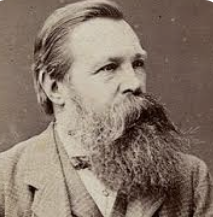
The abolition of private property has become not only possible but absolutely necessary. ... The outcome can only be the victory of the proletariat.
2 months 1 week ago
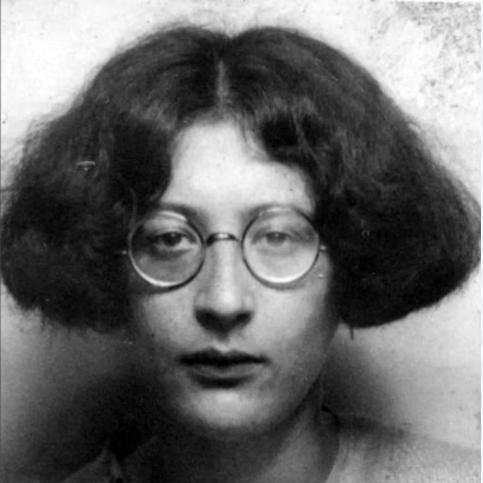
To desire friendship is a great fault. Friendship should be a gratuitous joy like those afforded by art or life. We must refuse it so that we may be worthy to receive it; it is of the order of grace.
▼
Source
source
p. 274
2 months 2 weeks ago
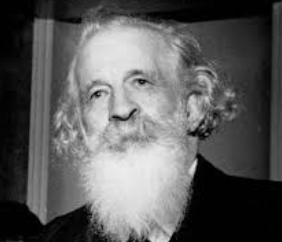
A special kind of beauty exists which is born in language, of language, and for language.
▼
Source
source
A Retrospective Glance at the Lifework of a Master of Books
3 months 3 weeks ago
Every man is a new method.
▼
Source
source
"The Natural History of Intellect", p. 28

2 months 3 weeks ago
Prejudice is of ready application in the emergency; it previously engages the mind in a steady course of wisdom and virtue and does not leave the man hesitating in the moment of decision sceptical, puzzled, and unresolved. Prejudice renders a man's virtue his habit, and not a series of unconnected acts. Through just prejudice, his duty becomes a part of his nature.


2 months 5 days ago
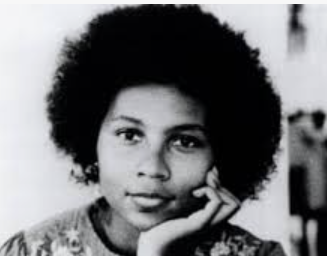
Black women control the world. We are through being discriminated against.
▼
Source
source
Communion: The Female Search for Love (2002) ISBN 0-06-093829-3

4 months 1 week ago
Pleasure and distress, fear and courage, desire and aversion, where have these affections and experiences their seat? Clearly, either in the Soul alone, or in the Soul as employing the body, or in some third entity deriving from both. And for this third entity, again, there are two possible modes: it might be either a blend or a distinct form due to the blending.

2 months 4 days ago
To die is to wander.

3 months 1 week ago
Fame and wealth without wisdom are unsafe possessions.
1 month 2 weeks ago
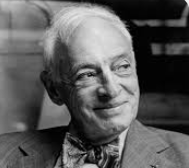
The university, in a society ruled by public opinion, was to have been an island of intellectual freedom where all views were investigated without restriction. ... But by consenting to play an active or "positive," a participatory role in society, the university has become inundated and saturated with the backflow of society's "problems." Preoccupied with questions of Health, Sex, Race, War, academics make their reputations and their fortunes. ... Any proposed reforms of liberal education which might bring the university into conflict with the whole of the U.S.A. are unthinkable. Increasingly, the people "inside" are identical in their appetites and motives with the people "outside" the university.
▼
Source
source
p. 18

3 months 2 weeks ago
If He who in Himself can lack nothing chooses to need us, it is because we need to be needed.
3 months 1 week ago
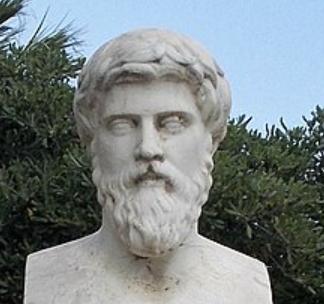
Pyrrhus said, "If I should overcome the Romans in another fight, I were undone."
▼
Source
source
47 Pyrrhus

4 months 1 week ago
Those who deny the first principle should be flogged or burned until they admit that it is not the same thing to be burned and not burned, or whipped and not whipped.
1 month 2 weeks ago
Media are means of extending and enlarging our organic sense lives into our environment.
▼
Source
source
"The Care and Feeding of Communication Innovation", Dinner Address to Conference on 8 mm Sound Film and Education, Teachers College, Columbia University, 8 November 1961
3 months 3 weeks ago
The importation of gold and silver is not the principal, much less the sole benefit which a nation derives from its foreign trade.
▼
Source
source
Chapter I, p. 479.

3 months 3 days ago
There are men and gods, and beings like Pythagoras.
▼
Source
source
Of himself, as quoted in A History of Western Philosophy (1945) by Bertrand Russell

2 months 4 weeks ago
Few men think; yet all have opinions.
▼
Source
source
Philonous to Hylas. The Second Dialogue. This appears in a passage first added in the third edition
1 day ago
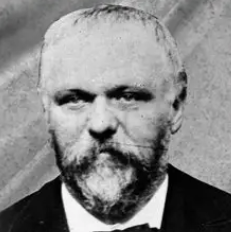
It is very difficult to understand proletarian violence as long as we try to think in terms of the ideas disseminated by bourgeois philosophy; according to this philosophy, violence is a relic of barbarism which is bound to disappear under the progress of enlightenment.
▼
Source
source
p. 65
CivilSimian.com created by AxiomaticPanic, CivilSimian, Kalokagathia