

2 months 1 week ago
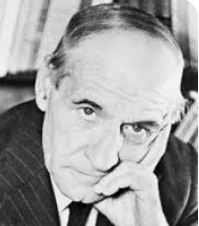
Is it not altogether absurd that, under actual circumstances, the average man does not feel spontaneously, and without being preached at, an ardent enthusiasm for those sciences and the related ones of biology?... Every day furnishes a new invention which this average man utilises. Every day produces a new anesthetic or vaccine from which this average man benefits. ... How is it, nevertheless, that there is no sign of the masses imposing on themselves any sacrifice of money or attention in order to endow science more worthily? Far from this being the case, the post-war period has converted the man of science into a new social pariah.
▼
Source
source
Chap.IX: The Primitive and the Technical

2 months 3 days ago
What is beginning to emerge, then, is a theory about psychic sensitivity. It runs as follows. When I relax deeply, it is as if someone opened up the partition between the two compartments of my brain, turning them into a single large room. I experience a sense of mental freedom as if I can suddenly breathe more deeply, and a feeling of contact with things. Everyone has had the experience of being in a state of hurry or excitement, and failing to notice that they have bruised or scratched themselves -- until the excitement evaporates and the pain makes itself known. Hurry and tension raise our sensitivity threshold, and at the same time, erect a glass wall between us and reality. In the "unicameral" state, this wall vanishes, and everything seems more real.
▼
Source
source
p. 51
1 month 3 weeks ago
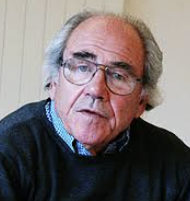
Forgetting extermination is part of extermination, because it is also the extermination of memory, of history, of the social, etc. This forgetting is as essential as the event in any case unlocatable by us, inaccessible to us in its truth. This forgetting is still too dangerous, it must be effaced by an artificial memory (today, everywhere, it is artificial memories that effect the memory of man, that efface man in his own memory). This artificial memory will be the restaging of extermination-but late, much too late for it to be able to make real waves and profoundly disturb something, and especially, especially through medium that is itself cold, radiating forgetfulness, deterrence, and extermination in a still more systematic way, if that is possible, than the camps themselves.
▼
Source
source
"Holocaust," p. 49

3 months 2 weeks ago
As image and apprehension are in an organic unity, so, for a Christian, are human body and human soul.
▼
Source
source
"Priestesses in the Church?" (1948), p. 237

3 months 3 weeks ago
The theory of Communism may be summed up in the single sentence: Abolition of private property.
▼
Source
source
Section 2, paragraph 13.

3 months 1 week ago
And what he fears he cannot make attractive with his touch he abandons.
▼
Source
source
Line 149 (tr. H. R. Fairclough)
3 months 2 weeks ago
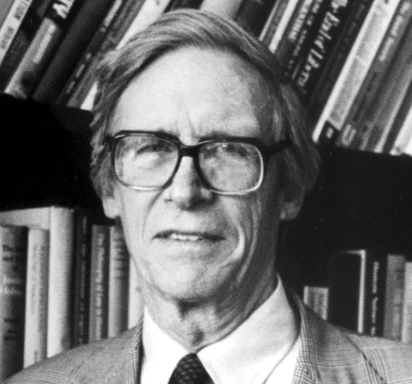
First of all, principles should be general. That is, it must be possible to formulate them without use of what would be intuitively recognized as proper names, or rigged definite descriptions.
▼
Source
source
Chapter III, Section 23, pg. 131

2 months 3 days ago
Emptiness empties the one seeing into what is seen.

3 months 2 weeks ago
There is no history of mankind, there is only an indefinite number of histories of all kinds of aspects of human life. And one of these is the history of political power. This is elevated into the history of the world. But this, I hold, is an offence against every decent conception of mankind. It is hardly better than to treat the history of embezzlement or of robbery or of poisoning as the history of mankind. For the history of power politics is nothing but the history of international crime and mass murder (including it is true, some of the attempts to suppress them). This history is taught in schools, and some of the greatest criminals are extolled as heroes.
▼
Source
source
Vol 2, Ch. 25 "Has History any Meaning?" Variant: There is no history of mankind, there are only many histories of all kinds of aspects of human life. And one of these is the history of political power. This is elevated into the history of the world.

2 months ago
Before one blames, one should always find out whether one cannot excuse. To discover little faults has been always the particularity of such brains that are a little or not at all above the average. The superior ones keep quiet or say something against the whole and the great minds transform without blaming.
▼
Source
source
K 39 Variant translation: Before we blame we should first see whether we cannot excuse.

1 month 2 weeks ago
Everything comes in time to him who knows how to wait.
▼
Source
source
Bk. X, ch. 16

2 months 2 weeks ago
Without its assiduity to the ridiculous, would the human race have lasted more than a single generation?
2 months 2 weeks ago
"I am like a broken puppet whose eyes have fallen inside." This remark of a mental patient weighs more heavily than a whole stack of works on introspection.


5 days ago
You are doing an excellent thing, one which will be wholesome for you, if, as you write me, you are persisting in your effort to attain sound understanding; it is foolish to pray for this when you can acquire it from yourself. We do not need to uplift our hands towards heaven, or to beg the keeper of a temple to let us approach his idol's ear, as if in this way our prayers were more likely to be heard. A god is near you, with you, and in you. This is what I mean, Lucilius: there sits a holy spirit within us, one who marks our good and bad deeds, and is our a guardian.
3 months 3 weeks ago
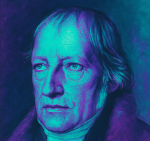
The great thing however is, in the show of the temporal and the transient to recognize the substance which is immanent and the eternal which is present. For the work of Reason (which is synonymous with the Idea) when considered in its own actuality, is to simultaneously enter external existence and emerge with an infinite wealth of forms, phenomena and phases - a multiplicity that envelops its essential rational kernel with a motley outer rind with which our ordinary consciousness is earliest at home. It is this rind that the Concept must penetrate before Reason can find its own inward pulse and feel it still beating even in the outward phases. But this infinite variety of circumstances which is formed in this element of externality by the light of the rational essence shining in it - all this infinite material, with its regulatory laws - is not the object of philosophy....To comprehend what is, is the task of philosophy: and what is is Reason.
▼
Source
source
Works, VII, 17.

2 months 1 week ago
And if you lend to those from whom you expect repayment, what credit is that to you? Even sinners lend to sinners, expecting to be repaid in full. But love your enemies, do good to them, and lend to them without expecting to get anything back.
▼
Source
source
Jesus on usury from the Sermon on the Mount, Luke 6:34-35

3 months 3 weeks ago
What is prudence in the conduct of every private family, can scarce be folly in that of a great kingdom.
▼
Source
source
Chapter II, p. 490.

3 months 3 weeks ago
I am against a League war in present circumstances, because the anti-League powers are strong. The analogy is not King v. Barons, but the War of the Roses. If the League were strong enough I should favour sanctions, because the effect would suffice, or the war would be short and small. The whole question is quantitative.
▼
Source
source
Letter to Kingsley Martin shortly before the Italo-Abyssinian War (7 August 1935), quoted in Kingsley Martin, Editor: A Second Volume of Autobiography, 1931-45 (1968), p. 207

4 months 5 days ago
Therefore death is nothing to us, it matters not one jot, since the nature of the mind is understood to be mortal.
▼
Source
source
Book III, lines 830-831 (tr. Rouse)
1 month 4 weeks ago
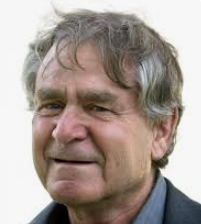
To conclude: there are two well-known minor ways in which language has mattered to philosophy. On the one hand there is a belief that if only we produce good definitions, often marking out different senses of words that are confused in common speech, we will avoid the conceptual traps that ensnared our forefathers. On the other hand is a belief that if only we attend sufficiently closely to our mother tongue and make explicit the distinctions there implicit, we shall avoid the conceptual traps. One or the other of these curiously contrary beliefs may nowadays be most often thought of as an answer to the question Why does language matter to philosophy? Neither seems to me enough.
▼
Source
source
Ian Hacking (1975), Why Does Language Matter to Philosophy?, p. 7.

2 weeks 1 day ago
The more progress that has been made toward eradicating social injustices, the more intolerable the remaining injustices seem, and thus the moral imperative to mobilizing to correct them.
2 months 1 week ago
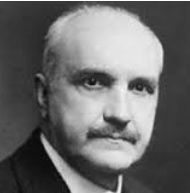
Every moment celebrates obsequies over the virtues of its predecessor.
▼
Source
source
Ch. XIV
3 months 2 weeks ago
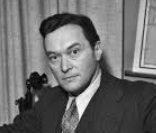
It is hard to have patience with people who say 'There is no death' or 'Death doesn't matter.' There is death. And whatever is matters. And whatever happens has consequences, and it and they are irrevocable and irreversible. You might as well say that birth doesn't matter.
2 weeks 3 days ago
A free press is not a privilege but an organic necessity in a great society. ...Without criticism and reliable and intelligent reporting, the government cannot govern. For there is no adequate way in which it can keep itself informed about what the people of the country are thinking and doing and wanting.
▼
Source
source
International Press Institute Association, London

1 week 4 days ago
It is the property of every Hero, in every time, in every place and situation, that he come back to reality; that he stand upon things, and not shows of things. According as he loves, and venerates, articulately or with deep speechless thought, the awful realities of things, so will the hollow shows of things, however regular, decorous, accredited by Koreishes or Conclaves, be intolerable and detestable to him.

3 months 3 weeks ago
Nature has pointed out a mixed kind of life as most suitable to the human race, and secretly admonished them to allow none of these biases to draw too much, so as to incapacitate them for other occupations and entertainments. Indulge your passion for science, says she, but let your science be human, and such as may have a direct reference to action and society. Abstruse thought and profound researches I prohibit, and will severely punish, by the pensive melancholy which they introduce, by the endless uncertainty in which they involve you, and by the cold reception which your pretended discoveries shall meet with, when communicated. Be a philosopher; but, amidst all your philosophy, be still a man.
▼
Source
source
Section 1 : Of The Different Species of Philosophy

2 months 3 weeks ago
And surely, he that hath taken the true Altitude of Things, and rightly calculated the degenerate state of this Age, is not like to envy those that shall live in the next, much less three or four hundred Years hence, when no Man can comfortably imagine what Face this World will carry.
2 months 1 week ago
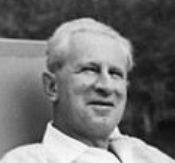
Operational analysis ... cannot raise the decisive question whether the consent itself was not the work of manipulation-a question for which the actual state of affairs provides ample justification. The analysis cannot raise it because it would transcend its terms toward transitive meaning-toward a concept of democracy which would reveal the democratic election as a rather limited democratic process. Precisely such a non-operational concept is the one rejected by the authors as "unrealistic" because it defines democracy on too articulate a level as the clear-cut control of representation by the electorate-popular control as popular sovereignty.
▼
Source
source
p. 116

2 months 3 weeks ago
Granted I am a babbler, a harmless vexatious babbler, like all of us. But what is to be done if the direct and sole vocation of every intelligent man is babble, that is, the intentional pouring of water through a sieve?
▼
Source
source
Part 1, Chapter 5

1 month 2 weeks ago
Marx shared with economists then and since the inability to make his concepts include innovational processes. It is one thing to spot a new product but quite another to observe the invisible new environments generated by the action of the product on a variety of pre-existing social grounds.
▼
Source
source
(p. 63)
1 month 2 weeks ago
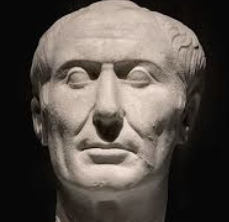
A wise man rules his passions, a fool obeys them.
▼
Source
source
Maxim 49
1 month 2 weeks ago
When technology extends one of our senses, a new translation of culture occurs as swiftly as the new technology is interiorized.
▼
Source
source
(p. 47)
2 months 5 days ago
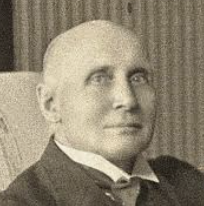
Heaven knows what seeming nonsense may not to-morrow be demonstrated truth.
▼
Source
source
Ch. 7: "Relativity", p. 161
3 months 1 week ago
Think to yourself that every day is your last; the hour to which you do not look forward will come as a welcome surprise.
▼
Source
source
Book I, epistle iv, line 13-14
2 months 6 days ago
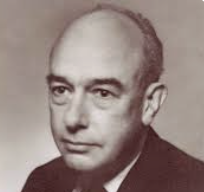
Tactically, conceptualism is no doubt the strongest position of the three; for the tired nominalist can lapse into conceptualism and still allay his puritanic conscience with the reflection that he has not quite taken to eating lotus with the Platonists.
▼
Source
source
"Logic and the Reification of Universals"

3 months 3 weeks ago
You can hardly convince a man of an error in a lifetime, but must content yourself with the reflection that the progress of science is slow. If he is not convinced, his grandchildren may be.
1 month 4 weeks ago
To me it seems clear that the descriptions of human life we find in the novels of Tolstoy or George Eliot are not mere entertainment; they teach us to perceive what goes on in social and individual life. And such descriptions require the many subtle distinctions that ordinary language has made available to us. The question of the relevance or irrelevance of "how we speak" is not just a question for philosophers, although it is that too. It is a question for philosophers because once ordinary language is laughed out of the room, philosophical theories are no longer held responsible at all to the ways we actually speak and actually live; but it is a question for more than just philosophers because, at bottom, contempt for ordinary language is contempt for all the humanities.
▼
Source
source
"Science and Philosophy"

2 months 3 weeks ago
I must say, that the whole Scheme of the war is mistaken, (or appears to me to be so), for it ought to be, not for Dunkirk, or this or t'other Town-but to drive Jacobinism from the world.
▼
Source
source
Letter to Dr Charles Burney (14/15 September 1793), quoted in P. J. Marshall and John A. Woods (eds.)

3 months 2 weeks ago
And striving to be man, the worm Mounts through all the spires of form.
▼
Source
source
May-Day
2 months 2 weeks ago
The power of thought is the light of knowledge, the power of will is the energy of character, the power of heart is love. Reason, love and power of will are perfections of man.
▼
Source
source
Introduction, Z. Hanfi, trans., in The Fiery Brook (1972), p. 99
2 months 3 days ago
If things are deprived of memory, they become information or commodities. They are pushed into a time-free, ahistorical place.

4 months 5 days ago
Those of our pleasures which come most rarely give the greatest delight.
▼
Source
source
Fragment 33 (Oldfather translation)
2 months 2 weeks ago
The fact that life has no meaning is a reason to live - moreover, the only one.

4 months 1 week ago
The Yin based its propriety on that of the Xia, and what it added and subtracted is knowable. The Zhou has based its propriety on that of the Shang and what it added and subtracted is knowable. In this way, what continues from the Chou, even if 100 generations hence, is knowable.

2 months 1 week ago
I do not understand these men who tell me that the prospect of the yonder side of death has never tormented them, that the thought of their own annihilation never disquiets them. For my part I do not wish to make peace between my heart and my head, between my faith and my reason - I wish rather that there should be war between them.
3 months 3 weeks ago
There is more of good nature than of good sense at the bottom of most marriages.
▼
Source
source
Pearls of Thought (1881) p. 170

3 months 4 weeks ago
What then remains but that we still should cry Not to be born, or, being born, to die?

2 months 3 weeks ago
Seeing therefore they are both [heat and pain] immediately perceived at the same time, and the fire affects you only with one simple, or uncompounded idea, it follows that this same simple idea is both the intense heat immediately perceived, and the pain; and consequently, that the intense heat immediately perceived, is nothing distinct from a particular sort of pain.
▼
Source
source
Philonous to Hylas
3 months 3 weeks ago
I do not wish to force my thoughts upon you, but I feel forced myself. Little as I know of Captain Brown, I would fain do my part to correct the tone and the statements of the newspapers, and of my countrymen generally, respecting his character and actions. It costs us nothing to be just. We can at least express our sympathy with, and admiration of, him and his companions, and that is what I now propose to do.
CivilSimian.com created by AxiomaticPanic, CivilSimian, Kalokagathia