

2 months 1 week ago
All art is the struggle to be, in a particular sort of way, virtuous.
▼
Source
source
The Black Prince (1973); 2003, p. 181.
2 months 3 days ago
Historical time knows no lasting present.

2 months 2 weeks ago
By all evidence we are in the world to do nothing.
2 months 2 weeks ago
What is Nature? An encyclopedical, systematic Index or Plan of our Spirit. Why will we content us with the mere catalogue of our Treasures? Let us contemplate them ourselves, and in all ways elaborate and use them.
4 months 3 weeks ago
A friend is one soul abiding in two bodies. p. 188; also reported in various sources as:Friendship is a single soul dwelling in two bodies. A true friend is one soul in two bodies. Love is composed of a single soul inhabiting two bodies. What is a friend? A single soul dwelling in two bodies.
2 months 2 weeks ago
Read day and night, devour books - these sleeping pills - not to know but to forget! Through books you can retrace your way back to the origins of spleen, discarding history and its illusions.
2 months 2 weeks ago
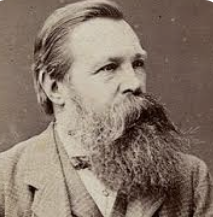
Education will enable young people quickly to familiarize themselves with the whole system of production and to pass from one branch of production to another in response to the needs of society or their own inclinations. It will, therefore, free them from the one-sided character which the present-day division of labor impresses upon every individual. Communist society will, in this way, make it possible for its members to put their comprehensively developed faculties to full use. But, when this happens, classes will necessarily disappear. It follows that society organized on a communist basis is incompatible with the existence of classes on the one hand, and that the very building of such a society provides the means of abolishing class differences on the other.

2 months 1 week ago
Thou shalt do no murder, Thou shalt not commit adultery, Thou shalt not steal, Thou shalt not bear false witness, Honour thy father and thy mother: and, Thou shalt love thy neighbour as thyself.
▼
Source
source
19:18-19 (KJV)
4 months 3 days ago
All men are almost led to believe not of proof, but by attraction. This way is base, ignoble, and irrelevant; every one therefore disavows it. Each one professes to believe and even to love nothing but what he knows to be worthy of belief and love.

3 months 2 weeks ago
The most violent revolutions in an individual's beliefs leave most of his old order standing. Time and space, cause and effect, nature and history, and one's own biography remain untouched. New truth is always a go-between, a smoother-over of transitions. It marries old opinion to new fact so as ever to show a minimum of jolt, a maximum of continuity.
▼
Source
source
"What Pragmatism Means," Pragmatism, pp. 60-61 (1931); lectures delivered at the Lowell Institute, Boston, Massachusetts
4 months 2 weeks ago
Some say that the body is the "tomb" of the soul, their notion being that the soul is buried in the present life; and again, because by its means the soul gives any signs which it gives, it is for this reason also properly called "sign". But I think it most likely that the Orphic poets gave this name, with the idea that the soul is undergoing punishment for something; they think it has the body as an enclosure to keep it safe, like a prison, and this is, as the name itself denotes, the "safe" for the soul, until the penalty is paid, and not even a letter needs to be changed.
2 months 2 days ago
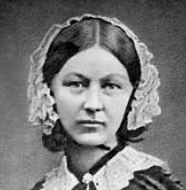
People do not go into the company of their fellow-creatures for what would seem a very sufficient reason, namely, that they have something to say to them, or something that they want to hear from them; but in the vague hope that they may find something to say.
3 months 4 weeks ago
The hair is the finest ornament women have. . . . I like women to let their hair fall down their back, it is a most agreeable sight.
▼
Source
source
-- Table Talk, quoted in Luther On "Woman"

3 months 2 weeks ago
Scientific theories are distinguished from myths... in being criticizable, and... open to modifications... They can be neither verified nor probabilified.

3 months 2 weeks ago
A writer who takes political, social or literary positions must act only with the means that are his. These means are the written words.
▼
Source
source
Refusing the Nobel Prize, New York Times
2 months 4 days ago
The more Lil' Kim distorted her natural beauty to become a cartoonlike caricature of whiteness, the larger her success.

2 months 3 days ago
Faculty X is simply that latent power in human beings possess to reach beyond the present. After all, we know perfectly well that the past is as real as the present, and that New York and Singapore and Lhasa and Stepney Green are all as real as the place I happen to be in at the moment. Yet my senses do not agree. They assure me that this place, here and now, is far more real than any other place or any other time. Only in certain moments of great inner intensity do I know this to be a lie. Faculty X is a sense of reality, the reality of other places and other times, and it is the possession of it - fragmentary and uncertain though it is - that distinguishes man from all other animals.
▼
Source
source
p. 59

1 month 3 weeks ago
There is one ethical principle, either you are preserving life generally, or you aren't. Preserving life in your ends and your means determines whether you are good or evil.

2 months 1 week ago
Whenever a man talks he lies, and so far as he talks to himself - that is to say, so far as he thinks, knowing that he thinks - he lies to himself. The only truth in human life is that which is physiological. Speech - this thing that they call a social product - was made for lying.
▼
Source
source
Niebla [Mist]

5 days ago
Things that were hard to bear are sweet to remember.
▼
Source
source
lines 656-657;
7 months 3 weeks ago
The symptom is not only a cyphered message, it is at the same time a way for the subject to organize his enjoyment - that is why, even after the completed interpretation, the subject is not prepared to renounce his symptom.

3 months 3 weeks ago
What, in unenlightened societies, colour, race, religion, or in the case of a conquered country, nationality, are to some men, sex is to all women; a peremptory exclusion from almost all honourable occupations, but either such as cannot be fulfilled by others, or such as those others do not think worthy of their acceptance.
▼
Source
source
Ch. 4

3 months 2 weeks ago
The believing we do something when we do nothing is the first illusion of tobacco.
▼
Source
source
1859
6 days ago
A people cannot be free otherwise than at the individual's expense; for it is not the individual that is the main point in this liberty, but the people. The freer the people, the more bound the individual; the Athenian people, precisely at its freest time, created ostracism, banished the atheists, poisoned the most honest thinker.
▼
Source
source
Cambridge 1995, p. 190

2 months 3 weeks ago
It shews the anxiety of the great men who influenced the conduct of affairs at that great event, to make the Revolution a parent of settlement, and not a nursery of future revolutions.
▼
Source
source
Referring to the Glorious Revolution of 1688

3 months 4 weeks ago
I do myself a greater injury in lying than I do him of whom I tell a lie.
▼
Source
source
Book II, Ch. 17

1 week 4 days ago
One comfort is, that Great Men, taken up in any way, are profitable company. We cannot look, however imperfectly, upon a great man, without gaining something by him. He is the living light-fountain, which it is good and pleasant to be near. The light which enlightens, which has enlightened the darkness of the world; and this not as a kindled lamp only, but rather as a natural luminary shining by the gift of Heaven; a flowing light-fountain, as I say, of native original insight, of manhood and heroic nobleness;-in whose radiance all souls feel that it is well with them.

3 months 3 weeks ago
The origin of our passions, the root and spring of all the rest, the only one which is born with man, which never leaves him as long as he lives, is self-love; this passion is primitive, instinctive, it precedes all the rest, which are in a sense only modifications of it. In this sense, if you like, they are all natural. But most of these modifications are the result of external influences, without which they would never occur, and such modifications, far from being advantageous to us, are harmful. They change the original purpose and work against its end; then it is that man finds himself outside nature and at strife with himself.

3 months 4 days ago
The mathematician speculates the causes of a certain sensible effect, without considering its actual existence; for the contemplation of universals excludes the knowledge of particulars; and he whose intellectual eye is fixed on that which is general and comprehensive, will think but little of that which is sensible and singular.
▼
Source
source
A Dissertation on the Doctrine of Ideas, &c.
1 week 4 days ago
Let the modern eye look earnestly on that old midnight hour in St. Edmundsbury Church, shining yet on us, ruddy-bright, through the depths of seven hundred years; and consider mournfully what our Hero-worship once was, and what it now is!
2 months 2 weeks ago
Murder begins where self-defense ends.
▼
Source
source
Act I.
2 months 2 weeks ago
It is the preservation of the species, not of individuals, which appears to be the design of Deity throughout the whole of nature.
▼
Source
source
Letter 22
3 months 4 weeks ago
Make your educational laws strict and your criminal ones can be gentle; but if you leave youth its liberty you will have to dig dungeons for ages.
3 months 2 weeks ago
There is little in common between the organised parading of madness in the eighteenth century and the freedom with which madness came to the fore during the Renaissance. The earlier age had found it everywhere, an integral element of each experience, both in images and in real life dangers. During the classical period, it was also on public view, but behind bars. When it manifested itself it was at a carefully controlled distance, under the watchful eye of a reason that denied all kinship with it, and felt quite unthreatened by any hint of resemblance. Madness had become a thing to be observed, no longer the monster within, but an animal moved by strange mechanisms, more beast than man, where all humanity had long since disappeared.
▼
Source
source
Part One: 5. The Insane

3 months 3 weeks ago
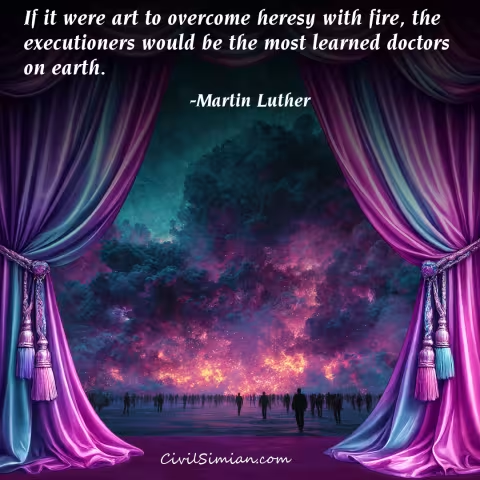
Superstition sets the whole world in flames; philosophy quenches them.
▼
Source
source
Dictionnaire philosophique (1822), "Superstition"

2 weeks 1 day ago
There is an unquestionable relationship between economic development and liberal democracy, which one can observe simply by looking around the world. But the exact nature of that relationship is more complicated than it first appeared, and is not adequately explained by any of the theories presented up to this point. The logic of modern natural science and the industrialization process it fosters does not point in a single direction in the sphere of politics, as it does in the sphere of economics. Liberal democracy is compatible with industrial maturity, and is preferred by the citizens of many industrially advanced states, but there does not appear to be a necessary connection between the two. The Mechanism underlying our directional history leads equally well to a bureaucratic-authoritarian future as to a liberal one. We will therefore have to look elsewhere in trying to understand the current crisis of authoritarianism and the worldwide democratic revolution.
▼
Source
source
p. 125
2 months 3 weeks ago
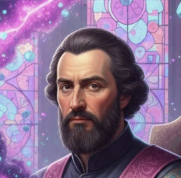
Perchance you who pronounce my sentence are in greater fear than I who receive it.
▼
Source
source
His famous response to his judges upon his conviction as a heretic, prior to his transfer to the civil authorities for execution. (16 February 1600); as quoted by Gaspar Schopp of Breslau in a letter to Conrad Rittershausen
2 months 3 weeks ago
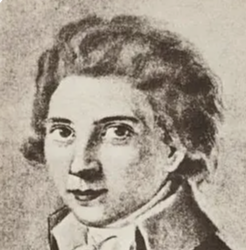
The romantic poetry is a progressive universal poetry.
▼
Source
source
Progressive Universalpoesie (1798)

4 months 2 weeks ago
Great novelists are philosopher novelists, that is, the contrary of thesis-writers.

3 months 2 days ago
There are men and gods, and beings like Pythagoras.
▼
Source
source
Of himself, as quoted in A History of Western Philosophy (1945) by Bertrand Russell
2 months 3 days ago
Whatever is merely positive is lifeless. Negativity is essential to vitality.

4 months 2 weeks ago
For man to become successful, for man to establish himself as the ruler of the planet, it was necessary for him to use his brain as something more than a device to make the daily routine of getting food and evading enemies a little more efficient. Man had to learn to control his environment.
2 months 2 weeks ago
By capitulating to life, this world has betrayed nothingness. . . . I resign from movement, and from my dreams. Absence! You shall be my sole glory. . . . Let "desire" be forever stricken from the dictionary, and from the soul! I retreat before the dizzying farce of tomorrows. And if I still cling to a few hopes, I have lost forever the faculty of hoping.
3 months 2 weeks ago
Only the great generalizations survive. The sharp words of the Declaration of Independence, lampooned then and since as 'glittering generalities,' have turned out blazing ubiquities that will burn forever and ever.
▼
Source
source
From a lecture on Books given in the Fraternity Course in Boston in 1864

2 months 6 days ago
Although people seem to be unaware of it today, the development of the faculty of attention forms the real object and almost the sole interest of studies.
1 week 4 days ago
History a distillation of Rumour.
▼
Source
source
Pt. I, Bk. VII, ch. 5.
4 months 1 week ago
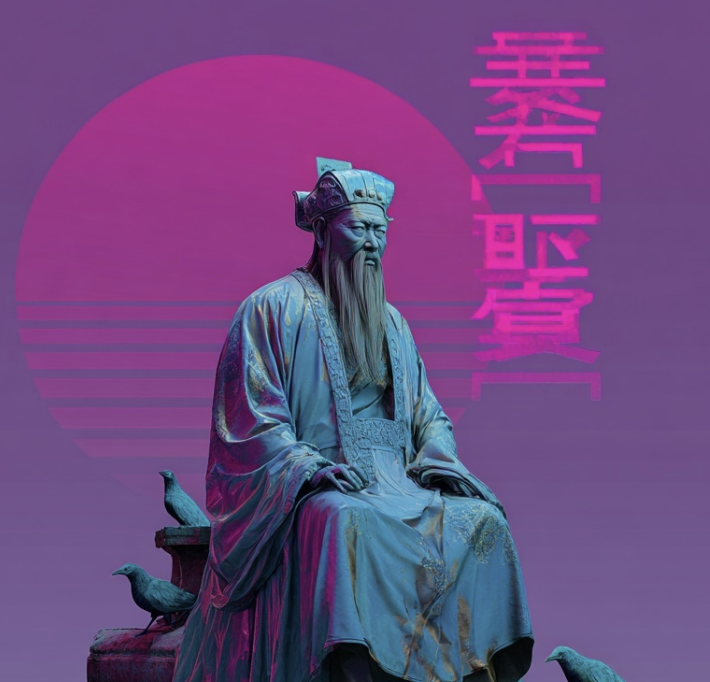
If I hear the Way [of truth] in the morning, I am content even to die in that evening.
CivilSimian.com created by AxiomaticPanic, CivilSimian, Kalokagathia