

2 months 1 week ago
What is the wisdom of a book compared with the wisdom of an angel?

3 months 1 week ago
The soul is subject to dollars.
▼
Source
source
par. 6

3 months 1 week ago
In this third period (as it may be termed) of my mental progress, which now went hand in hand with hers, my opinions gained equally in breadth and depth, I understood more things, and those which I had understood before, I now understood more thoroughly. I had now completely turned back from what there had been of excess in my reaction against Benthamism. I had, at the height of that reaction, certainly become much more indulgent to the common opinions of society and the world, and more willing to be content with seconding the superficial improvement which had begun to take place in those common opinions, than became one whose convictions on so many points, differed fundamentally from them. I was much more inclined, than I can now approve, to put in abeyance the more decidedly heretical part of my opinions, which I now look upon as almost the only ones, the assertion of which tends in any way to regenerate society.
▼
Source
source
(p. 229)
1 month 4 days ago
Faith exalts the human heart, by removing it from the market-place, making it sacred and unexchangeable. Under the jurisdiction of religion our deeper feelings are sacralized, so as to become raw material for the ethical life: the life lived in judgement.
▼
Source
source
"Avant-garde and Kitsch" (p. 91)
2 days ago
In science, as in the playing card experiment, novelty emerges only with difficulty, manifested by resistance, against a background provided by expectation.
▼
Source
source
p. 64
1 month 3 weeks ago
Implication is thus the very texture of our web of belief, and logic is the theory that traces it.
▼
Source
source
S. 41

1 month 4 weeks ago
The real sin - perhaps it is a sin against the Holy Ghost for which there is no remission - is the sin of heresy, the sin of thinking for oneself. The saying has been heard before now, here in Spain, that to be a liberal - that is, a heretic - is worse than being an assassin, a thief, or an adulterer. The gravest sin is not to obey the Church, whose infallibility protects us from reason.
1 month 1 week ago
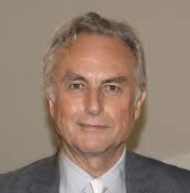
The population of the US is nearly 300 million, including many of the best educated, most talented, most resourceful, humane people on earth. By almost any measure of civilised attainment, from Nobel prize-counts on down, the US leads the world by miles. You would think that a country with such resources, and such a field of talent, would be able to elect a leader of the highest quality. Yet, what has happened? At the end of all the primaries and party caucuses, the speeches and the televised debates, after a year or more of non-stop electioneering bustle, who, out of that entire population of 300 million, emerges at the top of the heap? George Bush.
▼
Source
source
"Bin Laden's victory " The Guardian

3 months 1 week ago
Life is just a notebook with blank pages. Every time we make a mistake, the pages get stained and living in it becomes impossible.

3 months 2 weeks ago
But such is the nature of the human mind, that it always lays hold on every mind that approaches it; and as it is wonderfully fortified by an unanimity of sentiments, so is it shocked and disturbed by any contrariety. Hence the eagerness, which most people discover in a dispute; and hence their impatience of opposition, even in the most speculative and indifferent opinions.
▼
Source
source
Part I, Essay 8: Of Parties in General
3 months 1 week ago
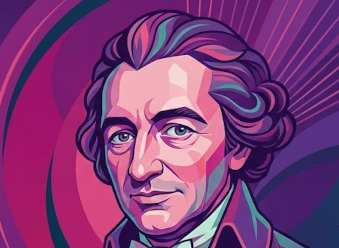
It is the nature and intention of a constitution to prevent governing by party, by establishing a common principle that shall limit and control the power and impulse of party, and that says to all parties, thus far shalt thou go and no further. But in the absence of a constitution, men look entirely to party; and instead of principle governing party, party governs principle.

3 months 1 week ago
A life devoted to science is therefore a happy life, and its happiness is derived from the very best sources that are open to dwellers on this troubled and passionate planet.
▼
Source
source
Ch. 2: The Place of Science in a Liberal Education
3 months 6 days ago
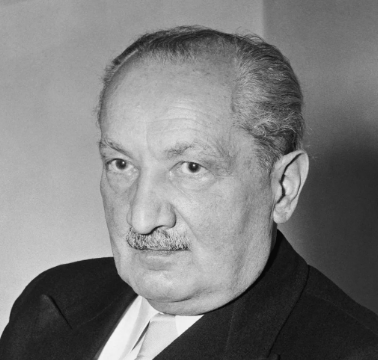
The critique of the highest values hitherto does not simply refute them or declare them invalid. It is rather a matter of displaying their origins as impositions which must affirm precisely what ought to be negated by the values established.
▼
Source
source
p. 26
3 months 6 days ago
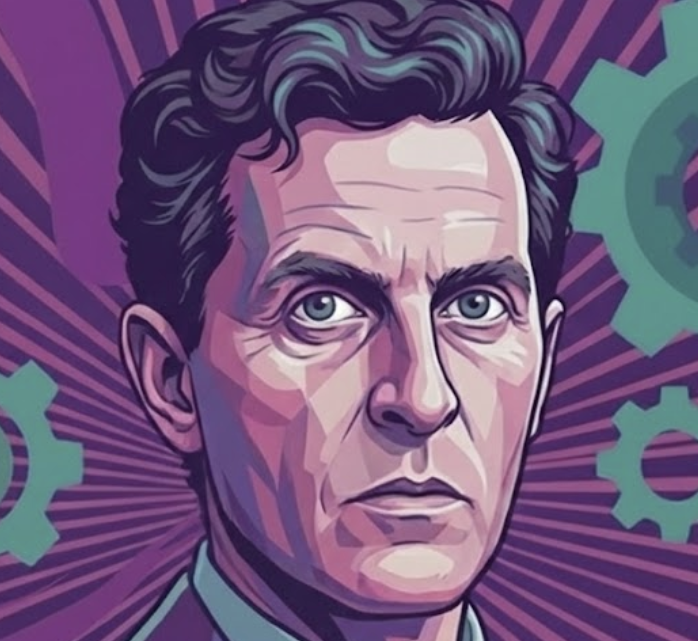
The problems are dissolved in the actual sense of the word - like a lump of sugar in water.
▼
Source
source
Ch. 9 : Philosophy, p. 183

2 days ago
What you see, yet can not see over, is as good as infinite.
▼
Source
source
Bk. II, ch. 1.
2 months 3 days ago
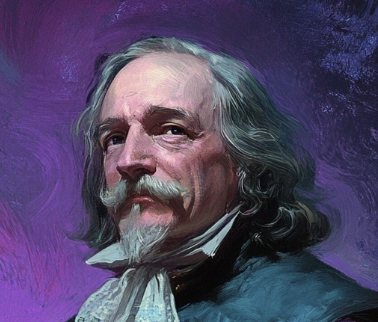
Science is the knowledge of Consequences, and dependence of one fact upon another: by which, out of that we can presently do, we know how to do something else when we will, or the like, another time.
▼
Source
source
The First Part, Chapter 5, p. 21
3 months 1 day ago
It is no more evident that democratic institutions are to be measured by the sort of person they create than that they are to be measured against divine commands. ... Even if the typical character types of liberal democracies are bland, calculating, petty, and unheroic, the prevalence of such people may be a reasonable price to pay for political freedom.
2 months 1 week ago
What has always made the state a hell on earth has been precisely that man has tried to make it heaven.
3 months 1 week ago
I always made one prayer to God, a very short one. Here it is: "O Lord, make our enemies quite ridiculous!" God granted it.
▼
Source
source
16 May 1767, Letter to Étienne Noël Damilaville
3 months 1 week ago
Reading the morning newspaper is the realist's morning prayer. One orients one's attitude toward the world either by God or by what the world is. The former gives as much security as the latter, in that one knows how one stands.
▼
Source
source
Miscellaneous writings of G.W.F. Hegel, translation by Jon Bartley Stewart, Northwestern University Press, 2002, page 247.

3 months 1 week ago
What interest, zest, or excitement can there be in achieving the right way, unless we are enabled to feel that the wrong way is also a possible and a natural way, - nay, more, a menacing and an imminent way? And what sense can there be in condemning ourselves for taking the wrong way, unless we need have done nothing of the sort, unless the right way was open to us as well? I cannot understand the willingness to act, no matter how we feel, without the belief that acts are really good and bad.
▼
Source
source
The Dilemma of Determinism, 1884

1 month 2 weeks ago
All mathematical laws which we find in Nature are always suspect to me, in spite of their beauty. They give me no pleasure. They are merely auxiliaries. At close range it is all not true.
▼
Source
source
As quoted in Lichtenberg : A Doctrine of Scattered Occasions (1959) by Joseph Peter Stern, p. 84
4 months 1 week ago
According to one mode... nature is thus denominated, viz. the first subject matter to every thing which contains in itself the principle of motion and mutation. But after another mode it is denominated form, which subsists according to definition: for as art is called that which subsists according to art, and that which is artificial; so likewise nature is both called that which is according to nature, and that which is natural. ...that which is composed from these is not nature, but consists from nature; as, for instance, man. And this is nature in a greater degree than matter: for every thing is then said to be, when it is form in energy... entelecheia, rather than when it is incapacity.

2 months 1 week ago
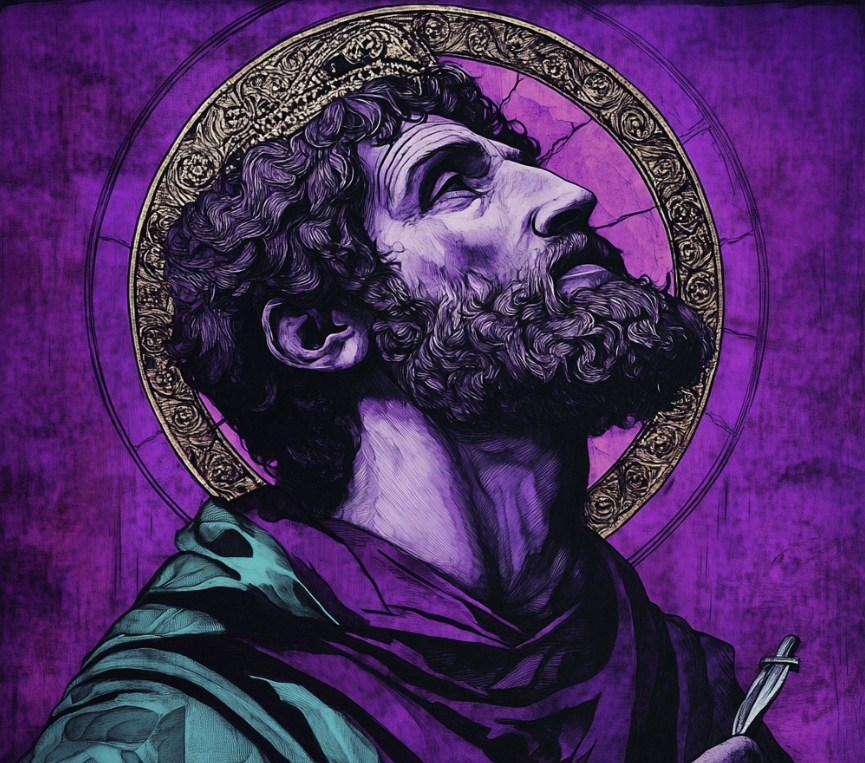
On the frontiers of the self: "What I have suffered, what I am suffering, no one will ever know, not even I."
3 months 3 weeks ago
Choose to love whomsoever thou wilt: all else will follow. Thou mayest say, "I love only God, God the Father." Wrong! If Thou lovest Him, thou dost not love Him alone; but if thou lovest the Father, thou lovest also the Son. Or thou mayest say, "I love the Father and I love the Son, but these alone; God the Father and God the Son, our Lord Jesus Christ who ascended into heaven and sitteth at the right hand of the Father, the Word by whom all things were made, the Word who was made flesh and dwelt amongst us; only these do I love." Wrong again! If thou lovest the Head, thou lovest also the members; if thou lovest not the members, neither dost thou love the Head.
▼
Source
source
p 438
3 months 1 week ago
The world at present is obsessed by the conflict of rival ideologies, and one of the apparent causes of conflict is the desire for the victory of our own ideology and the defeat of the other. I do not think that the fundamental motive here has much to do with ideologies. I think the ideologies are merely a way of grouping people, and that the passions involved are merely those which always arise between rival groups. Ideologies, in fact, are one of the methods by which herds are created, and the psychology is much the same however the herd may have been generated.

3 months 1 week ago
The true Enlightenment thinker, the true rationalist, never wants to talk anyone into anything. No, he does not even want to convince; all the time he is aware that he may be wrong. Above all, he values the intellectual independence of others too highly to want to convince them in important matters. He would much rather invite contradiction, preferably in the form of rational and disciplined criticism. He seeks not to convince but to arouse - to challenge others to form free opinions.

3 months 2 weeks ago
The natural price, therefore, is, as it were, the central price, to which the prices of all commodities are continually gravitating.
▼
Source
source
Chapter VII, p. 69.
3 days ago
Tsze-Kung asked Confucius, saying, "Master, are you a sage?" Confucius answered him: "A sage is what I cannot rise to. I learn without satiety, and teach without being tired." Tsze-Kung said: "You learn without satiety: that shows your wisdom. You teach without being tired: that shows your benevolence. Benevolent and wise:- Master, you are a sage."
▼
Source
source
"Humility", no. 139

3 months 1 week ago
I have always - at least, ever since I can remember - had a kind of longing for death. Psyche
1 month 1 week ago
Treat your friend as if he might become an enemy.
▼
Source
source
Maxim 401

3 months 1 week ago
So that is what hell is. I would never have believed it. You remember: the fire and brimstone, the torture. Ah! the farce. There is no need for torture: Hell is other people.
▼
Source
source
Garcin, Act 1, sc. 5
2 months 2 days ago
Tell me to what you pay attention and I will tell you who you are.
▼
Source
source
p. 94.

1 month 1 week ago
The nuclear bomb will turn warfare into the juggling of images.
▼
Source
source
(p. 360)
3 months 4 weeks ago
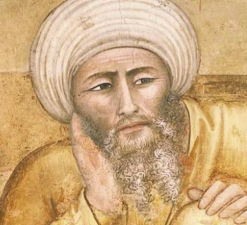
On the whole, a man who denies the existence of the effects arranged according to the causes in the question of arts, or whose wisdom cannot understand it, then he has no knowledge of the art of its Maker.
3 months 1 week ago
Possibilities that fail to get realized are, for determinism, pure illusions: they never were possibilities at all. There is nothing inchoate, it says, about this universe of ours, all that was or is or shall be actual having been from eternity virtually there. The cloud of alternatives our minds escort this mass of actuality withal is a cloud of sheer deceptions, to which 'impossibilities' is the only name that rightfully belongs.
▼
Source
source
The Dilemma of Determinism in "The Will to Believe" p. 151
3 months 1 week ago
I cannot imagine how the clockwork of the universe can exist without a clockmaker.
▼
Source
source
As attributed in More Random Walks in Science : An Anthology (1982) by Robert L. Weber, p. 65
3 months 1 week ago
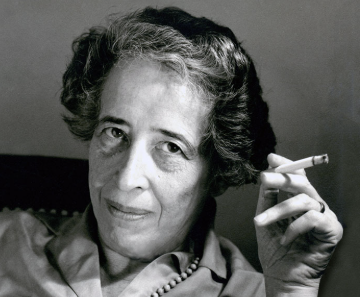
No punishment has ever possessed enough power of deterrence to prevent the commission of crimes. On the contrary, whatever the punishment, once a specific crime has appeared for the first time, its reappearance is more likely than its initial emergence could ever have been.
▼
Source
source
Epilogue
3 months 1 day ago
Commit no slander; so that infamy and wickedness may not happen unto thee.
▼
Source
source
(p. 59)

3 months 2 weeks ago
As regards the objection that possibles are independent of the decrees of God I grant it of actual decrees (although the Cartesians do not at all agree to this), but I maintain that the possible individual concepts involve certain possible free decrees; for example, if this world was only possible, the individual concept of a particular body in this world would involve certain movements as possible, it would also involve the laws of motion, which are the free decrees of God; but these, also, only as possibilities. Because, as there are an infinity of possible worlds, there are also an infinity of laws, certain ones appropriate to one; others, to another, and each possible individual of any world involves in its concept the laws of its world.
▼
Source
source
(May, 1686) as quoted in George R. Montgomery, Tr., "Correspondence between Leibniz and Arnauld," Leibniz: Discourse on metaphysics; correspondence with Arnauld, and Monadology (1916) VIII, p. 108
2 months 3 days ago
All metaphysical theories are inconclusively vulnerable to positivist attack.
▼
Source
source
Ch. 9, p. 127

1 month 3 weeks ago
The combination of these two facts - the longing in the depth of the heart for absolute good, and the power, though only latent, of directing attention and love to a reality beyond the world and of receiving good from it - constitutes a link which attaches every man without exception to that other reality. Whoever recognizes that reality recognizes also that link. Because of it, he holds every human being without any exception as something sacred to which he is bound to show respect. This is the only possible motive for universal respect towards all human beings. Whatever formulation of belief or disbelief a man may choose to make, if his heart inclines him to feel this respect, then he in fact also recognizes a reality other than this world's reality. Whoever in fact does not feel this respect is alien to that other reality also.
2 months 3 days ago
Love is the extremely difficult realisation that something other than oneself is real. Love, and so art and morals, is the discovery of reality.
▼
Source
source
"The Sublime and the Good", in the Chicago Review, Vol. 13 Issue 3 (Autumn 1959) p. 51.

1 month 3 weeks ago
Christianity was an epidemic rather than a religion. It appealed to fear, hysteria and ignorance. It spread across the Western world, not because it was true, but because humans are gullible and superstitious.
▼
Source
source
p. 212
1 month 1 week ago
The TV camera has no shutter. It does not deal with aspects or facets of objects in high resolution. It is a means of direct pick-up by the electrical groping over surfaces.
▼
Source
source
Arts in society, Volume 3, 1964, p. 242
3 months 1 week ago
When nature removes a great man, people explore the horizon for a successor; but none comes, and none will. His class is extinguished with him. In some other and quite different field the next man will appear.
▼
Source
source
Uses of Great Men

3 months 1 week ago
The country that is more developed industrially only shows, to the less developed, the image of its own future.
▼
Source
source
Author's prefaces to the First Edition.
1 month 3 weeks ago
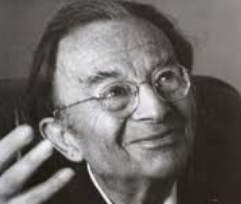
The revolutionary and critical thinker is in a certain way always outside of his society while of course he is at the same time also in it. That he is in it is obvious, but why is he outside it? First, because he is not brainwashed by the ruling ideology, that is to say, he has an extraordinary kind of independence of thought and feeling; hence he can have a greater objectivity than the average person has. There are many emotional factors too. And certainly I do not mean to enter here into the complex problem of the revolutionary thinker. But it seems to me essential that in a certain sense he transcends his society. You may say he transcends it because of the new historical developments and possibilities he is aware of, while the majority still think in traditional terms.

2 months 3 days ago
Foxes have their dens and birds have their nests, but human beings have no place to lay down and rest.
2 months 2 days ago
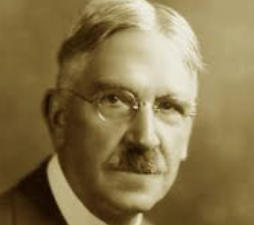
The determination of the mot juste, of the right incident in the right place, of exquisiteness of proportion, of the precise tone, hue, and shade that helps unify the whole while it defines a part, is accomplished by emotion. Not every emotion, however, can do this work, but only one informed by material that is grasped and gathered. Emotion is informed and carried forward when it is spent indirectly in search for material and in giving it order, not when it is directly expended.
▼
Source
source
p. 73
CivilSimian.com created by AxiomaticPanic, CivilSimian, Kalokagathia