


2 months 5 days ago
Man is said to be a reasoning animal. I do not know why he has not been defined as an affective or feeling animal. Perhaps that which differentiates him from other animals is feeling rather than reason. More often I have seen a cat reason than laugh or weep. Perhaps it weeps or laughs inwardly - but then perhaps, also inwardly, the crab resolves equations of the second degree.
1 month 3 weeks ago
If we want a theory explaining how people play billiards, we do not want a theory of perfect billiard balls; we want a theory of what heuristics a human billiard player uses in order to plan and make a (often not quite accurate) shot. These heuristics and actions do not involve solving the differential equations of the billiard board; they involve rules of thumb and it is these practice guides to action we are trying to discover in order to explain the behavior.
▼
Source
source
An Empirically Based Microeconomics (1997), p. 173

4 months 1 week ago
See a person's means (of getting things). Observe his motives. Examine that in which he rests. How can a person conceal his character? See a person's "being", observe his motive, notice his result. How can a person conceal his character?
7 months 3 weeks ago
It is also crucial to bear in mind the interconnection between the Decalogue... and its modern obverse, the celebrated 'human Rights'. As the experience of our post-political liberal-permissive society amply demonstrates, human Rights are ultimately, at their core, simply Rights to violate the Ten Commandments. 'The right to privacy' — the right to adultery, in secret, where no one sees me or has the right to probe my life. 'The right to pursue happiness and to possess private property' -- the right to steal (to exploit others). 'Freedom of the press and of the expression of opinion' -- the right to lie. 'The right of free citizens to possess weapons' -- the right to kill. And, ultimately, 'freedom of religious belief' — the right to worship false gods.
1 month 2 weeks ago
Sanity itself is a kind of convention.
▼
Source
source
The Hunter's Family

1 week 3 days ago
The rudest heathen that worshipped Canopus, or the Caabah Black-Stone, he, as we saw, was superior to the horse that worshipped nothing at all! Nay there was a kind of lasting merit in that poor act of his; analogous to what is still meritorious in Poets: recognition of a certain endless divine beauty and significance in stars and all natural objects whatsoever.

3 months 2 weeks ago
I mistrust illuminations: what we take for a discovery is very often only a familiar thought that we have not recognized.
▼
Source
source
p. 439
2 months 2 weeks ago
We exhort the compromisers to open their hearts to truth, to free themselves of their wretched and blind circumspection, of their intellectual arrogance, and of the servile fear which dries up their souls and paralyzes their movements. Let us therefore trust the eternal Spirit which destroys and annihilates only because it is the unfathomable and eternal source of all life. The passion for destruction is a creative passion, too!
▼
Source
source
"The Reaction in Germany" (1842) Often paraphrased as, "The urge to destroy is also a creative urge"
4 months 1 week ago
The wise find pleasure in water; the virtuous find pleasure in hills. The wise are active; the virtuous are tranquil. The wise are joyful; the virtuous are long-lived.
1 month 4 days ago
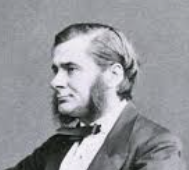
Every living creature commences its existence under a form different from, and simpler than, that which it eventually attains.
▼
Source
source
Ch.2, p. 74

3 months 1 week ago
I shall develop the thesis that anyone acting communicatively must, in performing any speech act, raise universal validity claims and suppose that they can be vindicated.
▼
Source
source
p. 22
4 weeks ago
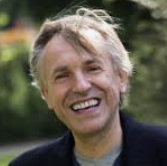
One should be wary of assuming that we're the folk who can properly look after ourselves, whereas our descendants, if they become genetically pre-programmed ecstatics, will get trapped in robot-serviced states of infantile dependence. For it shouldn't be forgotten that exuberantly happy people also have a fierce will to survive. They love life dearly. They take on daunting challenges against seemingly impossible odds. One of the hallmarks of many endogenous depressive states, on the other hand, is so-called behavioural despair. If one learns that apparently no amount of effort can rescue one from an aversive stimulus, then one tends to sink into a lethargic stupor. This syndrome of "learned helplessness" may persist even when the opportunity to escape from the nasty stimulus subsequently arises.
▼
Source
source
4. Objections, 4.2
3 months 2 weeks ago
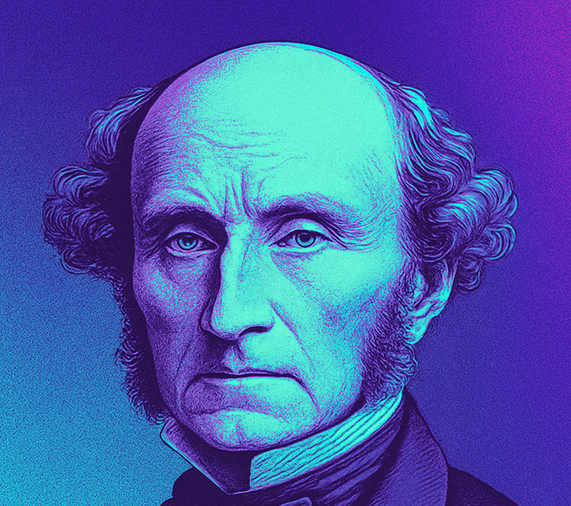
I well knew that to propose something which would be called extreme, was the true way not to impede but to facilitate a more moderate experiment.
▼
Source
source
(p. 294)

3 months 2 weeks ago
Fine manners need the support of fine manners in others.
▼
Source
source
Behavior
3 months 2 weeks ago
I read your piece on Plato. Holmes, when you strike at a king, you must kill him.
▼
Source
source
as reported by Felix Frankfurter in Harlan Buddington Phillips, Felix Frankfurter Reminisces (1960), p. 59
1 week 3 days ago
It is a most important social act; nay, at bottom, the one important social act. Given the men a People choose, the People itself, in its exact worth and worthlessness, is given. A heroic people chooses heroes, and is happy; a valet or flunkey people chooses sham-heroes, what are called quacks, thinking them heroes, and is not happy.
2 months 2 weeks ago
Liberty is so great a magician, endowed with so marvelous a power of productivity, that under the inspiration of this spirit alone, North America was able within less than a century to equal, and even surpass, the civilization of Europe.

1 month 2 weeks ago
The happiness of men consists in life. And life is in labor.
▼
Source
source
What Is To Be Done? (1886) Chap. XXXVIII

3 months 2 weeks ago
I have lived in the pursuit of a vision, both personal and social. Personal: to care for what is noble, for what is beautiful, for what is gentle; to allow moments of insight to give wisdom at more mundane times. Social: to see in imagination the society that is to be created, where individuals grow freely, and where hate and greed and envy die because there is nothing to nourish them. These things I believe, and the world, for all its horrors, has left me unshaken.
1 month 3 weeks ago
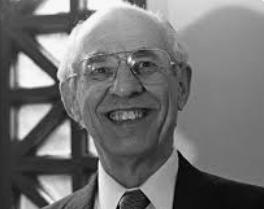
If the importance of science does not lie in its constituting the whole of human knowledge, even less does it lie, in my view, in its technological applications. Science at the best is a way of coming to know, and hopefully a way of acquiring some reverence for, the wonders of nature. The philosophical study of science, at the best, has always been a way of coming to understand both some of the nature and some of the limitations of human reason. These seem to me to be sufficient grounds for taking science and philosophy of science seriously; they do not justify science worship.
▼
Source
source
"Introduction: Science as approximation to truth"
3 months 2 weeks ago
As for us, my little friend, we entered [the Communist Party] because we were tired of dying of hunger.
▼
Source
source
Act 3, sc. 2
3 months 2 weeks ago
I should as soon think of swimming across Charles River when I wish to go to Boston, as of reading all my books in originals when I have them rendered for me in my mother tongue.
▼
Source
source
Books
4 months 1 week ago
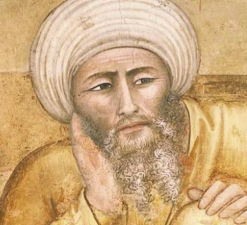
If we admit the existence of the prophetic mission, by putting the idea of possibility, which is in fact ignorance, in place of certainty, and make miracles a proof of the truth of man who claims to be a prophet it becomes necessary that they should not be used by a person, who says that they can be performed by others than prophets, as the Mutakallimun do.
2 months 5 days ago
It has been said a thousand times and in a thousand books that ancestor-worship is for the most part the source of primitive religions, and it may be strictly said that what most distinguishes man from the other animals is that, in one form or another, he guards his dead and does not give them over to the neglect of teeming mother earth; he is an animal that guards its dead.
1 week 3 days ago
No nation ever had so bad a neighbour as Germany has had in France for the last 400 years; bad in all manner of ways; insolent, rapacious, insatiable, unappeasable, continually aggressive. ... Germany, after 400 years of ill-usage, and generally ill-fortune, from that neighbour, has had at last the great happiness to see its enemy fairly down in this manner; and Germany, I do clearly believe, would be a foolish nation not to think of raising up some secure boundary-fence between herself and such a neighbour now that she has the chance.
▼
Source
source
Letter to The Times on the Franco-Prussian War and Germany's annexation of Alsace-Lorraine (18 November 1870), p. 8

2 months 2 weeks ago
Knowledge is the plague of life, and consciousness, an open wound in its heart.
3 months 2 weeks ago
Leave this hypocritical prating about the masses. Masses are rude, lame, unmade, pernicious in their demands and influence, and need not to be flattered, but to be schooled. I wish not to concede anything to them, but to tame, drill, divide, and break them up, and draw individuals out of them.
▼
Source
source
Considerations by the Way

3 months 2 weeks ago
In short, competition has to shoulder the responsibility of explaining all the meaningless ideas of the economists, whereas it should rather be the economists who explain competition.
▼
Source
source
Vol. III, Ch. L, Illusions Created by Competition, p. 866.
3 months 4 weeks ago
Credulity in arts and opinions is likewise of two kinds viz., when men give too much belief to arts themselves, or to certain authors in any art. The sciences that sway the imagination more than the reason are principally three viz., astrology, natural magic, and alchemy. Alchemy may be compared to the man who told his sons that he had left them gold, buried somewhere in his vineyard; while they by digging found no gold, but by turning up the mould about the roots of the vines procured a plentiful vintage. So the search and endeavours to make gold have brought many useful inventions to light.
▼
Source
source
De Augmentis Scientiarum (1623) as quoted by Edward Thorpe, History of Chemistry, Vol. 1, p. 43.

2 months 1 day ago
I have been taught that the land should belong to those who till the soil. With all of his deep-seated sympathies with the Arabs, our comrade cannot possibly deny that the Jews in Palestine have tilled the soil. Tens of thousands of them, young and deeply devout idealists, have flocked to Palestine, there to till the soil under the most trying pioneer conditions. They have reclaimed wastelands and have turned them into fertile fields and blooming gardens. Now I do not say that therefore Jews are entitled to more rights than the Arabs, but for an ardent socialist to say that the Jews have no business in Palestine seems to me rather a strange kind of socialism.
1 month 2 weeks ago
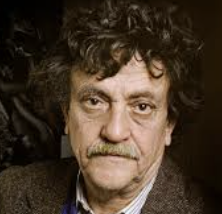
I sometimes wondered what the use of any of the arts was. The best thing I could come up with was what I call the canary in the coal mine theory of the arts. This theory says that artists are useful to society because they are so sensitive. They are super-sensitive. They keel over like canaries in poison coal mines long before more robust types realize that there is any danger whatsoever.
▼
Source
source
Physicist, Purge Thyself in the Chicago Tribune Magazine

3 months 3 weeks ago
Death, they say, acquits us of all obligations.
▼
Source
source
Book I, Ch. 7

2 months 2 weeks ago
The supporters of the Development Hypothesis... can show that any existing species-animal or vegetable-when placed under conditions different from its previous ones, immediately begins to undergo certain changes fitting it for the new conditions. They can show that in successive generations these changes continue; until, ultimately, the new conditions become the natural ones. They can show that in cultivated plants, in domesticated animals, and in the several races of men, such alterations have taken place. They can show that the degrees of difference so produced are often, as in dogs, greater than those on which distinctions of species are in other cases founded.

4 months 2 weeks ago
I recognize the necessity of animal experiments with my mind but not with my heart.
2 months 2 weeks ago
Irony is the form of paradox. Paradox is what is good and great at the same time.
▼
Source
source
Aphorism 48, as translated in Dialogue on Poetry and Literary Aphorisms (1968), p. 151

3 days ago
Pain he endures, death he awaits.

3 months ago
By Silence, the discretion of a man is known: and a fool, keeping Silence, seemeth to be wise.
3 months 2 weeks ago
The owl of Minerva first begins her flight with the onset of dusk.
2 weeks 1 day ago
The totalitarian states, whether of the fascist or the communist persuasion, are more than superficially alike as dictatorships, in the suppression of dissent, and in operating planned and directed economies. They are profoundly alike.
▼
Source
source
Ch. V: "The Totalitarian Regimes", §7, p. 89


2 months 3 weeks ago
Americans of all ages, all stations of life, and all types of disposition are forever forming associations... In democratic countries knowledge of how to combine is the mother of all other forms of knowledge; on its progress depends that of all the others.
▼
Source
source
Book Two, Chapter V.
3 months 2 weeks ago
The reason that I call my doctrine logical atomism is because the atoms that I wish to arrive at as the sort of last residue in analysis are logical atoms and not physical atoms. Some of them will be what I call "particulars" - such things as little patches of color or sounds, momentary things - and some of them will be predicates or relations and so on.

2 months 4 days ago
If a captive mind is unaware of being in prison, it is living in error. If it has recognized the fact, even for the tenth of a second, and then quickly forgotten it in order to avoid suffering, it is living in falsehood. Men of the most brilliant intelligence can be born, live and die in error and falsehood. In them, intelligence is neither a good, nor even an asset. The difference between more or less intelligent men is like the difference between criminals condemned to life imprisonment in smaller or larger cells. The intelligent man who is proud of his intelligence is like a condemned man who is proud of his large cell.
▼
Source
source
p. 69
3 days ago
Very often the things that cost nothing cost us the most heavily; I can show you many objects the quest and acquisition of which have wrested freedom from our hands.
2 months 4 days ago
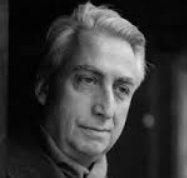
Whereas the work is understood to be traceable to a source (through a process of derivation or "filiation"), the Text is without a source - the "author" a mere "guest" at the reading of the Text.
▼
Source
source
Proposition 5

1 week 6 days ago
He whom God has touched will always be a being apart: he is, whatever he may do, a stranger among men; he is marked by a sign.
▼
Source
source
Oeuvres Complètes, vol. 3. L'Avenir de la Science (1890).

3 months 2 weeks ago
There is no worse lie than a truth misunderstood by those who hear it.
▼
Source
source
Lectures XIV and XV, "The Value of Saintliness"
3 months 2 weeks ago
History is not like some individual person, which uses men to achieve its ends. History is nothing but the actions of men in pursuit of their ends.
▼
Source
source
The Holy Family, Ch. VI (1845).
3 months 2 weeks ago
How much good it would do if one could exterminate the human race.
▼
Source
source
A characteristic saying of Russell, reported by Aldous Huxley in a letter to Lady Ottoline Morrell dated 8 October 1917, as quoted in Bibliography of Bertrand Russell, Routledge, 2013
CivilSimian.com created by AxiomaticPanic, CivilSimian, Kalokagathia