

6 months 3 weeks ago
Sex is no longer a serious taboo. Teenagers sometimes know more about it than adults.
▼
Source
source
Inside Information p. 4

6 months 1 week ago
As a violin string or a harpsichord key vibrates and gives forth sound, so the cerebral fibres, struck by waves of sound, are stimulated to render or repeat the words that strike them.

9 months 1 week ago
I like thought which preserves a whiff of flesh and blood, and I prefer a thousand times an idea rising from sexual tension or nervous depression to empty abstraction.
8 months 4 weeks ago
The issue over there being classes seems more a question of convenient conceptual scheme; the issue over there being centaurs, or brick houses on Elm Street, seems more a question of fact. But I have been urging that this difference is only one of degree, and that it turns upon our vaguely pragmatic inclination to adjust one strand of the fabric of science rather than another in accommodating some particular recalcitrant experience. Conservatism figures in such choices, and so does the quest for simplicity.
▼
Source
source
"Two Dogmas of Empiricism"

8 months 1 week ago
Never did Christ utter a single word attesting to a personal resurrection and a life beyond the grave.
▼
Source
source
My Religion (1884), Ch. 8
6 months 1 week ago
I, however, place economy among the first and most important republican virtues, and public debt as the greatest of the dangers to be feared.
▼
Source
source
Letter to William Plumer

10 months 3 weeks ago
Remember that you ought to behave in life as you would at a banquet. As something is being passed around it comes to you; stretch out your hand, take a portion of it politely. It passes on; do not detain it. Or it has not come to you yet; do not project your desire to meet it, but wait until it comes in front of you. So act toward children, so toward a wife, so toward office, so toward wealth.
▼
Source
source
(15).
8 months 5 days ago
There are evils, as someone has pointed out, that have the ability to survive identification and go on for ever - money, for instance, or war.
▼
Source
source
The Dean's December (1982) [Penguin Classics, 1998, ISBN 0-140-18913-0], ch. 13, p. 140
9 months 3 days ago
Hatred is a feeling which leads to the extinction of values.
▼
Source
source
Cited in the Oxford Dictionary of Quotations by Subject, ed. Susan Ratcliffe (2010), p. 223

8 months 3 weeks ago
The deepest definition of youth is life as yet untouched by tragedy.
▼
Source
source
p. 285.

10 months 1 week ago
Hitch your wagon to a star.
▼
Source
source
Civilization
10 months 3 days ago
On James's view, "true" resembles "good" or "rational" in being a normative notion, a compliment paid to sentences that seem to be paying their way and that fit with other sentences which are doing so.
▼
Source
source
Introduction to Consequences of Pragmatism



10 months 1 week ago
The strangest mores of the most of-the-way societies will, in spite of everything, be relatively comprehensible to the person who has a flesh-and-blood knowledge of man's needs, anxieties, and hopes. If, on the other hand, this experience is lacking, he will not even be able to understand the customs of those about him.
▼
Source
source
p. 139
7 months 3 days ago
Normal science, the activity in which most scientists inevitably spend almost all their time, is predicated on the assumption that the scientific community knows what the world is like. Normal science often suppresses fundamental novelties because they are necessarily subversive of its basic commitments.
▼
Source
source
p. 5
9 months 1 week ago
The original thinking force of the universe progresses and develops itself in all possible determinations of which it is capable, just as the other original natural forces progress and assume all possible configurations. I am a particular determination of the formative force, like the plant; a particular determination of the peculiar motive force, like the animal; and in addition to this a determination of the thinking force: and the union of these three basic forces into one force, into one harmonious development, is the distinguishing characteristic of my species.
▼
Source
source
P. Preuss, trans. (1987), p. 12
9 months 1 week ago
All my life, I have lived with the feeling that I have been kept from my true place. If the expression "metaphysical exile" had no meaning, my existence alone would afford it one.
6 months 3 weeks ago
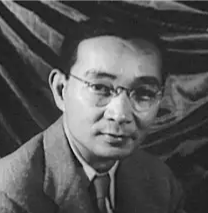
Life after all is made up of eating and sleeping, of meeting and saying good-by to friends, of reunions and farewell parties, of tears and laughter, of having a haircut once in two weeks, of watering a potted flower and watching one's neighbor fall off his roof.
▼
Source
source
p. 202

10 months 2 weeks ago
The true Gospel has it that we are justified by faith alone, without the deeds of the Law.
▼
Source
source
Chapter 2
11 months 1 week ago
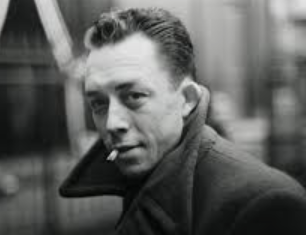
Hungary conquered and in chains has done more for freedom and justice than any people for twenty years. But for this lesson to get through and convince those in the West who shut their eyes and ears, it was necessary, and it can be no comfort to us, for the people of Hungary to shed so much blood which is already drying in our memories. In Europe's isolation today, we have only one way of being true to Hungary, and that is never to betray, among ourselves and everywhere, what the Hungarian heroes died for, never to condone, among ourselves and everywhere, even indirectly, those who killed them. It would indeed be difficult for us to be worthy of such sacrifices.

10 months 3 weeks ago
When you close your doors, and make darkness within, remember never to say that you are alone, for you are not alone; nay, God is within, and your genius is within. And what need have they of light to see what you are doing?
▼
Source
source
Book I, ch. 14, 13, 14.

10 months 1 week ago
... the fight against suffering must be considered a duty, while the right to care for the happiness of others must be considered a privilege confined to the close circle of their friends. ... Pain, suffering, injustice, and their prevention, these are the eternal problems of public morals, the 'agenda' of public policy ...
▼
Source
source
Vol. 2, Ch. 24 "Oracular Philosophy and the Revolt against Reason"


9 months 5 days ago
The total victimization of the individual that takes place is encouraged for the specific benefit of the industrial and political bureaucracy. It therefore cannot be justified on the ground of the individual's true interest. National Socialist ideology simply states that true human existence consists in unconditional sacrifice, that it is of the essence of the individual's life to abbey and to serve-'service which never comes to an end because service and life coincide.'
▼
Source
source
P. 416


8 months 3 weeks ago
Cautiousness in judgment is nowadays to be recommended to each and every one: if we gained only one incontestable truth every ten years from each of our philosophical writers the harvest we reaped would be sufficient. ... To grow wiser means to learn to know better and better the faults to which this instrument with which we feel and judge can be subject.
▼
Source
source
A 38
8 months 1 week ago
There can be only one permanent revolution - a moral one; the regeneration of the inner man. How is this revolution to take place? Nobody knows how it will take place in humanity, but every man feels it clearly in himself. And yet in our world everybody thinks of changing humanity, and nobody thinks of changing himself.
▼
Source
source
"Three Methods Of Reform" in Pamphlets : Translated from the Russian (1900) as translated by Aylmer Maude, p. 29
11 months 2 days ago
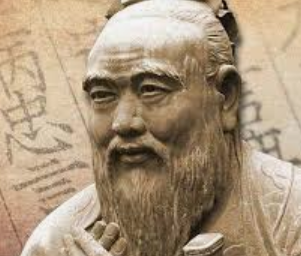
Fine words and an insinuating appearance are seldom associated with true virtue.
▼
Source
source
Variant: Someone who is a clever speaker and maintains a 'too-smiley' face is seldom considered a humane person.
6 months 1 week ago
The principle of rotation... in the body of [bank] directors... breaks in upon the esprit de corps so apt to prevail in permanent bodies; it gives a chance for the public eye penetrating into the sanctuary of those proceedings and practices, which the avarice of the directors may introduce for their personal emolument, and which the resentments of excluded directors, or the honesty of those duly admitted, might betray to the public; and it gives an opportunity at the end of the year, or at other periods, of correcting a choice, which on trial, proves to have been unfortunate.
▼
Source
source
Letter to Albert Gallatin, 1803. ME 10:437
9 months 1 week ago
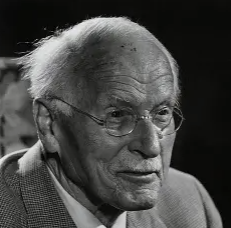
Among all my patients in the second half of life-that is to say, over thirty-five-there has not been one whose problem in the last resort was not that of finding a religious outlook on life. It is safe to say that every one of them fell ill because he had lost what the living religions of every age have given their followers, and none of them has been really healed who did not regain his religious outlook.
▼
Source
source
Chap. 11 (Psychotherapists or the Clergy), p. 229

9 months 1 week ago
Lack of originality, everywhere, all over the world, from time immemorial, has always been considered the foremost quality and the recommendation of the active, efficient and practical man...
▼
Source
source
Part 3, Chapter ?

10 months 3 days ago
Since ancient times, philosophers have maintained that to strive too hard for one's own happiness is self-defeating.
▼
Source
source
Chapter 5, Reason And Genes, p. 145

7 months 2 weeks ago
The irony of scientific progress is that in solving human problems it creates problems that are not humanly soluble. Science has given humans a kind of power over the natural world achieved by no other animal. It has not given humans the ability to remodel the planet according to their wishes. The Earth is not a clock that can be wound up and stopped at will. A living system, the planet will surely rebalance itself. It will do so, however, without any regard for humans.
▼
Source
source
Sweet Morality (p. 212)

10 months 1 week ago
What do you think of the aspect of the money market? ... This time, by the by, the thing has assumed European dimensions such as have never been seen before, and I don't suppose we'll be able to spend much longer here merely as spectators. The very fact that I've at last got round to setting up house again and sending for my books seems to me to prove that the 'mobilisation' of our persons is AT HAND.
▼
Source
source
Letter to Friedrich Engels (26 September 1856), quoted in The Collected Works of Karl Marx and Friedrich Engels: Volume 40. Letters 1856-59 (2010), pp. 71-72

10 months 1 week ago
This bird sees the white man come and the Indian withdraw, but it withdraws not. Its untamed voice is still heard above the tinkling of the forge... It remains to remind us of aboriginal nature.
▼
Source
source
March 23, 1856; of the crow

6 months 1 week ago
Too many French scholars were the principal authors of the Revolution, too many approved and gave their support so long as the Revolution, like Tarquinius' sceptre, struck down only the tallest heads. Like so many others, they said, It is impossible to make a great revolution without incurring misfortunes. But when a philosopher justifies evil by the end in view, when he says in his heart, Let there be a hundred thousand murders, provided we are free, and Providence replies, I accept your offer, but you must be included in the number, where is the injustice?
▼
Source
source
Chapter II, pp. 9-10

10 months 2 weeks ago
The way of the world is to make laws, but follow custom.
10 months 2 weeks ago
I do not speak the minds of others except to speak my own mind better.
▼
Source
source
Ch. 26. On the Education of Children

10 months 1 week ago
If a man is offered a fact which goes against his instincts, he will scrutinize it closely, and unless the evidence is overwhelming, he will refuse to believe it. If, on the other hand, he is offered something which affords a reason for acting in accordance with his instincts, he will accept it even on the slenderest evidence. The origin of myths is explained in this way.
▼
Source
source
Ch. VI: International relations, p. 97
6 months 3 weeks ago
Know all ye mortals who have entered this contest, that according to our laws and decrees the victor is allowed to exult but the vanquished must not complain. Depart then wherever you please, and in future live every one of you under the guidance of the gods. Let every man choose his own guardian and guide.

9 months 2 weeks ago
Happiest are the people who give most happiness to others.
▼
Source
source
As quoted in Happyology by Harald W. Tietze, p. 28

9 months 1 week ago
Is there in the whole world a being who would have the right to forgive and could forgive? I don't want harmony. From love for humanity I don't want it. I would rather be left with the unavenged suffering. I would rather remain with my unavenged suffering and unsatisfied indignation, even if I were wrong. Besides, too high a price is asked for harmony; it's beyond our means to pay so much to enter on it. And so I hasten to give back my entrance ticket, and if I am an honest man I am bound to give it back as soon as possible. And that I am doing. It's not God that I don't accept, Alyosha, only I most respectfully return him the ticket.
▼
Source
source
Book II, Chapter 4: Rebellion (trans. Constance Garnett)
10 months 1 week ago
We are born believing. A man bears beliefs as a tree bears apples.
▼
Source
source
Worship

10 months 1 week ago
Persons of genius, it is true, are, and are always likely to be, a small minority; but in order to have them, it is necessary to preserve the soil in which they grow. Genius can only breathe freely in an atmosphere of freedom.
▼
Source
source
Ch. III: Of Individuality, As One of the Elements of Well-Being

8 months 3 weeks ago
The reward in heaven is the perpetual bait, a bait that has caught man in an iron net, a strait-jacket which does not let him expand or grow. All pioneers of truth have been, and still are, reviled; they have been, and still are, persecuted. But did they ask humanity to pay the price? Did they seek to bribe mankind to accept their ideas? They knew too well that he who accepts a truth because of the bribe, will soon barter it away to a higher bidder...Proud and self-reliant characters prefer hatred to such sickening artificial love. Not because of any reward does a free spirit take his stand for a great truth, nor has such a one ever been deterred because of fear of punishment.

10 months 1 week ago
We live, in fact, in a world starved for solitude, silence, and privacy: and therefore starved for meditation and true friendship.


CivilSimian.com created by AxiomaticPanic, CivilSimian, Kalokagathia