

4 months 1 day ago
To call out for the hand of the enemy is a rather extreme measure, yet a better one, I think, than to remain in continual fever over an accident that has no remedy. But since all the precautions that a man can take are full of uneasiness and uncertainty, it is better to prepare with fine assurance for the worst that can happen, and derive some consolation from the fact that we are not sure that it will happen.
▼
Source
source
Ch. 25

3 months 3 weeks ago
For in every country of the world, I believe, the avarice and injustice of princes and sovereign states, abusing the confidence of their subjects, have by degrees diminished the real quantity of metal, which had been originally contained in their coins.
▼
Source
source
Chapter IV, p. 34.
1 week 2 days ago
Whether nature gives me a right, or whether God, the people's choice, etc., does so, all of that is the same foreign right, a right that I do not give or take to myself. Thus the Communists say, equal labour entitles man to equal enjoyment. [...] No, equal labour does not entitle you to it, but equal enjoyment alone entitles you to equal enjoyment. Enjoy, then you are entitled to enjoyment. But, if you have laboured and let the enjoyment be taken from you, then - 'it serves you right.' If you take the enjoyment, it is your right; if, on the contrary, you only pine for it without laying hands on it, it remains as before, a, 'well-earned right' of those who are privileged for enjoyment. It is their right, as by laying hands on it would become your right.
▼
Source
source
Cambridge 1995, p. 170, 171

1 month 3 weeks ago
Newton, and 'proper scientific method' after him, conducted attention to 'continuous description' of experimental phenomena instead of to causes.
▼
Source
source
p. 50
3 months 2 weeks ago
People nowadays think that scientists exist to instruct them, poets, musicians, etc. to give them pleasure. The idea that these have something to teach them - that does not occur to them.
▼
Source
source
p. 36e
2 months 3 weeks ago
Most observers of the French Revolution, especially the clever and noble ones, have explained it as a life-threatening and contagious illness. They have remained standing with the symptoms and have interpreted these in manifold and contrary ways. Some have regarded it as a merely local ill. The most ingenious opponents have pressed for castration. They well noticed that this alleged illness is nothing other than the crisis of beginning puberty.
▼
Source
source
Fragment No. 105

2 months 3 weeks ago
The pretended rights of these theorists are all extremes: and in proportion as they are metaphysically true, they are morally and politically false. The rights of men are in a sort of middle, incapable of definition, but not impossible to be discerned. The rights of men in government are their advantages; and these are often in balances between differences of good; in compromises between good and evil, and sometimes between evil and evil. Political reason is a computing principle: adding, subtracting, multiplying, and dividing, morally and not metaphysically or mathematically, true moral denominations.

3 months 3 weeks ago
He would have left a Greek accent slanting the wrong way, and righted up a falling man.
1 month 2 weeks ago
Is it not the interest of the human race, that every one should be so taught and placed, that he would find his highest enjoyment to arise from the continued practice of doing all in his power to promote the well-being, and happiness, of every man, woman, and child, without regard to their class, sect, party, country or colour?
▼
Source
source
Paper Dedicated to the Governments of Great Britain, Austria, Russia, France, Prussia and the United States of America (1841) 17th of "20 Questions to the Human Race"
4 months 1 week ago
In this one man, the whole Church has been assumed by the Word.
▼
Source
source
p.434
2 months 3 weeks ago
France wanted to make proselytes to her opinions, and turn every government in the world into a republic. If every government was against her, it was because she had declared herself hostile to every government. He knew of nothing to which this strange republic could be compared, but to the system of Mahomet, who with the koran in one hand, and a sword in the other, held out the former to the acceptance of mankind, and with the latter compelled them to adopt it as their creed. The koran which France held out, was the declaration of the rights of man and universal fraternity; and with the sword she was determined to propagate her doctrines, and conquer those whom she could not convince.
▼
Source
source
Speech in the House of Commons (14 December 1792), quoted in The Parliamentary History of England, From the Earliest Period to the Year 1803, Vol. XXX (1817), column 72
3 months 3 weeks ago
If at times I have thought myself unfortunate, it is because of a confusion, an error. I have mistaken myself for someone else... Who am I really? I am the author of The World as Will and Representation, I am the one who has given an answer to the mystery of Being that will occupy the thinkers of future centuries. That is what I am, and who can dispute it in the years of life that still remain for me?
▼
Source
source
From The Total Library by Jorge Luis Borges, 1999
2 months 3 weeks ago
Pure mathematics is religion.

1 week 1 day ago
... the only contestant who can confidently enter the lists is the man who has seen his own blood, who has felt his teeth rattle beneath his opponent's fist, who has been tripped and felt the full force of his adversary's charge, who has been downed in body but not in spirit, one who, as often as he falls, rises again with greater defiance than ever.


3 months 2 weeks ago
Without some redistribution of wealth and power, downward mobility and debilitating poverty will continue to drive people into desperate channels. And without principled opposition to xenophobias from above and below, these desperate channels will produce a cold-hearted and mean-spirited America no longer worth fighting for or living in.
▼
Source
source
(p79)

1 month ago
The repression of liberty that took place in the countries in which Communist regimes were established cannot be adequately explained as a product of backwardness, or of errors in the application of Marxian theory. It was the result of a resolute attempt to realize an Enlightenment utopia - a condition of society in which no serious form of conflict any longer exists.
▼
Source
source
'Isaiah Berlin: The Value of Decency' (p.99)

2 weeks ago
Alas, the Hero from of old has had to cramp himself into strange shapes: the world knows not well at any time what to do with him, so foreign is his aspect in the world!
3 months 3 weeks ago
The South may keep her pine-apples, and we will be content with our strawberries, which are, as it were, pine-apples with "going a-strawberrying" stirred into them, infinitely enhancing their flavor.

3 months 3 weeks ago
An unexciting truth may be eclipsed by a thrilling falsehood.
▼
Source
source
Chapter 11 (p. 104)
4 months 3 weeks ago
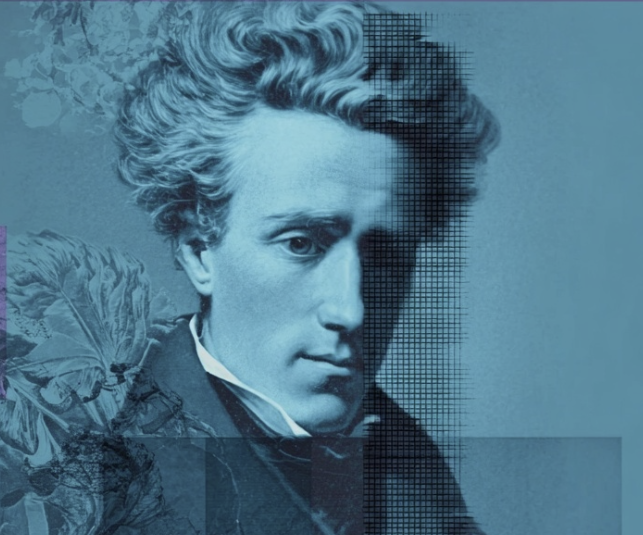
When you are reading God's Word, it is not the obscure passages that bind you but what you understand, and with that you comply at once. If you understood only one single passage in all of Holy Scripture, well, then you must do that first of all, but you do not first have to sit down and ponder the obscure passages.
3 months 3 weeks ago
The ways by which you may get money almost without exception lead downward. To have done anything by which you earned money merely is to have been truly idle or worse. If the laborer gets no more than the wages which his employer pays him, he is cheated, he cheats himself.
▼
Source
source
p. 486
2 months 4 weeks ago
When shall we see poets born? After a time of disasters and great misfortunes, when harrowed nations begin to breathe again. And then, shaken by the terror of such spectacles, imaginations will paint things entirely strange to those who have not witnessed them.

2 months 4 weeks ago
In cities men cannot be prevented from concerting together, and from awakening a mutual excitement which prompts sudden and passionate resolutions. Cities may be looked upon as large assemblies, of which all the inhabitants are members; their populace exercises a prodigious influence upon the magistrates, and frequently executes its own wishes without their intervention. Variant translation: In towns it is impossible to prevent men from assembling, getting excited together and forming sudden passionate resolves. Towns are like great meeting houses with all the inhabitants as members. In them the people wield immense influence over their magistrates and often carry their desires into execution without intermediaries.
▼
Source
source
Chapter XVII.
2 months 2 weeks ago
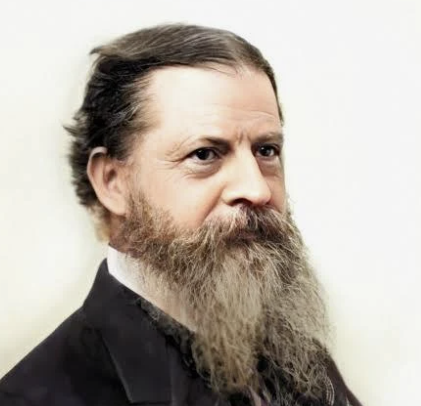
The law of habit exhibits a striking contrast to all physical laws in the character of its commands. A physical law is absolute. What it requires is an exact relation. Thus, a physical force introduces into a motion a component motion to be combined with the rest by the parallelogram of forces; but the component motion must actually take place exactly as required by the law of force. On the other hand, no exact conformity is required by the mental law. Nay, exact conformity would be in downright conflict with the law ; since it would instantly crystallise thought and prevent all further formation of habit. The law of mind only makes a given feeling more likely to arise. It thus resembles the "non-conservative" forces of physics, such as viscosity and the like, which are due to statistical uniformities in the chance encounters of trillions of molecules.
2 months 2 weeks ago
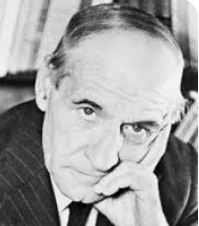
I have never said that human society ought to be aristocratic, but a great deal more than that. What I have said, and still believe with ever-increasing conviction, is that human society is always, whether it will or no, aristocratic by its very essence, to the extreme that it is a society in the measure that it is aristocratic, and ceases to be such when it ceases to be aristocratic. Of course I am speaking now of society and not of the State.
▼
Source
source
Chap.II: The Rise Of The Historic Level
2 months 2 weeks ago
We cannot credit our enjoyment of a flower or of the atmosphere of a room to an autonomous esthetic instinct. Man's esthetic responsiveness relates in its prehistory to various forms of idolatry; his belief in the goodness or sacredness of a thing precedes his enjoyment of its beauty. The applies no less to such concepts as freedom and humanity.
▼
Source
source
p. 36.
1 month 2 weeks ago
Most of what we strive for in our modern life uses the apparatus of goal seeking that was originally set up to seek goals in the state of nature.

3 months 3 weeks ago
Even atheists rebel and express, like Hardy and Housman, their rage against God although (or because) He does not, on their view, exist...
2 days ago
One indeed is the Creator of all things, but many are the creative powers revolving in the heavens; we must, therefore, place the influence of the Sun as intermediate with respect to each single operation affecting the earth. Moreover, the principle productive of Life is vastly superabundant in the Intelligible World; our world, also, is evidently full of generative life. It is therefore clear that the life-producing power of the sovereign Sun is intermediate between these two, since the phenomena of Nature bear testimony to the fact; for some kinds of things the Sun brings to perfection, others of them he brings to pass, others he regulates, others he excites, and there exists nothing that, without the creative influence of the Sun, comes to light and is born.

3 months 3 weeks ago
The very port and gait of a swan, or turkey, or peacock show the high idea he has entertain'd of himself; and his contempt of all others. This is the more remarkable, that in the two last species of animals, the pride always attends the beauty, and is discover'd in the male only. The vanity and emulation of nightingales in singing have been commonly remark'd [...] All these are evident proofs, that pride and humility are not merely human passions, but extend themselves over the whole animal creation.
▼
Source
source
Part 1, Section 12
3 months 3 weeks ago
As to the having and possessing of things, teach them to part with what they have, easily and freely to their friends, and let them find by experience that the most liberal has always the most plenty, with esteem and commendation to boot, and they will quickly learn to practise it.
▼
Source
source
Sec. 110

2 months 6 days ago
When we are lulled into somnolence by lack of challenge every molehill tends to become a mountain, every minor inconvenience an intolerable imposition. For a self-chosen reality tends to become a prison. The factors that protect and insulate civilized man can easily end by suffocating him unless he possesses a high degree of self-discipline, the 'highly developed vital sense' that Shaw speaks of. And since clever and sensitive people are inclined to lack self-discipline, a high degree of culture usually involves a high degree of pessimism. This is what has happened to Western civilisation over the past two centuries. It explains why so many distinguished artists, writers and musicians have taken such a negative view of the human situation.
▼
Source
source
Introduction, p. xiii
3 months 3 weeks ago
Never give children a chance of imagining that anything exists in isolation. Make it plain from the very beginning that all living is relationship. Show them relationships in the woods, in the fields, in the ponds and streams, in the village and in the country around it. Rub it in.
2 months 1 week ago
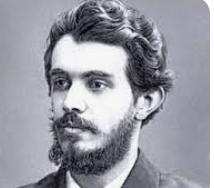
It is difficult to fit the work of Nikolai Berdyaev into any neat category. The label that was used most frequently to characterize him was that of an "existential Christian philosopher" but ... his voice is equally relevant to psychology and psychoanalysis and it also constitutes a uniquely original commentary on the very nature of the person in our postmodern world especially in relation to spirituality.
▼
Source
source
Renos K. Papadopoulos, in C.G. Jung and Nikolai Berdyaev: Individuation and the Person (2011) by Georg Nicolaus, Foreword, p. xiii
2 weeks 3 days ago
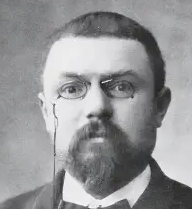
Behold... the only... rule we can follow: when a phenomenon appears... as the cause of another, we regard it as anterior. ...Therefore by cause... we define time; but...how do we recognize which is the cause and which the effect? We assume... the anterior fact, the antecedent, is the cause of the... consequent. It is then by time that we define cause. ...Shall we escape from this vicious circle?
1 day ago
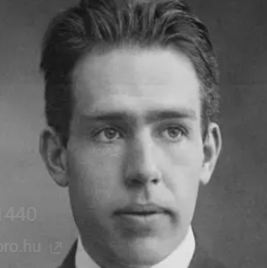
Every valuable human being must be a radical and a rebel, for what he must aim at is to make things better than they are.
▼
Source
source
As quoted in The World of the Atom (1966) by Henry Abraham Boorse and Lloyd Motz, p. 741
2 weeks 3 days ago
If... it be supposed that another way of measuring time is adopted... enunciation of the law would be... translated into another language... much less simple. So that the definition implicitly adopted by the astronomers may be summed up..: Time should be so defined that the equations of mechanics may be as simple as possible... [i.e.,] there is not one way of measuring time more true... only more convenient.
2 weeks ago
This same Man-of-Letters Hero must be regarded as our most important modern person. He, such as he may be, is the soul of all.

2 months 2 weeks ago
Whoever blasphemes against the Father will be forgiven, and whoever blasphemes against the Son will be forgiven, but whoever blasphemes against the Holy Spirit will not be forgiven either on earth or in heaven.
4 months 1 week ago
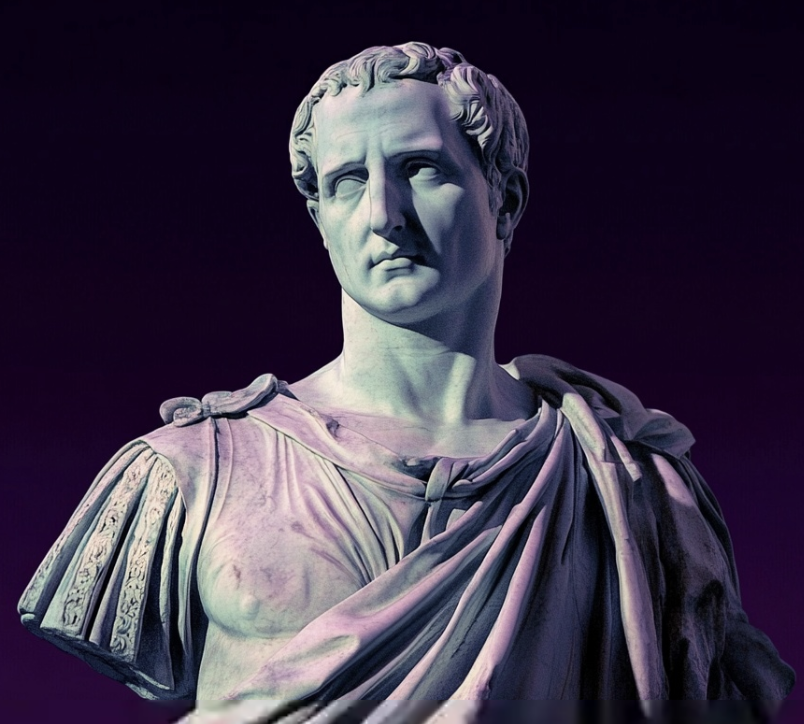
I am a Roman citizen.
▼
Source
source
Against Verres [In Verrem], part 2, book 5, section 57; reported in Cicero, The Verrine Orations, trans. L. H. G. Greenwood (1935), vol. 2, p. 629
1 week 6 days ago
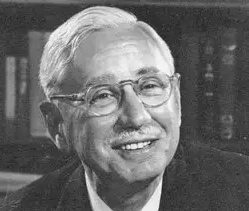
It is true that even across the Himalayan barrier India has sent to the west, such gifts as grammar and logic, philosophy and fables, hypnotism and chess, and above all numerals and the decimal system.
1 month 1 week ago
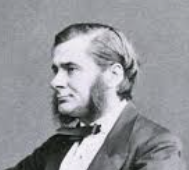
The language of the chalk is not hard to learn, not nearly so hard as Latin, if you only want to get at the broad features of the story it has to tell; and I propose that we now set to work to spell that story out together.
2 months 3 weeks ago
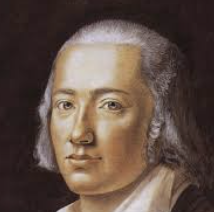
The earth with yellow pears And overgrown with roses wild Upon the pond is bent, And swans divine, With kisses drunk You drop your heads In the sublimely sobering water. But where, with winter come, am I To find, alas, the floweres, and where The sunshine And the shadow of the world? Cold the walls stand And the wordless, in the wind The weathercocks are rattling.
▼
Source
source
"Halves of Life"
3 months 3 weeks ago
The eye may see for the hand, but not for the mind.
2 weeks 2 days ago
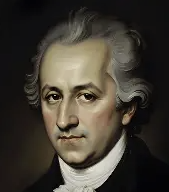
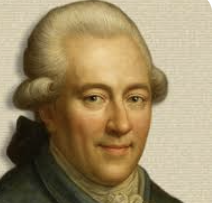
And now the sagacious reader, who is capable of reading into these lines what does not stand written in them, but is nevertheless implied, will be able to form some conception of the serious feelings with which I then set foot in Emmendingen.
▼
Source
source
Autobiography: Truth and Poetry Book xviii. London 1884 p. 115 books.google.de
2 months 3 days ago
We are obliged to regard many of our original minds as crazy - at least until we have become as clever as they are.
▼
Source
source
D 97

3 months 5 days ago
Use examples; that such as thou teachest may understand thee the better!
1 month 3 weeks ago
Electric circuitry profoundly involves men with one another. Information pours upon us, instantaneously and continuously.
CivilSimian.com created by AxiomaticPanic, CivilSimian, Kalokagathia