

1 month 3 weeks ago
Reason is like an open secret that can become known to anyone at any time; it is the quiet space into which everyone can enter through his own thought.
▼
Source
source
As quoted in Philosophy for a Time of Crisis : An Interpretation, with Key Writings by Fifteen Great Modern Thinkers (1959) by Adrienne Koch, Ch. 18, "Karl Jaspers : A New Humanism"

3 months 1 week ago
I have heard with admiring submission the experience of the lady who declared "that the sense of being perfectly well-dressed gives a feeling of inward tranquility which religion is powerless to bestow".
▼
Source
source
Social Aims

1 month 2 weeks ago
I do not regard the late Carl Sagan as any kind of authority. On the contrary, as this book will show, I regard him in many ways as a dubious publicity seeker and careerist, more concerned to maintain his reputation as the brilliant and sceptical representative of hard-headed science than to look squarely and honestly at the facts.
▼
Source
source
In short, a bit of a crook. pp. xix-xx
1 month 2 weeks ago
I've always believed that a writer has got to remain an outsider. If I was offered anything like the Nobel Prize for Literature, I'd find it an extremely difficult conflict because I'd be basically disinclined to accept.
▼
Source
source
Interview with Paul Newman in Abraxas Unbound #7
3 months 1 week ago
People say law but they mean wealth.
▼
Source
source
1841

1 month 6 days ago
Error is the force that welds men together; truth is communicated to men only by deeds of truth. Only deeds of truth, by introducing light into the conscience of each individual, can dissolve the cohesion of error, and detach men one by one from the mass united together by the cohesion of error.
▼
Source
source
My Religion (1884), Ch. 12

3 months 3 weeks ago
Men are eager to tread underfoot what they have once too much feared.
▼
Source
source
Book V, line 1140 (tr. Rouse)

2 days ago
In a liberal society you're not going to agree on the deepest... moral frameworks, but you are going to agree on factual information, and... if you can't agree on factual information it's very hard to deliberate in common... on what needs to be done in the future, and that's the situation we now face.
▼
Source
source
23:00
3 months 1 day ago
Deconstruction never had meaning or interest, at least in my eyes, than as a radicalization, that is to say, also within the tradition of a certain Marxism, in a certain spirit of Marxism.
▼
Source
source
Specters of Marx. Routledge, 1994. p. 115
2 weeks 5 days ago
Now who are the individuals who are the greatest benefactors of the living generation of mankind? I should say: Confucius and Lao-Tse; the Buddha; the Prophets of Israel and Judah; Zoroaster, Jesus, Muhammad; and Socrates.
▼
Source
source
Ch. 8: Civilization on Trial

3 months 2 weeks ago
A strong memory is commonly coupled with infirm judgment.
▼
Source
source
Ch. 9. Of Liars, tr. Cotton, rev. W. Carew Hazlitt, 1877

3 months 6 days ago
Now, to-day, this moment, is our chance to choose the right side. God is holding back to give us that chance. It will not last for ever. We must take it or leave it.
▼
Source
source
Book II, Chapter 5, "The Practical Conclusion"

2 months 1 week ago
The ultimate result of shielding men from the effects of folly, is to fill the world with fools.
▼
Source
source
Vol. 3, Ch. IX, State-Tamperings with Money and Banks

1 month 3 weeks ago
The state of conformity is an imitation of grace. By a strange mystery - which is connected with the power of the social element - a profession can confer on quite ordinary men in their exercise of it, virtues which, if they were extended to all circumstances of life, would make of them heroes or saints. But the power of the social element makes these virtues natural.
▼
Source
source
Accordingly they need a compensation. p. 124
1 month 4 weeks ago
Operational analysis ... cannot raise the decisive question whether the consent itself was not the work of manipulation-a question for which the actual state of affairs provides ample justification. The analysis cannot raise it because it would transcend its terms toward transitive meaning-toward a concept of democracy which would reveal the democratic election as a rather limited democratic process. Precisely such a non-operational concept is the one rejected by the authors as "unrealistic" because it defines democracy on too articulate a level as the clear-cut control of representation by the electorate-popular control as popular sovereignty.
▼
Source
source
p. 116
1 month 4 weeks ago
The doctrine of Right and Wrong, is perpetually disputed, both by Pen and the Sword: Whereas the doctrine of Lines, and Figures, is not so; because men care not, in that subject what be truth, as a thing that crosses no mans ambition, profit, or lust. For I doubt not, but if it had been a thing contrary to any mans right of dominion, or to the interest of men that have dominion, That the three Angles of a Triangle, should be equall to two Angles of a Square; that doctrine should have been, if not disputed, yet by the burning of all books of Geometry, suppressed, as far as he whom it concerned was able.
▼
Source
source
The First Part, Chapter 11, p. 80-81

3 months 5 days ago
We must plan for freedom, and not only for security, if for no other reason than that only freedom can make security secure.
▼
Source
source
Vol. 2, Ch. 21 "An Evaluation of the Prophecy"

2 months 1 week ago
We are sleeping on a volcano... A wind of revolution blows, the storm is on the horizon.
▼
Source
source
Speaking in the Chamber of Deputies just prior to to outbreak of revolution in Europe (1848).
1 month 6 days ago
It is terrible when people do not know God, but it is worse when people identify as God what is not God.
▼
Source
source
p. 5

2 months 3 days ago
The only subversive mind is the one that questions the obligation to exist; all the others, the anarchist at the top of the list, compromise with the established order.
2 months 1 week ago
There is hardly a pioneer's hut which does not contain a few odd volumes of Shakespeare. I remember reading the feudal drama of Henry V for the first time in a log cabin.
▼
Source
source
Book One, Chapter XIII.

3 months 6 days ago
Jehovah, Allah, the Trinity, Jesus, Buddha, are names for a great variety of human virtues, human mystical experiences, human remorses, human compensatory fantasies, human terrors, human cruelties. If all men were alike, all the world would worship the same God.
▼
Source
source
"One and Many," p. 3
3 months 2 weeks ago
Logic has borrowed, perhaps, the rules of geometry, without comprehending their force... it does not thence follow that they have entered into the spirit of geometry, and I should be greatly averse... to placing them on a level with that science that teaches the true method of directing reason.
1 month 2 weeks ago
My own view is that philosophy at its best has always, in every period, included some philosophers who brilliantly represent the moral face of the subject and some philosophers who brilliantly represent the theoretical face, as well as some geniuses whose insights span and unite both sides of the subject. To renounce either the moral ambitions of philosophy or its theoretical ambitions is not just to kill the subject of philosophy; it is to commit intellectual and spiritual suicide.
▼
Source
source
Science and Philosophy



3 months 1 week ago
The whole is a riddle, an aenigma, an inexplicable mystery. Doubt, uncertainty, suspence of judgment appear the only result of our most accurate scrutiny, concerning this subject. But such is the frailty of human reason, and such the irresistible contagion of opinion, that even this deliberate doubt could scarcely be upheld; did we not enlarge our view, and opposing one species of superstition to another, set them a quarrelling; while we ourselves, during their fury and contention, happily make our escape, into the calm, though obscure, regions of philosophy.
▼
Source
source
Part XV - General corollary

4 months 1 week ago
Everything that depends on the action of nature is by nature as good as it can be, and similarly everything that depends on art or any rational cause, and especially if it depends on the best of all causes. To entrust to chance what is greatest and most noble would be a very defective arrangement.
1 month ago
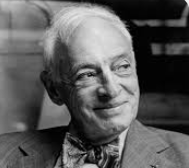
Can we find nothing good to say about TV? Well, yes, it brings scattered solitaries into a sort of communion. TV allows your isolated American to think that he participates in the life of the entire country. It does not actually place him in a community, but his heart is warmed with the suggestion (on the whole false) that there is a community somewhere in the vicinity and that his atomized consciousness will be drawn back toward the whole.
▼
Source
source
The Distracted Public (1990), p. 159

3 months 1 week ago
Every man, as the Stoics used to say, is first and principally recommended to his own care; and every man is certainly, in every respect, fitter and abler to take care of himself than of any other person. Every man feels his own pleasures and his own pains more sensibly than those of other people. The former are the original sensations; the latter the reflected or sympathetic images of those sensations. The former may be said to be the substance; the latter the shadow.
▼
Source
source
Section II, Chap. I.
3 months 1 week ago
I perfectly agree with your Lordship too, that to crush the Industry of so great and so fine a province of the empire, in order to favour the monopoly of some particular towns in Scotland or England, is equally unjust and impolitic. The general opulence and improvement of Ireland might certainly, under proper management, afford much greater resources to the Government, than can ever be drawn from a few mercantile or manufacturing towns.
▼
Source
source
Letter to Henry Dundas (1 November 1779), quoted in Adam Smith, The Correspondence of Adam Smith, eds. E. C. Mossner and I. S. Ross (1987), p. 241

2 months 1 week ago
If you are penitent, you love. And if you love you are of God. All things are atoned for, all things are saved by love. If I, a sinner even as you are, am tender with you and have pity on you, how much more will God have pity upon you. Love is such a priceless treasure that you can redeem the whole world by it, and cleanse not only your own sins but the sins of others.
▼
Source
source
Book II, Chapter 3 (trans. Constance Garnett) The Elder Zossima, speaking to a devout widow afraid of death
3 weeks 1 day ago
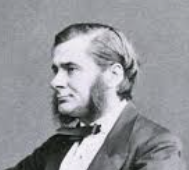
The only good that I can see in the demonstration of the truth of "Spiritualism" is to furnish an additional argument against suicide. Better live a crossing-sweeper than die and be made to talk twaddle by a "medium" hired at a guinea a séance.
▼
Source
source
Review in the Daily News (17 October 1871), quoted in Life and Letters of Thomas Henry Huxley F.R.S (1900) edited by Leonard Huxley, Vol. 1, p. 452
2 months 3 days ago
By all evidence we are in the world to do nothing.
3 months 2 weeks ago
Don't discuss yourself, for you are bound to lose; if you belittle yourself, you are believed; if you praise yourself, you are disbelieved.
▼
Source
source
Book III, Ch. 8

3 months 3 weeks ago
Music is associated not only with speculation but with morality. When rhythms and modes reach an intellect through the ear, they doubtless affect and reshape that mind according to their particular character.
2 months 1 week ago
Every central government worships uniformity: uniformity relieves it from inquiry into an infinity of details.
▼
Source
source
Book Four, Chapter III.
1 month 2 days ago
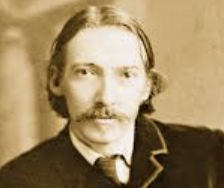
A happy man or woman is a better thing to find than a five-pound note. He or she is a radiating focus of goodwill; and their entrance into a room is as though another candle had been lighted. We need not care whether they could prove the forty-seventh proposition; they do a better thing than that, they practically demonstrate the great Theorem of the Liveableness of Life.
▼
Source
source
An Apology for Idlers.

1 month 4 days ago
The telegraph press mosaic is acoustic space as much as an electric circus.

3 months 3 weeks ago
For it still seemed to me that it is not we who sin, but some other nature sinned in us. And it gratified my pride to be beyond blame, and when I did anything wrong not to have to confess that I had done wrong. I loved to excuse my soul and to accuse something else inside me (I knew not what) but which was not I. But, assuredly, it was I, and it was my impiety that had divided me against myself. That sin then was all the more incurable because I did not deem myself a sinner.
▼
Source
source
A. Outler, trans. (Dover: 2002), Book 5, Chapter 10, p. 77
1 month ago
In an age of enormities, the emotions are naturally weakened. We are continually called upon to have feelings - about genocide, for instance, or about famine or the blowing up of passenger planes - and we are all aware that we are incapable of reacting appropriately. A guilty consciousness of emotional inadequacy or impotence makes people doubt their own human weight.
▼
Source
source
"The Distracted Public" (1990), p. 156

3 months 1 week ago
It goes without saying that the normal durability of fixed capital is calculated on the supposition that all the conditions under which it can perform its functions normally during that time are fulfilled, just as we assume, in placing a mans life at 30 years on the average,that he will wash himself.
▼
Source
source
Volume II, Ch. VIII, p. 176-177.

3 months 1 week ago
It must not be supposed that this conflict is, on the part of the Teuton, aggressive in substance, whatever it may be in form. In substance it is defensive, the attempt to preserve Central Europe for a type of civilisation indubitably higher and of more value to mankind than that of any Slav State. The existence of the Russian menace on the Eastern border is, quite legitimately, a nightmare to Germany.
▼
Source
source
War: The Offspring of Fear (1914), quoted in Ray Monk, Bertrand Russell: The Spirit of Solitude, 1872-1921 (1996), p. 373
3 weeks 1 day ago
Try to learn something about everything and everything about something.
▼
Source
source
A favourite comment, inscribed on his memorial at Ealing, quoted in Nature Vol. XLVI (30 October 1902), p. 658
3 months 6 days ago
It's a bit embarrassing to have been concerned with the human problem all one's life and find at the end that one has no more to offer by way of advice than 'Try to be a little kinder.'
▼
Source
source
As quoted in Huston Smith, "Aldous Huxley--A Tribute," The Psychedelic Review, (1964) Vol I, No.3, (Aldous Huxley Memorial Issue), p. 264-5
1 month ago
You never have to change anything you got up in the middle of the night to write.
▼
Source
source
As quoted in The #1 New York Times Bestseller (1992) by John Bear, p. 93
3 months 1 week ago
The government of an exclusive company of merchants is, perhaps, the worst of all governments for any country whatever.
▼
Source
source
Chapter VII, Part Second, p. 619.
2 months 1 week ago
Architecture, sculpture, painting, music, and poetry, may truly be called the efflorescence of civilised life.
▼
Source
source
Education: What Knowledge Is of Most Worth?
1 month 2 weeks ago
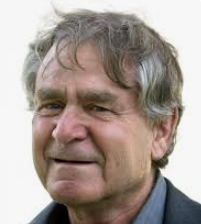
There are two ways in which a science develops; in response to problems which is itself creates, and in response to problems that are forced on it from the outside.
▼
Source
source
Chapter 1, An Absent Family Of Ideas, p. 4.
1 month 4 days ago
Cultural dominance by either the left or the right hemisphere is largely dependent upon environmental factors.
▼
Source
source
p. 72
CivilSimian.com created by AxiomaticPanic, CivilSimian, Kalokagathia