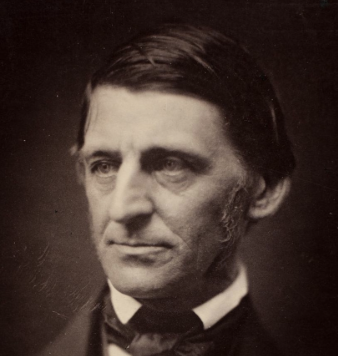
"We, as we read," Ralph Waldo Emerson wrote in an essay on history, "must become Greeks, Romans, Turks, priest and king, martyr and executioner; must fasten these images to some reality in our secret experience, or we shall learn nothing rightly."
0
⚖0
▼Source
source
Edwidge Danticat chapter 1, "Create Dangerously: The Immigrant Artist at Work"
It was a maxim with him that power is not so much shown in talent or in successful performance as in tone; the absolute or the victorious tone ... He disliked limitations, and welcomed whatever promised to get rid of them, without always inquiring very closely what was left when they were removed.
0
⚖0
▼Source
source
James Elliot Cabot, A Memoir of Ralph Waldo Emerson (1887)
No member of a crew is praised for the rugged individuality of his rowing.
0
⚖0
▼Source
source
Widely misattributed to Emerson on the Internet, this quote is actually taken from Alfred North Whitehead's essay "Harvard: The Future" (The Atlantic Monthly, September 1936.)
The purpose of life is not to be happy. It is to be useful, to be honorable, to be compassionate, to have it make some difference that you have lived and lived well.
0
⚖0
▼Source
source
Attributed to Emerson in Life's Instructions for Wisdom, Success, and Happiness (2000) by H. Jackson Brown Jr., as well as numerous online sources since, the article [https://quoteinvestigator.com/2014/11/29/purpose/ "The Purpose of Life Is Not To Be Happ
What lies behind us and what lies ahead of us are tiny matters compared to what lies within us.
0
⚖0
▼Source
source
As [http://quoteinvestigator.com/2011/01/11/what-lies-within/ reported by Quoteinvestigator on January 11, 2011] the quote appeared in "Meditations in Wall Street" (1940) by Wall Street trader Henry Stanley Haskins, "a Wall Street trader with a checkered
Once you make a decision, the universe conspires to make it happen.
0
⚖0
▼Source
source
Attributed to Emerson in The Gift of Depression: Twenty-one Inspirational Stories Sharing Experience, Strength, and Hope (2001) by John F. Brown, p. 56, no prior occurrence of this statement has been located; it seems to be derived from one which occurs i
Widely attributed to Ralph Waldo Emerson on the internet; however, a presumably definitive source of Emerson's works at http://www.rwe.org fails to confirm any occurrence of this phrase across his works. This phrase is found in remarks attributed to Charl