
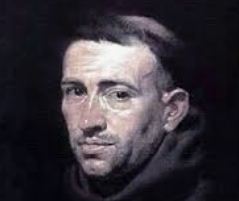
William of Ockham — Parsimony, Nominalism, and the Liberation of Reason (c. 1287–1347)
William of Ockham was an English Franciscan friar, theologian, and philosopher whose razor-sharp logic and radical nominalism made him the most provocative and consequential philosopher of the later Middle Ages.
Excommunicated, condemned, and forced to flee the papal court at Avignon, he spent the last decades of his life under the protection of the Holy Roman Emperor, writing polemics against papal power with the same relentless precision he brought to metaphysics and logic.
His central concern: that philosophy had multiplied entities beyond necessity — that the intellectual world was cluttered with invented abstractions that explained nothing and obscured everything — and that a rigorous commitment to parsimony could sweep the slate clean and restore genuine understanding.
Ockham's Razor
The principle associated with Ockham's name — that entities should not be multiplied beyond necessity — is the most cited methodological maxim in the history of philosophy and science. It appears in various formulations across his works, always expressing the same fundamental conviction: that the simpler explanation, requiring fewer assumptions and fewer invented entities, is to be preferred when it accounts for the facts equally well.
Ockham applied the razor with devastating effect against the elaborate metaphysical constructions of his scholastic predecessors — above all against the Thomist synthesis of Aristotelian philosophy and Christian theology that had dominated European thought for the previous century.
Where Aquinas and his followers had posited a rich ontology of real universals, substantial forms, real relations, and a hierarchy of being linking creatures to their Creator, Ockham asked at each step: is this entity actually required to explain the facts? And at step after step, he answered: no.
The razor cut deep — and the wound to medieval metaphysics never fully healed.
"It is futile to do with more what can be done with fewer."
Nominalism and the Reality of Universals
The deepest philosophical dispute of the medieval period concerned the status of universals — abstract categories like "humanity," "redness," or "justice." Do these exist as real entities in some way, independent of the individual things that instantiate them? Or are they nothing more than names — mental concepts or spoken words that we use to group individuals who resemble each other in certain respects?
Ockham was the most thoroughgoing and most rigorous defender of the nominalist position — that universals are names only, that only individual things exist, and that the categories we impose on them reflect the structure of our thought and language, not some additional layer of reality beyond the individuals themselves.
This was not merely a technical metaphysical position. It had far-reaching consequences for theology, for ethics, for political theory, and for the emerging sciences of nature — all of which had been built on frameworks that assumed the reality of universals at crucial points. Strip them away and the entire edifice required reconstruction.
The reconstruction took centuries — and ran through Descartes, Locke, Hume, and the whole empiricist tradition that Ockham had inadvertently set in motion.
"Every universal is a single mental thing that is predicable of many things — but it exists in the mind only, not in things outside the mind."
The Separation of Faith and Reason
One of Ockham's most consequential moves was his insistence on a sharp separation between the domains of faith and reason.
The great Thomist synthesis had held that faith and reason were complementary — that philosophical argument could establish certain truths that faith also affirmed, providing a rational foundation for theology. Ockham cut this connection. The central doctrines of Christianity — the Trinity, the Incarnation, the immortality of the soul — could not be demonstrated by reason alone. They were matters of faith, known by revelation, and philosophy had neither the authority to confirm them nor the capacity to undermine them.
This separation was double-edged. It protected theology from philosophical attack — what reason cannot establish, reason cannot refute. But it also liberated natural philosophy from theological constraint — the investigation of the natural world need not proceed on theological assumptions it could not itself verify.
The liberation of natural inquiry from theological supervision was one of the long-term consequences of Ockham's move — a consequence he neither intended nor foresaw.
"Only faith gives us access to theological truth. The ways of God are not open to reason, for God's will is limited by nothing — not even logic."
Political Theory and the Limits of Papal Power
After his flight from Avignon in 1328, Ockham devoted much of his remaining energy to political philosophy — specifically to an extended and technically sophisticated attack on the theory of papal absolutism.
He argued that the Pope had no legitimate authority over temporal affairs — that spiritual and secular power were distinct in origin, distinct in scope, and ought to remain distinct in practice. Neither emperor nor pope was absolute; both were subject to law, and both could be resisted when they overstepped.
He developed early versions of arguments for the rights of individuals and communities against overreaching authority — arguments that would be taken up and extended by later theorists of limited government and popular sovereignty. The line from Ockham to Locke is not straight, but it is real.
He wrote with the urgency of a man who had personally experienced the abuse of ecclesiastical power — and whose theoretical precision gave his political arguments a sharpness that polemics alone could not achieve.
"A tyrant is one who rules for his own benefit rather than the benefit of those he governs — and such a one may legitimately be resisted."
Legacy — The Razor That Cut an Era in Two
Ockham is one of those thinkers whose influence is so deeply embedded in subsequent thought that it has become invisible — absorbed into the assumptions of modernity without acknowledgment of its origin.
The preference for simpler explanations in science, the suspicion of abstract entities in philosophy, the separation of church and state in political theory, the empiricist insistence that knowledge begins with individual experience rather than universal categories — all of these bear Ockham's fingerprints, usually without his name attached.
Some historians of philosophy have argued that Ockham's nominalism was the decisive break that made modernity possible — that by dissolving the medieval synthesis of faith and reason, universal and particular, church and state, he cleared the ground on which the modern world was built. Whether or not this overstates his role, it captures something true about the direction of his thought and the magnitude of its long-term consequences.
He was a man of the Middle Ages who did more than almost any other to make the Middle Ages impossible to continue.
"For nothing ought to be posited without a reason given, unless it is self-evident, known by experience, or proved by the authority of Sacred Scripture."
CivilSimian.com created by AxiomaticPanic, CivilSimian, Kalokagathia