
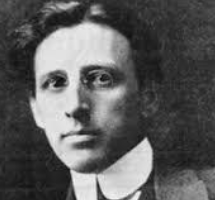
William Drummond of Logiealmond — Academical Questions and the Scottish Skeptical Tradition (1769–1828)
Sir William Drummond of Logiealmond was a Scottish diplomat, classical scholar, orientalist, and philosopher whose wide-ranging erudition and restless skeptical intelligence made him one of the more unusual and underappreciated figures of the late Enlightenment.
A Whig politician who served as ambassador to Naples and Constantinople, he pursued his intellectual interests with the freedom of a wealthy independent scholar — publishing works on ancient philosophy, biblical criticism, mythology, and the theory of knowledge that attracted both admiration and fierce controversy.
His central concern: that the foundations of human knowledge are far less secure than philosophers and theologians typically assume — and that an honest accounting of what we can and cannot know demands a suspension of dogmatic certainty in almost every domain.
Academical Questions
Drummond's principal philosophical work, published in 1805, took its title from the tradition of Academic skepticism in ancient philosophy — the school of Arcesilaus and Carneades, who had argued that on no question could genuine knowledge be achieved, and that the appropriate response to the difficulty of all philosophical questions was suspension of judgment.
Drummond did not simply revive ancient skepticism. He brought it into dialogue with the entire tradition of modern philosophy — Descartes, Locke, Berkeley, Hume, and Kant — examining each attempt to ground human knowledge and finding each, in different ways, insufficient.
He was particularly interested in the philosophy of perception — in what grounds our belief that the external world corresponds to our experience of it — and in the limits of causal reasoning, following Hume's lead into territory that most of his contemporaries preferred to leave undisturbed.
The book was admired by Shelley, who found in its skepticism a philosophical framework for his own resistance to received authority — intellectual, political, and religious.
"The skeptic does not deny that things exist — he only doubts that we have the means to know them as they truly are."
Biblical Criticism and Oedipus Judaicus
Drummond's most controversial work was his "Oedipus Judaicus" of 1811 — an attempt to read much of the Hebrew Bible as astronomical allegory rather than literal history.
He argued, drawing on his extensive knowledge of ancient Near Eastern languages and mythology, that many of the biblical narratives — the patriarchs, the Exodus, the exploits of the judges — were encodings of astronomical observations and astrological symbolism, overlaid with the historical memory of the Hebrew people.
The argument was speculative and frequently strained — even sympathetic readers found the allegorical readings too freely applied — but the work placed him at the forefront of early nineteenth century biblical criticism, anticipating methods and concerns that would become central to academic theology decades later.
It was also deeply shocking to contemporaries who regarded the literal truth of scripture as a foundation not to be questioned — and the controversy it generated effectively ended Drummond's public political career.
"The mythological is not the false — it is the true expressed in the language of symbol rather than the language of fact."
Classical Scholarship and the Ancient World
Drummond was a serious classical scholar whose knowledge of Greek and Latin extended to a genuine engagement with the pre-Socratic philosophers, the Stoics, and the ancient skeptical tradition.
He wrote extensively on Plato and on the early Greek thinkers — bringing to ancient philosophy the same skeptical scrutiny he applied to modern epistemology and biblical criticism. His readings were often unconventional, finding in the ancients resources for positions that his contemporaries associated only with the moderns.
His diplomatic postings to Naples and Constantinople gave him direct access to manuscript traditions and scholarly networks that were unavailable to most British scholars of his period — and he used that access to pursue a range of philological and historical questions with genuine rigor.
He corresponded with the leading European scholars of his day and was respected on the continent in ways that his British reputation — damaged by theological controversy — did not always reflect.
"The ancients thought more carefully about many things than we give them credit for — and less carefully about others than we often suppose."
Shelley, Controversy, and the Circle of Influence
Drummond's influence on Percy Bysshe Shelley was direct and documented — Shelley read "Academical Questions" with enthusiasm in the years when his own philosophical skepticism and hostility to religious orthodoxy were taking shape.
The connection is representative of Drummond's broader role: a figure who operated at the edges of respectability, whose ideas were too heterodox for the mainstream but whose rigor made him impossible to simply dismiss, and who consequently shaped thinkers who were willing to follow arguments further than polite society recommended.
He was also connected to the circle of Neapolitan liberal intellectuals during his ambassadorship — engaging with Italian philosophical culture at a moment of considerable intellectual ferment — and his correspondence reveals a man whose curiosity extended in more directions than his published works alone suggest.
"The honest philosopher must be willing to follow the argument wherever it leads — even when it leads somewhere uncomfortable."
Legacy — A Forgotten Voice Worth Recovering
Drummond occupies a curious position in the history of ideas — known to specialists, cited occasionally in studies of Shelley or of early biblical criticism, but absent from the standard histories of philosophy that determine which figures are read and remembered.
His eclipse is partly a matter of timing — he wrote between Hume and the great Victorian debates that would bring religious skepticism into the mainstream — and partly a matter of the theological controversy that made his work radioactive to institutions that controlled academic reputation.
What he represents is a particular type that recurs throughout intellectual history: the independent scholar of genuine ability whose range and heterodoxy prevent him from being claimed by any single discipline or tradition — and who consequently falls between the categories that academic memory uses to preserve names.
On CivSim he belongs naturally alongside Clifford, Whewell, and Ockham — in the long conversation about what honest inquiry requires of those who pursue it, and what it costs them when they do.
"To suspend judgment where judgment is premature is not weakness but wisdom — the beginning of genuine understanding rather than its defeat."
CivilSimian.com created by AxiomaticPanic, CivilSimian, Kalokagathia