
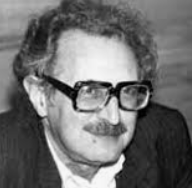
Simon Soloveychik — Dignity, Freedom, and the Philosophy of Upbringing (1930–1996)
Simon L'vovich Soloveychik was a Russian journalist, social philosopher, and educator whose work on the philosophy of childhood, parenting, and the dignity of the human person made him one of the most influential voices in Soviet and post-Soviet educational thought.
A classic member of the Russian intelligentsia — focused on underlying ideas and their significance rather than on what was practical or expedient — he spent his life writing in defense of teachers, children, and the proposition that the proper aim of education is the cultivation of inner freedom and human dignity, not the production of compliant subjects.
His central concern: that the dignity of the child is not a reward for good behavior but the starting point of all genuine education — and that any upbringing that demeans, controls, or diminishes a child has already failed at the only thing that matters.
Parenting for Everyone — The Philosophy of Raising Free Children
Soloveychik's central work, developed across a decade of writing and revised throughout his career, was his "Parenting for Everyone" — a work of philosophical reflection on the goals, conditions, and meaning of raising children.
Its central argument was simple, radical, and almost entirely counter to the assumptions of Soviet pedagogy: the goal of upbringing is not to instill correct beliefs, produce useful citizens, or shape children into the forms that society requires — it is to protect and develop the child's inherent dignity, and to raise a person who is free internally, whatever the external circumstances of their life.
He argued that dignity is not something earned — it is something possessed from birth and either protected or violated by those responsible for a child's development. Every act of humiliation, every exercise of contempt, every interaction that treats the child as an object to be managed rather than a person to be respected inflicts damage that no subsequent success can repair. Parents and teachers, on this account, are not authorities over children but stewards of their dignity — and the measure of education is not achievement but the health of the soul.
"The demeaning of dignity is almost the only reason for a fight. Let's remember our goal — we need that the sense of dignity remains in our son or daughter. Here is our goal."
The Pedagogy of Cooperation
In the mid-1980s, working at the influential teachers' newspaper Uchitelskaya Gazeta, Soloveychik helped bring to national prominence a movement he called the pedagogy of cooperation — a radical reframing of the relationship between teacher and student, parent and child.
The conventional model of education treated the child as a vessel to be filled, a subject to be formed, an object upon which the educator's will was exercised. The pedagogy of cooperation proposed instead that education was a dialogue — a genuine relationship between two persons, one more experienced and one less, but both possessed of equal dignity and both capable of contributing to each other's growth.
This was not a soft or permissive pedagogy — Soloveychik was explicit that cooperation required genuine effort, genuine standards, and genuine accountability. But it located the authority of education not in hierarchy and compulsion but in the quality of the relationship — in trust, in mutual respect, in the shared project of understanding something together.
The movement drew on the best traditions of Russian humanist pedagogy and produced a generation of teacher-innovators whose influence spread throughout Soviet schools at a moment when the system was beginning to open.
"Upbringing of a child is not an influence upon a child — it is a dialogue between educator and student."
Inner Freedom and the Free Person
At the heart of Soloveychik's philosophy was a distinction that he returned to throughout his life — between outer freedom, which depends on circumstances, and inner freedom, which does not.
A free person, in his account, is not one who is unconstrained by external conditions — no one is fully free in that sense — but one whose inner life has not been colonized by fear, by the need for others' approval, by the internalization of contempt. Inner freedom is the capacity to act from one's own convictions, to think one's own thoughts, to preserve the integrity of the self regardless of what external pressures are brought to bear.
He argued that this inner freedom was the proper product and purpose of education — and that the Soviet system, in its insistence on conformity, ideological compliance, and the subordination of the individual to collective demands, systematically destroyed it. He said this with characteristic directness, at considerable personal cost, in a system that preferred educators to be more circumspect.
"A free man is a man who is free internally. As all other people, externally he or she depends on society — but inside, in his soul, he is free."
Happiness, Fear, and the Unhappy Upbringing
Soloveychik wrote with unusual warmth and directness about happiness — not as a goal to be pursued but as a condition to be preserved and protected, especially in children whose capacity for joy is damaged before it has had time to develop.
He argued that fear was the great enemy of education — fear of the teacher, fear of classmates, fear of the subject, fear of being wrong — and that a system organized around fear deprived students of half their capacities before they had a chance to discover what those capacities were. The teacher who can help students learn without fear has achieved something more important than any curriculum objective.
His observation that unhappy people cannot raise happy children — that a child surrounded by misery inevitably absorbs it, regardless of the external circumstances — was one of those insights that seems obvious once stated and yet is almost entirely absent from conventional discussions of education and parenting. The emotional climate of the relationship matters more than any technique or method.
"A child gets sick with a chronic disease of unhappiness not from unhappy circumstances but from unhappy people around him. Unhappy people cannot raise happy children — it's impossible."
September First and the Newspaper for Teachers
In 1992, following the collapse of the Soviet Union, Soloveychik founded "Pervoe Sentiabria" — September First — a newspaper for teachers that became one of the most important forums for educational reform in post-Soviet Russia.
He ran it as editor-in-chief until his death in 1996, maintaining on its masthead a slogan that expressed the organizing conviction of his entire career: "You're an outstanding teacher — You have wonderful pupils." The slogan was not empty encouragement — it was a philosophical position: that the teacher's belief in the student's worth is itself formative, that to see a person as capable and good is part of what makes them so.
He died in October 1996 at the age of sixty-six, having seen the newspaper through five hundred issues — a quiet, stubborn monument to the proposition that teachers matter, that children matter, and that the philosophical questions surrounding education are among the most consequential any society faces.
"To see a man as beautiful — means to make him really beautiful. There is no cunning, no deceit — this happens every time, everyone knows that."
Legacy — The Philosopher of the Child's Soul
Soloveychik is almost entirely unknown outside Russia — a fact that reflects the asymmetries of intellectual translation rather than any judgment on his importance. Within the Russian educational tradition he is a major figure, his ideas forming part of the foundation of humanistic pedagogy in the post-Soviet period.
His insistence on dignity as the organizing principle of education — prior to achievement, prior to conformity, prior to any social goal — connects him across vast cultural distance to figures like L.P. Jacks, who argued that the goal of education was wholeness rather than usefulness, and to Mozi, who grounded ethics in equal concern for the welfare of all persons regardless of status.
On CivSim his work is directly relevant to the concerns of Universal Humanism — a philosophy that grounds human value in something prior to social role, cultural membership, or productive capacity. Soloveychik arrived at a similar conclusion through the entirely different route of watching children and asking what they needed to flourish — and his answer, dignity preserved and inner freedom cultivated, is one of the most practically grounded expressions of humanist values in the entire catalogue.
"Imagine a man who doesn't believe in anything, hope for anything, doesn't love anyone. This is a description of a dead or paralyzed soul. This happens from great grief, or from an unhappy upbringing — when parents make from their children's souls paralytics."
CivilSimian.com created by AxiomaticPanic, CivilSimian, Kalokagathia