
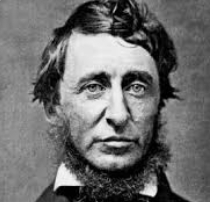
Ralph Barton Perry — Value, Interest, and the Democratic Vision of Human Nature (1876–1957)
Ralph Barton Perry was an American philosopher, intellectual historian, and student of William James whose systematic theory of value and passionate defense of liberal democracy made him one of the most significant figures in American philosophy of the first half of the twentieth century.
A founding member of the New Realist movement, winner of the Pulitzer Prize for his biography of William James, and a professor at Harvard for nearly four decades, he brought to moral philosophy an empiricist rigor and a democratic commitment that distinguished him from both the idealists he opposed and the emotivists who would supersede him.
His central concern: that value is not a mysterious metaphysical property nor a mere expression of subjective feeling but a natural fact about the relationship between objects and the interests of conscious beings — and that this naturalistic account of value provides the philosophical foundation for a democratic ethics grounded in the equal worth of every person's interests.
New Realism and the Revolt Against Idealism
Perry came to philosophical maturity at a moment when American philosophy was dominated by various forms of idealism — the view, ultimately derived from Kant and Hegel, that reality is in some fundamental sense mental, that objects exist only as they are experienced or thought.
He was among the six philosophers who collaborated on the 1910 manifesto "The Program and First Platform of Six Realists" — a declaration that inaugurated the New Realist movement and argued that things exist independently of being known, that the act of knowing does not alter the thing known, and that the proper method of philosophy was continuous with and not fundamentally different from the method of natural science.
This was not merely a technical metaphysical position — it had consequences for ethics, for politics, and for the relationship between philosophy and democracy. If value is a natural fact accessible to empirical inquiry, then ethical disagreements can in principle be adjudicated by evidence and argument. If every conscious being has interests that count as real, then the equal consideration of those interests has a philosophical foundation that idealism struggled to provide.
"Things exist independently of being known — and this independence is the beginning of both science and democracy."
The Theory of Value — Interest and Its Objects
Perry's most systematic and most influential philosophical work, "General Theory of Value" (1926), developed what remains one of the most carefully argued naturalistic theories of value in the history of moral philosophy.
His central thesis was disarmingly simple: value is the character which anything acquires by virtue of being an object of interest. Things are not valuable in themselves, in isolation — they acquire value by standing in a particular relation to the interests of conscious beings. Where there is interest, there is value. Where there is no interest, there is no value.
Interest, in Perry's technical sense, was a broad category covering desire, aversion, preference, purpose, caring — any state in which a conscious being is oriented toward or away from something. The hungry person's interest in food gives food its value. The parent's love for a child gives the child its value. The citizen's concern for justice gives justice its value.
This made value objective in an important sense — it was a real relation between objects and interests, not merely a feeling in the subject — while grounding it entirely in the natural world without invoking mysterious non-natural properties. The theory navigated between the Scylla of subjectivism and the Charybdis of non-naturalism with unusual elegance.
"A thing — any thing, every thing — has value, or is valuable, in the original and generic sense, when it is the object of an interest — any interest."
Moral Value and the Harmonization of Interests
Perry's theory of value faced the obvious challenge: if anything that is an object of interest has value, what distinguishes moral value from mere preference? How do we move from the fact that people have interests to any normative conclusions about which interests ought to be satisfied?
His answer centered on the concept of harmonization — the idea that the moral good is not any particular interest but the condition in which interests are most fully and inclusively satisfied. A state of affairs in which more interests are realized, in which conflicts between interests are resolved rather than suppressed, in which the satisfaction of one person's interests does not require the frustration of another's — such a state has more value than one in which interests conflict and cancel each other.
This gave his ethics a social and democratic character — the good life was not the maximally satisfied individual but the community organized to allow the fullest realization of the interests of all its members. Moral progress, on this account, was the progressive expansion of the circle of included interests — the incorporation of more and more conscious beings into the community whose interests counted.
"The highest good is the harmonious happiness of all — a condition in which the interests of each are advanced rather than frustrated by the interests of all."
William James — A Pulitzer Prize Biography
Perry's two-volume intellectual biography of his teacher William James — "The Thought and Character of William James" (1935) — won the Pulitzer Prize for biography and remains the most thorough and philosophically serious account of James's life and thought ever written.
Perry had known James personally, corresponded with him extensively, and had access to an enormous range of unpublished letters and manuscripts. He used these resources to construct not merely a chronological account of a life but an intellectual portrait of a mind — tracing the development of James's pragmatism, his radical empiricism, his religious philosophy, and his political commitments in a way that illuminated each in terms of the others.
The biography was a philosophical achievement as well as a biographical one — an act of sustained philosophical interpretation that shaped how subsequent generations understood one of America's greatest philosophers. It also demonstrated something about Perry's own philosophical method — his conviction that ideas are not free-floating abstractions but grow from and respond to the concrete circumstances of living human minds.
"James believed that philosophy must make a difference — that an idea which makes no difference to anyone is not a philosophical idea but a verbal formula."
Democracy, War, and the Philosophical Citizen
Perry was not merely an academic philosopher — he brought his philosophical commitments to bear on the political crises of his era with unusual directness.
During both World Wars he wrote extensively on the philosophical foundations of the democratic cause — arguing that the conflict between liberal democracy and totalitarianism was not merely a political dispute but a conflict between fundamentally different views of the nature and value of human beings. Democracy, on his account, was not merely an effective form of government but the political expression of a philosophical commitment to the equal worth of every person's interests.
His "Realms of Value" (1954) — his final systematic work — traced the implications of his value theory through morality, religion, art, science, economics, politics, and law, showing how the harmonization of interests provided the philosophical foundation for the entire range of human institutions and practices. It was the summation of a career's philosophical work applied to the full range of human concern.
"Democracy is not merely a form of government — it is the political expression of a moral conviction: that every human being has interests which deserve equal consideration."
Legacy — The Naturalistic Foundation of Democratic Ethics
Perry's philosophical reputation declined in the decades after his death — partly because the analytic movement that came to dominate anglophone philosophy found his style too synoptic, partly because the emotivist and prescriptivist theories of value that his work had tried to forestall temporarily dominated the field, and partly because the broader revival of interest in naturalistic ethics came later than he could have benefited from.
But his questions have not gone away. The project of grounding value in natural facts about interests — of showing how moral claims can be objective without invoking mysterious non-natural properties — is precisely the project that contemporary moral naturalists, from Peter Railton to Philip Kitcher, have taken up in the decades since his death. Perry worked on the right problem with the right methods — and his specific contributions deserve more attention than they currently receive.
On CivSim he belongs alongside Dworkin and Mozi — philosophers who sought a foundation for the equal consideration of all persons' interests that was rigorous enough to support the weight placed upon it and honest enough to acknowledge its own limitations. His interest-based theory of value maps naturally onto the concerns of Universal Humanism — providing a philosophical account of why every person's interests count that is grounded in natural facts rather than theological assertion or intuitive appeal.
"The good life is not the life of maximum personal satisfaction — it is the life lived in a community where the satisfaction of each is bound up with and advances the satisfaction of all."
CivilSimian.com created by AxiomaticPanic, CivilSimian, Kalokagathia