
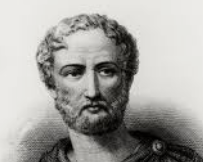
Pliny the Younger — Letters, Witness, and the Art of Civilized Life (61–113 AD)
Gaius Caecilius Secundus, known to history as Pliny the Younger, was a Roman lawyer, author, and magistrate whose nine books of carefully crafted letters constitute one of the richest and most intimate portraits of Roman life at its intellectual and social peak.
Nephew and adopted son of Pliny the Elder, a friend of Tacitus and correspondent of the Emperor Trajan, he moved at the center of the Roman world and wrote about it with a clarity, wit, and moral seriousness that has kept his letters in continuous circulation for two thousand years.
His central concern: that a life worth living requires cultivation — of friendship, of literature, of the law, of the capacity for honest observation — and that the examined life, in the Roman as in the Socratic sense, is both a personal achievement and a social obligation.
The Letters — A Portrait of an Age
Pliny's letters were composed with full awareness that they would be published and read — they are literary performances as much as personal communications, carefully shaped to present both their author and the world he inhabited in the most considered light. This does not make them dishonest — it makes them Roman.
They cover an extraordinary range: descriptions of his villa and its gardens, accounts of literary dinner parties and legal cases, portraits of the great and the ordinary, reflections on friendship, on death, on the proper use of time, on the management of his estates, on the duties of a Roman magistrate, on the education of the young and the obligations of the old.
What holds them together is a consistent sensibility — humane, curious, somewhat self-regarding, genuinely concerned with how a person of intelligence and means ought to spend the time allotted to them. They are, in a precise sense, philosophical letters — not treatises on abstract questions but sustained reflections on how to live.
"How many days have I lost! How little have I written! But time spent with good friends is not lost — it is stored."
The Eruption of Vesuvius — History's Finest Eyewitness Account
Pliny's two letters to Tacitus describing the eruption of Vesuvius in 79 AD — in which his uncle Pliny the Elder died — are among the most celebrated documents in all of Latin literature, and the foundation of modern volcanology.
The first letter describes the eruption from across the bay at Misenum, where Pliny watched a cloud of extraordinary shape rise above Vesuvius and his uncle sail toward it to investigate and rescue survivors. The description of the cloud — like an umbrella pine, its trunk shooting upward before spreading out — is so precise that geologists still use the term "Plinian eruption" for this type of volcanic column.
The second letter describes what Pliny himself experienced — the darkness, the falling ash, the panic of the population, his own terror and his mother's calm, the surreal quality of a world suddenly plunged into night at midday — with a directness and precision that makes the reader feel the ground shaking beneath their feet two millennia later.
He wrote them decades after the event, at Tacitus's request, for inclusion in his histories. The care he brought to recollecting and ordering his experience is itself a philosophical act — the making of order out of chaos, the preservation of what was witnessed for those who were not there.
"A cloud was rising from a mountain — at such a distance we could not tell which, though it was afterwards known to be Vesuvius. Its general appearance can best be expressed by a comparison to a pine tree, for it shot up to a great height in the form of a trunk, which spread at the top into a sort of branches."
The Correspondence with Trajan — Law, Administration, and the Christians
Pliny's tenth book of letters — his official correspondence with the Emperor Trajan during his governorship of Bithynia-Pontus — is uniquely valuable as a document of Roman provincial administration at the height of the empire.
Among the most historically significant of these letters is Pliny's consultation of Trajan about how to deal with the Christians he had encountered in his province — the first surviving pagan account of Christian communities from someone who had actually investigated them.
He described their practices with characteristic precision: they met before dawn, sang hymns to Christ as to a god, bound themselves by oath not to commit crimes, and shared an ordinary meal. He found nothing criminally objectionable in the practices themselves — his concern was with the stubbornness of those who refused to renounce their faith under questioning, and with the proper legal procedure for dealing with them.
The exchange between Pliny and Trajan is one of the foundational documents in the history of religious persecution — a window into how the Roman state understood, categorized, and decided to treat a community it found bewildering but not obviously threatening.
"They affirmed that the whole of their guilt or error was that they were in the habit of meeting on a certain fixed day before it was light, when they sang in alternate verse a hymn to Christ as to a god."
Friendship, Time, and the Life Well Spent
The philosophical heart of Pliny's letters is his sustained meditation on the proper use of time — a Roman obsession that ran from Seneca through Marcus Aurelius and that Pliny approached with his own characteristic gentleness.
He was acutely aware of time's passage and its demands — of the constant pressure of legal business, social obligations, and public duties that threatened to consume the hours that might otherwise go to writing, reading, and friendship. His letters are full of resolutions to do better, to protect the morning for writing, to resist the invitations that fritter away the afternoon.
He did not advocate withdrawal from the world — he was too Roman for that, too committed to the obligations of the public man — but he sought a balance between negotium and otium, business and leisure, that would allow both the duties and the pleasures of civilized life to be honored without either destroying the other. His villas — described in letters of unusual architectural detail — were designed for exactly this balance: spaces for work and for rest, for company and for solitude, each hour given its proper activity.
"It is one of the hardest things in the world to persuade yourself that you have time when you are always busy — yet if you cannot steal an hour for yourself, you will find the whole of life has been given to others."
The Good Man in Public Life
Pliny was a successful lawyer and magistrate who took the obligations of public life seriously — defending clients in the courts, serving as a senatorial advocate, administering provinces, and performing the hundred duties that Roman public life demanded.
He was not blind to the moral hazards of this world — the corruption, the flattery, the compromises that public life under an emperor demanded. He had survived the reign of Domitian, a period of fear and denunciation that he describes with retrospective shudder, and he was acutely aware of what it cost a man to maintain his integrity under tyranny.
His friend and model Helvidius Priscus had died for his principles under Domitian — and Pliny wrote about him with admiration that contained, perhaps, a measure of self-knowledge about his own more accommodating survival. He prosecuted the informers of Domitian's reign in the Senate when it became safe to do so — a belated act of justice that he described with a mixture of satisfaction and unease that suggests he was not entirely comfortable with the order of his own courage.
"The mark of a good man in bad times is not that he escapes without stain — it is that he keeps enough of himself intact to recognize the stain."
Legacy — The Letter as Philosophical Form
Pliny's letters have never gone out of circulation — they were copied throughout the medieval period, rediscovered with enthusiasm in the Renaissance, and have been read continuously as models of Latin prose and as windows into Roman social life ever since.
Their philosophical significance lies less in any single doctrine than in what they model — the examined public life, the cultivation of friendship and literature as serious moral activities, the attempt to hold together the claims of duty and pleasure, of public obligation and private cultivation, without sacrificing either to the other.
In the company of Marcus Aurelius and Seneca on CivSim — the great Roman practitioners of philosophical self-examination — Pliny occupies a distinctive position. Where Marcus writes to himself, struggling with the demands of office, and Seneca writes to Lucilius, constructing a philosophical persona, Pliny writes to the world — offering not a system or a discipline but a sensibility: curious, affectionate, humane, aware of mortality and undaunted by it, finding in the pleasures of civilized life not a distraction from philosophy but its proper and natural expression.
"This is my leading maxim: that those things are best and most worth seeking which, when you have got them, you will most wish to have had."
CivilSimian.com created by AxiomaticPanic, CivilSimian, Kalokagathia