
4 months 3 weeks ago
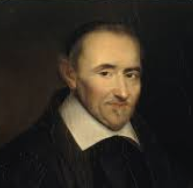
Man lives very well upon flesh, you say, but, if he thinks this food to be natural to him, why does he not use it as it is, as furnished to him by Nature? But, in fact, he shrinks in horror from seizing and rending living or even raw flesh with his teeth, and lights a fire to change its natural and proper condition. … What is clearer than that man is not furnished for hunting, much less for eating, other animals? In one word, we seem to be admirably admonished by Cicero that man was destined for other things than for seizing and cutting the throats of other animals. If you answer that ‘that may be said to be an industry ordered by Nature, by which such weapons are invented,’ then, behold! it is by the very same artificial instrument that men make weapons for mutual slaughter. Do they this at the instigation of Nature? Can a use so noxious be called natural? Faculty is given by Nature, but it is our own fault that we make a perverse use of it.
▼
Source
source
Letter to Van Helmont, quoted in [https://archive.org/stream/ethicsofdietcate00will/ethicsofdietcate00will#page/n3/mode/2up The Ethics of Diet: A Catena of Authorities Deprecatory of the Practice of Flesh-eating] by Howard Williams (London: F. Pitman, 188
4 months 3 weeks ago
The ancient Greek philosopher, Democritus, propounded an hypothesis of the constitution of matter, and gave the name of atoms to the ultimate unalterable parts of which he imagined all bodies to be constructed. In the 17th century, Gassendi revived this hypothesis, and attempted to develope it, while Newton used it with marked success in his reasonings on physical phenomena; but the first who formed a body of doctrine which would embrace all known facts in the constitution of matter, was Roger Joseph Boscovich, of Italy, who published at Vienna, in 1759, a most important and ingenious work, styled Theoria Philosophiæ Naturalis ad unicam legem virium, in Natura existentium redacta. This is one of the most profound contributions ever made to science; filled with curious and important information, and is well worthy of the attentive perusal of the modern student. In more recent days, the theory of Boscovich has received further confirmation and extension in the researches of Dalton, Joule, Thomson, Faraday, Tyndall, and others.
▼
Source
source
Alfred Marshall Mayer, Lecture-notes on Physics (1868) [https://books.google.com/books?id=hqsLAAAAYAAJ Part 1]
4 months 3 weeks ago
Boyle entertains the hypothesis of a universal matter, the concept of atoms of different shapes and sizes, and the possibility of existence of substances that might properly be called elements... The atomic theory as originally conceived by Democritus and Epicurus, developed by Lucretius, and resurrected by Gassendi from about 1647 on, was doubtless the source from which Boyle derived his ideas, ...as he cites both Epicurus and Gassendi. Boyle, however... avoids any dogmatic assertion of these hypotheses. It is plain, however, that these atoms or "corpuscles" as he calls them are a constant element of his thought.
▼
Source
source
John Maxson Stillman, The Story of Alchemy and Early Chemistry (1924)
CivilSimian.com created by AxiomaticPanic, CivilSimian, Kalokagathia