
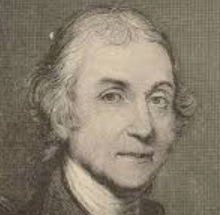
Joseph Priestley — Oxygen, Unitarianism, Radicalism, and the Unity of Knowledge (1733–1804)
Joseph Priestley was an English Dissenting minister, natural philosopher, political theorist, historian, grammarian, and educational reformer — born in Yorkshire in 1733, legally barred from attending English universities as a religious Nonconformist, educated instead at a Dissenting Academy where he became, in his own words, "a furious freethinker" — who over a seventy-year life published more than 150 works, discovered ten gases including oxygen, invented carbonated water, helped found Unitarianism in America, watched his house and laboratory burned by a mob in Birmingham for his political sympathies with the French Revolution, and fled to Pennsylvania where he died in 1804 in the kind of principled obscurity that frequently concludes a life of too many enemies.
The eighteenth century produced polymaths — but Priestley was one of the more extreme cases: a man who treated theology, natural philosophy, political theory, educational reform, grammar, and the history of science as not merely compatible pursuits but as aspects of a single unified project to understand and improve the world. His conviction that human knowledge was progressive, that error would gradually yield to rational inquiry, and that political and religious liberty were the conditions of that progress gave everything he did a common philosophical foundation.
His central concern: the perfectibility of knowledge and the conditions that made it possible — free inquiry, free speech, religious toleration, political liberty, and the rejection of all authority that demanded acceptance without rational justification.
The Science — Oxygen, Gases, and the Chemistry of Air
Priestley's most famous scientific achievement was the isolation of oxygen on August 1, 1774 — achieved by focusing sunlight through a lens onto a sample of mercuric oxide and collecting the gas that resulted. He called it "dephlogisticated air" — air from which the hypothetical substance phlogiston had been removed, leaving it purer and more supportive of combustion than ordinary air. When he tested it on mice, they survived longer than expected. When he tested it himself, he wrote that it was "five or six times better than common air for the purpose of respiration." He had isolated the gas we call oxygen.
This discovery was one of the most important in the history of chemistry — and was the beginning of a story with an ironic ending. Lavoisier, who met Priestley in Paris later that year and learned of the discovery, used it as the foundation for his new theory of chemistry — replacing phlogiston with oxygen as the key to combustion and thereby inaugurating what is called the chemical revolution. Priestley refused to accept this revolution for the rest of his life, continuing to defend phlogiston theory against Lavoisier's system long after the scientific community had moved on. The French naturalist Cuvier, eulogizing Priestley after his death, called him "the father of modern chemistry who never acknowledged his daughter."
His other chemical achievements were substantial: he discovered nitrous oxide (laughing gas), ammonia, hydrogen chloride, sulfur dioxide, nitrogen dioxide, carbon monoxide, and silicon tetrafluoride — ten gases in total — and invented the apparatus for producing carbonated water that eventually made possible the soda-water industry. His history of electricity, published when he was thirty, was a landmark work in the history of science.
"Priestley was never a chemist; in a modern sense, he was never a scientist. He was a natural philosopher, concerned with the economy of nature and obsessed with an idea of unity, in theology and in nature."
— Robert Schofield, historian of science
Materialism, Determinism, and the Unity of Mind and Matter
What made Priestley philosophically unusual — and philosophically dangerous to his contemporaries — was his combination of Unitarian theology with a thoroughgoing materialist and determinist philosophy. Where most of his contemporaries assumed that Christianity required the immateriality of the soul, the freedom of the will, and some form of dualism between mind and matter, Priestley argued that all three assumptions were mistaken.
His materialism: the soul was not a separate immaterial substance but a property of organized matter. Mind and consciousness were activities of the brain — a position that anticipated later neuroscience but outraged eighteenth-century sensibilities. His determinism: all events, including human thoughts and actions, were determined by prior causes — a position he regarded not as eliminating moral responsibility but as clarifying it, since virtuous character was itself the product of proper education and environment. His Unitarianism: the Trinity was an irrational doctrine imposed by later church councils on an originally simple Christian monotheism — and Jesus was a human prophet, not the second person of a divine Trinity.
These positions formed a coherent system — one in which the unity of nature and the unity of God implied and supported each other — but it was a system that gave orthodox Christianity maximum offense. He was comparing his philosophical work to "laying gunpowder grain by grain under the old building of error and superstition" — a metaphor his enemies found both accurate and threatening.
"Having compared the clarifying power of reason to 'laying gunpowder grain by grain under the old building of error and superstition,' Priestley's radicalism could easily be denounced as a threat to Restoration England."
Political Philosophy — Liberty and the First Principles of Government
Priestley's "Essay on the First Principles of Government" (1768) was one of the more important works of political philosophy in the English-speaking Enlightenment — and had direct influence on Jeremy Bentham's development of utilitarianism. His formulation of the principle that "the good and happiness of the members, that is the majority of the members of any state, is the great standard by which everything relating to that state must finally be determined" was one of the statements Bentham cited as a source for the principle of utility.
He distinguished political liberty from civil liberty — the former concerning participation in governance, the latter concerning freedom from governmental interference in private life — and argued that civil liberty was more fundamental. His arguments for religious toleration, freedom of the press, and the reform of the Test Acts that excluded Dissenters from public life were consistently principled and consistently unpopular with those whose power they threatened.
His support for the American Revolution and then the French Revolution — he was one of the most prominent British defenders of both — made him a target of loyalist anger. When, on the second anniversary of the Bastille's fall in 1791, a mob attacked Birmingham's Dissenting community, Priestley's house, laboratory, and library were among the first targets, burned to the ground while he and his wife barely escaped.
"The good and happiness of the majority of the members of any state is the great standard by which everything relating to that state must finally be determined."
The Lunar Society — Science, Industry, and Enlightenment
Priestley's Birmingham years were among the most productive of his life — not only for his scientific work but for his membership of the Lunar Society, the informal network of scientists, engineers, industrialists, and thinkers who met monthly at the full moon to discuss the intersection of science, technology, and social progress. His fellow members included Erasmus Darwin, Josiah Wedgwood, Matthew Boulton, James Watt, and others who were simultaneously making the Industrial Revolution happen and thinking about its philosophical implications.
Priestley stood somewhat apart from the purely industrial enthusiasm of some Lunar Society members — his interest was in the philosophical and theological dimensions of scientific progress, in what the expansion of human knowledge implied for the improvement of human institutions — but he was fully engaged with the idea that science, commerce, religion, and political reform were all parts of a single project of human improvement.
"Priestley's considerable scientific reputation rested on his wide-ranging contributions to pneumatic chemistry, electricity, and optics — but he himself claimed that his most valuable works were his theological ones, because they were 'superior in dignity and importance.'"
America and the Final Years
Priestley emigrated to Pennsylvania in 1794 — at sixty-one, with his house and laboratory destroyed, his scientific reputation under attack from Lavoisier's followers, and his political reputation making continued residence in England impossible. He declined a professorship at the University of Pennsylvania and settled in Northumberland, a remote frontier town, to be near his sons.
In America he continued everything — the science, the theology, the political controversy. He founded the first Unitarian church in America, stimulated the creation of a dozen Unitarian congregations, published papers attacking Lavoisier's chemistry, and wrote political works that upset the Federalists enough to bring him close to deportation (John Adams blamed his writings for contributing to his 1800 electoral defeat). When Jefferson — a close friend — was elected president, the political atmosphere improved. Priestley died in 1804, still working, still arguing, still defending phlogiston theory, still confident in the progressive perfectibility of human knowledge.
"A wide variety of philosophers, scientists, and poets became associationists as a result of his work, including Erasmus Darwin, Coleridge, Wordsworth, John Stuart Mill, Alexander Bain, and Herbert Spencer. He paved the way for utilitarianism and helped found Unitarianism."
Legacy — The Unity He Maintained
Priestley's legacy is typically fragmented — celebrated in chemistry for oxygen, in religious history for Unitarianism, in political thought for utilitarian precursors, in the history of education for his curriculum innovations — but the most important thing about him was the unity he maintained across all these domains. His materialism, his determinism, his Unitarianism, his political radicalism, and his scientific method were not separate commitments but aspects of a single worldview organized around the conviction that rational inquiry, freed from superstition and authority, would gradually produce both better knowledge and better societies.
On CivSim he belongs alongside Franklin, Jefferson, and Voltaire — the eighteenth-century thinkers who brought Enlightenment principles into direct confrontation with the institutional arrangements that sustained privilege, orthodoxy, and arbitrary power. His synthesis of scientific materialism with Unitarian Christianity and democratic political philosophy is one of the more remarkable intellectual constructions of the period — and his willingness to maintain it in the face of mob violence, professional isolation, and exile is one of the more remarkable biographical facts.
"Knowledge must not be allowed to stagnate, and there was much work still to be done — Priestley had confidence in the project because he held that although truth itself was absolute and uniform, human attainment of truth was a fluid and gradual process."
CivilSimian.com created by AxiomaticPanic, CivilSimian, Kalokagathia