
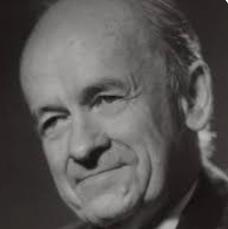
John Passmore — Human Imperfectibility, Environmental Philosophy, and the Pessimistic Humanist (1914–2004)
John Passmore was an Australian philosopher whose sixty-year career at Sydney, Otago, and the Australian National University produced some of the most important works of philosophical history writing in the English-speaking world — including a standard account of a century of analytic philosophy, a comprehensive history of the idea of human perfectibility, and the first serious philosophical treatment of environmental ethics — written from the perspective of a man who described himself as "a pessimistic humanist" who regarded neither human beings nor human societies as perfectible.
A philosopher who was always also a historian of ideas, who brought to every problem the patience to understand how it had been posed and answered before, and who found in that historical understanding not an obstacle to philosophical clarity but its best preparation — he was one of those philosophers whose influence was larger than their fame, whose scholarship shaped how several generations of English-speaking philosophers understood their own tradition.
His central concern, running through all his work: the examination of claims about what human beings can become — whether through moral effort, political transformation, technical enhancement, or mystical experience — and the sustained, historically informed critique of what he regarded as the most dangerous idea in Western thought: that human perfection was achievable and that achieving it justified whatever it cost.
A Hundred Years of Philosophy — The Standard Reference
Passmore's 1957 "A Hundred Years of Philosophy" became one of the most widely used texts in Anglo-American philosophy programs — a survey of philosophical development from Mill to the mid-twentieth century that was at once historically rigorous, philosophically sensitive, and written with the kind of clarity that made difficult ideas accessible without falsifying them.
The book traced the development of British and analytic philosophy from the empiricist tradition through idealism, pragmatism, the rise of mathematical logic, logical positivism, and the various forms of ordinary language philosophy that had come to dominate the field by mid-century. What distinguished it from a mere chronicle was Passmore's ability to see the internal logic of transitions — to show why each development responded to the difficulties of what preceded it — while maintaining a critical distance that prevented the narrative from becoming hagiography.
He confessed in his later autobiography that he had always been a philosopher in his own right and not merely a historian of ideas — a distinction that his ANU colleague Philip Pettit confirmed, noting that Passmore's historical studies were always in the service of genuine philosophical positions. The Hundred Years was not just a map of a territory but a way of navigating it.
"Passmore shaped public debate and opened up philosophy and history of ideas to the wider world."
— Frank Jackson, philosopher
The Perfectibility of Man — Against the Most Dangerous Idea
Passmore's most philosophically ambitious and most historically sweeping work was "The Perfectibility of Man" (1970) — which he later said might better have been titled "Human Imperfectibility." It was a comprehensive history of the idea that human beings could be made perfect, traced from ancient Greece through Christianity, the Renaissance, the Enlightenment, anarchism, utopianism, Marxism, psychoanalysis, and evolutionary and transhumanist theories.
His argument was not that improvement was impossible — he was not a nihilist about progress — but that the specific claim of perfectibility — that human nature could be fundamentally transformed, that a new kind of human being could be created through the right conditions, practices, or institutions — had been the driver of some of history's most catastrophic programs. The perfectibilist argument always licensed extraordinary measures in the present in the name of an ideal future — and the measures had consistently proved more real than the ideal.
He was a pessimistic humanist about this — believing that human beings had genuine capacities for improvement and genuine moral responsibilities, while denying that the human condition could be transformed into something categorically different from what it had always been. This was not despair but realism — the philosophical attitude that best preserved both honesty and hope in a century that had demonstrated, at enormous cost, what perfectibilist politics produced.
"A pessimistic humanist who regarded neither human beings nor human societies as perfectible — but who believed, precisely for that reason, that genuine improvement was possible and worth working for."
Man's Responsibility for Nature — Environmental Philosophy Before It Had a Name
Passmore's 1974 "Man's Responsibility for Nature" appeared before environmental philosophy had fully established itself as an academic discipline — and helped establish it by providing the first philosophically rigorous treatment of how the Western philosophical and theological tradition had shaped, for better and worse, humanity's relationship to the natural world.
His central claim was that the ecological crisis was genuinely serious and demanded genuine philosophical response — but that the appropriate response was not the abandonment of Western rationalism in favor of mystical or animistic worldviews, as the deep ecology movement was beginning to advocate. The crisis had been produced within the Western tradition; the resources for addressing it were also within that tradition — in a stricter adherence to genuine scientific understanding, in an extension of existing ethical frameworks to cover more of the natural world, in better stewardship rather than either domination or mysticism.
He was skeptical of attempts to attribute intrinsic value to nature — finding these philosophically unstable — and preferred to ground environmental concern in what nature contributed to the flourishing of sentient creatures. This was a more modest philosophical position than deep ecology demanded, but it was more philosophically defensible and more practically connected to existing ethical traditions that people were already committed to.
"We do indeed face daunting ecological crises, but the best hope for solving them lies in a more general adherence to a perfectly familiar ethic — not in a new metaphysics, a new ethics, or a new religion."
Hume's Intentions — Philosophy Through Philosophical History
Passmore's 1952 "Hume's Intentions" was his most technically philosophical work — a reconstruction of the unity of Hume's philosophical project from the apparently disparate works of the Treatise, the Enquiries, the History, and the essays. The book sought to discover what Hume was actually trying to do — what problems he was trying to solve, what opponents he was addressing — rather than simply cataloguing his doctrines.
This was a methodological commitment as much as a historical one. Passmore believed that the history of philosophy required imaginative reconstruction of historical intentions — the attempt to understand philosophers as trying to solve specific problems in specific contexts — rather than the anachronistic projection of contemporary concerns onto past texts. This approach, which he shared with other Cambridge historians of ideas like Quentin Skinner, became methodologically influential in how intellectual history was practiced.
"In reading Hume, Passmore seeks 'to discover, if possible, the unity — as they were the cogitations of one person — of his contribution.'"
Legacy — The Philosopher Who Did Not Pretend
Passmore died in 2004 at eighty-nine — having remained intellectually active into old age, producing a major autobiography in 1997 — and was remembered as a figure who had made Australian philosophy visible on the world stage through work of genuine range and quality. The annual John Passmore Lecture at the ANU is one of the more prestigious philosophy lectures in Australia — appropriately, since the institution he served for twenty years was the one he most shaped.
His self-description as a "pessimistic humanist" captures something philosophically important and practically rare — the combination of genuine moral seriousness with genuine epistemic humility about human nature and human possibility. He was not cynical — he cared deeply about improvement — but he refused to pretend that the obstacles were smaller or the tools more powerful than they actually were. This combination is less common in philosophy than it should be.
On CivSim he belongs alongside Revel and Aron — thinkers who maintained intellectual honesty about what human beings were and were not capable of, who found in the history of perfectibilist politics reasons for sustained skepticism about the idea that the right theory or the right conditions could transform humanity into something new. His challenge to Universal Humanism is precise and important: the commitment to necessity for all is admirable and necessary, but the expectation that it can be achieved by transforming human nature must be distinguished from the more modest but more realistic hope that it can be approached by changing institutions while accepting human nature as it is.
"The perfectibilist argument always licensed extraordinary measures in the present in the name of an ideal future — and the measures have consistently proved more real than the ideal."
CivilSimian.com created by AxiomaticPanic, CivilSimian, Kalokagathia