
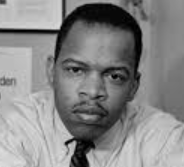
John Lewis — Christian Socialism, British Marxism, and the Althusser Debate (1889–1976)
John Lewis was a British Unitarian minister, Marxist philosopher, and prolific popular writer on philosophy, anthropology, and religion whose long intellectual career — from his Welsh Nonconformist origins through Christian socialism and into committed Marxism — made him one of the more unusual figures in British left-wing thought: a man who maintained a humanist and moralist reading of Marx against both orthodox Soviet dialectical materialism and, in his final years, against the anti-humanist structuralism of Louis Althusser.
The son of a devout Methodist builder whose social conservatism Lewis found intolerable from an early age — and who disinherited him as a consequence — he moved through Congregationalism and Presbyterianism before settling into Unitarianism, while simultaneously moving politically from Christian socialism into Marxism under the influence of the Bolshevik Revolution. The two commitments — religious humanist and dialectical materialist — were never fully resolved, and the tension between them was productive rather than paralyzing.
His central concern throughout his career: that Marxism was not the mechanical materialism of vulgar Marxists but a dialectical and humanist philosophy — one that absorbed and transcended idealism rather than simply rejecting it, and that placed the full development of human beings rather than the impersonal working out of historical forces at the center of its account of historical change.
From Ministry to Marxism — The Intellectual Journey
Lewis's path from Nonconformist ministry to Marxist philosophy was gradual and intellectually serious — not a dramatic conversion but a sustained engagement with the relationship between religious ethics, social critique, and materialist philosophy.
His doctoral work at Birmingham on the philosophy of Marx was undertaken while he was still serving as a minister — an unusual combination that reflected his genuine conviction that Marxism and Christianity addressed overlapping questions from different directions. He became, in effect, a Christian Marxist — someone who took seriously both the ethical imperative of the Gospels and the materialist analysis of capitalism, finding more continuity between them than either orthodox Christianity or orthodox Marxism acknowledged.
The Bolshevik Revolution was decisive — it gave Marxism an empirical reality that philosophy alone could not provide. Lewis studied Russian, engaged with Soviet thought, and became one of the more influential British interpreters of Marxist philosophy for educated non-specialist audiences through a series of books that neither condescended nor demanded more technical background than their readers possessed.
"Marxism does not flatly refute idealism as though the whole idealist movement from Descartes to Hegel had been a preposterous error — its whole attitude is dialectical: it absorbs even while it criticizes, it includes even while it transcends."
The Left Book Club — Popular Education and Political Organization
Lewis's most practically consequential work came through the Left Book Club in the late 1930s — when he abandoned his ministry to become the national organizer of the Club's network of discussion groups.
The Left Book Club, founded by Victor Gollancz in 1936, became one of the most remarkable phenomena in British cultural history — a monthly book selection program that grew within two years to over 50,000 subscribers and spawned hundreds of local discussion groups across the country. Lewis built and coordinated this network, bringing together "intelligent, literate people who had not found rewarding political action in left-wing parties" — exactly the audience that British Marxism needed to reach if it was to become a force in public life rather than a sectarian internal controversy.
The groups functioned, as Lewis's biographers noted, as something close to a quasi-political party — connecting thousands of people who shared progressive political instincts but whose intellectual formation was too serious for party discipline and too independent for official Communist party membership. Lewis was the organizing intelligence behind this network for the years of its greatest influence — the period of the Popular Front, the Spanish Civil War, and the anxious countdown to the Second World War.
"The groups brought together in a progressive movement intelligent, literate people who had not found rewarding political action in left-wing parties — and soon there were groups in every town."
The Modern Quarterly — British Marxist Philosophy
From 1946 to 1953 Lewis edited the Modern Quarterly — the principal journal of British Marxist philosophy — providing a forum for the serious engagement between Marxist theory and the broader currents of British intellectual life in the early Cold War period.
His own contributions to the journal and his books of this period — "Marxism and the Irrationalists," "Marxism and the Open Mind" — sustained a consistent argument against both directions of error that he saw in contemporary thought: the irrationalism and existentialism of the non-Marxist left, which he regarded as a surrender to bourgeois subjectivism; and the mechanical materialism and Stalinist orthodoxy of parts of the Marxist movement, which he regarded as an impoverishment of Marx's genuine philosophy. His Marxism was always in dialogue — taking seriously the arguments of those it opposed, engaging with Sartre, Berdyaev, and others as genuine philosophical interlocutors rather than simply dismissing them as class enemies.
"What has been lacking in contemporary Marxism is the modification and re-formulation of theory in the light of historical study, the contemporary economic situation, and the development of modern science."
The Althusser Debate — Humanism Challenged
The most philosophically consequential episode in Lewis's career came in 1972, when he published an article in Marxism Today — the theoretical journal of the Communist Party of Great Britain — titled "The Althusser Case," criticizing the French Marxist philosopher's "theoretical anti-humanism" and structural reading of Marx.
Althusser had argued in "For Marx" and "Reading Capital" that there was an "epistemological break" in Marx's thought — that the mature Marx had abandoned the humanist philosophy of alienation and species-being of the 1844 Manuscripts in favor of a rigorous science of historical materialism that had no place for the category of "man" at all. Humanism, in Althusser's analysis, was an ideology — useful perhaps for political mobilization but theoretically retrograde, obscuring the real mechanisms of historical change.
Lewis rejected this sharply. For him, Althusser's anti-humanism was not a philosophical advance but a philosophical retreat — an academically sophisticated version of the dehumanized Marxism that had made Stalinism possible. A Marxism that could not speak of human beings, that reduced history to the impersonal play of structures, was not a more rigorous science but a less adequate philosophy — one that had thrown out precisely what made Marx's thought both true and worth defending.
Althusser's response — "Reply to John Lewis," published in Marxism Today in October and November 1972 — was extensive, technically formidable, and theatrically staged: it began with the image of Lewis as a medical specialist examining "the Althusser case," a rhetorical move that simultaneously acknowledged the critique and placed it at a clinical distance. The exchange became one of the more significant debates in postwar Marxist philosophy — not because Lewis "won" in any simple sense but because it forced Althusser to clarify and defend positions that his earlier work had left more implicit, and because it demonstrated that the humanist tradition in Marxism had serious philosophical resources that the structuralist critique had not exhausted.
"The rest of the family stood silent and still at the bedside, while Dr Lewis leaned over to examine 'the Althusser case.' He made his diagnosis: the patient is suffering from an attack of severe 'dogmatism' — a 'medieval' variety."
— Althusser's theatrical opening to his Reply to John Lewis
Legacy — The Humanist Tradition in British Marxism
Lewis died in 1976, three years after the Althusser exchange — having spent his final years on the question of whether a philosophy adequate to human beings could be housed within the Marxist framework or whether the humanist impulse he had never abandoned pointed beyond it. He never fully resolved this question — and the unresolved tension was philosophically honest.
He belongs to a tradition of British Marxism — alongside Christopher Caudwell, Raymond Williams, and E.P. Thompson — that was persistently skeptical of continental theoretical fashion, committed to the connection between Marxist analysis and moral concern, and unwilling to purchase theoretical sophistication at the cost of the human subject that the theory was supposed to serve. This tradition has been consistently undervalued in the academy because it is harder to categorize than either orthodox Marxism or the grand theoretical systems that came from France and Germany.
On CivSim he belongs alongside Rosa Luxemburg and Karl Mannheim — thinkers who maintained the centrality of the human subject within traditions that were systematically tempted to dissolve it. His debate with Althusser was the British equivalent of the broader European argument about whether Marxism could survive the structuralist turn without losing what had made it a force for human liberation — and his answer, which was no, was not obviously wrong.
"Marxism does not brush Plato and his disciples on one side — it absorbs even while it criticizes, it includes even while it transcends. A Marxism that cannot speak of human beings has not advanced beyond ideology — it has simply adopted a different one."
CivilSimian.com created by AxiomaticPanic, CivilSimian, Kalokagathia