
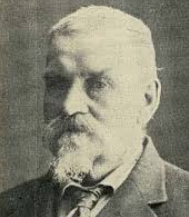
John Austin — Law as Command, Legal Positivism, and the Province of Jurisprudence (1790–1859)
John Austin was an English jurist and legal philosopher whose single important book — "The Province of Jurisprudence Determined," published in 1832 — established the foundations of legal positivism and made him, posthumously, one of the most influential figures in the history of Anglo-American jurisprudence.
A man of whom his widow wrote that his life was one of "unbroken disappointment and failure" — whose lectures attracted distinguished audiences and then dwindled, whose legal career failed, whose commissions ended in frustration, whose book was barely noticed in his lifetime — he achieved the rare distinction of founding a school of thought entirely after his death, when his widow published the second edition of his work in 1861 and it became the essential reference for English legal education for the next half-century.
His central concern: that law and morality were genuinely distinct — that the question of what the law is and the question of what the law ought to be required fundamentally different kinds of inquiry — and that jurisprudence could only become a rigorous discipline by confining itself clearly to the first.
The Command Theory — Law as Sovereign Will
Austin's analytical jurisprudence rested on a simple but powerful framework — the command theory of law. A law, properly so called, was a command: a declaration of a wish that something should be done or refrained from, issued by a determinate superior to an inferior, and backed by a credible threat of punishment — a sanction — in the event of non-compliance. This definition reduced the key concepts of legal analysis — law, right, duty, validity, obligation — to terms that could be specified without reference to moral evaluation.
The sovereign, in Austin's framework, was the person or body habitually obeyed by the bulk of the population who did not itself habitually obey any other person or body. In England, this was Parliament. Laws were the commands of this sovereign — and their validity as laws depended not on their moral content but on their source: on whether they had been issued by the appropriate authority in the appropriate manner.
The framework was deliberately reductive — and deliberately so. Austin wanted to distinguish law from morality with a clarity that natural law theory had always obscured. Unjust laws were still laws — a law's obligation derived from its being commanded by the sovereign, not from its conforming to moral principles. This was not a defense of injustice but a claim about what kind of question the legal theorist was and was not equipped to answer.
"The existence of law is one thing; its merit or demerit is another. Whether it be or be not is one enquiry; whether it be or be not conformable to an assumed standard is a different enquiry."
Legal Positivism — The Separation of Law and Morality
Austin's most lasting contribution was not any specific doctrine but the approach he established — legal positivism — and the questions it forced into focus. He was the first legal thinker to work out a fully systematic positivistic theory of law — the view that law is a social fact, not a moral ideal, and that legal systems can and should be studied empirically and analytically rather than evaluated morally.
This was a methodological claim as much as a substantive one. Natural law theorists had treated jurisprudence as continuous with moral and political philosophy — asking what law ought to be, under what circumstances it was legitimate, and when citizens had genuine obligations to obey it. Austin proposed a different kind of inquiry: what law actually is, how legal systems actually work, what the key concepts of legal analysis actually mean. These were questions that required not moral evaluation but careful conceptual analysis.
The separation of law and morality had practical implications. Lawyers, judges, and legal scholars needed to know what the law was — not what it should be — in order to practice their profession. Conflating the two produced confusion: it tempted lawyers to read their moral preferences into the law and tempted moral philosophers to treat the law as if it were already what justice required. Austin's separation aimed to discipline both errors.
"No moral judgment is ever necessary to determine what the law is — though morality must be consulted in determining what the law should be."
Bentham's Circle and the Utilitarian Context
Austin's legal positivism did not develop in isolation — it emerged from the Utilitarian intellectual world centered on Jeremy Bentham, whose neighbor he became in 1819 and whose influence shaped his entire approach.
Bentham had anticipated much of Austin's legal theory — his distinction between expositorial and censorial jurisprudence, between describing law as it is and evaluating it as it ought to be, was the direct precursor of Austin's positivism. But Bentham's jurisprudential writings did not appear in systematic form until long after his death, and Austin's was the version that shaped the discipline.
Like Bentham, Austin was a committed Utilitarian — he believed that laws should promote the greatest happiness of society. But his legal positivism was carefully distinguished from his utilitarian ethics: the question of what law ought to do was a moral and political question to be answered by Utilitarian calculation; the question of what law actually was was a jurisprudential question to be answered by analysis. The two questions required different methods and different disciplines.
"The science of jurisprudence is concerned with positive laws, or with laws strictly so called, as considered without regard to their goodness or badness."
The Limits of the Command Theory
Austin's theory was criticized almost from the moment of its posthumous fame, and the criticisms identified genuine limitations that the theory could not accommodate.
H.L.A. Hart's "The Concept of Law" (1961) — the most influential work of jurisprudence in the twentieth century — was organized largely as a sustained critique of Austin that preserved the positivist spirit while abandoning the command model. Hart argued that law consisted not merely of commands backed by threats but of rules — and not just primary rules imposing obligations but secondary rules that specified how primary rules were created, changed, and recognized. A society governed entirely by commands would be a gunman situation — obedience secured by threat rather than by the acceptance of rule. Genuine law involved an internal point of view: people accepted rules as standards, not merely complied under threat.
Other objections pressed different difficulties. International law, customary law, and constitutional law did not fit the command model — in international law there was no sovereign, in customary law there was no issuing authority, in constitutional law the sovereign was often bound by the law itself. Austin's sovereign — unlimited, indivisible, determinate — was an idealization that few actual political systems realized.
"Austin's sovereign is a mythic ideal — law involves more than threats; it requires practices, conventions, and the internal acceptance of rules as standards."
— H.L.A. Hart's summary critique
A Life of Disappointment — The Irony of Posthumous Fame
Austin's personal history is one of jurisprudence's more poignant ironies. His first lectures at University College London in 1828 attracted a distinguished audience — John Stuart Mill among them — but student numbers dwindled and he resigned his chair in 1832. He was appointed to the Criminal Law Commission in 1833 and resigned in 1836, finding little support for his views. He lived abroad in Paris for years, unable to find occupation that suited his temperament. He suffered persistent melancholy and self-distrust. He died in 1859, his Province of Jurisprudence Determined largely forgotten.
His widow Sarah — herself an accomplished writer and translator — published the second edition of his work in 1861 and devoted herself to securing his posthumous reputation. By the 1880s the book had become the standard text for English legal education, and Austin was widely celebrated as the founder of analytical jurisprudence. The transformation from neglected failure to canonical figure happened entirely without his knowledge — a form of vindication that, as consolations go, is philosophically interesting even if personally cold.
"His life was one of unbroken disappointment and failure — in ironic contrast with his posthumous fame and influence."
— Sarah Austin, his widow
Legacy — The Foundation That Had to Be Rebuilt
Austin's specific command theory has been almost universally superseded — Hart's critique is generally regarded as decisive — but the positivist approach he established remains fundamental to jurisprudence. The questions he forced into clarity — what law is, how legal validity is determined, what relationship law has to morality — have structured debate in the philosophy of law ever since. Even those who reject his answers engage with his questions.
His impact on the profession was also significant: his approach gave English lawyers in the late nineteenth century a rigorous analytical framework for thinking about their discipline that had been largely absent before him. The treatment of jurisprudence as a serious academic subject — rather than an addendum to moral philosophy or historical study — owes much to the seriousness and systematicity he brought to a field that had previously lacked both.
On CivSim he belongs alongside Dworkin and Tom Campbell — the legal philosophers who have pressed hardest on the questions of what law is, how it differs from morality, and what the relationship between legal and moral obligation actually requires. Austin's position — law as command, positivism as method — is the sharpest statement of one end of that argument, and the subsequent history of jurisprudence is substantially an extended dialogue with what he established.
"Laws and other commands are said to proceed from superiors and to bind or oblige inferiors. I wish to ascertain the meaning of this language — which is intimately related to the meaning of law."
CivilSimian.com created by AxiomaticPanic, CivilSimian, Kalokagathia