
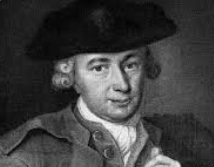
Johann Georg Hamann — The Magus of the North, Reason is Language, and the Metacritique of Pure Reason (1730–1788)
Johann Georg Hamann was a German philosopher, Lutheran pietist, and literary provocateur from Königsberg whose dense, allusive, deliberately obscure writings made him one of the most influential and least read of the great figures of the German Counter-Enlightenment — the man whom Goethe and Hegel called the brightest head of his age, whose student Herder shaped Romanticism and nationalism, and whose friend and philosophical opponent Kant was introduced by Hamann to both Hume and Rousseau.
Known as the Magus of the North — a tax clerk and occasional civil servant in Frederick the Great's Prussia who never held an academic post, who had four children with a woman he never married, who played the lute and wrote in a style so allusive and ironic that even his admirers struggled to follow him — he was nonetheless the philosopher whose ideas did most to crack the Enlightenment's confidence in abstract reason from the inside.
His central concern: that reason is not the pure, autonomous, self-sufficient faculty the Enlightenment believed it to be — that it is always embodied, always historical, always linguistic, always bound to faith, tradition, and sensory experience in ways that the Kantian "purism" of reason systematically denied and systematically required.
The London Conversion — From Enlightenment to Counter-Enlightenment
Hamann began as a committed partisan of the Enlightenment — educated at Königsberg, enthusiastic about the cause of reason, a friend of the Berens family who were publishers and promoters of Enlightenment ideas in Prussia. In 1757 he traveled to London on a business mission that ended in personal disaster — the mission failed, he fell into dissipation and possible sexual scandal, and in his distress he turned to the Bible and underwent what can only be described as a conversion.
He emerged from London with a completely transformed philosophical outlook. The conversion was not merely personal and religious — it was epistemological. His reading of the Bible convinced him that the Enlightenment had fundamentally misunderstood what human beings were and how they knew — that reason was not a faculty that could be purified of experience, emotion, language, and faith and then applied to yield certain knowledge. It was always embedded in these things and could not function without them.
The Berens family, and Kant, attempted to talk him out of it — they sent him philosophical arguments, invited him to discussions, hoped he would return to the Enlightenment fold. He declined, and his reply to their efforts — the "Socratic Memorabilia" of 1759 — was his first major work and his declaration of philosophical independence.
"I look upon logical proofs the way a well-bred girl looks upon a love letter."
Reason is Language — The Linguistic Turn Before the Linguistic Turn
Hamann's most important and most prophetic philosophical claim was his identification of reason with language — "Vernunft ist Sprache." This was not a metaphor or a casual observation but a carefully considered philosophical position with radical implications for the Enlightenment project.
If reason is language — if rational thought is not possible except through the medium of language — then reason cannot be what the Enlightenment claimed: a pure, universal, a-historical faculty available equally to all rational beings regardless of their particular linguistic and cultural situation. Language is historical, particular, traditional. It grows, changes, carries within it the accumulated habits and presuppositions of the communities that have used it. No purification of reason can strip out these particular deposits — because the purification itself is conducted in language and therefore bears the marks of particularity that the purification was supposed to remove.
This argument — developed over decades in dense, allusive prose — anticipates some of the most important developments of twentieth century philosophy. The later Wittgenstein's account of language games, Heidegger's critique of presence, the linguistic turn in analytic philosophy — all of these can be seen as belated elaborations of what Hamann had seen in the 1780s.
"Reason is language — logos. I gnaw on this marrow bone and will gnaw on it to death. It still remains dark for me over this depth — I still await an apocalyptic angel with a key to this abyss."
The Metacritique of Pure Reason — Against Kant's Purism
When Kant published the "Critique of Pure Reason" in 1781, Hamann was among the first and most penetrating of its critics — and he criticized it from a direction that none of Kant's other critics had taken.
He wrote his "Metacritique of the Purism of Reason" — never published in his lifetime, circulated in manuscript — as a response to what he saw as Kant's fundamental error: the attempt to purify reason of everything empirical, everything linguistic, everything traditional, and arrive at pure formal structures that would be universally valid regardless of context.
Hamann's metacritique pressed on precisely the point that later critical theorists would also press: the claim to universality was itself made in language, in a specific historical and cultural context, drawing on vocabulary and concepts with traceable genealogies in Greek philosophy and the Hume-Berkeley-Locke tradition. Kant's supposedly pure reason was bound to the particular intellectual tradition from which it had emerged — and the claim to have escaped that particularity was itself an artifact of that tradition.
Moreover, Kant's separation of sensibility and understanding — the two sources of human knowledge — was for Hamann a violent and unjustified divorce of things that nature had joined together. Reason and sensibility, thought and feeling, concept and intuition — these were not two separate faculties to be analyzed and reconciled but aspects of a single human reality that only abstract philosophical analysis could separate.
"Sensibility and understanding arise as two stems of human knowledge from one common root — to what end is such a violent, unjustified, willful divorce of that which nature has joined together?"
Faith, History, and the Embodied Reason
Hamann's critique of the Enlightenment was not — despite appearances — simply a defense of religion against reason. It was something more philosophically interesting: a defense of the concreteness and historicity of all human knowing against the Enlightenment's dream of an abstract, disembodied reason that had escaped its particular situation.
He valued Hume's skepticism precisely because it showed where the Enlightenment's own method led when followed rigorously — to doubt, to uncertainty, to the undercutting of the rational foundations that Enlightenment thought claimed to have secured. But Hamann drew from this not Hume's conclusion (that we must rely on custom and habit) but a different one: that the failure of abstract reason pointed toward the necessity of faith — not blind faith but faith as the appropriate epistemic attitude toward realities that reason could not reach by its own resources.
He insisted that reason was always embedded in community, history, and language — that the "rational individual" of Enlightenment thought was an abstraction that had never existed — and that a philosophy adequate to actual human beings had to take this embeddedness seriously rather than treating it as a limitation to be overcome.
"The main fallacy of the Enlightenment is hypostasis — the reification of ideas, the artificial abstraction of reason from its social and historical context."
The Style — Deliberate Obscurity as Philosophical Strategy
Hamann's prose is famously difficult — dense, allusive, ironic, requiring a command of multiple languages, biblical texts, classical references, and contemporary philosophical disputes that few readers then or now could bring to it. This was not a failure of communication but a deliberate philosophical stance.
Against the Enlightenment's ideal of clear, perspicuous, universal prose — philosophy written to be accessible to any rational being regardless of their particular cultural formation — Hamann wrote prose that demanded cultural embeddedness, that could only be understood by a reader who shared his particular tradition. The style was itself an argument about language and reason — a demonstration that genuine communication required shared particularity, not universal transparency.
He wanted his collected works published under the title "Curative Baths" — suggesting that his philosophy was therapeutic rather than constructive, designed to heal the philosophical diseases of abstract rationalism rather than to erect a competing system. This anticipates Wittgenstein's later description of philosophy as therapy against the bewitchment of our intelligence by language — and the parallel is not coincidental.
"Do nothing or everything — the mediocre, the moderate, is repellent to me. I prefer an extreme."
Legacy — The Subterranean Influence
Hamann died in 1788 at Münster, having spent most of his life in Königsberg as a minor civil servant, his influence transmitted not through published volumes but through correspondence, manuscript circulation, and the inspired disciples — above all Herder — who translated his insights into more accessible form.
Isaiah Berlin devoted significant attention to him as a key figure of the Counter-Enlightenment — seeing in him one of the first and deepest critics of the Enlightenment's universalist pretensions. Recent scholarship, particularly by Oswald Bayer, has challenged this reading, describing Hamann as a "radical Enlightener" whose critique was internal to and not simply opposed to Enlightenment values — someone who took the Enlightenment's own commitments to truth and clarity more seriously than the Enlightenment itself.
On CivSim he belongs alongside Herder, Kierkegaard, and Wittgenstein — the philosophers who most consistently pressed against the abstraction and universalism of the dominant rational tradition, insisting on the irreducible particularity of language, community, and faith. His challenge to Universal Humanism is genuine and important: if reason is always embedded in language, and language in tradition and community, can there be the kind of universal moral foundation that Universal Humanism requires? The question is not resolved — and should not be.
"Kant made reason the rule of his life and the source of his philosophy — Hamann found the source of both in his heart. Both were from Königsberg. The distance between them was the distance between two worlds."
— Kant's biographer, on the two great philosophers of Königsberg
CivilSimian.com created by AxiomaticPanic, CivilSimian, Kalokagathia