
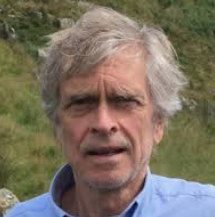
Jeff McMahan — The Moral Seriousness of Killing and the Revision of Just War Theory (1954– )
Jeff McMahan is an American moral philosopher, longtime professor at Oxford, and one of the most technically rigorous and most consequential practitioners of applied ethics in the contemporary world — whose sustained engagement with the ethics of killing, at the margins of life and in the context of war, has reshaped both bioethics and just war theory with arguments whose precision and courage have been widely admired and widely challenged.
Educated at Oxford and Cambridge — where he studied under Jonathan Glover, Derek Parfit, and Bernard Williams — he absorbed from that training the conviction that applied ethics required the full resources of moral theory and personal identity theory brought to bear with maximum rigor on the hardest practical questions.
His central concern: that questions about when it is permissible to kill — in war, in self-defense, at the beginning and end of life — are genuine philosophical questions admitting of careful answers, that those answers will often be deeply counterintuitive, and that the discomfort of the conclusions is not grounds for abandoning the arguments that lead to them.
The Ethics of Killing — Problems at the Margins of Life
McMahan's 2002 masterwork approached the ethics of killing through the foundational questions of personal identity and moral status — asking what we are, when we begin and cease to exist, what makes death bad for us, and therefore what makes killing us wrong.
Drawing primarily on Parfit's work on personal identity and developing his own account of what he called "time-relative interests" — the idea that the strength of an individual's interest in continuing to exist depends on the psychological connections between their present and their future selves — he developed a comprehensive framework for thinking about the ethics of killing across an enormous range of cases: abortion, infanticide, the killing of animals, euthanasia, and the status of individuals with severe cognitive disabilities.
His conclusions were systematically counterintuitive — or rather, they were counterintuitive to those who hold that biological humanity is the source of moral status, but they were the consequences of taking seriously the actual properties that ground our concern about killing and about death. If what matters morally is psychological continuity and connectedness, then a late-term human fetus has less moral status than a normal adult chimp — not because fetuses are less "human" but because they have less of what actually grounds moral concern.
"The wrongness of killing derives from the deprivation it causes to the victim — and the seriousness of that deprivation depends on the nature of the victim and the strength of their interest in continued existence."
Killing in War — Against the Moral Equality of Combatants
McMahan's 2009 book "Killing in War" represents one of the most sustained and most consequential challenges to the traditional theory of just war in its long history.
The traditional view — associated with Michael Walzer and enshrined in the laws of armed conflict — holds what is called the moral equality of combatants: soldiers on both sides of a war, whether just or unjust, have the same rights in combat. A soldier fighting in a just war and a soldier fighting in an unjust war are both permitted to kill enemy combatants and both are constrained by the same rules of engagement. The justice or injustice of the war itself is morally irrelevant to the individual combatant's conduct.
McMahan argued that this was philosophically indefensible — that the moral equality of combatants rested on a confusion between the legal rules of war and the deep moral facts about killing. At the level of deep morality, combatants who fight for an unjust cause lack the justification for killing that combatants on the just side possess. An unjust combatant who kills a just combatant commits a genuine moral wrong — not merely a tactical action within a morally neutral framework — because they lack the just cause that would provide justification for lethal force.
This argument had radical implications: soldiers ordered to fight in unjust wars have an obligation to refuse — or at least cannot be fully morally exculpated by "following orders." The individual moral responsibility of the combatant was not dissolved by participation in a collective enterprise.
"Combatants who fight for an unjust cause are acting wrongly — mere participation in an unjust war is not morally neutral, and the soldier cannot escape this by appealing to the laws of war."
Self-Defense, Liability, and Who May Be Killed
Central to McMahan's work in both bioethics and just war theory is his account of what makes a person liable to be killed — what conditions must be satisfied for killing them to be justifiable as self-defense or defense of others.
The standard view in just war theory treats all combatants as liable to be killed by the other side simply by virtue of posing a threat — even if they pose that threat through no fault of their own, and even if the war they are fighting is just. McMahan challenged this view: genuine liability to be killed required some form of moral responsibility for the threat one posed. A fully innocent threat — someone who poses danger through no fault of their own, while themselves acting justly — cannot be killed with full justification, even if killing them is the only way to prevent serious harm.
These distinctions — between responsible threats, innocent threats, and bystanders — generated a highly sophisticated framework for thinking about the permissibility of killing in both individual self-defense and collective armed conflict. The framework was philosophically more precise than previous accounts and generated conclusions that practical policymakers found both illuminating and deeply uncomfortable.
"Liability to be killed is not simply a function of posing a threat — it requires that one be morally responsible for that threat to some degree. Mere causal involvement in danger does not make one liable to lethal force."
The Ethics of Killing and Personal Identity — The Parfit Connection
McMahan's work is deeply indebted to Derek Parfit — his supervisor at Oxford and the philosopher he credits most directly with shaping his philosophical approach — and he has continued to develop Parfitian insights in directions that Parfit himself did not always follow.
The central connection is through personal identity. If what matters in survival is not identity itself but psychological continuity and connectedness — the Parfitian thesis — then the degree to which an individual's death deprives them of something of value depends on how strong the psychological connections are between their present and future selves. This generates the time-relative interests account: what matters is not merely that someone will cease to exist but how strongly connected their present self is to the future self they will never become.
This framework has implications across the entire range of life and death ethics — explaining why the death of an infant may be less bad for the infant than the death of an adult, why a human fetus in the early stages has a weaker interest in continued existence than a psychologically complex animal, and why end-of-life cases involving diminished psychological continuity require different moral analysis than cases involving healthy adults.
"What matters for the permissibility of killing is not merely that a being will cease to exist — it is how strongly connected their present self is to the future they will be deprived of."
Legacy — The Applied Ethics of Maximum Rigor
McMahan's influence on contemporary moral philosophy has been substantial and growing. His work on just war theory has generated an entire subfield of revisionist just war theory — philosophers who follow his approach in deriving the ethics of war from fundamental moral principles about killing, liability, and self-defense, rather than from received tradition or legal convention. His bioethics work has become essential reference for anyone working on the permissibility of killing at the margins of life.
What distinguishes McMahan from most philosophers working in applied ethics is his refusal to allow discomfort with conclusions to count as an argument against premises. His method is to identify the moral considerations that seem most defensible, follow them wherever they lead, and confront honestly the implications — even when those implications are that widely accepted moral beliefs are in significant respects mistaken.
On CivSim he belongs alongside Dworkin and Peter Unger — philosophers who applied maximum philosophical rigor to the most practically consequential moral questions and found conclusions that their discipline's mainstream was not always ready to accept. His work on the ethics of killing connects directly to Universal Humanism's foundational commitment to preservation of life — providing, in its precision and its willingness to confront difficulty, one of the more serious philosophical accounts of what that commitment actually requires.
"Killing a person is in general among the most seriously wrongful forms of action — yet most of us accept that it can be permissible to kill people on a large scale in war. This apparent paradox demands genuine philosophical work, not comfortable evasion."
CivilSimian.com created by AxiomaticPanic, CivilSimian, Kalokagathia