↑ Back to the start
5 months 3 weeks ago
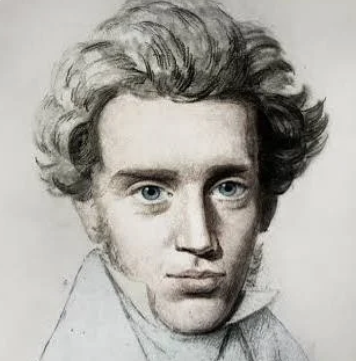
He lived year after year. He attended only to himself and to God and this picture-but he did not understand himself.
0
⚖0
▼ Source
source
p. 57
5 months 3 weeks ago
These two essays probably will essentially be able to interest only theologians. (Preface)
0
⚖0
5 months 3 weeks ago

Does a Human Being Have the Right to Let Himself Be Put to Death for the Truth?

0
⚖0
5 months 3 weeks ago
Be attentive therefore, according to the instruction of the Gospel, to learn obedience from the lily and the bird. Be not affrighted, do no despair, when thou comparest thy life with these teachers. There is nothing to despair about, for indeed thou shalt learn from them; and the Gospel first comforts thee by telling thee that God is the God of patience, and then it adds: 'Thou shalt learn from the lilies and the birds, learn to be absolutely obedient like the lilies and the birds, learn not to serve two masters; for no man can serve two masters, he must either ... or. P. 343
0
⚖0
5 months 3 weeks ago
now, in the solemn silence before God with the lilies and the birds, where accordingly there is nobody at all present, where accordingly there is no other intercourse for thee but with God-there indeed the rule holds good: either hold to Him/or despise Him. There is no excuse, for no one else is present, in any case no one is present in such a wise that thou canst hold to him without despising God; for precisely there in the silence it is clear how close God is to thee. P. 334
0
⚖0
5 months 3 weeks ago
This little book (which in view of the circumstances under which it is issued reminds me of my first and more especially of the first to my first, the Preface to the Two Edifying Discourses of 1843, which came out immediately after Either/Or) will, as I hope, recall this to ‘that single individual whom I with joy and gratitude call my reader’: ‘it desires to remain in retirement, as it was in concealment it had its origin – a little flower in the cover of a great forest.’ Preface. P. 313
0
⚖0
5 months 3 weeks ago
God's greatness lies in forgiving, in showing mercy, and in this greatness He is greater than the heart which condemns itself. Behold, this is that greatness of God which we have to speak of especially within the sanctuary; for here we know God differently, more closely – from the other side, if one may say so – that out there, where doubtless He is revealed, is to be known in His works, whereas here He is to be known as He has revealed Himself, as He would be known by Christians. The tokens of God's greatness can be known in nature everyone can behold with wonder, or rather there is no special token, for the works themselves are the tokens; thus every one can see the rainbow and must wonder when he sees it. But the token of God's greatness in showing mercy exists only for faith; this token is in fact the Sacrament. God's greatness in nature is manifest, but God's greatness in showing mercy is a secret which has to be believed.
0
⚖0
▼ Source
source
Soren Kierkegaard, Three Discourses at the Communion on Fridays.1 John 3:20 From Cristian Discourses & The Lilies of the Field & The Birds of the Air, & Discourses at the Communion on Fridays 1848 Translated by Walter Lowrie 1940, 1961 Galaxy Books P. 298
5 months 3 weeks ago
A man who but rarely, and then only cursorily, concerns himself with his relationship to God, hardly thinks or dreams that he has so closely to do with God, or that God is so close to him, that there exists a reciprocal relationship between him and God, the stronger a man is, the weaker God is, the weaker a man is, the stronger God is in him. Every one who assumes that a God exists naturally thinks of Him as the strongest, as He eternally is, being the Almighty who creates out of nothing, and for whom all the creation is as nothing; but such a man hardly thinks of the possibility of a reciprocal relationship. And yet for God, the infinitely strongest, there is an obstacle; He has posited it Himself, yea, He has lovingly, with incomprehensible love posited it Himself; for He posited it and posits it every time a man comes into existence, when He in His love makes to be something directly in [https://en.wiktionary.org/wiki/apposite apposition] to Himself. Oh, marvelous omnipotence of love! A man cannot bear that his ‘creations’ should be directly in apposition to Himself, and so he speaks of them in a tone of disparagement as his ‘creations’. But God who creates out of nothing, who almightily takes from nothing and says, ‘Be’, lovingly adjoins, ‘Be something even in apposition to me.’ Marvellous love, even His omnipotence is under the sway of love!

0
⚖0
▼ Source
source
Søren Kierkegaard, Christian Discourses, 1848 Lowrie 1940, 1961 p. 132
5 months 3 weeks ago
Every earthly or worldly good is in itself selfish, begrudging; its possession is begrudging or is envy and in one way or another must make others poorer – what I have someone else cannot have; the more I have, the less someone else must have. The unrighteous mammon (with this term we perhaps may indeed designate every earthly good, also worldly honor, power, etc.) is in itself unjust and makes for injustice (quite apart here from the question of acquiring it or possessing it in an unlawful manner) and in itself cannot be acquired or possessed equally. If one person is to have much of it, there must be someone else who necessarily gets only a little, and what the one has the other cannot possibly have. Furthermore, all the time and energy, all the mental solicitude and concern that is applied to acquiring or possessing earthly good is selfish, begrudging, or the person who is occupied in this way is selfish, at every such moment has no thought for others; at every such moment he is selfishly working for himself or selfishly for a few others, but not equally for himself and for everyone else. Even if a person is willing to share his earthly goods, at every moment in which he is occupied with acquiring them or is engrossed in possessing them, he is selfish, just as that is which he possesses or acquires.
0
⚖0
▼ Source
source
Soren Kierkegaard, Christian Discourses 1848, Hong 1997 p. 115-116
5 months 3 weeks ago
Sin is man's destruction. Only the rust of sin can consume the soul-or eternally destroy it. For here indeed is the remarkable thing from which already that simple wise man of olden time derived a proof of the immortality of the soul, that the sickness of the soul (sin) is not like bodily sickness which kills the body. Sin is not a passage-way which a man has to pass through once, for from it one shall flee; sin is not (like suffering) the instant, but an eternal fall from the eternal, hence it is not ‘once’, and it cannot possibly be that its ‘once’ is no time. No, just as between the rich man in hell and Lazarus in Abraham's bosom there was a yawning gulf fixed, so is there also a yawning distinction between suffering and sin. Let us not confuse it, lest talk about suffering might become less frank-hearted, because it had also sin in mind, and this less frank-hearted talk might be boldly impudent inasmuch as it is talking this way about sin. This precisely is the Christian position, that there is this infinite distinction between evil and evil, as they are confusedly named; this precisely is the Christian characteristic, to talk of temporal sufferings ever more and more frank-heartedly, more triumphantly, more joyfully, because Christianity regarded, sin, and sin only, is destructive.
0
⚖0
▼ Source
source
Søren Kierkegaard, Christian Discourses, The Joy of it – That We Suffer Only Once But Triumph Eternally. P. 108 Lowrie Translation 1961 Oxford University Press

Works (Thanks to Project Gutenberg)

CivilSimian.com created by AxiomaticPanic, CivilSimian, Kalokagathia