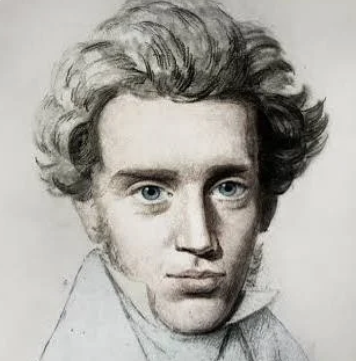
When you read God's Word, in everything you read, continually to say to yourself: It is I to whom it is speaking - this is earnestness, precisely this is earnestness. Not a single one of those to whom the cause of Christianity in the higher sense has been entrusted forgot to urge this again and again as most crucial, as unconditionally the condition if you are to come to see yourself in the mirror.
0
⚖0
▼Source
source
Soren Kierkegaard, For Self-Examination, Hong p. 36-37
When you are reading God's Word, it is not the obscure passages that bind you but what you understand, and with that you comply at once. If you understood only one single passage in all of Holy Scripture, well, then you must do that first of all, but you do not first have to sit down and ponder the obscure passages.
0
⚖0
▼Source
source
Soren Kierkegaard, For Self-Examination, Hong p. 29
Imagine a lover who has received a letter from his beloved – I assume that God's Word is just as precious to you as this letter is to the lover. I assume that you read and think you ought to read God's Word in the same way the lover reads this letter.
0
⚖0
▼Source
source
Soren Kierkegaard, For Self-Examination, Hong p. 26
I have worked for this restlessness oriented toward inward deepening. But “without authority.” Instead of conceitedly making myself out to be a witness for the truth and causing others rashly to want to be the same, I am an unauthorized poet who influences by means of the ideas.
0
⚖0
▼Source
source
Soren Kierkegaard, For Self-Examination, Hong p. 21
I assume that Luther has risen from the grave. For several years now he has been living among us but incognito; he has been observing the lives we lead, has been scrutinizing everyone in this regard and me also. I assume that he speaks to me one day and says, “Are you a believer? Do you have faith?” Anyone who knows me as an author will see that I would perhaps be the one who might come off best of all in such and examination, for I have continually said, “I do not have faith” – I have expressed, as does a bird's alarmed flight before a storm, that there is mischief brewing here, “I do not have faith.” So I should say to Luther, “No, dear Luther, I have at least shown the respect of saying: I do not have faith.” However, I shall not press this, but, just as others call themselves Christians and believers, I, too, shall say, “I am a believer,” for otherwise what I wish to be cleared up will not be cleared up.
0
⚖0
▼Source
source
Soren Kierkegaard, For Self-Examination, Hong p. 17-18
The person who is going to preach ought to live in the Christian thoughts and ideas: they ought to be his daily life. If so – this is the view of Christianity – then you, too, will have eloquence enough and precisely that which is needed when you speak extemporaneously without specific preparation. However, it is fallacious eloquence if someone, without otherwise occupying himself with, without living in these thoughts, once in a while sits down and laboriously collects such thoughts, perhaps in the field of literature, and then works them into a well-composed discourse, which is then committed to memory and delivered superbly, with respect both to voice and diction and gestures.
0
⚖0
▼Source
source
Soren Kierkegaard, For Self-Examination, Hong p. 10
My dear reader, read aloud, if possible! If you do so, allow me to thank you for it: if you not only do it yourself, if you also influence others to do it, allow me to thank each one of them, and you again and again! (Preface)
It is true that in the confessional it is the pastor who preaches; but the true preacher is still the secret-sharer in your inner being. The pastor can preach only in vague generalities; the preacher in your inner being is just the opposite; he speaks simply and solely about you, to you, and within you. P. 183
A person can perhaps succeed in hiding his sins from the world, he can perhaps be foolishly happy that he succeeds, or yet, a little more honest, admit that it is a deplorable weakness and cowardliness that he does not have the courage to become open-but a person cannot hide his sins from himself. P. 182
Lord Jesus Christ, the birds had nests, the foxes had dens, and you had no place where you could lay your head. You were homeless in the world-yet you yourself were a hiding place, the only place where the sinner could flee. And so even this very day you are a hiding place. When the sinner flees to you, hides himself with you, is hidden in you, he is eternally kept safe, since love hides a multitude of sins. P. 182