
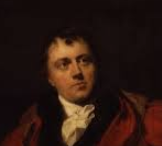
James Mackintosh — Revolution, Recantation, and the Progress of Ethical Philosophy (1765–1832)
Sir James Mackintosh was a Scottish jurist, moral philosopher, Whig politician, and historian — one of those eighteenth and nineteenth century figures whose range of active engagement across law, philosophy, journalism, colonial administration, and parliamentary politics makes any single label inadequate.
A student of Dugald Stewart at Edinburgh, the author of one of the finest responses to Burke's attack on the French Revolution, a recorder of Bombay and Whig reformer, and the compiler of the most important survey of moral philosophy of the seventeenth and eighteenth centuries, he moved across the entire public intellectual landscape of his era without quite achieving the single defining work that would have secured him a permanent place in every history of philosophy.
His central philosophical concern: that moral philosophy must be built on an honest understanding of human nature as it actually is — empirical, historical, social — rather than deduced from abstract principles that no actual human being has ever inhabited.
Vindiciae Gallicae — The Defence of the French Revolution
Mackintosh's first major public work, published in April 1791 after long meditation, was a systematic reply to Edmund Burke's "Reflections on the Revolution in France" — the most celebrated conservative attack on the Revolution and one of the founding documents of modern conservatism.
The "Vindiciae Gallicae" — A Defence of the French Revolution and its English Admirers — engaged Burke's arguments point by point with a philosophical seriousness and rhetorical skill that placed its author immediately in the front rank of European publicists. Burke himself reportedly regarded it as the only response to his "Reflections" worthy of a reply.
Mackintosh defended the natural rights principles of the Revolution — the universality of the Declaration of the Rights of Man, the legitimacy of the French constitution-making project — arguing from the Scottish Enlightenment's conception of natural law and rational political reform. He connected the French Revolution to the American, to Locke, Rousseau, and the great tradition of liberal political thought, against Burke's appeal to prescription, tradition, and the accumulated wisdom of inherited institutions.
"From the progress of opinion arose the American revolution, and from this, most unquestionably, the delivery of France — these are not accidents of circumstance but the fruits of the long cultivation of reason."
The Recantation — Burke's Vindication
What makes Mackintosh philosophically interesting is not only the "Vindiciae" but what followed it. By the mid-1790s, as the Terror demonstrated what the Revolution was capable of, Mackintosh underwent a fundamental change of view — one of the more honest and more painful intellectual reversals of the period.
He came to agree with Burke — not entirely, and not in all respects, but substantially enough to represent a genuine recantation of his earlier position. The excesses of the revolutionaries forced him to recognize what Burke had seen: that abstract principles of rights, however philosophically sound, could not simply be imposed on existing societies without regard to the institutions, customs, and habits that held those societies together. That the destruction of inherited order in the name of rational principle could produce catastrophe rather than liberation.
He was reportedly visited by Burke before the great man's death, and the reconciliation — if that is what it was — was later described with considerable embarrassment by Mackintosh himself, who in 1804 reflected that he had "most unwarily ventured on publication, when my judgment and taste were equally immature." The self-criticism was characteristic — and perhaps too severe. The "Vindiciae" was not wrong about everything; what the Revolution actually did was not what its principles required.
"Filled with enthusiasm in very early youth by the promise of a better order of society, I most unwarily ventured on publication, when my judgment and taste were equally immature."
The Dissertation on the Progress of Ethical Philosophy
Mackintosh's most enduring philosophical contribution was his "Dissertation on the Progress of Ethical Philosophy, Chiefly During the Seventeenth and Eighteenth Centuries" — written mostly in ill-health and in snatches of time taken from parliamentary engagements, and published in 1831 as a preface to the seventh edition of the Encyclopaedia Britannica.
The Dissertation was the most comprehensive survey of the history of moral philosophy available in English at the time of its publication — tracing the development of ethical thought from Hobbes and Cumberland through Shaftesbury, Mandeville, Hutcheson, Butler, Hume, Smith, and Price to his own day. It was written in a period when the history of philosophy was barely recognized as a serious academic discipline, and it helped establish the idea that philosophical ideas had histories worth tracing — that understanding a philosophical position required understanding the context in which it emerged.
Mackintosh's own position in moral philosophy was broadly in the tradition of Scottish moral sense theory — sympathetic to Hutcheson's account of moral intuition, respectful of Hume's skeptical challenge, and convinced that the proper foundation of ethics was an empirical account of human moral psychology rather than either divine command or abstract rational principle. Moral feelings were not mere prejudices to be overcome but evidence about what morality actually required — data to be understood and refined, not noise to be eliminated.
"The moral sentiments of mankind are not illusions to be explained away — they are the accumulated moral experience of the species, which philosophy must understand before it can improve."
Criminal Law Reform and the Practical Whig
Mackintosh was not merely a philosopher and publicist but a practical reformer whose work in criminal law exemplified his conviction that philosophy had direct application to the improvement of human institutions.
As Recorder of Bombay from 1804 to 1811 — his period of "exile" from London society, undertaken partly for financial reasons — he worked to apply Enlightenment principles to the administration of colonial justice, attempting to bring greater consistency, humanity, and rational principle to a legal system that combined English common law with local custom in ways that often served neither well.
On returning to England as a Whig MP, he was instrumental in the movement to reform English criminal law — which in the early nineteenth century still prescribed the death penalty for hundreds of offences — arguing from both humanitarian principle and utilitarian calculation that disproportionate punishments were both unjust and ineffective. His approach was distinctively Whiggish rather than Benthamite — evolutionary and respectful of existing institutions while insisting on their rational improvement.
"Such a body of political laws must in all countries arise out of the character and situation of a people — they must grow with its progress, be adapted to its peculiarities, change with its changes."
The Attack on Bentham and Utilitarianism
Mackintosh's most philosophically interesting late contribution was his sustained critique of Benthamite utilitarianism — the dominant reform philosophy of his era — which he attacked from the perspective of Scottish moral psychology.
He argued that Bentham's reduction of all motivation to pleasure and pain, and all moral evaluation to the calculation of utility, failed to account for the actual complexity of human moral life — for the role of sympathy, habit, character, and sentiment in moral judgment and moral action. Real human beings were not the calculating machines that Bentham's moral psychology required — and a reform program built on a false psychology would produce institutions poorly suited to the actual beings who had to live under them.
James Mill's "Fragment on Mackintosh" — a ferocious response to the Dissertation — demonstrated how seriously the Benthamites took the attack. The controversy illuminated a genuine fault line in early nineteenth century reform thought — between the rationalist, calculating, abstractive approach of philosophical radicalism and the empirical, historical, psychological approach of the Scottish tradition.
"Human nature cannot be reduced to a single principle — the philosopher who builds a system on one faculty alone will find that the others take their revenge in the institutions he creates."
Legacy — The Almost-Great and the Genuinely Useful
Mackintosh died in 1832 from a chicken bone lodged in his throat — one of intellectual history's more undignified exits — with his history of the Glorious Revolution unfinished and his philosophical reputation already beginning to fade before the combined forces of Benthamite utilitarianism and Coleridgean romanticism, neither of which had much patience for the moderate Whig empiricism he represented.
He was a transitional figure in the history of moral philosophy — part of the last generation for whom the Scottish Enlightenment provided the dominant intellectual framework, and the first to feel seriously the pressure of the philosophical radicalism that would succeed it. His Dissertation preserved a tradition's self-understanding at the moment of its eclipse — and in doing so provided subsequent historians an invaluable record of how that tradition understood itself.
On CivSim he sits alongside Thomas Brown and William Drummond — the Scottish moral philosophers of the late Enlightenment who worked at the intersection of empirical psychology and normative ethics, who took human moral experience seriously as philosophical data, and who resisted the twin temptations of rationalist abstraction on one side and emotivist dismissal on the other. His recantation of the Vindiciae is also philosophically instructive — a reminder that the relationship between principles and their consequences is not always what the principles' defenders predict, and that intellectual honesty sometimes requires revising convictions one has publicly committed to.
"The progress of ethical philosophy is not a march toward a fixed destination — it is an ongoing conversation between what reason requires and what human nature actually is, and neither side can afford to ignore the other."
CivilSimian.com created by AxiomaticPanic, CivilSimian, Kalokagathia