
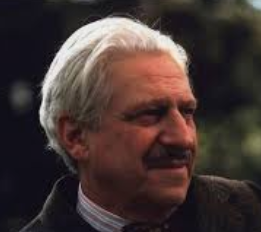
I. Bernard Cohen — Newton, the History of Science, and the Revolution in Understanding Revolutions (1914–2003)
I. Bernard Cohen was an American historian of science whose sixty years at Harvard University — first as student, then as the founder and first chairman of its Department of the History of Science — made him the central figure in establishing the history of science as a serious academic discipline in the United States.
The first American to receive a doctorate in the history of science, the student and successor of George Sarton as editor of "Isis" — the field's flagship journal — the author of more than twenty books and one hundred fifty articles, and the scholar whose fifteen-year labor produced the first complete English translation of Newton's Principia since 1729, he was as close to a founding figure as a field can have.
His central concern: to understand how scientific revolutions actually happen — how the ideas of individual scientists relate to the traditions they inherit, how conceptual change propagates through a discipline, and what the concept of "revolution" in science actually means when examined with the same rigor that scientists bring to the phenomena they study.
The Translation of Newton's Principia — A Fifteen-Year Labor
Cohen considered the Principia translation his most important work — and it was, in one sense, definitionally important: the first complete English rendering of Newton's masterpiece since Andrew Motte's 1729 translation, revised by Florian Cajori in 1934 but not fundamentally retranslated, was an embarrassment to the English-speaking scholarly world that Cohen spent fifteen years correcting.
The translation, completed with the Latinist Anne Whitman who died before it was published, was accompanied by a nearly four-hundred page "Guide to Newton's Principia" that made the work accessible to readers who understood physics but not seventeenth century Latin, and to readers who could parse the Latin but needed the historical and conceptual context that Cohen's decades of Newton scholarship provided.
His fellow Newton scholar George Smith wrote that the translation and variorum edition "will remain indispensable so long as Newton continues to receive any attention at all among scholars" — an assessment that has proved accurate. It is the kind of work that disappears from notice because it is so completely used — the translation that scholars use without needing to cite it as a translation, because it is simply what the Principia says in English.
"I hope that, decades from now, when I and my other books have been forgotten, this will still be useful to scholars and students."
— Cohen on his Principia translation, 1999
The Newtonian Revolution — Conceptual Change in Science
Cohen's most philosophically substantial work, developed in "The Newtonian Revolution" (1980), was his account of what Newton actually did — of the intellectual transformation that the Principia represented and how it differed from the work of predecessors like Galileo, Kepler, and Descartes.
He developed the concept of the "Newtonian style" — a distinctive mathematical method for transforming questions about actual physical systems into questions about idealized mathematical constructs, solving the mathematical problem, and then applying the solution back to the physical world. This was not merely a technical innovation but a fundamental change in how scientists related mathematics to nature — a methodological revolution as important as any of Newton's specific discoveries.
The analysis showed how Newton stood in relation to his predecessors — not simply superseding them but transforming the questions they had asked, using their results as raw material for a synthesis that neither they nor he could have predicted from their starting points. This was intellectual history done with philosophical precision — not the mere listing of influences and debts but the careful analysis of conceptual transformation.
"The Newtonian style consists in transforming the actual physical system under investigation into a corresponding mathematical construct, and then operating on this construct to find mathematical solutions which can then be applied back to the real world."
Revolution in Science — What the Word Actually Means
Cohen's 1985 "Revolution in Science" was his most ambitious and most widely read work — a comprehensive history and analysis of the concept of "revolution" as applied to the development of science, tracing its use from Copernicus to Einstein and beyond.
He argued that the concept of scientific revolution was often used loosely and sometimes anachronistically — that scientists and historians applied the term to transformations that differed enormously in character, scope, and significance, and that a more precise account was needed. His analysis distinguished between different kinds of conceptual change — the radical restructuring of an entire field, the modification of specific theories within a continuing tradition, the emergence of entirely new disciplines — and traced how scientists themselves had used the concept of revolution to characterize their own and others' contributions.
The work ranged across the entire history of modern science — from the Copernican revolution through Newtonian mechanics, Lavoisian chemistry, Darwinian evolution, and Einsteinian relativity — bringing to each case the same meticulous attention to detail and the same commitment to letting the historical record speak rather than forcing it into a preconceived framework.
"A scientific revolution occurs when there is a fundamental change in scientific concepts, procedures, or interpretations of nature — but the historical reality of such revolutions is far more complex and varied than our theoretical accounts typically suggest."
Franklin and Newton — Two Americans and the Enlightenment
Cohen's other major scholarly preoccupation was Benjamin Franklin — whose electrical experiments he had studied since his doctoral dissertation — and the relationship between Newtonian experimental science and the American Enlightenment.
His "Franklin and Newton" (1956) — six hundred dense pages — demonstrated that Franklin was not the "practical inventor and tinkerer" of popular legend but a serious scientific thinker who worked within the Newtonian tradition and made genuine theoretical contributions to the understanding of electricity. Franklin's election to the Royal Society was based on his experiments and original theory — not on his practical applications — and the restoration of his reputation as a scientist was one of Cohen's important contributions to historical accuracy.
His later "Science and the Founding Fathers" (1995) turned to the relationship between scientific thinking and the political philosophy of the American Revolution — arguing, against Woodrow Wilson's influential claim that the Constitution was a "Newtonian document," that the founders used scientific concepts more as rhetorical metaphors and analogies than as genuine mechanical inspirations for their political theory. This was a philosophically significant distinction — between the genuine intellectual influence of science and its appropriation as cultural authority.
"Franklin's political and diplomatic career cannot be understood apart from his scientific activities — which established his reputation and brought him into contact with the leaders of British and European society."
Building the Discipline — Einstein's Last Interview
Beyond his scholarly work, Cohen's importance lies in the institutional history of his discipline. He was the first American to receive a doctorate in the history of science, and he spent his career building the institutional infrastructure that made the field possible — the department at Harvard, the editorial leadership of Isis, the presidential roles in professional societies, the mentorship of students who became leading historians of science themselves.
He was also a skilled communicator to general audiences — writing eighteen essays for Scientific American over four decades, covering subjects from Newton and Franklin to Florence Nightingale's contributions to social statistics. The April 1955 interview he conducted with Albert Einstein — published in July 1955 in Scientific American — was the last interview Einstein gave before his death the following month. That interview, sitting at the boundary between the history of science in the making and the history of science already made, is a characteristic Cohen moment — the historian as witness as well as analyst.
"He possessed two qualities that made him an excellent teacher and important scholar: he was a commanding and innovative lecturer and a scholar who had a commitment to detail."
— Everett Mendelsohn, Harvard colleague
Legacy — The Founder Who Stayed
Cohen mailed the manuscript of his last book — "The Triumph of Numbers," a history of numbers and their impact on society — to the publisher one week before he died in 2003. He had taught at Harvard for sixty years, from 1942 to his hospitalization for terminal illness in 2002. The continuity is itself a kind of philosophical statement — a life spent in sustained engagement with the same questions about how science works and how its history should be understood.
The history of science as an academic discipline in America owes more to Cohen than to any other single person — not because he was its greatest theorist but because he was its most tireless builder, combining deep scholarship with institutional imagination and a commitment to communicating science's history to audiences beyond the academy.
On CivSim he belongs alongside Whewell, Duhem, and Suppes — the philosophers and historians who have pressed hardest on the question of what scientific knowledge actually is, how it develops, and what the concepts we use to describe it — revolution, paradigm, method, progress — actually mean when examined with historical precision. His life's work demonstrated that the history of science was not an ornament to the practice of science but a form of understanding it from the inside.
"The history of science is not the history of truth — it is the history of how human beings have asked better and better questions about the world they inhabit, and of the extraordinary difficulty of that project."
CivilSimian.com created by AxiomaticPanic, CivilSimian, Kalokagathia