
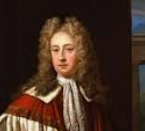
Henry St John, Viscount Bolingbroke — Opposition, the Patriot King, and the Conservative Enlightenment (1678–1751)
Henry St John, 1st Viscount Bolingbroke, was a British Tory politician, philosopher, historian, and the most brilliant prose stylist of early eighteenth century English political writing — a man whose career included Secretary of State under Queen Anne, exile for treason, service as foreign minister to the Jacobite Pretender, return to England, and two decades as the philosophical voice of opposition to Walpole's Whig oligarchy.
Friend and patron of Pope, Swift, and Voltaire — who visited him at his estate near Orléans and expressed "unbounded admiration for his learning and politeness" — and a major influence on the American founding generation, whose works John Adams claimed to have read at least five times — he was a figure of European intellectual significance whose political failures have obscured the genuine importance of his ideas.
His central concern: that the Glorious Revolution's settlement had been captured by faction — that party government under Walpole had corrupted the constitution by subordinating public interest to private, and that the remedy was either a regenerated opposition that could transcend party or a patriot king who would govern for the whole nation rather than for any interest within it.
The Career — Brilliance, Betrayal, and Exile
Bolingbroke entered Parliament in 1701 and rose with extraordinary rapidity through the Tory party — his eloquence, his intellectual energy, and his capacity for political intrigue making him, alongside Robert Harley, Earl of Oxford, one of the two dominant figures of Anne's last ministry. As Secretary of State he was the primary architect of the Treaty of Utrecht (1713), which ended the War of the Spanish Succession — a diplomatic achievement that Whig opponents called a betrayal of Britain's allies and that Tories celebrated as a necessary peace.
The death of Queen Anne in 1714 ended everything. The Hanoverian succession brought the Whigs to power; Bolingbroke, who had been in contact with the Jacobite Pretender, fled to France before he could be arrested, and was attainted for treason. He became, briefly, foreign minister for James Francis Edward Stuart — a decision he came to regard as the worst of his career. Convinced that the Jacobite cause was hopeless, he broke with the Pretender in 1716 and spent years negotiating his return to England, which he eventually achieved in 1723 — though the attainder was only partially reversed, leaving him permanently excluded from the House of Lords.
"He is free not from the law, but by the law — the constitution is not the restraint of liberty but its guarantee and expression."
The Craftsman and the Opposition Ideology
Bolingbroke's exile and exclusion from Parliament transformed his role from politician to political philosopher — and the transformation was productive. From 1726 to 1735 he was the intellectual driving force behind "The Craftsman," the opposition journal that mounted the most sustained attack on Walpole's administration in print.
His strategic achievement was the adaptation of Whig constitutional theory to Tory purposes — taking the language of the "Ancient Constitution," with its emphasis on liberty, mixed government, and resistance to tyranny, and deploying it against the Whig oligarchy that had made it its own. Walpole's government, on Bolingbroke's analysis, represented not the vindication of 1688 but its betrayal — a system of corruption in which parliamentary independence had been bought with patronage, ministerial power had overridden constitutional balance, and public virtue had been replaced by private interest.
The ideology he developed — sometimes called "country" ideology — transcended the Tory-Whig divide and was appropriated across political traditions in Britain and eventually in America, where it provided much of the rhetorical and conceptual vocabulary with which the colonists framed their resistance to British imperial power.
"Bolingbroke was the first major thinker to face the long-term economic and political consequences of the Glorious Revolution, particularly the creation of the first modern system of party politics — and his analyses of constitutional government and the party system are still relevant to the dilemmas of modern democratic politics."
The Idea of a Patriot King — Monarchy Against Faction
Bolingbroke's most famous and most philosophically ambitious work was written in 1738 for Frederick, Prince of Wales — the heir apparent who had established a rival court at Leicester House and around whom the opposition was gathering — as a guide to what virtuous kingship required and how a patriot king might save the constitution.
The argument was elegant and politically pointed. The constitution required a balance between king, lords, and commons. Walpole had destroyed this balance by reducing Parliament to an instrument of ministerial control through patronage. A patriot king — one who genuinely identified with the whole nation rather than with any party or faction within it — could restore the balance by governing above party, using the royal prerogative to break the stranglehold of Walpole's system and restoring genuine constitutional government.
The work was entrusted to Alexander Pope for private circulation — and Pope secretly printed fifteen hundred copies without permission, a breach of trust that Bolingbroke never forgave and that generated lasting controversy. When he eventually published a corrected version in 1749, he included an account of Pope's transgression — generating further controversy about his motives. The literary and political drama surrounding the text was almost as interesting as the text itself.
"I know of none who are anointed by God to rule in limited monarchies — kings in such constitutions are appointed by the people, and their duty is to the nation as a whole, not to any party, faction, or interest within it."
Letters on the Study of History — History as Political Education
Bolingbroke's "Letters on the Study and Use of History" — written in France and published posthumously — made a philosophical case for history as the proper education for political actors, against what he saw as the false systematizing of academic philosophy.
His argument: the principles of political action could not be derived from abstract philosophical reasoning but only from the study of historical examples — from watching how constitutions actually rose and fell, how liberty was actually preserved or lost, how virtue actually functioned in historical actors. History was not a collection of amusing anecdotes but philosophy teaching by examples — a phrase he used and that became widely quoted.
He was also a critic of the received chronology of the Bible — producing historical work that found the scriptural timeline inconsistent with ancient history as he understood it — part of a broader antireligious skepticism that coexisted with his political defense of the Church of England and that attracted the admiration of Voltaire and the denunciation of orthodox churchmen.
"History is philosophy teaching by examples — it is the only school in which statesmen can learn what they need to know before the consequences of their ignorance are paid by those they govern."
The American Connection — Founding Thought
Bolingbroke's influence on the American Revolution has been recognized by historians since the late twentieth century — and it is more extensive than his reputation in Britain might suggest. John Adams claimed to have read his complete works at least five times. Jefferson, Madison, and other founders absorbed his analysis of constitutional corruption, his language of civic virtue and patriotism, and his account of liberty as existing "not from the law but by the law."
His vision of history as cycles of birth, growth, and decline — the republican cycle in which virtue gives way to corruption and corruption to collapse — provided the colonists with a framework for understanding what British imperial policy represented: not mere taxation but the corruption of constitutional government that Bolingbroke had identified and anatomized in the context of Walpole's England. The American founding generation read Bolingbroke as a description of their own situation.
"Adams said that he had read all of Bolingbroke's works at least five times — and the colonial founders found in his analysis of constitutional corruption the language for their own political emergency."
Burke's Verdict — Who Now Reads Bolingbroke?
Edmund Burke famously asked in the "Reflections on the French Revolution": "Who now reads Bolingbroke, who ever read him through?" The question was rhetorical, pointed, and somewhat unfair — Burke had written his early "Vindication of Natural Society" in deliberate imitation of Bolingbroke's style, as a satirical refutation of his principles. But Burke's question has stuck, and Bolingbroke's reputation has never fully recovered.
Disraeli lionized him as the "Founder of Modern Toryism" — but this attribution made him the ancestor of a tradition that developed in directions he would not have recognized. His political failures — the Jacobite adventure, the failed opposition strategy, the Walpole who survived and died in office — have overshadowed what he actually achieved as a political thinker: the first systematic theory of parliamentary opposition, the articulation of "country" ideology against court corruption, and an account of constitutional balance that shaped political thought on two continents.
On CivSim he belongs alongside Machiavelli, Montesquieu, and Raymond Aron — political thinkers who analyzed power with unsentimental realism, who understood that constitutions were fragile achievements constantly threatened by the interests they were supposed to constrain, and who found in history rather than in abstract theory the material for political wisdom. His conviction that "one is free not from the law, but by the law" is the precise formulation of a constitutional commitment that Universal Humanism shares.
"Who now reads Bolingbroke, who ever read him through?"
— Edmund Burke, who had imitated his style and refuted his principles, and who read him through well enough to know what needed refuting.
CivilSimian.com created by AxiomaticPanic, CivilSimian, Kalokagathia