
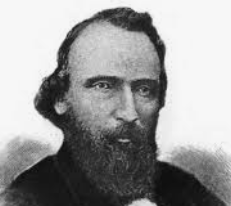
Kurt Gödel — The Incompleteness Theorems, Mathematical Platonism, and the Limits of Formal Reason (1906–1978)
Kurt Gödel was an Austrian-American logician, mathematician, and philosopher who published, at the age of twenty-five, the two incompleteness theorems that are among the handful of results that genuinely changed what it was possible to think — demonstrating that any consistent formal system powerful enough to express arithmetic contains true statements that cannot be proven within that system, and cannot prove its own consistency.
Considered alongside Aristotle and Frege as one of the most significant logicians in history, his work ended the Hilbert program — the attempt to find a complete and consistent foundation for all mathematics — demonstrated the undecidability of the continuum hypothesis, and shaped both the philosophy of mathematics and the theory of computation in ways that continue to generate debate a century later.
His personal history was as unusual as his mathematics: a hypochondriac from childhood who believed he had a weak heart, a member of the Vienna Circle who rejected logical positivism, a close friend of Einstein at Princeton with whom he took daily walks for twenty years, a man who eventually starved himself to death because he was convinced his food was being poisoned — and who had, despite all this, produced results that will be read and used as long as mathematics exists.
The First Incompleteness Theorem — Truth Beyond Proof
The background to the incompleteness theorems was the Hilbert program — David Hilbert's ambitious project, developed in the 1920s, to place mathematics on a rigorous axiomatic foundation that was both complete (every mathematical truth provable) and consistent (no contradictions derivable). At the Königsberg conference in September 1930, Hilbert declared in his retirement address: for the mathematician, there is no ignorabimus — no unknowable. At the same conference, Gödel quietly announced that he had proved Hilbert wrong.
The proof was a technical tour de force — using a method now called Gödel numbering, which assigned unique numbers to every formula and proof in a formal system, allowing the system to talk about its own formulas. He then constructed a statement — the Gödel sentence — that in effect said "this statement cannot be proved in this system." If the statement were provable, it would be false — contradicting the system's consistency. If it were not provable, it was true but unprovable — making the system incomplete. Either the system was inconsistent or it was incomplete. There was no third option.
The first incompleteness theorem established that for any consistent formal system powerful enough to express arithmetic, there will always be true statements that the system cannot prove. Mathematical truth transcends mathematical provability. No axiom system could capture all of arithmetic.
"There will always be mathematical facts about numbers that are true but unprovable within the system — and the consistency of the axioms themselves cannot be proved within the system either."
The Second Incompleteness Theorem — The System Cannot Vouch for Itself
The second incompleteness theorem was in some ways more philosophically devastating than the first. It established that no consistent formal system capable of expressing arithmetic could prove its own consistency.
This destroyed Hilbert's second desideratum — the hope that mathematics could provide an internal guarantee of its own reliability. Any proof that a mathematical system was consistent would have to come from outside that system — from a more powerful system whose own consistency was equally unprovable internally. The regress had no bottom.
The implications went beyond mathematics into epistemology: no formal system of sufficient power could certify its own correctness from within. Self-grounding was logically impossible. Every sufficiently rich formal structure contained within itself the trace of something it could not capture.
"Any system powerful enough to describe arithmetic cannot prove that it is itself free of contradiction — the grounds of any system lie outside that system."
Mathematical Platonism — Against Formalism and Positivism
Gödel's philosophical position was remarkable for its independence from the intellectual currents surrounding him. He had attended meetings of the Vienna Circle — the logical positivists around Moritz Schlick — but he was never a positivist. His incompleteness theorems themselves, in his view, supported mathematical Platonism rather than refuting it.
The formalist position — associated with Hilbert — held that mathematics was essentially a game with symbols, and that mathematical truth meant formal provability within a system. Gödel's theorems showed that provability and truth came apart: there were true mathematical statements that no formal system could prove. But this meant, on Gödel's view, that mathematical truth was something more than formal derivability — that mathematical objects and truths existed independently of our formal systems and were in some sense discovered rather than constructed.
He defended a robust Platonism — the view that mathematicians had a special faculty, analogous to perception, for grasping mathematical facts — and that mathematical intuition, properly cultivated, could access truths that no formal system could contain. This was, and remains, a minority position among philosophers of mathematics; but it was the position of the man who had done more than anyone else to reveal the limits of the formalist alternative.
"Mathematical logic was, in Gödel's view, 'a science prior to all others, which contains the ideas and principles underlying all sciences.'"
The Continuum Hypothesis and Set Theory
Gödel's contributions extended well beyond the incompleteness theorems. In 1938 and 1940 he published proofs showing that the axiom of choice and the generalized continuum hypothesis were consistent with the standard axioms of set theory — they could not be disproved from those axioms. Paul Cohen later showed they could not be proved either. Together, these results established that the continuum hypothesis was genuinely independent of the standard axioms — neither provable nor disprovable — making it one of the clearest concrete instances of Gödelian incompleteness in action.
The continuum hypothesis asks whether there is a cardinality of sets strictly between the cardinality of the natural numbers and the cardinality of the real numbers. After Gödel and Cohen, mathematicians discovered that whether the answer was yes or no depended on which axioms they chose — that this fundamental question about the structure of infinity had no determinate answer within any standard foundational framework. Mathematics contained undecidable questions not just in the abstract but at its deepest foundations.
"There can be no mathematical theory of everything — no unification of what's provable and what's true. What mathematicians can prove depends on their starting assumptions, not on any fundamental ground truth from which all answers spring."
Einstein, Princeton, and the Late Philosophy
After fleeing Nazi Germany via the trans-Siberian railway in 1940, Gödel settled permanently at the Institute for Advanced Study in Princeton — where he spent the rest of his life. His friendship with Einstein became one of the more famous intellectual partnerships in twentieth century academic history — two refugees from Europe, both at the IAS, taking daily walks and discussing physics and philosophy. Einstein said that in his later years in Princeton he came to the IAS mainly for the privilege of walking home with Gödel.
Gödel's late philosophical work turned to cosmology — he constructed an exact solution to Einstein's field equations in which time travel was theoretically possible, raising questions about the objective flow of time that he used to argue for the ideality of time in the Kantian sense. He also worked extensively on Leibniz and developed a formal modal-logic proof of the existence of God — the "Gödel ontological proof" — which he kept private for years, reportedly fearing it would be misunderstood as an expression of religious belief rather than a logical exercise.
"Einstein told me that in the later years of his life he came to the Institute mainly for the privilege of walking home with Gödel."
— Oskar Morgenstern
Legacy — The Theorem That Cannot Be Proven Away
Gödel died in January 1978, having refused to eat for fear that his food was poisoned — his lifelong hypochondria and paranoia taking their final form. He weighed 65 pounds at death. The man who had proved the limits of formal systems could not, in the end, reason his way past his own fears.
His theorems have been applied — often overenthusiastically — far beyond mathematics, to questions about consciousness, the limits of artificial intelligence, and the structure of human understanding. Lucas and Penrose famously argued that the incompleteness theorems proved human minds could not be formal systems — arguments whose technical validity remains contested but whose influence on the philosophy of mind has been substantial.
What is not contested is the significance of the theorems themselves: they represent one of the handful of results in the history of mathematics and philosophy that genuinely changed what it was possible to believe. The Hilbert program — the dream of a complete and self-grounding mathematics — was ended by a twenty-five-year-old from Brünn. The dream of a formal theory of everything died with it. And the philosophical implications — about truth, provability, the nature of mathematical objects, and the limits of formal reason — are still being worked out.
On CivSim he belongs alongside Turing, Hermann Weyl, and Harvey Brown — thinkers who pressed on the foundations of mathematical and scientific knowledge and found that those foundations were less secure and more philosophically interesting than the dominant programs had assumed. His incompleteness theorems are a permanent reminder that any system of sufficient power contains within itself the trace of something it cannot capture — and that the examined life, like the examined axiom system, will always encounter truths it cannot prove.
"For the mathematician there is no ignorabimus."
— David Hilbert, September 1930, at the same conference where Gödel quietly announced that Hilbert was wrong.
CivilSimian.com created by AxiomaticPanic, CivilSimian, Kalokagathia