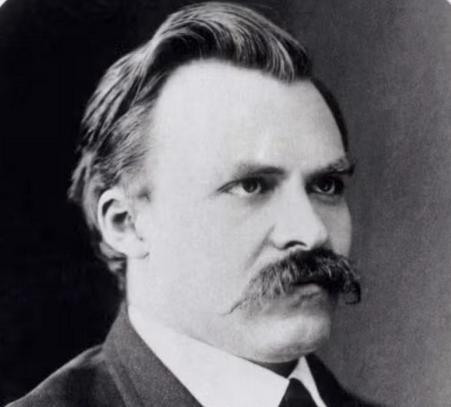
Against that positivism which stops before phenomena, saying "there are only facts," I should say: no, it is precisely facts that do not exist, only interpretations.
0
⚖0
▼Source
source
Notebooks (Late 1886 – Spring 1887) [http://www.nietzschesource.org/eKGWB/NF-1886,7[60]] | Popular usage: "There are no facts, only interpretations."
I am utterly amazed, utterly enchanted! I have a precursor, and what a precursor! I hardly knew Spinoza: that I should have turned to him just now, was inspired by "instinct." Not only is his overtendency like mine—namely to make all knowledge the most powerful affect — but in five main points of his doctrine I recognize myself; this most unusual and loneliest thinker is closest to me precisely in these matters: he denies the freedom of the will, teleology, the moral world-order, the unegoistic, and evil. Even though the divergencies are admittedly tremendous, they are due more to the difference in time, culture, and science. In summa: my lonesomeness, which, as on very high mountains, often made it hard for me to breathe and make my blood rush out, is now at least a twosomeness. Strange! Incidentally, I am not at all as well as I had hoped. Exceptional weather here too! Eternal change of atmospheric conditions! — that will yet drive me out of Europe! I must have clear skies for months, else I get nowhere. Already six severe attacks of two or three days each. With affectionate love, Your friend.
0
⚖0
▼Source
source
Postcard to Franz Overbeck, Sils-Maria (30 July 1881), tr. Walter Kaufmann, The Portable Nietzsche (1954)
Knowledge more than a Means. Also without this passion I refer to the passion for knowledge, science would be furthered: science has hitherto increased and grown up without it. The good faith in science, the prejudice in its favour, by which States are at present dominated (it was even the Church formerly), rests fundamentally on the fact that the absolute inclination and impulse has so rarely revealed itself in it, and that science is regarded not as a passion, but as a condition and an "ethos." Indeed, amour-plaisir of knowledge (curiosity) often enough suffices, amour-vanity suffices, and habituation to it, with the afterthought of obtaining honour and bread; it even suffices for many that they do not know what to do with a surplus of leisure, except to continue reading, collecting, arranging, observing and narrating; their "scientific impulse" is their ennui.
Without art we would be nothing but foreground and live entirely in the spell of that perspective which makes what is closest at hand and most vulgar appear as if it were vast, and reality itself.