
Philosophy is an inventory of thoughts in the flow of life.
0
0
Poor Nietzsche! He was the only philosopher who had the singular privilege of being held responsible for nothing less than a world war.
0
0
After history has taught us that possession of the Truth often produces fanaticism, and that an individual armed with truth is a potential terrorist, one is led to ask: are relativism and nihilism really the radical evil that we are led to believe? Or do they not also produce an awareness of the relativity of every point of view, and therefore of every religion? And so, do they not convey respect for the point of view of others and, therefore, the fundamental value of tolerance? There is beauty even in relativism and nihilism: they inhibit fanaticism.
0
0
His [Nietzsche's] criticism of the “herd” mentality and morality, his defence of what we might call a “right to excellence”, is an attempt to overcome the sterility of simple prohibition, self-denial and renunciation, which mortify life. Nietzsche wants life to be realised in all its potential. He therefore recommends a “creative” attitude that gives life its fullness, similar to that of the artist who imprints a beautiful form on his work. In this sense, his new morality is a kind of “aesthetics of existence” whose imperative recommends: “Become what you are!” And even if life is not beautiful, it is up to us to try to make it so.
0
0
One of the problems of the current Church is that the production of happiness has slipped out of its hands. But it is not Nietzsche's fault that the power of the Gospels is fading and the condition of Western man is becoming increasingly paganised.
0
0
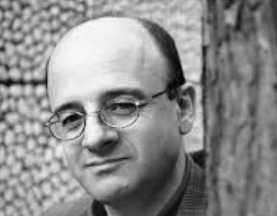
Profound thoughts in a light-hearted soul, that was Franco. You could see it in his face, because even his features matched: a large, high forehead, a compact face that would break into a slight but sincere smile at the slightest thing, eyes that sparkled behind his glasses. He was like that even at Pigafetta High School in Vicenza, a year ahead of us in '53. We would bump into each other during break time and, amid the flood of nonsense, jokes and silly pranks, he stood out because he was smart. He was the prototype not of a good student, but of a boy who had something extra: I never thought of Franco as a nerd, far from it: he was sociable, witty, and sharp in the unwitting contests of intelligence. You found yourself listening to him naturally: you were silent and he spoke, making Giuseppe Faggin's beautiful lessons even more digestible.
0
0

CivilSimian.com created by AxiomaticPanic, CivilSimian, Kalokagathia