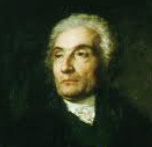
There is a great analogy between grace and genius, for genius is a grace. The real man of genius is the one who acts by grace or by impulsion, without ever contemplating himself and without ever saying to himself: Yes! It is by grace that I act.
If you wish to extinguish that enthusiasm, which inspires great thoughts, and impels to noble enterprises;—if you wish to render men's hearts cold, and unfeeling; and to substitute egotism in the room of generous, and ardent, patriotism,—if you wish to do this, only take away from the people their faith, and make them philosophers.
During the last three centuries, there has been, by virtue of the Inquisition, a greater enjoyment of peace, and happiness, in Spain, than in the other nations of Europe.
When we reflect, that the Inquisition, by its restrictions, and authority, would have prevented the French revolution,—it is hard to say, whether the Sovereign, who, wholly, and without reserve, gave up this instrument, would not, in reality, be doing an injury to humanity.
Genius does not seem to derive any great support from syllogisms. Its carriage is free; its manner has a touch of inspiration. We see it come, but we never see it walk.
All sciences have their mysteries and at certain points the apparently most obvious theory will be found in contradiction with experience. Politics, for example, offers several proofs of this truth. In theory, is anything more absurd than hereditary monarchy? We judge it by experience, but if government had never been heard of and we had to choose one, whoever would deliberate between hereditary and elective monarchy would be taken for a fool. Yet we know by experience that the first is, all things considered, the best that can be imagined, while the second is the worst. What arguments could not be amassed to establish that sovereignty comes from the people? However they all amount to nothing. Sovereignty is always taken, never given, and a second more profound theory subsequently discovers why this must be so. Who would not say the best political constitution is that which has been debated and drafted by statesmen perfectly acquainted with the national character, and who have foreseen every circumstance? Nevertheless nothing is more false. The best constituted people is the one that has the fewest written constitutional laws, and every written constitution is worthless.
The first among the sciences is that of statesmanship. That cannot be learnt in academies. No great minister, from Suger to Richelieu, ever occupied himself with physics or mathematics. The genius of the natural sciences makes impossible that other kind of genius, which is a talent unto itself.
Opinion is so powerful in war that it can alter the nature of the same event and give it two different names, for no reason other than its own whim. A general throws his men between two enemy armies and he writes to his king, I have split him, he has lost. His opponent writes to his king, He has put himself between two fires, he is lost. Which of the two is mistaken? Whoever is seized by the cold goddess. Assuming that all things, especially size, are at least approximately equal, the only difference between the two positions is a purely moral one. It is imagination that loses battles.
War is divine in itself, since it is a law of the world. War is divine through its consequences of a supernatural nature which are as much general as particular, consequences little known because little studied, but which are nevertheless incontestable. War is divine in the mysterious glory that surrounds it and in the no less inexplicable attraction that draws us to it. War is divine by the manner in which it breaks out.
In the immense sphere of living things, the obvious rule is violence, a kind of inevitable frenzy which arms all things in mutua funera. Once you leave the world of insensible substances, you find the decree of violent death written on the very frontiers of life. Even in the vegetable kingdom, this law can be perceived: from the huge catalpa to the smallest of grasses, how many plants die and how many are killed!