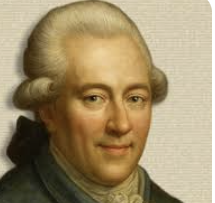
Every man has his moral backside which he refrains from showing unless he has to and keeps covered as long as possible with the trousers of decorum.
0
⚖0
▼Source
source
B 12 Variant translation: Everyone has a moral backside, which he does not show except in case of need and which he covers as long as possible with the breeches of respectability.
We can see nothing whatever of the soul unless it is visible in the expression of the countenance; one might call the faces at a large assembly of people a history of the human soul written in a kind of Chinese ideograms.
Prejudices are so to speak the mechanical instincts of men: through their prejudices they do without any effort many things they would find too difficult to think through to the point of resolving to do them.
Cautiousness in judgment is nowadays to be recommended to each and every one: if we gained only one incontestable truth every ten years from each of our philosophical writers the harvest we reaped would be sufficient. ... To grow wiser means to learn to know better and better the faults to which this instrument with which we feel and judge can be subject.
It is we who are the measure of what is strange and miraculous: if we sought a universal measure the strange and miraculous would not occur and all things would be equal.
Food probably has a very great influence on the condition of men. Wine exercises a more visible influence, food does it more slowly but perhaps just as surely. Who knows if a well-prepared soup was not responsible for the pneumatic pump or a poor one for a war?
It is hardly to be believed how spiritual reflections when mixed with a little physics can hold people's attention and give them a livelier idea of God than do the often ill-applied examples of his wrath.
One might call habit a moral friction: something that prevents the mind from gliding over things but connects it with them and makes it hard for it to free itself from them.