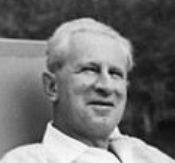
Adorno, Marcuse, and other members of the Frankfurt School were explicit about the link between “antifascism,” which was the banner they sported, and sympathy for Communist governments. Like Sartre and his collaborators at Les Temps Modernes, the Critical Theorists considered anti-Communist attitudes proof positive of fascist residues in those who expressed them. After the publication of The Authoritarian Personality in 1950, Adorno was shocked by a suggestion from one of his coworkers, Seymour Martin Lipset, that the psychic grid they had applied to right-wingers might work for left-wing extremists equally well.
0
⚖0
▼Source
source
Paul Gottfried (2018), The strange death of Marxism: the European Left in the new Millennium, University of Missouri Press, p.71
When I heard that Herbert Marcuse had died, I immediately thought, "The same year as John Wayne." For people like me Marcuse was something of a star, a presence, a symbol of certain values. I felt connected to him, though not in any simple I discovered his books at a time when I was groping toward a radicalism that would make sense of my experience as a middle-class American. Eros and Civilization and One Dimensional Man excited me because they were about problems I was struggling with the relation of psychology to politics, the idea of a cultural revolution, the prospects for radical change in a society where most people had enough to eat. Still, my copies of the books are filled with comments like "European elitism" and "glib" and "what bullshit!" As my politics matured, I found that I disagreed with most of what Marcuse said and hated what the new left made of his ideas. In some ways I defined my political outlook in reaction to Marcuse's, an acknowledgment that he'd made certain territory his own. In his monolithically bleak view of advanced capitalism and his contempt for American workers' enjoyment of their material gains, Marcuse was hardly distinguishable from conservative critics of mass culture…The Times quotes Marcuse wistfully referring to the "heroic period" of "the hippies and yippies." I wonder if he understood how thoroughly his heroes' values were rooted in mass culture. What did he think it meant when the Yippies got the Chicago police and the news media to cooperate in bringing revolutionary theater to millions? But then, he may have been more appreciative of such ironies than I tend to assume.
0
⚖0
▼Source
source
Ellen Willis Herbert Marcuse, 1898-1979 (August 1979) in Beginning to See the Light: Pieces of a Decade (1981)
Marcuse, Sartre, Colletti and Althusser were style-maestros of turgidity and never tried to rise to the flights of Marx and Engels in their inspired moments. Not one of them would choose a monosyllable if a longer word could be discovered or devised. Their Marxism, if not exactly pessimistic, was cramped and cautious. What is more, they were philosophers writing mainly for other philosophers. Only Marcuse became a genuine favourite of the thousands of students who rebelled in 1968 against ‘bourgeois society’ and university discipline, as well as the American war in Vietnam. He and his ideas were accorded a profile in Playboy magazine. (It is hard to imagine another Marxist theorist, except perhaps Marx himself, tolerating this without complaint.) Marcuse had grown popular because of the significance he attached to the students; it also did him no harm that he was willing to discuss the erotic as well as the socio-political.
0
⚖0
▼Source
source
Robert Service, Comrades: A History of World Communism (1968)
Another veteran communist calling for the revision of conventional contemporary Marxism was Herbert Marcuse. After emigrating from Nazi Germany in 1933, he took American citizenship and wrote prolifically about the need to graft several intellectual trends of the twentieth century – especially Freudianism and German sociology – on to the tree of the Marxist tradition. Marcuse rejected Stalin’s version of communism as dogmatic, narrow and plain wrong in its interpretation of Marx. He was a freer spirit than Lukács and refused to recognise Lenin as an absolute authority. He insisted that sexual drives as well as economic imperatives help to explain the mechanisms of politics and society. He scorned the Communist Party of the USA and refused to align himself with any organisation. His experiences as a young militant in Europe had eroded his faith in the revolutionary potential of the working class. Marcuse saw well-paid industrial workers as constituting one of the obstacles to humanity’s liberation from oppression. Based on the San Diego campus of the University of California, he counted instead upon the unemployed, the vagabond poor and the Hispanic immigrants; he also had a soft spot for college students. He regarded these groups as living in detachment from ‘bourgeois’ society and ready to overcome the ‘one-dimensional’ aspects of contemporary capitalist existence. Marcuse’s forte was as a philosopher. His preoccupation with epistemology and dialectics was typical of a growing trend among Marxist writers seeking to challenge the Marxism that had been customary since 1917.
0
⚖0
▼Source
source
Robert Service, Comrades: A History of World Communism (2009)
In his essay on Repressive Tolerance...Marcuse argues that the tolerance of the advanced industrial democracies is a deceit... Freedom of speech is not an overriding good, for to allow freedom of speech in the present society is to assist in the propagation of error, and "the telos of tolerance is truth." The truth is carried by the revolutionary minorities and their intellectual spokesmen, such as Marcuse, and the majority have to be liberated by being re-educated into the truth by this minority, who are entitled to suppress rival and harmful opinions. This is perhaps the most dangerous of all Marcuse's doctrines, for not only is what he asserts false, but his is a doctrine which if it were widely held would be an effective barrier to any rational progress and liberation...What, then, are the true connections between tolerance, rationality, and liberation? The telos of tolerance is not truth but rationality. Certainly we value rationality because it is by rational methods that we discover truth; but a man may be rational who holds many false beliefs, and a man may have true beliefs and yet be irrational. What is crucial is that the former has the possibility of progressing toward truth, while the second not only has no grounds for asserting what he believes, even though it is true, but is continually liable to acquire false beliefs. What is it to be rational? It is a necessary condition of rationality that a man shall formulate his beliefs in such a way that it is clear what evidence would be evidence against them and that he shall lay himself open to criticism and refutation in the light of any possible extreme. But to foreclose on tolerance is precisely to cut oneself off from such criticism and refutation. It is to gravely endanger one’s own rationality by not admitting one's own fallibility.
While more conventional thinkers insisted that technology would create more leisure time, Marcuse warned that it would instead imprison people in unoriginal lives devoid of creative thinking. He warned that the though technology appeared to to help the dissenter, it would actually be used to muffle protest. People were being anesthetized into a complacency that was mistaken for happiness. Goods and services were rendering mankind useless and incapable of real thought. There was an increase in media, but it espoused less and less variety of ideas. People in today's world who "surf" through eighty or more television stations, only to find less there than when they had only four choices, might be beginning to grasp Marcuse's vision for a technological age in which people think they have more choices but the choices lack significant differences. In an age of abundance, when technology has made individuals extraordinarily efficient, why do people spend even more time working, and why is so much work mindless instead of stimulating? One of the first Marxists to lose faith in the Soviet system, Marcuse saw the West as also in a state of "unfreedom" and often suggested that revolution may be the only path to true freedom. Marcuse, the aging professor, seemed to warm to the role of guru to the student radicals. He frequently discussed their movements. He warned Abbie Hoffman on "flower power" that "flowers have no power" other than the force of the people that cultivate them—one of the few occasions on which Hoffman had no reply. But as Marcuse freely admitted, many of the young rebels who talked about his ideas had never read him. His work is written in the German dialectic tradition. Marcuse achieved popularity without ever developing an accessible writing style. Luis Gonzalez de Alba, one of the student leaders in Mexico, described finally sitting down to read some Marcuse simply because President Gustavo Díaz Ordez had accused the movement of being influenced by the philosopher: "I opened One-Dimensional Man and got as far as page five. Eros and Civilization had been a terrible bore. And now I had to read another of Marcuse's books, all because Diaz Ordaz had happened to mention the 'philosophers of destruction.'"
0
⚖0
▼Source
source
Mark Kurlansky, 1968: The Year that Rocked the World (2004), p. 108-109, ISBN 0-345-45581-9
By 1968 there was another intellectual it seemed everybody wanted to quote: Marxist-Hegelian revisionist revolutionary Herbert Marcuse. His most appealing idea was what he called "the great refusal," the time to say "No, this is not acceptable"—another idea that was expressed in Savio's "odious machine" speech. Marcuse, a naturalized American citizen who had fled the Nazis, was on the faculty of Brandeis when Abbie Hoffman was a student there, and Hoffman was enormously influenced by him, especially by his book Eros and Civilization, which talked about guilt-free physical pleasure and learned about "false fathers, teachers, and heroes." The most talked about Marcuse book of the late sixties, One-Dimensional Man, was published in 1964. It denounced technological society as shallow and conformist and put into the carefully orchestrated discipline of German philosophy all of the sentiments of the 1950s James Dean-style rebels and the 1960s student revolutionaries. The New York Times called Marcuse "the most important philosopher alive." In 1968, at the age of seventy, Marcuse taught at San Diego State, where he could be seen fussing over his rust-colored cat and enjoying the hippos at the zoo, an avuncular white-haired figure whose impact was felt across the globe. The students who forced the University of Rome to close in March of that year carried a banner with three Ms that stood for Marx, Mao, and Marcuse.
0
⚖0
▼Source
source
Mark Kurlansky, 1968: The Year that Rocked the World (2004), p. 108-109, ISBN 0-345-45581-9
Mr. Marcuse. . . . It’s the kind of Marxism which I dislike the most. It’s a combination of Marxism and Freudianism. I am equally opposed to both of the sources, and in its combined form I find it particularly repulsive.
0
⚖0
▼Source
source
Friedrich Hayek, quoted in Ralf Dahrendorf, LSE: A History of the London School of Economics and Political Science, 1895– 1995 (1995)
A couple of years later I was an Assistant Professor and read Critique of Pure Tolerance. I quite hated it. It espoused a doctrine of the objective truth of what are in fact simply personal opinions with emotive value but no fact value. I also read Herbert Marcuse's One-Dimensional Man, which I also hated. I had lunch with Marcuse when he was lecturing in Cambridge, Ma. I quite liked Marcuse because his was capable of changing his mind, and was mentally vigorous at an advanced age (most of my colleagues ceased thinking beyond tenure). I told him that he and his critical studies comrades were true totalitarians. They hoped for a workers' revolution, after which they would be appointed Cultural Commisars by the Great Leader of the working class, and they would teach people what to think.
0
⚖0
▼Source
source
Herbert Gintis (2018), [https://www.amazon.com/gp/customer-reviews/R1CWWH2VYEQM26/ Review of A Critique of Pure Tolerance]
To understand the scope and significance of women's involvement in radical political movements, we must have some idea of the contradictions and patterns of this participation as they have appeared in the past. The struggle of other women to define ideology, translate feminist consciousness into practice, and scale major obstacles provides us with a historical base by which we can more accurately assess the current potential of feminist radicalism and understand the real portent of Herbert Marcuse's observation that the "Women's Liberation movement today is perhaps the most important and potentially the most radical political movement we have"
0
⚖0
▼Source
source
Jane Slaughter and Robert Korn European Women on the Left (1981)