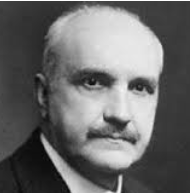
They [the wise spirits of antiquity in the first circle of Dante's Inferno] are condemned, Dante tells us, to no other penalty than to live in desire without hope, a fate appropriate to noble souls with a clear vision of life.
Although a poem be not made by counting of syllables upon the fingers, yet "numbers" is the most poetical synonym we have for verse, and "measure" the most significant equivalent for beauty, for goodness, and perhaps even for truth. Those early and profound philosophers, the followers of Pythagoras, saw the essence of all things in number, and it was by weight, measure, and number, as we read in the Bible, that the Creator first brought Nature out of the void.
0
⚖0
▼Source
source
Interpretations of Poetry and Religion (1900), p. 251
In the Gospels, for instance, we sometimes find the kingdom of heaven illustrated by principles drawn from observation of this world rather than from an ideal conception of justice; ... They remind us that the God we are seeking is present and active, that he is the living God; they are doubtless necessary if we are to keep religion from passing into a mere idealism and God into the vanishing point of our thought and endeavour.
0
⚖0
▼Source
source
Interpretations of Poetry and Religion (1900), p. 54
O world, thou choosest not the better part! It is not wisdom to be only wise, And on the inward vision close the eyes, But it is wisdom to believe the heart. Columbus found a world, and had no chart, Save one that faith deciphered in the skies; To trust the soul's invincible surmise Was all his science and his only art.
I was still "at the church door". Yet in belief, in the clarification of my philosophy, I had taken an important step. I no longer wavered between alternative views of the world, to be put on or taken off like alternative plays at the theatre. I now saw that there was only one possible play, the actual history of nature and of mankind, although there might well be ghosts among the characters and soliloquies among the speeches. Religions, all religions, and idealistic philosophies, all idealistic philosophies, were the soliloquies and the ghosts. They might be eloquent and profound. Like Hamlet's soliloquy they might be excellent reflective criticisms of the play as a whole. Nevertheless they were only parts of it, and their value as criticisms lay entirely in their fidelity to the facts, and to the sentiments which those facts aroused in the critic.
... I once shook hands with Longfellow at a garden party in 1881; and I often saw Dr. Holmes, who was our neighbor in Beacon Street: but Emerson I never saw.