

3 months 3 weeks ago
I learned a lot from the black arts movement. I loved reading black feminist thinkers on my own (outside of academia)—Audre Lorde, Barbara Smith, Angela Davis, June Jordan, bell hooks, etc.
▼
Source
Marilyn Chin [https://asianreviewofbooks.com/content/marilyn-chin-talks-to-jennifer-wong/ Interview] with Asian Review of Books (2020)
3 months 3 weeks ago
An excellent digest of all that is valuable in former Oeconomical writers with many valuable corrective Observations.
▼
Source
Edmund Burke, remark on The Wealth of Nations as recorded by Dugald Stewart (8 April 1784), quoted in Ian Simpson Ross, The Life of Adam Smith (1995; 2nd ed. 2010), p. 376

3 months 3 weeks ago
One free man will say with truth what he thinks and feels amongst thousands of men who by their acts and words attest exactly the opposite. It would seem that he who sincerely expressed his thought must remain alone, whereas it generally happens that every one else, or the majority at least, have been thinking and feeling the same things but without expressing them. And that which yesterday was the novel opinion of one man, to-day becomes the general opinion of the majority. And as soon as this opinion is established, immediately by imperceptible degrees, but beyond power of frustration, the conduct of mankind begins to alter. Whereas at present, every man, even, if free, asks himself, "What can I do alone against all this ocean of evil and deceit which overwhelms us? Why should I express my opinion? Why indeed possess one? It is better not to reflect on these misty and involved questions. Perhaps these contradictions are an inevitable condition of our existence. And why should I struggle alone with all the evil in the world? Is it not better to go with the stream which carries me along ? If anything can be done, it must be done not alone but in company with others." And leaving the most powerful of weapons — thought and its expression — which move the world, each man employs the weapon of social activity, not noticing that every social activity is based on the very foundations against which he is bound to fight, and that upon entering the social activity which exists in our world every man is obliged, if only in part, to deviate from the truth and to make concessions which destroy the force of the powerful weapon which should assist him in the struggle. It is as if a man, who was given a blade so marvelously keen that it would sever anything, should use its edge for driving in nails. We all complain of the senseless order of life, which is at variance with our being, and yet we refuse to use the unique and powerful weapon within our hands — the consciousness of truth and its expression; but on the contrary, under the pretext of struggling with evil, we destroy the weapon, and sacrifice it to the exigencies of an imaginary conflict'.
▼
Source
Ch. 17

3 months 3 weeks ago
In the social body as in every organized body — that is, one in which the parts are arranged in certain relationships to each other relative to a given end — the cessation of vital functions does not come from the annihilation of their parts, but from their displacement and the disturbances of their relationships.

3 months 3 weeks ago
Though thou loved her as thyself, As a self of purer clay, Tho' her parting dims the day, Stealing grace from all alive, Heartily know, When half-gods go, The gods arrive.
▼
Source
Give All to Love, st. 4
3 months 3 weeks ago
The more reified the world becomes, the thicker the veil cast upon nature, the more the thinking weaving that veil in its turn claims ideologically to be nature, primordial experience.
▼
Source
p. 7

3 months 3 weeks ago
Philosophy is not a matter of knowledge; it is a matter of understanding, that is to say, of organizing what is known.
▼
Source
[https://books.google.com/books/about/What_I_Believe.html?id=bQnZcFiCz8QC&pg=PA14 What I Believe] (2006), p. 14
3 months 3 weeks ago
The social product grows from year to year. Who is now the true creator of this surplus value which grows wildly and beyond any measure? Who can afford to figure out the profit yielded causally adequate by this immense wealth and the series of economic miracles? In concrete terms: who is the legitimate distributor of the social product and who actually assesses the shares in practical life? As long as the issue is about value, all such questions must above all be formulated as economic questions.
3 months 3 weeks ago
It appears... that a work similar in its object and general conception to that of Adam Smith, but adapted to the more extended knowledge and improved ideas of the present age, is the kind of contribution which Political Economy at present requires. The Wealth of Nations is in many parts obsolete, and in all, imperfect. Political Economy... has grown up almost from infancy since the time of Adam Smith; and the philosophy of society... has advanced many steps beyond the point at which he left it.
▼
Source
John Stuart Mill, ' (1848) Preface
3 months 3 weeks ago
In Nekhludoff, as in all people, there were two beings; one spiritual, who sought only such happiness for himself as also benefited others; and the animal being, seeking his own happiness for the sake of which he is willing to sacrifice that of the world.
▼
Source
Ch. 14

3 months 3 weeks ago
If there be in nature such a principle as justice, it is necessarily the only political principle there ever was, or ever will be. All the other so-called political principles, which men are in the habit of inventing, are not principles at all. They are either the mere conceits of simpletons, who imagine they have discovered something better than truth, and justice, and universal law; or they are mere devices and pretences, to which selfish and knavish men resort as means to get fame, and power, and money.
▼
Source
Section VIII, p. 15
3 months 3 weeks ago
Solvency is maintained by means of the national debt, on the principle, "If you will not lend me the money, how can I pay you?"
▼
Source
Ability

3 months 3 weeks ago
Being asked what was pleasant to men, he replied, "Hope."
3 months 3 weeks ago
Every stage of education begins with childhood. That is why the most educated person on earth so much resembles a child.
▼
Source
“Miscellaneous Observations,” Philosophical Writings, M. Stolijar, trans. (Albany: 1997) #48
3 months 3 weeks ago
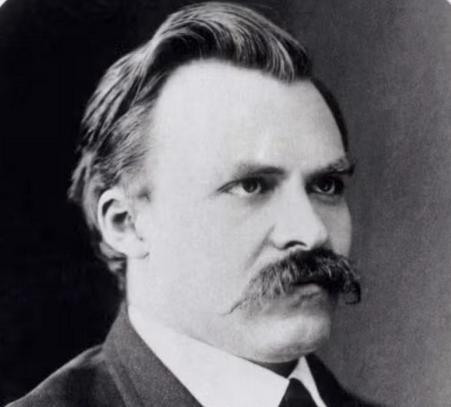
Style ought to prove that one believes in an idea; not only that one thinks it but also feels it.
▼
Source
Letter to Lou Andreas-Salomé (August 1881), in Salomé's biography of Nietzsche, tr. Siegfried Mandel (1988)
3 months 3 weeks ago
When an individual passes from one period of life to another a time comes when he cannot go on in senseless activity and excitement as before, but has to understand that although he has out-grown what before used to direct him, this does not mean that he must live without any reasonable guidance, but rather that he must formulate for himself an understanding of life corresponding to his age, and having elucidated it must be guided by it. And in the same way a similar time must come in the growth and development of humanity.
▼
Source
VI

3 months 3 weeks ago
My object in adopting this arrangement is that the truths should be at one time apparent and at another time concealed. Thus we shall not be in opposition to the Divine Will (from which it is wrong to deviate) which has withheld from the multitude the truths required for the knowledge of God, according to the words, "The secret of the Lord is with them that fear Him." (Psalm 25:14)
3 months 3 weeks ago
Bad times have a scientific value. [...] We learn geology the morning after the earthquake, on ghastly diagrams of cloven mountains, upheaved plains, and the dry bed of the sea.
▼
Source
Considerations by the Way
3 months 3 weeks ago
We speak erroneously of "artificial" materials, "synthetics", and so forth. The basis for this erroneous terminology is the notion that Nature has made certain things which we call natural, and everything else is "man-made", ergo artificial. But what one learns in chemistry is that Nature wrote all the rules of structuring; man does not invent chemical structuring rules; he only discovers the rules. All the chemist can do is find out what Nature permits, and any substances that are thus developed or discovered are inherently natural. It is very important to remember that.
▼
Source
"The Comprehensive Man", Ideas and Integrities: A Spontaneous Autobiographical Disclosure (1963), 75-76.
3 months 3 weeks ago
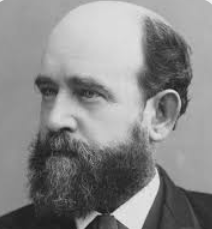
I propose in this inquiry to take nothing for granted, but to bring even accepted theories to the test of first principles, and should they not stand the test, freshly to interrogate facts in the endeavor to discover their law. I propose to beg no question, to shrink from no conclusion, but to follow truth wherever it may lead. Upon us is the responsibility of seeking the law, for in the very heart of our civilization to-day women faint and little children moan. But what that law may prove to be is not our affair. If the conclusions that we reach run counter to our prejudices, let us not flinch; if they challenge institutions that have long been deemed wise and natural, let us not turn back.
▼
Source
Introductory : The Problem
3 months 3 weeks ago
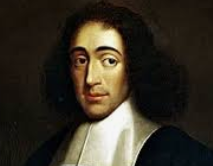
I make this chief distinction between religion and superstition, that the latter is founded on ignorance, the former on knowledge; this, I take it, is the reason why Christians are distinguished from the rest of the world, not by faith, nor by charity, nor by the other fruits of the Holy Spirit, but solely by their opinions, inasmuch as they defend their cause, like everyone else, by miracles, that is by ignorance, which is the source of all malice; thus they turn a faith, which may be true, into superstition.
▼
Source
Letter 21 (73) to Henry Oldenburg , November (1675)
3 months 3 weeks ago
Now to Some it appears not at all worth while to follow out the endless divisions of Nature; and moreover a dangerous undertaking, without fruit and issue. As we can never reach, say they, the absolutely smallest grain of material bodies, never find their simplest compartments, since all magnitude loses itself, forwards and backwards, in infinitude; so likewise is it with the species of bodies and powers; here too one comes on new species, new combinations, new appearances, even to infinitude. These seem only to stop, continue they, when our diligence tires; and so it is spending precious time with idle contemplations and tedious enumerations; and this becomes at last a true delirium, a real vertigo over the horrid Deep
3 months 3 weeks ago
Friends are as companions on a journey, who ought to aid each other to persevere in the road to a happier life.
▼
Source
As quoted in Gems of Thought: Being a Collection of More Than a Thousand Choice Selections, Or Aphorisms, from Nearly Four Hundred and Fifty Different Authors, and on One Hundred and Forty Different Subjects (1888). p. 97 by Charles Northend
3 months 3 weeks ago
The states in which we infuse a transfiguration and a fullness into things and poetize about them until they reflect back our fullness and joy in life...three elements principally: sexuality, intoxication and cruelty — all belonging to the oldest festal joys.
▼
Source
Sec. 801 (Notebook W II 1. Fall 1887, KGW VIII, 2.57-8, KSA 12.393-4)
3 months 3 weeks ago
If the world could write by itself, it would write like Tolstoy.
▼
Source
Isaak Babel, as quoted in The Literary 100 : A Ranking of the Most Influential Novelists, Playwrights, and Poets of All Time (2009) edited by Daniel S. Burt, Infobase Publishing, p. 15
3 months 3 weeks ago
Some consider... all wants of the body as shame, disgrace, and defect to which they are compelled to attend; this is chiefly the case with the sense of touch, which is a disgrace to us according to Aristotle, and which is the cause of our desire for eating, drinking, and sensuality. Intelligent persons must, as much as possible, reduce these wants, guard against them, abstain from speaking of them, discussing them, and attending to them in company of others. Man must have control over all these desires, reduce them as much as possible, and only retain of them as much as is indispensable. His aim must be the aim of man as man, viz., the formation of ideas, and nothing else. The best and sublimest among them is the idea which man forms of God, angels, and the rest of the creation according to his capacity. Such men are always with God, and of them it is said, "Ye are princes, and all of you are children of the Most High." (Ps. lxxxii. 6) This is man's task and purpose.
▼
Source
Ch.8
3 months 3 weeks ago
Fear not, then, thou child infirm, There's no god dare wrong a worm.
▼
Source
Compensation, st. 2
3 months 3 weeks ago
It is one of our most exciting discoveries that local discovery leads to a complex of further discoveries. Corollary to this we find that we no sooner get a problem solved than we are overwhelmed with a multiplicity of additional problems in a most beautiful payoff of heretofore unknown, previously unrecognized, and as-yet unsolved problems.
3 months 3 weeks ago
A special kind of beauty exists which is born in language, of language, and for language.
▼
Source
A Retrospective Glance at the Lifework of a Master of Books
3 months 3 weeks ago
The respect for authority, the presumption in favor of those who have won intellectual reputation, is within reasonable limits, both prudent and becoming. But it should not be carried too far, and there are some things especially as to which it behooves us all to use our own judgment and to maintain free minds. For not only does the history of the world show that undue deference to authority has been the potent agency through which errors have been enthroned and superstitions perpetuated, but there are regions of thought in which the largest powers and the greatest acquirements cannot guard against aberrations or assure deeper insight. One may stand on a box and look over the heads of his fellows, but he no better sees the stars. The telescope and the microscope reveal depths which to the unassisted vision are closed. Yet not merely do they bring us no nearer to the cause of suns and animal-cula, but in looking through them the observer must shut his eyes to what lies about him. That intension is at the expense of extension is seen in the mental as in the physical sphere. A man of special learning may be a fool as to common relations. And that he who passes for an intellectual prince may be a moral pauper there are examples enough to show.
▼
Source
Introduction : The Reason for the Examination
3 months 3 weeks ago
When we speak of the aim and Art observable in Shakespeare's works, we must not forget that Art belongs to Nature; that it is, so to speak, self-viewing, self-imitating, self-fashioning Nature. The Art of a well-developed genius is far different from the Artfulness of the Understanding, of the merely reasoning mind. Shakspeare was no calculator, no learned thinker; he was a mighty, many-gifted soul, whose feelings and works, like products of Nature, bear the stamp of the same spirit; and in which the last and deepest of observers will still find new harmonies with the infinite structure of the Universe; concurrences with later ideas, affinities with the higher powers and senses of man. They are emblematic, have many meanings, are simple and inexhaustible, like products of Nature; and nothing more unsuitable could be said of them than that they are works of Art, in that narrow mechanical acceptation of the word.
3 months 3 weeks ago
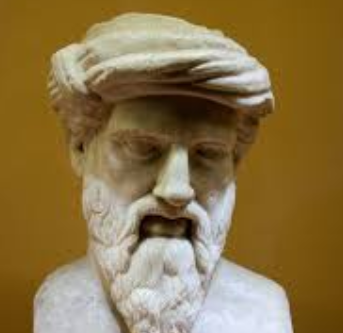
Know that death comes to everyone, and that wealth will sometimes be acquired, sometimes lost. Whatever griefs mortals suffer by divine chance, whatever destiny you have, endure it and do not complain. But it is right to improve it as much as you can, and remember this: Fate does not give very many of these griefs to good people.
▼
Source
As quoted in Divine Harmony: The Life and Teachings of Pythagoras by John Strohmeier and Peter Westbrook. (1999)
3 months 3 weeks ago
Most people are not seeking truth; they are searching for comfort in illusions.
3 months 3 weeks ago
Anna Karenina
3 months 3 weeks ago
That which is produced with intention has passed over from non-existence to existence.
▼
Source
Ch.13
3 months 3 weeks ago
Everything in the universe goes by indirection. There are no straight lines.
▼
Source
Works and Days
3 months 3 weeks ago
Humanity is moving ever deeper into a crisis which has no precedent. It is a crisis brought about by evolution being intent on completely integrating differently colored, differently cultured, and intercommunicating humanity, and by evolution being intent on making integrated humanity able to live sustainedly at a higher standard of living for all than has ever been experienced by any. Probably ninety-nine percent of humanity does not know that we have the option to make it ; we do. It can only be accomplished, however, through a Design Science Revolution. Those in supreme power, politically and economically, aren't yet convinced that our Planet Earth has anywhere nearly enough life support for all humanity. They assume it has to be either you or me, that there is not enough for both. Those with financial advantage reason that selfishness is necessary and fortify themselves even further.

3 months 3 weeks ago
It is surely a pure delight to know, how and by what processes this earth is clothed with verdure and life, how the clouds, mists and rain are formed, what causes all the changes of this terrestrial system of things, and by what divine laws order is preserved amidst apparent confusion. It is a sublime occupation to investigate the cause of the tempest and the volcano, and to point out their use in the economy of things, — to bring the lightning from the clouds and make it subservient to our experiments, — to produce as it were a microcosm in the laboratory of art, and to measure and weigh those invisible atoms, which, by their motions and changes according to laws impressed upon them by the Divine Intelligence, constitute the universe of things. The true chemical philosopher sees good in all the diversified forms of the external world. Whilst he investigates the operations of infinite power guided by infinite wisdom, all low prejudices, all mean superstitions disappear from his mind. He sees man an atom amidst atoms fixed upon a point in space; and yet modifying the laws that are around him by understanding them; and gaining, as it were, a kind of dominion over time, and an empire in material space, and exerting on a scale infinitely small a power seeming a sort of shadow or reflection of a creative energy, and which entitles him to the distinction of being made in the image of God and animated by a spark of the divine mind. Whilst chemical pursuits exalt the understanding, they do not depress the imagination or weaken genuine feelings; whilst they give the mind habits of accuracy, by obliging it to attend to facts, they likewise extend its analogies; and, though conversant with the minute forms of things, they have for their ultimate end the great and magnificent objects of nature. They regard the formation of a crystal, the structure of a pebble, the nature of a clay or earth; and they apply to the causes of the diversity of our mountain chains, the appearances of the winds, thunder-storms, meteors, the earthquake, the volcano, and all those phenomena which offer the most striking images to the poet and the painter. They keep alive that inextinguishable thirst after knowledge, which is one of the greatest charactics of our nature; — for every discovery opens a new field for investigation of facts, shows us the imperfection of our theories. It has justly been said, that the greater the circle of light, the greater the boundary of darkness by which it is surrounded.
▼
Source
Consolations in Travel, or The Last Days of a Philosopher, 3rd ed. (London: John Murray, 1831) dialogue V, p. 229
3 months 3 weeks ago
If thy fellows hurt thee in small things, suffer it! and be as bold with them!
3 months 3 weeks ago
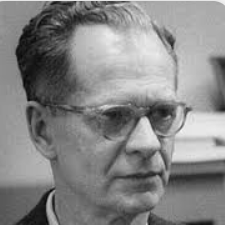
I loved my father dearly. He was fantastically devoted and affectionate. But perhaps the stories about me would never have started if he had done a better job with his public image. He believed that, although our genes determine who we are, it is mostly our environment that shapes our personality. A Time magazine cover story ran the headline "BF Skinner says we can't afford freedom". All he had said was that controls are an everyday reality — traffic lights and a police force, for instance — and that we need to organise our social structures in ways that create more positive controls and fewer aversive ones. As is clear from his utopian novel, Walden Two, the furthest thing from his mind was a totalitarian or fascist state. His careless descriptions of the aircrib might have contributed to the public's common misconception as well. He was too much the scientist and too little the self-publicist — especially hazardous when you are already a controversial figure.
▼
Source
Deborah Skinner Buzan, in "I was not a lab rat" in The Guardian (12 March 2004)

3 months 3 weeks ago
What cannot be imagined cannot even be talked about.
▼
Source
Journal entry (12 October 1916), p. 84e
3 months 3 weeks ago
Now I wonder what our knowledge has in common with God's knowledge according to those who treat God's knowledge... Is there anything else common to both besides the mere name? ...there is an essential distinction between His knowledge and ours, like the distinction between the substance of the heavens and that of the earth.
▼
Source
Ch.20
3 months 3 weeks ago
The perception of the comic is a tie of sympathy with other men, a pledge of sanity, and protection from those perverse tendencies and gloomy insanities in which fine intellects sometimes lose themselves. A rogue alive to the ludicrous is still convertible.
▼
Source
The Comic
3 months 3 weeks ago
That's the basis of all politics: it has to be you or me, there's not enough for both of us. Survival of the fittest.
3 months 3 weeks ago
I saw a Divine Being. I'm afraid I'm going to have to revise all my various books and opinions.
▼
Source
A statement he made soon after recovering from his near-death experience, as reported by Dr. Jeremy George, in [http://gonsalves.org/favorite/atheist.htm "Did atheist philosopher see God when he 'died'?" by William Cash, in National Post (3 March 2001)].
3 months 3 weeks ago
If it is my interest to have a farm, it is my interest to take it away from my neighbour; if it is my interest to have a cloak, it is my interest also to steal it from a bath. This is the source of wars, seditions, tyrannies, plots.
▼
Source
Book I, ch. 22, § 14.
3 months 3 weeks ago
Let us not link ourselves with the vilifiers of Plato and the persecutors of Confucius. They were oppressed by citizens who were considered the pride of the country. Thus has the world raised its hand against the great Servitors. Be assured that the Brotherhood formed by Pythagoras appeared dangerous in the eyes of the city guard. Paracelsus was a target for mockery and malignance. Thomas Vaughan seemed to be an outcast, and few wished to meet with him. Thus was the reign of darkness manifested.
▼
Source
Agni Yoga, Brotherhood (1937), 175.
3 months 3 weeks ago
Wisdom, virtue, morality, all these have fallen out of fashion: everybody worships at the shrine of commerce.
▼
Source
The Theory of the Four Movements (1808), G. Jones, ed. (1966), p. 269
3 months 3 weeks ago
The idea that in order to get clear about the meaning of a general term one had to find the common element in all its applications has shackled philosophical investigation; for it has not only led to no result, but also made the philosopher dismiss as irrelevant the concrete cases, which alone could have helped him understand the usage of the general term.
▼
Source
p. 19
3 months 3 weeks ago
It is namely distinctly stated in Scripture and handed down by tradition that the first commandments communicated to us did not include any law at all about burnt offering and sacrifice.
▼
Source
Ch.32
CivilSimian.com created by AxiomaticPanic, CivilSimian, Kalokagathia