

3 months 3 weeks ago
Beware of thinkers whose minds function only when they are fueled by a quotation.
3 months 3 weeks ago
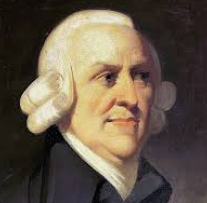
What is prudence in the conduct of every private family, can scarce be folly in that of a great kingdom.
▼
Source
Chapter II, p. 490.
3 months 3 weeks ago
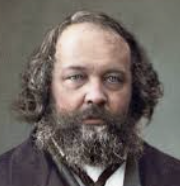
To revolt is a natural tendency of life. Even a worm turns against the foot that crushes it. In general, the vitality and relative dignity of an animal can be measured by the intensity of its instinct to revolt.
▼
Source
[https://www.marxists.org/reference/archive/bakunin/works/1872/karl-marx.htm "On the International Workingmen's Association and Karl Marx"] (1872)
3 months 3 weeks ago
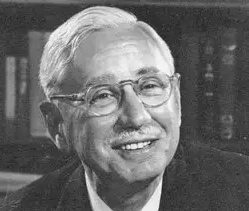
The death of Alexander (323 BC) quickened this process of decay. The boy-emperor, barbarian though he remained after all of Aristotle’s tutoring, had yet learned to revere the rich culture of Greece, and had dreamed of spreading that culture through the Orient in the wake of his victorious armies.... But he had underrated the inertia and resistance of the Oriental mind, and the mass and depth of Oriental culture. It was only a youthful fancy, after all, to suppose that so immature and unstable a civilization as that of Greece could be imposed upon a civilization immeasurably more widespread, and rooted in the most venerable traditions. The quantity of Asia proved too much for the quality of Greece.

3 months 3 weeks ago
How we come to have the world-views we do is an interesting question. No doubt reason plays a part, but human needs for meaning and purpose are usually more important. At times personal taste may be what decides the issue. There is nothing to say that, when all the work of reason is done, only one view of the world will remain. There may be many that fit everything that can be known. In that case you might as well choose the view of the world you find most interesting or beautiful. Adopting a world-view is more like selecting a painting to furnish a room than testing a scientific theory. The test is how it fits with your life.
▼
Source
Freedom for Über-Marionettes: What Science Won't Tell You (p. 150)

3 months 3 weeks ago
I... believe in the rationalist tradition of a commonwealth of learning, and in the urgent need to preserve this tradition.

3 months 3 weeks ago
Several times I asked myself, "Can it be that I have overlooked something, that there is something which I have failed to understand? Is it not possible that this state of despair is common to everyone?" And I searched for an answer to my questions in every area of knowledge acquired by man. For a long time I carried on my painstaking search; I did not search casually, out of mere curiosity, but painfully, persistently, day and night, like a dying man seeking salvation. I found nothing.
▼
Source
Pt. I, ch. 5

3 months 3 weeks ago
The clarification of our political ideas insensibly changes into and becomes indistinguishable from the history of political ideas.
▼
Source
p. 73

3 months 3 weeks ago
Beauty is the mark God sets upon virtue.
▼
Source
Beauty

3 months 3 weeks ago
Why can’t it be simple? If we were only to focus on gender, it would make things so much easier. But of course, it has been this yearning toward simplicity that has racialized feminism as white, that has been responsible for its false universals.
3 months 3 weeks ago
As Cioran correctly points out, a principal danger of being overcivilized is that one all too easily relapses, out of sheer exhaustion and the unsatisfied need to be "stimulated," into a vulgar and passive barbarism. Thus, "the man who unmasks his fictions" through an indiscriminate pursuit of the lucidity that is promoted by modern liberal culture "renounces his own resources and, in a sense, himself. Consequently, he will accept other fictions which will deny him, since they will not have cropped up from his own depth." There, he concludes, "no man concerned with his own equilibrium may exceed a certain degree of lucidity and analysis."
▼
Source
Susan Sontag, "'Thinking against oneself’: reflections on Cioran," Styles of Radical Will (New York: 1966), p. 85
3 months 3 weeks ago
That a joint stock company should be able to carry on successfully any branch of foreign trade, when private adventurers can come into any sort of open and fair competition with them, seems contrary to all experience.
▼
Source
Chapter I, Part III, Article I, p. 810.
3 months 3 weeks ago
Nothing, in fact, is as universal or as ancient as the iniquitous and absurd; truth and justice, on the contrary, are the least universal, the youngest features in the development of human society.
3 months 3 weeks ago
The principle of the family was mutual aid; but the principle of society is competition, the struggle for existence, the elimination of the weak and the survival of the strong.
▼
Source
Ch. 2 : On Youth
3 months 3 weeks ago
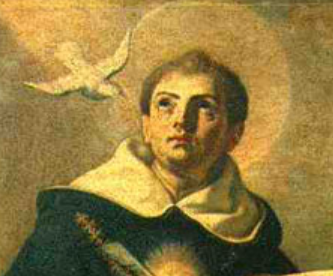
To become like God is the ultimate end of all.
3 months 3 weeks ago
Our main conclusions about the state are that a minimal state, limited, to the narrow functions of protection against force, theft, fraud, enforcement of contracts, and so on, is justified, but any more extensive state will violate persons' rights not to be forced to do certain things, and is unjustified; and that the minimal state is inspiring as well as right.
▼
Source
Preface, p. ix
3 months 3 weeks ago
I know—as we all do—very little of the practice and the spoken and written doctrine of former times on the subject of non-resistance to evil. I knew what had been said on the subject by the fathers of the Church—Origen, Tertullian, and others—I knew too of the existence of some so-called sects of Mennonites, Herrnhuters, and Quakers, who do not allow a Christian the use of weapons, and do not enter military service; but I knew little of what had been done by these so-called sects toward expounding the question.
▼
Source
Preface
3 months 3 weeks ago
In 1938 Strauss moved to the United States, where after the war he occupied a chair at Chicago in the same period that Oakeshott was at the LSE. There he produced the remarkable series of works – in form, an oracular retrospect of the history of philosophy from Socrates to Nietzsche, in effect, a systematic political doctrine – which has since nurtured the most distinctive and strong-minded school of American conservatism. There were two principal themes in this oeuvre. A just political order must be grounded in immutable demands of natural right. Nature, however, is inherently unequal. The capacity to discover truth is restricted to a few, and to endure it exhibited by scarcely more. The best regime will therefore reflect differences in human excellence, and be led by an appropriate élite. But although the highest virtue is philosophical contemplation of the truth, this does not mean – contrary to a superficial reading of the Republic – that the just city will be ruled by philosophers. For philosophy gazes without faltering, not only at the necessary conditions of political order, discomfiting as these may be to demotic prejudice, but at the far more terrible realities of cosmic disorder: the absence of any divine authority, the delusion of any common morality, the transience of the earth and its species – every insight that religion must deny and society cannot survive. Unfolded at large, these truths would destroy the protective atmosphere of any civilisation and with it the conditions for the pursuit of philosophy itself. Esoteric wisdom and exoteric opinion must therefore remain distinct, on pain of mutual destruction. Leisured gentlemen instructed in rule – but not raised to truth – by philosophers should uphold a rational order of political stability against levelling temptations. Under their rule, theoretical knowledge could find institutional shelter, without dangerous side-effects on civic practice.
▼
Source
Perry Anderson, "The Intransigent Right: Michael Oakeshott, Leo Strauss, Carl Schmitt, Friedrich von Hayek" (1992)
3 months 3 weeks ago
It will never make any difference to a hero what the laws are. His greatness will shine and accomplish itself unto the end, whether they second him or not. If he have earned his bread by drudgery, and in the narrow and crooked ways which were all an evil law had left him, he will make it at least honorable by his expenditure. Of the past he will take no heed; for its wrongs he will not hold himself responsible: he will say, All the meanness of my progenitors shall not bereave me of the power to make this hour and company fair and fortunate. Whatsoever streams of power and commodity flow to me, shall of me acquire healing virtue, and become fountains of safety. Cannot I too descend a Redeemer into nature? Whosoever hereafter shall name my name, shall not record a malefactor, but a benefactor in the earth. If there be power in good intention, in fidelity, and in toil, the north wind shall be purer, the stars in heaven shall glow with a kindlier beam, that I have lived. I am primarily engaged to myself to be a public servant of all the gods, to demonstrate to all men that there is intelligence and good will at the heart of things, and ever higher and yet higher leadings. These are my engagements; how can your law further or hinder me in what I shall do to men? On the other hand, these dispositions establish their relations to me. Wherever there is worth, I shall be greeted. Wherever there are men, are the objects of my study and love. Sooner of later all men will be my friends, and will testify in all methods the energy of their regard. I cannot thank your law for my protection. I protect it. It is not in its power to protect me. It is my business to make myself revered. I depend on my honor, my labor, and my dispositions for my place in the affections of mankind, and not on any conventions or parchments of yours.
3 months 3 weeks ago
Both are torn halves of an integral freedom, to which however they do not add up.
▼
Source
[http://www.scribd.com/doc/11510904/Adorno-Letters-to-Walter-Benjamin On high culture and popular culture, in a letter] to Walter Benjamin (18 March 1936)
3 months 3 weeks ago
I learned a lot from the black arts movement. I loved reading black feminist thinkers on my own (outside of academia)—Audre Lorde, Barbara Smith, Angela Davis, June Jordan, bell hooks, etc.
▼
Source
Marilyn Chin [https://asianreviewofbooks.com/content/marilyn-chin-talks-to-jennifer-wong/ Interview] with Asian Review of Books (2020)
3 months 3 weeks ago
An excellent digest of all that is valuable in former Oeconomical writers with many valuable corrective Observations.
▼
Source
Edmund Burke, remark on The Wealth of Nations as recorded by Dugald Stewart (8 April 1784), quoted in Ian Simpson Ross, The Life of Adam Smith (1995; 2nd ed. 2010), p. 376
3 months 3 weeks ago
One free man will say with truth what he thinks and feels amongst thousands of men who by their acts and words attest exactly the opposite. It would seem that he who sincerely expressed his thought must remain alone, whereas it generally happens that every one else, or the majority at least, have been thinking and feeling the same things but without expressing them. And that which yesterday was the novel opinion of one man, to-day becomes the general opinion of the majority. And as soon as this opinion is established, immediately by imperceptible degrees, but beyond power of frustration, the conduct of mankind begins to alter. Whereas at present, every man, even, if free, asks himself, "What can I do alone against all this ocean of evil and deceit which overwhelms us? Why should I express my opinion? Why indeed possess one? It is better not to reflect on these misty and involved questions. Perhaps these contradictions are an inevitable condition of our existence. And why should I struggle alone with all the evil in the world? Is it not better to go with the stream which carries me along ? If anything can be done, it must be done not alone but in company with others." And leaving the most powerful of weapons — thought and its expression — which move the world, each man employs the weapon of social activity, not noticing that every social activity is based on the very foundations against which he is bound to fight, and that upon entering the social activity which exists in our world every man is obliged, if only in part, to deviate from the truth and to make concessions which destroy the force of the powerful weapon which should assist him in the struggle. It is as if a man, who was given a blade so marvelously keen that it would sever anything, should use its edge for driving in nails. We all complain of the senseless order of life, which is at variance with our being, and yet we refuse to use the unique and powerful weapon within our hands — the consciousness of truth and its expression; but on the contrary, under the pretext of struggling with evil, we destroy the weapon, and sacrifice it to the exigencies of an imaginary conflict'.
▼
Source
Ch. 17

3 months 3 weeks ago
In the social body as in every organized body — that is, one in which the parts are arranged in certain relationships to each other relative to a given end — the cessation of vital functions does not come from the annihilation of their parts, but from their displacement and the disturbances of their relationships.
3 months 3 weeks ago
Though thou loved her as thyself, As a self of purer clay, Tho' her parting dims the day, Stealing grace from all alive, Heartily know, When half-gods go, The gods arrive.
▼
Source
Give All to Love, st. 4
3 months 3 weeks ago
The more reified the world becomes, the thicker the veil cast upon nature, the more the thinking weaving that veil in its turn claims ideologically to be nature, primordial experience.
▼
Source
p. 7

3 months 3 weeks ago
Philosophy is not a matter of knowledge; it is a matter of understanding, that is to say, of organizing what is known.
▼
Source
[https://books.google.com/books/about/What_I_Believe.html?id=bQnZcFiCz8QC&pg=PA14 What I Believe] (2006), p. 14
3 months 3 weeks ago
The social product grows from year to year. Who is now the true creator of this surplus value which grows wildly and beyond any measure? Who can afford to figure out the profit yielded causally adequate by this immense wealth and the series of economic miracles? In concrete terms: who is the legitimate distributor of the social product and who actually assesses the shares in practical life? As long as the issue is about value, all such questions must above all be formulated as economic questions.
3 months 3 weeks ago
It appears... that a work similar in its object and general conception to that of Adam Smith, but adapted to the more extended knowledge and improved ideas of the present age, is the kind of contribution which Political Economy at present requires. The Wealth of Nations is in many parts obsolete, and in all, imperfect. Political Economy... has grown up almost from infancy since the time of Adam Smith; and the philosophy of society... has advanced many steps beyond the point at which he left it.
▼
Source
John Stuart Mill, ' (1848) Preface
3 months 3 weeks ago
In Nekhludoff, as in all people, there were two beings; one spiritual, who sought only such happiness for himself as also benefited others; and the animal being, seeking his own happiness for the sake of which he is willing to sacrifice that of the world.
▼
Source
Ch. 14

3 months 3 weeks ago
If there be in nature such a principle as justice, it is necessarily the only political principle there ever was, or ever will be. All the other so-called political principles, which men are in the habit of inventing, are not principles at all. They are either the mere conceits of simpletons, who imagine they have discovered something better than truth, and justice, and universal law; or they are mere devices and pretences, to which selfish and knavish men resort as means to get fame, and power, and money.
▼
Source
Section VIII, p. 15
3 months 3 weeks ago
Solvency is maintained by means of the national debt, on the principle, "If you will not lend me the money, how can I pay you?"
▼
Source
Ability

3 months 3 weeks ago
Being asked what was pleasant to men, he replied, "Hope."
3 months 3 weeks ago
Every stage of education begins with childhood. That is why the most educated person on earth so much resembles a child.
▼
Source
“Miscellaneous Observations,” Philosophical Writings, M. Stolijar, trans. (Albany: 1997) #48
3 months 3 weeks ago
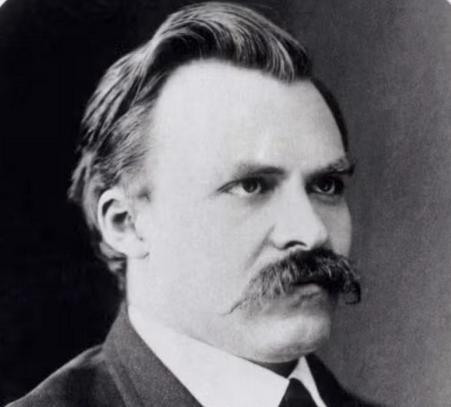
Style ought to prove that one believes in an idea; not only that one thinks it but also feels it.
▼
Source
Letter to Lou Andreas-Salomé (August 1881), in Salomé's biography of Nietzsche, tr. Siegfried Mandel (1988)
3 months 3 weeks ago
When an individual passes from one period of life to another a time comes when he cannot go on in senseless activity and excitement as before, but has to understand that although he has out-grown what before used to direct him, this does not mean that he must live without any reasonable guidance, but rather that he must formulate for himself an understanding of life corresponding to his age, and having elucidated it must be guided by it. And in the same way a similar time must come in the growth and development of humanity.
▼
Source
VI

3 months 3 weeks ago
My object in adopting this arrangement is that the truths should be at one time apparent and at another time concealed. Thus we shall not be in opposition to the Divine Will (from which it is wrong to deviate) which has withheld from the multitude the truths required for the knowledge of God, according to the words, "The secret of the Lord is with them that fear Him." (Psalm 25:14)
3 months 3 weeks ago
Bad times have a scientific value. [...] We learn geology the morning after the earthquake, on ghastly diagrams of cloven mountains, upheaved plains, and the dry bed of the sea.
▼
Source
Considerations by the Way
3 months 3 weeks ago
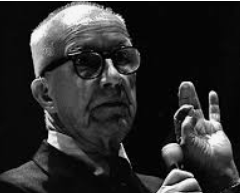
We speak erroneously of "artificial" materials, "synthetics", and so forth. The basis for this erroneous terminology is the notion that Nature has made certain things which we call natural, and everything else is "man-made", ergo artificial. But what one learns in chemistry is that Nature wrote all the rules of structuring; man does not invent chemical structuring rules; he only discovers the rules. All the chemist can do is find out what Nature permits, and any substances that are thus developed or discovered are inherently natural. It is very important to remember that.
▼
Source
"The Comprehensive Man", Ideas and Integrities: A Spontaneous Autobiographical Disclosure (1963), 75-76.
3 months 3 weeks ago
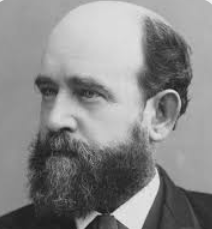
I propose in this inquiry to take nothing for granted, but to bring even accepted theories to the test of first principles, and should they not stand the test, freshly to interrogate facts in the endeavor to discover their law. I propose to beg no question, to shrink from no conclusion, but to follow truth wherever it may lead. Upon us is the responsibility of seeking the law, for in the very heart of our civilization to-day women faint and little children moan. But what that law may prove to be is not our affair. If the conclusions that we reach run counter to our prejudices, let us not flinch; if they challenge institutions that have long been deemed wise and natural, let us not turn back.
▼
Source
Introductory : The Problem
3 months 3 weeks ago
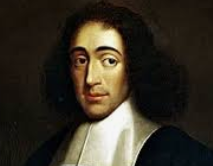
I make this chief distinction between religion and superstition, that the latter is founded on ignorance, the former on knowledge; this, I take it, is the reason why Christians are distinguished from the rest of the world, not by faith, nor by charity, nor by the other fruits of the Holy Spirit, but solely by their opinions, inasmuch as they defend their cause, like everyone else, by miracles, that is by ignorance, which is the source of all malice; thus they turn a faith, which may be true, into superstition.
▼
Source
Letter 21 (73) to Henry Oldenburg , November (1675)
3 months 3 weeks ago
Now to Some it appears not at all worth while to follow out the endless divisions of Nature; and moreover a dangerous undertaking, without fruit and issue. As we can never reach, say they, the absolutely smallest grain of material bodies, never find their simplest compartments, since all magnitude loses itself, forwards and backwards, in infinitude; so likewise is it with the species of bodies and powers; here too one comes on new species, new combinations, new appearances, even to infinitude. These seem only to stop, continue they, when our diligence tires; and so it is spending precious time with idle contemplations and tedious enumerations; and this becomes at last a true delirium, a real vertigo over the horrid Deep
3 months 3 weeks ago
Friends are as companions on a journey, who ought to aid each other to persevere in the road to a happier life.
▼
Source
As quoted in Gems of Thought: Being a Collection of More Than a Thousand Choice Selections, Or Aphorisms, from Nearly Four Hundred and Fifty Different Authors, and on One Hundred and Forty Different Subjects (1888). p. 97 by Charles Northend
3 months 3 weeks ago
The states in which we infuse a transfiguration and a fullness into things and poetize about them until they reflect back our fullness and joy in life...three elements principally: sexuality, intoxication and cruelty — all belonging to the oldest festal joys.
▼
Source
Sec. 801 (Notebook W II 1. Fall 1887, KGW VIII, 2.57-8, KSA 12.393-4)
3 months 3 weeks ago
If the world could write by itself, it would write like Tolstoy.
▼
Source
Isaak Babel, as quoted in The Literary 100 : A Ranking of the Most Influential Novelists, Playwrights, and Poets of All Time (2009) edited by Daniel S. Burt, Infobase Publishing, p. 15
3 months 3 weeks ago
Some consider... all wants of the body as shame, disgrace, and defect to which they are compelled to attend; this is chiefly the case with the sense of touch, which is a disgrace to us according to Aristotle, and which is the cause of our desire for eating, drinking, and sensuality. Intelligent persons must, as much as possible, reduce these wants, guard against them, abstain from speaking of them, discussing them, and attending to them in company of others. Man must have control over all these desires, reduce them as much as possible, and only retain of them as much as is indispensable. His aim must be the aim of man as man, viz., the formation of ideas, and nothing else. The best and sublimest among them is the idea which man forms of God, angels, and the rest of the creation according to his capacity. Such men are always with God, and of them it is said, "Ye are princes, and all of you are children of the Most High." (Ps. lxxxii. 6) This is man's task and purpose.
▼
Source
Ch.8
3 months 3 weeks ago
Fear not, then, thou child infirm, There's no god dare wrong a worm.
▼
Source
Compensation, st. 2
3 months 3 weeks ago
It is one of our most exciting discoveries that local discovery leads to a complex of further discoveries. Corollary to this we find that we no sooner get a problem solved than we are overwhelmed with a multiplicity of additional problems in a most beautiful payoff of heretofore unknown, previously unrecognized, and as-yet unsolved problems.
3 months 3 weeks ago
A special kind of beauty exists which is born in language, of language, and for language.
▼
Source
A Retrospective Glance at the Lifework of a Master of Books
3 months 3 weeks ago
The respect for authority, the presumption in favor of those who have won intellectual reputation, is within reasonable limits, both prudent and becoming. But it should not be carried too far, and there are some things especially as to which it behooves us all to use our own judgment and to maintain free minds. For not only does the history of the world show that undue deference to authority has been the potent agency through which errors have been enthroned and superstitions perpetuated, but there are regions of thought in which the largest powers and the greatest acquirements cannot guard against aberrations or assure deeper insight. One may stand on a box and look over the heads of his fellows, but he no better sees the stars. The telescope and the microscope reveal depths which to the unassisted vision are closed. Yet not merely do they bring us no nearer to the cause of suns and animal-cula, but in looking through them the observer must shut his eyes to what lies about him. That intension is at the expense of extension is seen in the mental as in the physical sphere. A man of special learning may be a fool as to common relations. And that he who passes for an intellectual prince may be a moral pauper there are examples enough to show.
▼
Source
Introduction : The Reason for the Examination
CivilSimian.com created by AxiomaticPanic, CivilSimian, Kalokagathia