

3 months 3 weeks ago
There must be an absolute, unlimited, and uncontroulable power lodged somewhere in every government; but to constitute monarchy, or the government of a single person, it is not necessary that this power should be lodged in the monarch alone.
▼
Source
p. 93

3 months 3 weeks ago
Wipe out the imagination. Stop pulling the strings. Confine thyself to the present. ...Divide and distribute every object into the causal [formal] and the material. ...Let the wrong which is done by a man stay there where the wrong was done.
▼
Source
VII, 29

3 months 3 weeks ago
Instruction, that mysterious communing of Wisdom with Ignorance, is no longer an indefinable tentative process, requiring a study of individual aptitudes, and a perpetual variation of means and methods, to attain the same end; but a secure, universal, straightforward business, to be conducted in the gross, by proper mechanism.

3 months 3 weeks ago
Nous nous trompons toujours deux fois sur ceux que nous aimons: d'abord à leur avantage, puis à leur désavantage.
▼
Source
We always deceive ourselves twice about the people we love — first to their advantage, then to their disadvantage. | A Happy Death (written 1938), first published as La mort heureuse (1971), as translated by Richard Howard (1972)

3 months 3 weeks ago
The Jews formed the breeding ground of all anti-Christian actions.
▼
Source
See [https://books.google.com.br/books?id=HCucAwAAQBAJ&pg=PA312 In His Name] by E. Christopher Reyes, Volume IV, p. 312
3 months 3 weeks ago
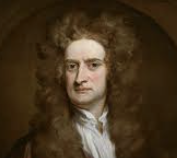
And so, supposing that light impinging on a refracting or reflecting ethereal superficies puts it into a vibrating motion, that physical superficies being by the perpetual applause of rays always kept in a vibrating motion, and the ether therein continually expanded and compressed by turns, if a ray of light impinge on it when it is much compressed, I suppose it is then too dense and stiff to let the ray through, and so reflects it; but the rays that impinge on it at other times, when it is either expanded by the interval between two vibrations or not too much compressed and condensed, go through and are refracted.
3 months 3 weeks ago
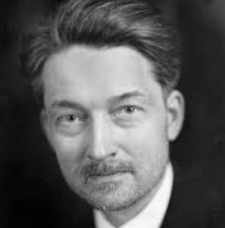
If it is correct to say that there will always be rightist temperaments and leftist temperaments, it is nevertheless also correct to say that political philosophy is neither rightist nor leftist; it must simply be true.
▼
Source
The Twilight of Civilization (1939). London: Sheed & Ward, 1946, p. 41.
3 months 3 weeks ago
Nature has had regard in everything no less to the end than to the beginning and the continuance, just like a man who throws up a ball. What good is it then for the ball to be thrown up, or harm for it to come down... what good is it to the bubble while it holds together, or what harm when it is burst?
▼
Source
VIII, 20

3 months 3 weeks ago
One of the greatest delusions of the average man is to forget that life is death's prisoner.
3 months 3 weeks ago
No man who has once heartily and wholly laughed can be altogether irreclaimably bad.
▼
Source
Bk. I, ch. 4.
3 months 3 weeks ago
I hope the dogs don't bark tonight. I always think it's mine.

3 months 3 weeks ago
Look on this life as the Progress of an Essence Royale. The Soul but quits her court to see the country. Heaven hath in it a scene of earth; and had she had bin contented with ideas, she had not travelled beyond the map.
3 months 3 weeks ago
It is impossible for a Christian to be a relativist.
▼
Source
p. 89.
3 months 3 weeks ago
A wrongdoer is often a man who has left something undone, not always one who has done something.
▼
Source
Ἀδικεῖ πολλάκις ὁ μὴ ποιῶν τι, οὐ μόνον ὁ ποιῶν τι. | IX, 5
3 months 3 weeks ago
No one should forget: Eros alone can fulfill life; knowledge, never. Only Eros makes sense; knowledge is empty infinity; — for thoughts, there is always time; life has its time; there is no thought that comes too late; any desire can become a regret.
3 months 3 weeks ago
Battles, in these ages, are transacted by mechanism; with the slightest possible development of human individuality or spontaneity: men now even die, and kill one another, in an artificial manner.
▼
Source
Pt. I, Bk. VII, ch. 4.
3 months 3 weeks ago
There can be no question of holding forth on ethics. I have seen people behave badly with great morality and I note every day that integrity has no need of rules. There is but one moral code that the absurd man can accept, the one that is not separated from God: the one that is dictated. But it so happens that he lives outside that God. As for the others (I mean also immoralism), the absurd man sees nothing in them but justifications and he has nothing to justify. I start out here from the principle of his innocence. That innocence is to be feared. "Everything is permitted," exclaims Ivan Karamazov. That, too, smacks of the absurd. But on condition that it not be taken in a vulgar sense. I don't know whether or not it has been sufficiently pointed out that it is not an outburst of relief or of joy, but rather a bitter acknowledgment of a fact.
3 months 3 weeks ago
Learn from thy errors to be infallible, from thy misfortunes to be constant. There is nothing stronger than perseverance, for it ends in miracles.
3 months 3 weeks ago
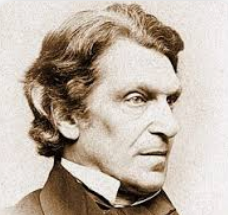
If it is permitted to the enlightened but baffled Statesman, when deserted and fallen from his place, to appeal from the voices of the moment to the judgment of more impartial times, with what right can we call in question the loftier form of the same prophetic trust which looks to a present God rather than to future men?
▼
Source
Vol II, pp. 189–190.
3 months 3 weeks ago
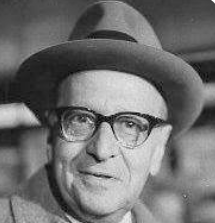
Calvin’s theocentric irrationalism eventually revealed itself as the cunning to technocratic reason which had to shape its human material. Misery and the poor laws did not suffice to drive men into the workshops of the early capitalistic era. The new spirit helped to supplement external pressures with a concern for wife and child to which the moral autonomy of the introverted subject in reality was tantamount.
▼
Source
p. 34.
3 months 3 weeks ago
Rememberest the gods, and that they wish not to be flattered, but wish all reasonable beings to be made like themselves; and... rememberest that what does the work of a fig-tree is a fig-tree, and that what does the work of a dog is a dog, and that what does the work of a bee is a bee, and that what does the work of a man is a man.
▼
Source
X, 8
3 months 3 weeks ago
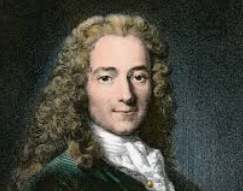
"A false science makes atheists, a true science prostrates men before the Deity"
▼
Source
[http://books.google.es/books?id=aItKAAAAcAAJ&printsec=frontcover&hl=es#v=onepage&q&f=false The critical review, or annals of literature, Volume XXVI], by A Society of Gentlemen (1768) p. 450
3 months 3 weeks ago
Someday the old shack we call the world will fall apart. How, we don't know, and we don't really care either. Since nothing has real substance, and life is a twirl in the void, its beginning and its end are meaningless.

3 months 3 weeks ago
As in Mathematicks, so in Natural Philosophy, the Investigation of difficult Things by the Method of Analysis, ought ever to precede the Method of Composition.
▼
Source
Isaac Newton, Opticks (1704)
3 months 3 weeks ago
The young generations of the world, who had in them the freshness of young children, and yet the depth of earnest men, who did not think that they had finished off all things in Heaven and Earth by merely giving them scientific names, but had to gaze direct at them there, with awe and wonder: they felt better what of divinity is in man and Nature; they, without being mad, could worship Nature, and man more than anything else in Nature.
3 months 3 weeks ago
I said that the world is absurd, but I was too hasty. This world in itself is not reasonable, that is all that can be said. But what is absurd is the confrontation of this irrational and the wild longing for clarity whose call echoes in the human heart.
▼
Source
p. 16

3 months 3 weeks ago
self-control contains honour as a chief constituent, and honour bravery.
▼
Source
Book I, 1.84; "self-control is the chief element in self-respect, and respect of self, in turn, is the chief element in courage" ([https://archive.org/stream/thucydideswithen01thucuoft/thucydideswithen01thucuoft#page/142/mode/2up trans. Charles Forster Sm
3 months 3 weeks ago
America is the object of their loathing because, for a half-century or more, she has been the most prosperous and creative capitalist society on earth. Ultimately it is liberal democracy - or quite simply liberty itself - that they are eager to destroy, even though they are among its foremost beneficiaries, being free to travel anywhere, anytime in order to hatch their plots. If their diktats were carried out, if frontier barriers were reestablished everywhere, with passports and visas even for tourists, there could have been no Seattle and no Goteborg.
▼
Source
p. 35
3 months 3 weeks ago
If it were not for the founder of the school, Charles S. Pierce, who has told us that he ‘learned philosophy out of Kant,’ one might be tempted to deny any philosophical pedigree to a doctrine that holds not that our expectations are fulfilled and our actions successful because our ideas are true, but rather that our ideas are true because our expectations are fulfilled and our actions successful.
▼
Source
describing the pragmatist view, p. 42.
3 months 3 weeks ago
How much more damage anger and grief do than the things that cause them.
▼
Source
XI, 18 (Hays translation)
3 months 3 weeks ago
We never live: we are always in expectation of living.
▼
Source
p. 55
3 months 3 weeks ago
The true hero fights and dies in the name of his destiny, and not in the name of a belief.
3 months 3 weeks ago
They indicate the saddest spiritual paralysis, and mere death-life of the souls of men: more godless theory, I think, was never promulgated in this Earth. A false man found a religion? Why, a false man cannot build a brick house!
3 months 3 weeks ago
Every revolutionary ends as an oppressor or a heretic.
▼
Source
Variant translation: Every revolutionary ends by becoming either an oppressor or a heretic.
3 months 3 weeks ago
When night came on, the Macedonians and the barbarian crowd suddenly took fright in one of those mysterious panics to which great armies are liable...
▼
Source
Book IV, 4.125-[1]
3 months 3 weeks ago
It is apparently very congenial for some people who are professionally concerned with fictional texts to be told that all texts are really fictional anyway, and that claims that fiction differs significantly from science and philosophy can be deconstructed as a logocentric prejudice, and it seems positively exhilarating to be told that what we call "reality" is just more textuality. Furthermore, the lives of such people are made much easier than they had previously supposed, because now they don't have to worry about an author's intentions, about precisely what a text means, or about distinctions within a text between the metaphorical and the literal, or about the distinction between texts and the world because everything is just a free play of signifiers. The upper limit, and I believe the reductio ad absurdum, of this "sense of mastery" conveyed by deconstruction, is in Geoffrey Hartman's claim that the prime creative task has now passed from the literary artist to the critic.
▼
Source
"The Word Turned Upside Down", The New York Review of Books, Volume 30, Number 16, October 27, 1983.
3 months 3 weeks ago
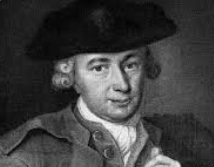
Let us assume that we invited an unknown person to a game of cards. If this person answered us, “I don’t play,” we would either interpret this to mean that he did not understand the game, or that he had an aversion to it which arose from economic, ethical, or other reasons. Let us imagine, however, that an honorable man, who was known to possess every possible skill in the game, and who was well versed in its rules and its forbidden tricks, but who could like a game and participate in it only when it was an innocent pastime, were invited into a company of clever swindlers, who were known as good players and to whom he was equal on both scores, to join them in a game. If he said, “I do not play,” we would have to join him in looking the people with whom he was talking straight in the face, and would be able to supplement his words as follows: “I don’t play, that is, with people such as you, who break the rules of the game, and rob it of its pleasure. If you offer to play a game, our mutual agreement, then, is that we recognize the capriciousness of chance as our master; and you call the science of your nimble fingers chance, and I must accept it as such, it I will, or run the risk of insulting you or choose the shame of imitating you.” … The opinion of Socrates can be summarized in these blunt words, when he said to the Sophists, the leaned men of his time, “I know nothing.” Therefore these words were a thorn in their eyes and a scourge on their backs.
▼
Source
Socratic Memorabilia, J. Flaherty, trans. (Baltimore: 1967), pp. 165-167.
3 months 3 weeks ago
Of the life of man the duration is but a point.
▼
Source
II. 17, trans. C.R. Haines
3 months 3 weeks ago
All the reasoning of man is not worth one sentiment of woman.
▼
Source
p. 172
3 months 3 weeks ago
Chaos is rejecting all you have learned. Chaos is being yourself.
3 months 3 weeks ago
The seeing eye! It is this that discloses the inner harmony of things; what Nature meant, what musical idea Nature has wrapped up in these often rough embodiments. Something she did mean. To the seeing eye that something were discernible. Are they base, miserable things? You can laugh over them, you can weep over them; you can in some way or other genially relate yourself to them; — you can, at lowest, hold your peace about them, turn away your own and others' face from them, till the hour come for practically exterminating and extinguishing them!
3 months 3 weeks ago
God is not needed to create guilt or to punish. Our fellow men suffice, aided by ourselves.

3 months 3 weeks ago
Men shut their doors against a setting sun.
▼
Source
Apemantus, scene ii
3 months 3 weeks ago
We often attribute "understanding" and other cognitive predicates by metaphor and analogy to cars, adding machines, and other artifacts, but nothing is proved by such attributions.
3 months 3 weeks ago
Neatness begets order; but from order to taste there is the same difference as from taste to genius, or from love to friendship.
▼
Source
No. 594
3 months 3 weeks ago
Marcus Aurelius was the perfect man, says Renan. Yes; the great emperor was a perfect man. But how intolerable were the endless claims upon him! He staggered under the burden of the empire. He was conscious how inadequate one man was to bear the weight of that Titan and too vast orb.
▼
Source
Oscar Wilde, in The Soul of Man under Socialism, 1891
3 months 3 weeks ago
I grew bored in France -- and the main reason is that everyone here resembles Voltaire.
3 months 3 weeks ago
Lucidity's task: to attain a correct despair, an Olympian ferocity.

3 months 3 weeks ago
But yet they that have no Science, are in better, and nobler condition with their naturall Prudence; than men, that by their mis-reasoning, or by trusting them that reason wrong, fall upon false and absurd generall rules.
▼
Source
The First Part, Chapter 5, p. 21
3 months 3 weeks ago
There is no act more moral between men than that of rule and obedience. Woe to him that claims obedience when it is not due; woe to him that refuses it when it is! God's law is in that, I say, however the Parchment-laws may run: there is a Divine Right or else a Diabolic Wrong at the heart of every claim that one man makes upon another.
CivilSimian.com created by AxiomaticPanic, CivilSimian, Kalokagathia