
3 months 3 weeks ago
Be bold to look towards God and say, "Use me henceforward for whatever you want; I am of one mind with you; I am yours; I refuse nothing that seems good to you; lead me where you will; wrap me in what clothes you will."
▼
Source
Book II, ch. 16, § 42
3 months 3 weeks ago
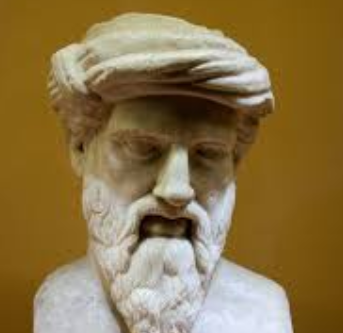
Pythagoras did not possess a proof of the theorem which bears his name... he was temperamentally uninterested in proofs of this nature, as may be gleaned from... his numerological deductions. ...the Pythagorean theorem was known to Thales. ...the hypotenuse theorem is a direct consequence of the principle of similitude, and... Thales was fully conversant with the theory of similar triangles. On the other hand, there is no doubt that Pythagoras fully appreciated the metaphysical implications. ...this relation ...was to Pythagoras and the Pythagoreans a basic law of nature, and... a brilliant confirmation of their number philosophy.
▼
Source
Tobias Dantzig, The Bequest of the Greeks (1955)
3 months 3 weeks ago
Religious minds, which are distrustful of philosophic dogmas, fall into the error - inculcated by philosophy - of supposing that Providence is limited in its action; that is does not extend to the social world or the social relations of mankind, and that God has not determined upon any plan of social organization for the regulation of those relations. If they had a PROFOUND FAITH IN THE UNIVERSALITY OF PROVIDENCE, they would be convinced that all human needs must have been foreseen and provided for, and especially that the most urgent of them all could not have been overlooked - namely, the need of a social order for the regulation of our industrial and social relations.
▼
Source
The Theory of Social Organization. Harmonian Man: Selected Writings of Charles Fourier, p. 5.

3 months 3 weeks ago
Philosophy unravels the knots in our thinking; hence its results must be simple, but its activity is as complicated as the knots that it unravels.
▼
Source
Ch. 9 : Philosophy, p. 183

3 months 3 weeks ago
Philosophy in the strong, classical sense shares with religion the object, truth, the Absolute in and of itself, and is therefore properly a stripping away, a removal of everything that is relative and accidental, in order to get to the essential. This concerns first and foremost ourselves, according to the precept of the Delphic Apollo: ‘Know thyself’. It is the ‘sculpting of one's own statue’ that Plotinus speaks of, removing the marble that covers it and prevents it from coming to light.

3 months 3 weeks ago
No congress, nor mob, nor guillotine, nor fire, nor all together, can avail, to cut out, burn, or destroy the offense of superiority in persons. The superiority in him is inferiority in me.
▼
Source
p. 65
3 months 3 weeks ago
Reflecting on my experience, I find myself agreeing with the eminent Cambridge philosopher, Dr. C. D. Broad, “that we should do well to consider much more seriously than we have hitherto been inclined to do the type of theory which Bergson put forward in connection with memory and sense perception. The suggestion is that the function of the brain and nervous system and sense organs is in the main eliminative and not productive. Each person is at each moment capable of remembering all that has ever happened to him and of perceiving everything that is happening everywhere in the universe. The function of the brain and nervous system is to protect us from being overwhelmed and confused by this mass of largely useless and irrelevant knowledge, by shutting out most of what we should otherwise perceive or remember at any moment, and leaving only that very small and special selection which is likely to be practically useful.”
▼
Source
Aldous Huxley The Doors of Perception (1954)
3 months 3 weeks ago
The mind celebrates a little triumph whenever it can formulate a truth, however unwelcome to the flesh, or discover an actual force, however unfavourable to given interests.
▼
Source
Ch. IV.: Music
3 months 3 weeks ago
Methinks I am like a man, who having struck on many shoals, and having narrowly escap'd shipwreck in passing a small frith, has yet the temerity to put out to sea in the same leaky weather-beaten vessel, and even carries his ambition so far as to think of compassing the globe under these disadvantageous circumstances.
▼
Source
Part 4, Section 7
3 months 3 weeks ago
When you do anything from a clear judgment that it ought to be done, never shun the being seen to do it, even though the world should make a wrong supposition about it; for, if you don't act right, shun the action itself; but, if you do, why are you afraid of those who censure you wrongly? (35).
3 months 3 weeks ago
What seems certain is that Pythagoras developed the idea of mathematical logic... He realized that numbers exist independently of the tangible world and therefore their study was untainted by inaccuracies of perception. This meant he could discover truths which were independent of opinion of prejudice and which were more absolute then any previous knowledge.
▼
Source
Simon Singh, Fermat's Last Theorem (1997)

3 months 3 weeks ago
Thus the Semitic race is to be recognized almost entirely by negative characteristics. It has neither mythology, nor epic, nor science, nor philosophy, nor fiction, nor plastic arts, nor civil life; in everything there is a complete absence of complexity, subtlety or feeling, except for unity. It has no variety in its monotheism.
▼
Source
Renan, E. (1855). Histoire générale et système composée des langues sémitiques. Paris. , quoted in Black Athena: The Afroasiatic Roots of Classical Civilization Vol. I, published in 1987, by Martin Bernal
3 months 3 weeks ago
So we do sometimes think because it has been found to pay.
▼
Source
§ 470

3 months 3 weeks ago
As your Bujutsu Martial Technique training approaches perfection you will be able to detect the suki (opening/weakness in your enemy's technique), even before he can, and as if to satisfy some deficiency in him, you can fill the suki with your technique.
▼
Source
(p. 26)
3 months 3 weeks ago
Variation: If a man can write a better book, preach a better sermon, or make a better mousetrap than his neighbor, though he builds his house in the woods the world will make a beaten path to his door.
▼
Source
Investigations have failed to confirm this in Emerson's writings (John H. Lienhard. [http://www.uh.edu/engines/epi1163.htm "A better moustrap"], Engines of our Ingenuity). Also reported as a misattribution in Paul F. Boller, Jr., and John George, They Nev
3 months 3 weeks ago
For the scientist a model is also a way in which the human though processes can be amplified. This method often takes the form of models that can be programmed into computers. At no point, however, the scientist intend to loose control of the situation because off the computer does some of his thinking for him. The scientist controls the basic assumptions and the computer only derives some of the more complicated implications.
▼
Source
p. 61
3 months 3 weeks ago
I like to walk about amidst the beautiful things that adorn the world; but private wealth I should decline, or any sort of personal possessions, because they would take away my liberty.
▼
Source
"The Irony of Liberalism"
3 months 3 weeks ago
In our reasonings concerning matter of fact, there are all imaginable degrees of assurance, from the highest certainty to the lowest species of moral evidence. A wise man, therefore, proportions his belief to the evidence.
▼
Source
Section X: Of Miracles; Part I. 87
3 months 3 weeks ago
If someone associates with a true Pythagorean, what will he will get from him, and in what quantity? I would say: statesmanship, geometry, astronomy, arithmetic, harmonics, music, medicine, complete and god-given prophecy, and also the higher rewards — greatness of mind, of soul, and of manner, steadiness, piety, knowledge of the gods and not just supposition, familiarity with blessed spirits and not just faith, friendship with both gods and spirits, self-sufficiency, persistence, frugality, reduction of essential needs, ease of perception, of movement, and of breath, good color, health, cheerfulness, and immortality.
▼
Source
Apollonius of Tyana, letter to Euphrates, Epp. Apoll. 52
3 months 3 weeks ago
The good seed that nature plants in us is so slight and so slippery that it cannot withstand the least harm from wrong nourishment.
▼
Source
Part 2
3 months 3 weeks ago
I squander untold effort making an arrangement of my thoughts that may have no value whatever.
▼
Source
p. 33e

3 months 3 weeks ago
Philosophy is not a system of propositions, and not a science.
▼
Source
p. 157 ; As cited in: Thomas Uebel (2012). Empiricism at the Crossroads: The Vienna Circle's Protocol-Sentence. p. 78
3 months 3 weeks ago
Prediction of events is a central problem to which students of decision making have also addressed themselves.
▼
Source
See, for example, Simon (1957), Theodore R. Sarbin (1960) Clinical inference and cognitive theory. p. 68 This quote tells us that in 1960 Sarbin considered Churchman's Theory of Experimental Inference as a notable book about the theory of decision making.
3 months 3 weeks ago
The famous George Santayana quote: “Those who forget the past are condemned to repeat it.” That's the thing, though. None of us have forgotten. Darned if we're not repeating it anyway...
▼
Source
[https://www.ajc.com/blog/mark-bradley/confederate-flags-and-noose-what-century-this-anyway/zZ1xCpzku1AUasaQqW7S3I/ Confederate flags and a noose: What century is this, anyway?, By Mark Bradley, The Atlanta Journal-Constitution] (22 June 2020)
3 months 3 weeks ago
It is a great mortification to the vanity of man, that his utmost art and industry can never equal the meanest of nature's productions, either for beauty or value. Art is only the under-workman, and is employed to give a few strokes of embellishment to those pieces, which come from the hand of the master
▼
Source
Part I, Essay 15: The Epicurean
3 months 3 weeks ago
If life becomes hard to bear we think of improvements. But the most important and effective improvement, in our own attitude, hardly occurs to us, and we can decide on this only with the utmost difficulty.
▼
Source
p. 60e

3 months 3 weeks ago
I am unable, when I turn to myself, to recognize any of my faculties or my capacities. The inner sensation which I have of myself informs me that I am, that I think, that I will, that I have sensory awareness, that I suffer, and so on; but it provides me with no knowledge whatever of what I am — of the nature of my thought, my sensations, my passions, or my pain — or the mutual relations that obtain between all these things … I have no idea whatever of my soul.
▼
Source
Dialogues on Metaphysics (1688) Dialogue III
3 months 3 weeks ago
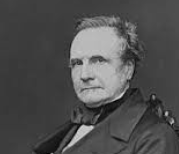
There remains a third source from which we arrive at the knowledge of the existence of a supreme Creator, namely, from an examination of his works. Unlike transmitted testimony, which is weakened at every stage, this evidence derives confirmation from the progress of the individual as well as from the advancement of the knowledge of the race. Almost all thinking men who have studied the laws which govern the animate and the inanimate world around us, agree that the belief in the existence of one Supreme Creator, possessed of infinite wisdom and power, is open to far less difficulties than the supposition of the absence of any cause, or of the existence of a plurality of causes.
▼
Source
"[https://archive.org/stream/passagesfromlif01babbgoog#page/n10/mode/2up Passages from the life of a philosopher]", The Belief In The Creator From His Works, p. 400-401
3 months 3 weeks ago
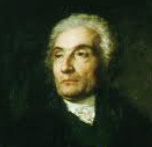
Now the real fruits of human nature – the arts, sciences, great enterprises, lofty conceptions, manly virtues – are due especially to the state of war. In a word, we can say that blood is the manure of the plant we call genius.
▼
Source
Chapter III, p. 29
3 months 3 weeks ago
Look round this universe. What an immense profusion of beings, animated and organised, sensible and active! You admire this prodigious variety and fecundity. But inspect a little more narrowly these living existences, the only beings worth regarding. How hostile and destructive to each other! How insufficient all of them for their own happiness! How contemptible or odious to the spectator! The whole presents nothing but the idea of a blind Nature, impregnated by a great vivifying principle, and pouring forth from her lap, without discernment or parental care, her maimed and abortive children!
▼
Source
Philo to Cleanthes, Part XI
3 months 3 weeks ago
I began by asking whether Wittgenstein was a spiritual genius. That question really has two parts: was he the spiritually sublime individual – the ‘saint’ – people often said he was? And did he know how to be such an individual, whether or not he was one himself? I think the answer must be no to both questions. His vanity, emotional solipsism and coldness put him well outside the category of the saint; and his engineering (or surgical) approach to his spiritual condition seems to me wrongly conceived, embodying as it does a deep mistake of ethical attention. But a better question might be this: given his nature, did he live a noble and ethically distinguished life? (He clearly lived an impressive and remarkable one.) Here I think we must do him the courtesy of taking him at his word and not allow our natural sentimentality about great men to get in the way of hearing what he actually says about himself. Of Moore's reputation for saintly childlike innocence, Wittgenstein remarked: ‘I can’t understand that, unless it’s also to a child’s credit. For you aren’t talking of the innocence a man has fought for, but of an innocence which comes from a natural absence of temptation.’ If we take seriously Wittgenstein's own repeated assessment of himself as ‘rotten’ and ‘indecent’, as having a ‘wicked heart’ – in whatever way these epithets were meant – then it becomes clear why he regarded his life as a mighty struggle with himself, and what he had to overcome to achieve the moral standing he did. His peculiar greatness comes from that agonising battle between his natural hubris and the humility he craved, between his compulsive devotion to himself and his willed concern for others. The singularity of his spiritual achievement consists in this strained amalgamation of aggressive megalomania and abject self-mortification. Somehow this battle brought something spiritually valuable into the world that had not been there before: an ability, we might say, to attend religiously to the face of another human being – but to do so as if this were the strangest and most impossible thing in the world to achieve.
▼
Source
Colin McGinn, "My Wicked Heart", London Review of Books (22 November 1990)

3 months 3 weeks ago
You know how I always believe in the future … Without disorder, the revolution is impossible; knowing that, I did not lose hope, and I do not lose it now.
▼
Source
Letter to a friend (November 1920), as quoted in Peter Kropotkin : From Prince to Rebel (1990) by George Woodcock and Ivan Avakumovic, p. 428
3 months 3 weeks ago
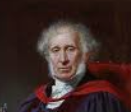
Trained in a less severe school than that of geometry and physics, his reasonings are almost always loose and inconclusive. His generalizations seem to have been reached before he had obtained the materials upon which he rests them: His facts, though frequently new and interesting, are often little more than conjectures; and the grand phenomena of the world of life, and instinct, and reason, which other minds have woven into noble and elevating truths, have thus become in Mr. Darwin's hands the basis of a dangerous and degrading speculation.
▼
Source
Referring to Charles Darwin
3 months 3 weeks ago
The first among the sciences is that of statesmanship. That cannot be learnt in academies. No great minister, from Suger to Richelieu, ever occupied himself with physics or mathematics. The genius of the natural sciences makes impossible that other kind of genius, which is a talent unto itself.
▼
Source
"Eighth Dialogue," p. 297–298

3 months 3 weeks ago
In order to enter into a real knowledge of your condition, consider it in this image: A man was cast by a tempest upon an unknown island, the inhabitants of which were in trouble to find their king, who was lost; and having a strong resemblance both in form and face to this king, he was taken for him, and acknowledged in this capacity by all the people.
3 months 3 weeks ago
Take any work on astronomy of the last century, or the beginning of ours. You will no longer find in it, it goes without saying, our tiny planet placed in the center of the universe. But you will meet at every step the idea of a central luminary — the sun — which by its powerful attraction governs our planetary world. From this central body radiates a force guiding the course of the planets, and maintaining the harmony of the system. Issued from a central agglomeration, planets have, so to say, budded from it; they owe their birth to this agglomeration; they owe everything to the radiant star that represents it still: the rhythm of their movements, their orbits set at wisely regulated distances, the life that animates them and adorns their surfaces. And when any perturbation disturbs their course and makes them deviate from their orbits, the central body re-establishes order in the system; it assures and perpetuates its existence.This conception, however, is also disappearing as the other one did. After having fixed all their attention on the sun and the large planets, astronomers are beginning to study now the infinitely small ones that people the universe. And they discover that the interplanetary and interstellar spaces are peopled and crossed in all imaginable directions by little swarms of matter, invisible, infinitely small when taken separately, but all-powerful in their numbers.
3 months 3 weeks ago
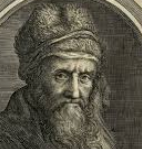
Solon gave the following advice: "Consider your honour, as a gentleman, of more weight than an oath. Never tell a lie. Pay attention to matters of importance."
▼
Source
Solon, 12.
3 months 3 weeks ago
[Maistre] fulminated as a littérateur, even as a grammarian, and his frenzies not only failed to diminish his passion for the correct and elegant formulation but augmented it even more. An epileptic temperament infatuated with the trifles of the Word: trances and boutades, convulsions and bagatelles, grace and a foaming mouth – everything combined to compose a pamphleteering universe at whose heart he harried ‘error’ with blows of invective, those ultimatums of impotence.
▼
Source
Emil Cioran, "Joseph de Maistre: An Essay on Reactionary Thought" in Anathemas and Admirations (1987), p. 70
3 months 3 weeks ago
A doubtful balance is made between truth and pleasure, and... the knowledge of one and the feeling of the other stir up a combat the success of which is very uncertain, since, in order to judge of it, it would be necessary to know all that passes in the innermost spirit of the man, of which man himself is scarcely ever conscious.
3 months 3 weeks ago
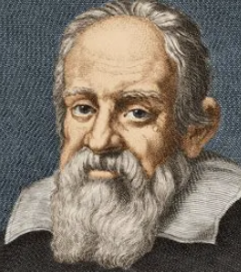
The sun, with all those planets revolving around it and dependent on it, can still ripen a bunch of grapes as if it had nothing else in the universe to do.
▼
Source
Loose paraphrase of Salviati on [http://law2.umkc.edu/faculty/projects/ftrials/galileo/dialogue3.html Day 3]: "For when the sun draws up some vapors here, or warms a plant there, it draws these and warms this as if it had nothing else to do. Even in ripen
3 months 3 weeks ago
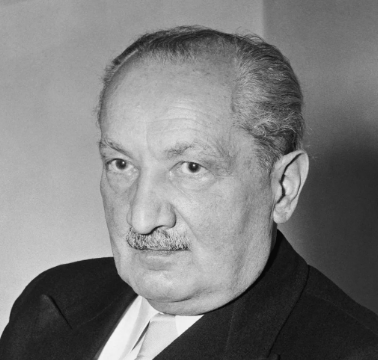
Transcendence constitutes selfhood.
▼
Source
Essence of Ground (1929)
3 months 3 weeks ago
The State is only one of the forms assumed by society in the course of history. Why then make no distinction between what is permanent and what is accidental?
▼
Source
I
3 months 3 weeks ago
There is a written and an unwritten law. The one by which we regulate our constitutions in our cities is the written law; that which arises from customs is the unwritten law.
▼
Source
Plato, 51.

3 months 3 weeks ago
Now, to say that a lot of objects is finite, is the same as to say that if we pass through the class from one to another we shall necessarily come round to one of those individuals already passed; that is, if every one of the lot is in any one-to-one relation to one of the lot, then to every one of the lot some one is in this same relation.
3 months 3 weeks ago
Man infinitely surpasses man.
▼
Source
Pope Paul VI, [http://www.vatican.va/content/paul-vi/en/encyclicals/documents/hf_p-vi_enc_26031967_populorum.html
3 months 3 weeks ago
For anyone who at the end of Western philosophy can and must still question philosophically, the decisive question is no longer merely “What basic character do beings manifest?” or “How may the being of beings be characterized?” but “What is this ‘being’ itself?” The decisive question is that of “the meaning of being,” not merely that of the being of beings.
▼
Source
p. 18
3 months 3 weeks ago
While science devotes its chief attention to industrial pursuits, a limited number of lovers of nature and a legion of workers... unknown to posterity have created of late a quite new agriculture, as superior to modern farming, as farming is superior to the old three fields system of our ancestors. Science seldom guided them, and sometimes misguided... they proceeded in the empirical way; but... they have opened a new field of experimental research for the physiology of plants. They have created a totally new agriculture. They smile when we boast about the rotation system having permitted us to take from the field one crop every year, or four crops every three years, because their ambition is to have 6 and 9 crops from the very same plot of land during the twelve months. They do not understand our talk about good and bad soils because they make the soils themselves, and make it in such quantities as to be compelled yearly to sell some of it: otherwise it would raise up the level of their gardens by half an inch every year. They aim at cropping not 5 or 6 tons of grass on the acre, as we do, but from 50 to 100 tons of various vegetables on the same space; not £5 worth of hay but £100 worth of vegetables, of the plainest description, cabbage and carrots, and more than £200 worth under intensive horticultural treatments. This is where agriculture is going now.
3 months 3 weeks ago
When asked what he would take to let a man give him a blow on the head, he said, "A helmet."
▼
Source
Diogenes, 6.
3 months 3 weeks ago
Reason and Revolution, Hegel and the Rise of Social Theory, Herbert Marcuse, London Routledge & Kegan Paul LTD 2nd edition 1941, reprinted 1955
3 months 3 weeks ago
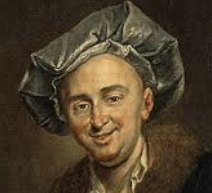
The human body is a machine which winds its own springs.
CivilSimian.com created by AxiomaticPanic, CivilSimian, Kalokagathia